


French Mantelpiece Candelabra
French mantelpiece candelabra bring the decorative brilliance of nineteenth-century salons directly to your hearth.
French Mantelpiece Candelabra
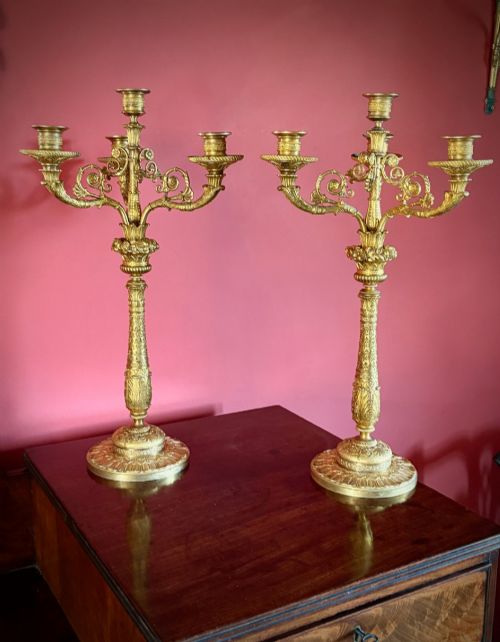
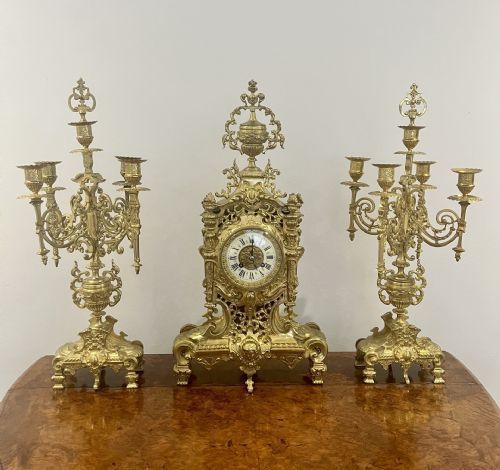
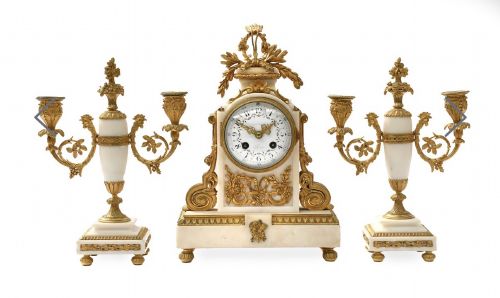
French mantelpiece candelabra comprise multi-branched candle holders designed specifically to sit upon a fireplace shelf, often as part of a larger garniture set alongside a matching clock. You are most likely to encounter pairs executed in the nineteenth century, spanning various revivals from Louis XVI style to ornate Rococo and Empire designs.
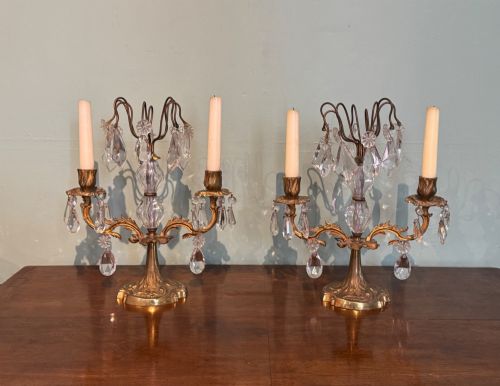
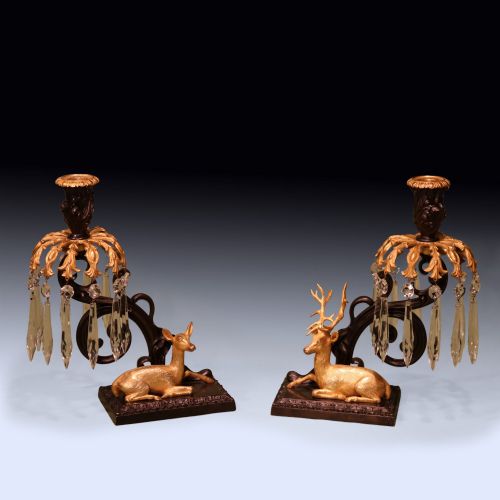
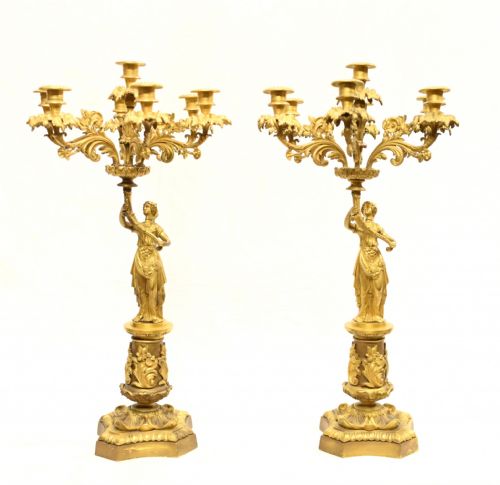
The objects take the form of standing bronze, ormolu, or marble shafts supporting two, three, four, or five branch arms for candles. Many examples incorporate figurative elements such as cherubs, maidens, stags, or classical motifs that reflect the prevailing taste of periods like the Victorian era and the Second Empire.
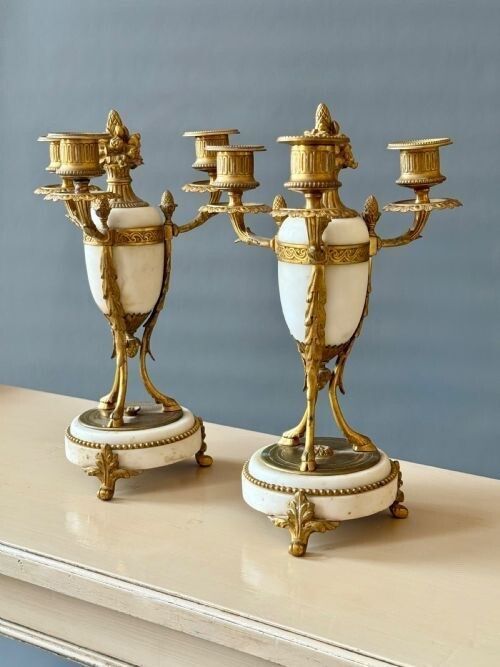
Makers and designers utilised diverse materials to create these display pieces, pairing gilt metals with contrasting white marble, green onyx, or porcelain inserts. They serve both a functional lighting role and a decorative purpose, anchoring the visual centre of a formal room.
Materials and construction methods
Craftsmen manufactured these pieces primarily through metal casting, combining patinated bronze and ormolu-gilded bronze to achieve tonal contrast. Artisans also integrated carved white marble, green marble, onyx, and porcelain elements into the bases and columns.
The manufacturing process involved assembling individual cast components, including scroll arms, drip pans, and figural sculptures, which were then secured together. Gilding was applied to bronze surfaces to create a bright, reflective finish that complemented the polished stone bases.
Listings feature items from the nineteenth century, incorporating materials such as gilt bronze, ormolu, white marble, porcelain, and patinated bronze across various styles.
Distinctions in quality and execution
The choice and preparation of materials also dictate the tier of the piece, with solid white marble, porphyry, and fine porcelain inserts marking higher standards of production. Heavier, more substantial metal components indicate superior workshop output compared to lighter, hollow constructions.
Claude Clodion
The French Mantelpiece Candelabra Glossary
- Ormolu
- Gilded bronze achieved through the application of a mercury-gold amalgam to a bronze base, creating a brilliant golden finish. This technique was widely employed in high-end French decorative metalwork.
- Garniture
- A set of matching decorative objects, typically comprising a mantel clock flanked by two matching candelabra or vases. These sets were designed to be displayed together on a fireplace mantel.
- Patinated bronze
- Bronze that has been treated chemically or naturally to produce a dark, protective surface coloration. It provides a striking visual contrast against bright ormolu mountings.
- Clock set
- Another term for a garniture, uniting a central timekeeper with matching side ornaments like candlesticks or candelabra. They unify the decorative scheme of a nineteenth-century interior.
French Mantelpiece Candelabra: Frequently Asked Questions
What is a clock garniture?
A clock garniture is a matched set consisting of a central mantel clock accompanied by two side pieces, such as candelabra or urns. These matched groupings were designed to create a balanced, symmetrical display on a fireplace mantel.
They coordinate in material, style, and decorative theme, frequently combining gilt bronze with marble or porcelain. This arrangement formed the visual centrepiece of formal nineteenth-century reception rooms.
How do you clean ormolu?
Ormolu requires gentle cleaning with a soft, dry cloth to remove dust without disturbing the delicate gold surface. Avoid abrasive cleaners, water, or chemical polishes that can strip the historic gilding.
Professional conservation may be necessary for pieces with heavy grime accumulation. Careful handling preserves the original lustre of the nineteenth-century finish.
Were these used for actual lighting?
These pieces functioned as practical lighting sources for candles in nineteenth-century homes before the widespread adoption of electric light. The multiple branch arms held wax candles to illuminate dark rooms during evening hours.
Over time, many examples transitioned into purely decorative objects or were converted for electrical use. Traces of wax residue often remain inside the drip pans of authentic period specimens.
How are periods distinguished?
Periods are identified through stylistic cues, material combinations, and casting characteristics specific to nineteenth-century design revivals. Empire and Charles X pieces favour strict classical symmetry, while Rococo and Louis XVI styles introduce flowing scrollwork and naturalistic asymmetry.
Examining the base stone, such as white marble or green onyx, alongside the type of bronze patination helps narrow the date of manufacture. Secondary evidence like clock movements and mounting hardware further assists in determining the precise era.