
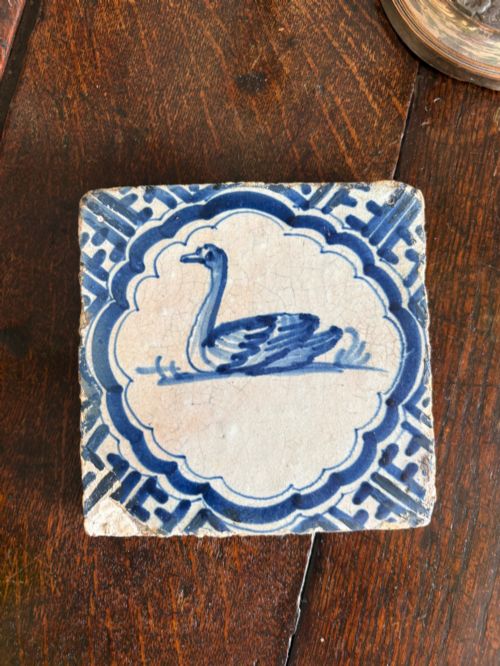


Antique Fireplace Tile
An antique fireplace tile brings hand-painted Dutch tin glaze and Victorian relief work straight to the hearth.
What an antique fireplace tile is
When you search antique fireplace tile, you encounter decorative ceramic pieces designed specifically for domestic hearths and surrounds. The selection spans distinct eras, from seventeenth and eighteenth century Dutch delftware to later nineteenth century British production.
You are most likely to meet Dutch delft tiles rendered in cobalt pigment on tin-glazed earthenware, alongside Victorian ceramic and earthenware examples. Forms range from simple decorative tiles to specific pictorial subjects like swans and human figures.
Origins represented on this page stretch across the seventeenth, eighteenth, and Victorian periods. Stylistic influences include Dutch Baroque, Dutch Golden Age, Dutch Colonial, Victorian Classical Revival, and the Victorian Aesthetic Movement.
How they were made
Makers shaped these items from basic clay and earthenware bodies before applying surface finishes. Tin glaze and tin-glazed earthenware provide the foundational smooth white or off-white ground for many of the older examples.
Decoration relied heavily on cobalt pigment applied by hand directly to the unfired glaze. Later Victorian production by firms such as Sherwin and Cotton utilised specialised ceramic moulding and glazing techniques to achieve figurative relief designs.
What varies in quality
Quality rests in the execution of the hand-painted brushwork and the clarity of the cobalt pigment against the tin glaze. Early seventeenth and eighteenth century delft pieces display individual artistic confidence in brush strokes that distinguish finer studio output from routine production.
In Victorian examples, quality appears in the crispness of the moulded relief and the depth of the ceramic glaze. Pieces featuring named subjects like the Lady with Ewer demonstrate greater artistic ambition than standard geometric or floral field tiles.
Sherwin and Cotton·Wedgwood and Sons
The Antique Fireplace Tile Glossary
- Tin-glazed earthenware
- Pottery covered with a white tin oxide glaze that becomes opaque and glossy when fired. This technique forms the receptive canvas for hand-painted cobalt decoration.
- Cobalt pigment
- A metallic blue colouring agent used extensively under the glaze on ceramics. It withstands high firing temperatures without losing its intense hue.
- Dutch delft
- Earthenware tiles made in the Netherlands during the seventeenth and eighteenth centuries. They typically feature blue and white motifs painted by hand.
- Victorian Aesthetic Movement
- A nineteenth century design style emphasising visual beauty over narrative or moral function. It encouraged refined craftsmanship in domestic ceramics.
- Relief
- Raised ornamentation on the surface of a tile. This sculptural approach creates depth and shadow across the ceramic plane.
Frequently Asked Questions
How were antique fireplace tiles used?
These tiles were inset into the surrounds and jambs of domestic fireplaces to reflect heat and decorate the living space.
Their glazed surfaces also allowed homeowners to wipe away soot and ash accumulation easily during routine cleaning.
How do I date a fireplace tile?
Dating relies on identifying the underlying ceramic material, glaze type, and painting style characteristic of specific centuries.
Early pieces often show seventeenth or eighteenth century Dutch delft traits, whereas nineteenth century works reflect Victorian revival styles.
Are these tiles suitable for installation?
Historic ceramics require careful consideration regarding structural stability and exposure to modern operational heat sources.
Many collectors prefer display mounting rather than active use in a working twentieth or twenty-first century hearth.
What is the difference between Dutch and Victorian tiles?
Dutch pieces from the seventeenth and eighteenth centuries primarily use cobalt pigment on tin-glazed earthenware with hand-painted motifs.
Victorian tiles introduce moulded ceramic bodies, figurative relief work, and classical or aesthetic movement design themes.