


Classical Revival Plaque
A classical revival plaque brings the sculptural language of antiquity into nineteenth-century interiors through cast metals, carved woods and glazed ceramics.
Classical Revival Plaque
A classical revival plaque encompasses nineteenth-century wall plaques, relief panels, decorative dishes and ceramic tiles drawing directly upon ancient Greek and Roman motifs. These works capture the period fascination with classical sculpture and mythology through varied sculptural media.
Buyers encountering this search phrase most frequently meet nineteenth-century copper, brass, bronze and carved wooden panels. Examples range from oval repousse dishes depicting mythological figures to white marble reliefs and framed walnut wall panels.
How they were made
Metal pieces rely on repousse techniques and casting, shaping copper, brass and bronze into detailed relief portraits and mythological scenes. These metalwork techniques allow for sharp contours and expressive depth on domestic wall vessels and shields.
Carved wooden plaques utilise dense timbers such as mahogany, walnut and coromandel, shaped into hanging panels and decorative pictures. Ceramic and plaster versions employ moulded earthenware, maiolica and white marble to replicate classical sculpture.
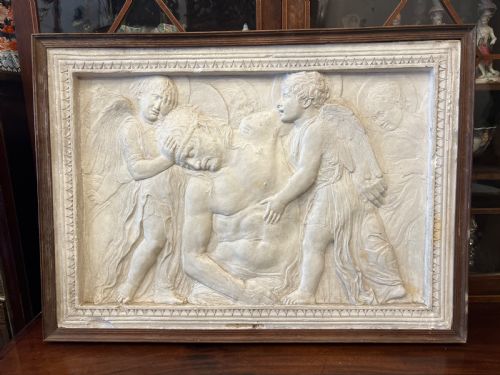
Even Donatello gets a nineteenth-century nod here, appearing as a plaster copy of The Dead Christ Tended by Angels.
What varies in quality
Quality rests upon the crispness of the modelling and the depth of the relief work across metal, stone and wood. Finer examples display meticulous hand-chasing in repousse copper and brass, alongside deeply undercut carving in walnut and mahogany.
The choice of material and the fidelity of the classical interpretation dictate the standing of a piece within the field. Superior ceramic tiles and maiolica chargers exhibit precise glazing and sophisticated tonal control that elevate them above simpler decorative wares.
Sherwin and Cotton·Lamb of Manchester
The Classical Revival Plaque Glossary
- Repousse
- A metalworking technique where a sheet of metal is hammered into relief from the reverse side. This process creates raised sculptural designs on copper and brass plaques.
- Maiolica
- Tin-glazed Italian earthenware of the Renaissance tradition, revived in the nineteenth century. These brightly painted chargers display intricate pictorial scenes.
- Coromandel
- A dense, dark cabinet wood with contrasting golden striations used for fine nineteenth-century panels and furniture. It provides a heavy and durable mounting for decorative displays.
- Relief sculpture
- Work where figures project from a flat background rather than standing freely. Nineteenth-century examples utilise marble, plaster and wood.
Classical Revival Plaque: Frequently Asked Questions
What is a classical revival plaque?
A classical revival plaque is a nineteenth-century decorative wall piece inspired by ancient Greek, Roman or Renaissance art. These works include cast metals, carved wood panels and glazed ceramic tiles.
They reflect the Victorian enthusiasm for classical antiquity, translating grand sculptural themes into domestic interior decorations.
How were metal plaques made?
Metal plaques were typically produced using repousse techniques, where craftsmen hammered sheet copper or brass from the reverse to raise the design. Bronze elements were also cast and hand-finished.
This painstaking process allowed artisans to achieve remarkable detail in depicting mythological figures and classical motifs.
Where should I hang these plaques?
These wall plaques and relief panels suit prominent positions in reception rooms, libraries or hallways where their textural detail can be appreciated. Wooden and metal panels pair well with traditional period interiors.
Ensure secure fixings are used, as materials like marble, cast bronze and dense hardwoods carry considerable weight.
How do I distinguish different periods?
Distinguishing periods relies on observing material choices, manufacturing techniques and stylistic markers such as Renaissance revival or Victorian aesthetic influences. Nineteenth-century pieces often combine historical motifs with contemporary framing or mounting styles.
Examining the reverse of metal or ceramic plaques frequently reveals maker marks and technological clues specific to the eighteen-seventies and eighties.