


Earthenware Wall Tile
An earthenware wall tile brings historic glaze and pigment straight to your room, offering centuries of hand-painted artistry in a compact format.
Earthenware Wall Tile
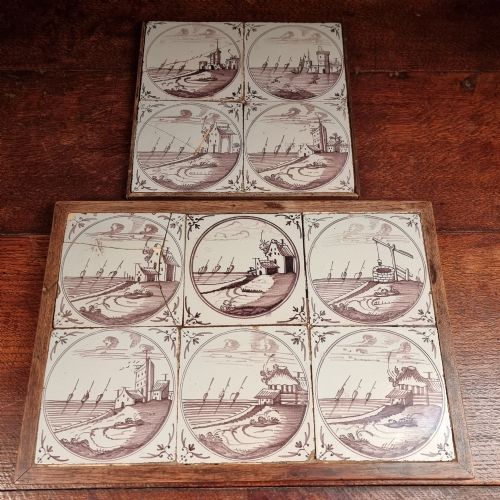
An earthenware wall tile serves as both architectural salvage and miniature canvas, spanning periods from the seventeenth century through to the twentieth. You will frequently encounter Dutch Delft pieces alongside Arts and Crafts plaques and later twentieth-century creations.
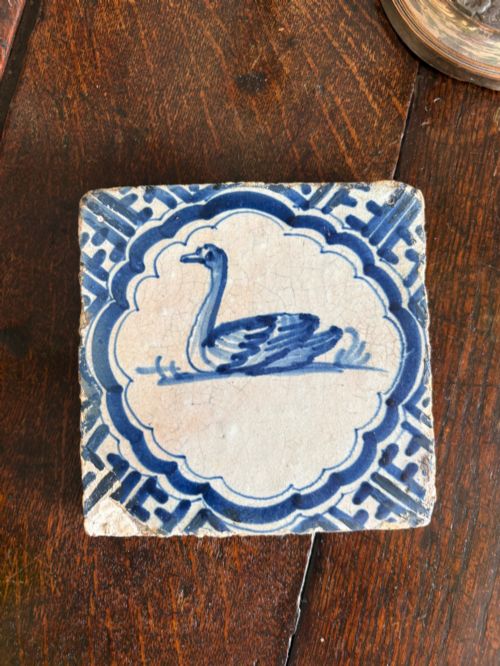
The selection ranges from individual tiles depicting swans and mythological motifs to framed sets and devotional plaques featuring Biblical scenes like the Last Supper. These objects function primarily as wall art and decorative wall plaques rather than floor coverings.
Materials and construction
Potters shaped and fired earthenware bodies before applying tin glaze or opaque white coatings to receive subsequent brushwork. Cobalt pigment and polychrome colours provided the foundational palette for hand-painted details.
Moulded relief techniques created three-dimensional surfaces on later Arts and Crafts and Art Nouveau plaques. Artisans frequently mounted these ceramic panels in wooden frames to secure and display them as standalone works of art.
Assessing quality and execution
The sophistication of the hand-painted brushwork dictates visual success, distinguishing confident pictorial execution from rigid copying. Finer pieces display precise control of cobalt pigment and rich tin glaze surfaces.
Preservation of the original ceramic body and the stability of any accompanying wooden frame influence desirability. Early examples retain historic character through glaze crazing and minor edge losses that reflect genuine age.
Reginald Robert Tomlinson·Gio Ponti·Richard Ginori
The Earthenware Wall Tile Glossary
- Earthenware
- Porous ceramic fired at relatively low temperatures. It requires a glaze to become impermeable to liquids.
- Tin Glaze
- Opaque white glaze containing tin oxide, providing a smooth background for painted decoration. It is characteristic of Delftware and majolica.
- Polychrome
- Decoration employing multiple colours rather than a single pigment like cobalt blue. This style appears frequently in Chinoiserie and floral plaques.
- Faience
- European tin-glazed earthenware, particularly associated with French, Italian and Dutch traditions. The term covers a wide range of decorative wall plaques.
- Chinoiserie
- European artistic interpretation of Chinese and East Asian motifs. It gained popularity on seventeenth and eighteenth-century tiles and ceramics.
Earthenware Wall Tile: Frequently Asked Questions
How do I hang a heavy tile plaque safely?
Most framed tile pictures and wall plaques require picture wire attached securely to a wooden frame or a custom-built wall bracket that supports the base. Ensure your fixings match the weight of the ceramic and backing materials.
Avoid hanging earthenware in damp areas like unventilated bathrooms where moisture can penetrate unglazed portions or affect old wooden mounts.
How can I tell an eighteenth-century tile from a later copy?
Early earthenware tiles often feature irregular hand-cut edges, thin biscuit bodies, and subtle variations in the tin glaze known as crawling or pitting. Pigments like cobalt sank slightly into the glaze during high-temperature firing.
Twentieth-century reproductions usually exhibit uniform dimensions, machine-pressed backs, and modern pigments that sit flatly on top of the glaze.
Were these tiles originally used on walls?
Many seventeenth and eighteenth-century pieces functioned as functional fireplace surrounds or wall linings before being salvaged and framed as art. Later nineteenth and twentieth-century examples were designed specifically as decorative plaques.
Examining the reverse side often reveals mortar remnants or clean surfaces that indicate whether a piece served an architectural purpose.