


Aesthetic Movement Tile
These aesthetic movement tile pieces bring the bold, nature-inspired decorative ambition of the late nineteenth century directly into modern interiors.
Aesthetic Movement Tile
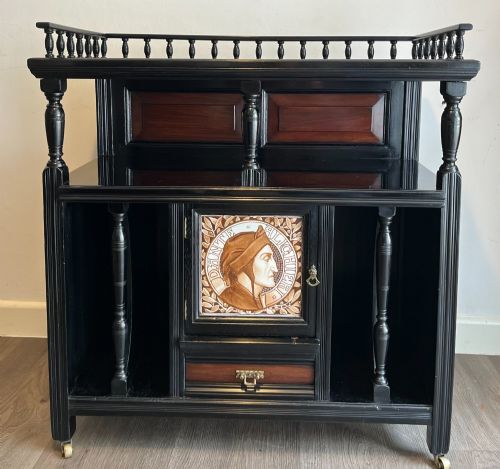
An aesthetic movement tile brings together utilitarian furniture and pictorial ceramic art, appearing embedded within larger pieces like washstands, hall stands, cabinets, and occasional tables. Buyers seeking this phrase encounter both individual pottery tiles and substantial furniture items incorporating glazed ceramic panels as focal decorative elements.
The objects span the Victorian era, specifically clustered around the decades of the 1870s, 1880s, and 1890s, with occasional Edwardian examples continuing the aesthetic tradition. Forms range from washstands and cabinets to planters, jardinieres, and stick stands, each integrating ceramic surfaces into wooden or cast iron frames.
How they were made
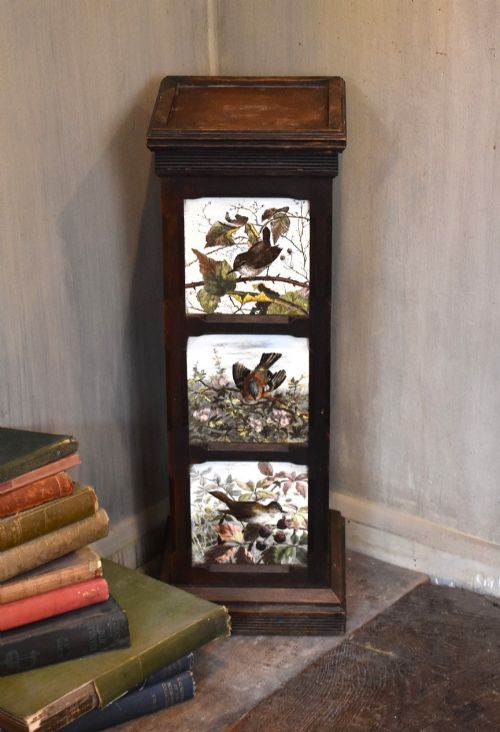
Makers utilised ceramic tiles produced by specialised potteries, setting them into foundational materials such as mahogany, oak, walnut, ebonised wood, and cast iron. These tiles often employed majolica glazing techniques or featured painted pictorial designs depicting subjects like herons and sequential figures.
The structural frames frequently combined hardwoods with metal elements like brass, creating contrast between the dark timber or ebonised surfaces and the vibrant colours of the inset ceramic panels.
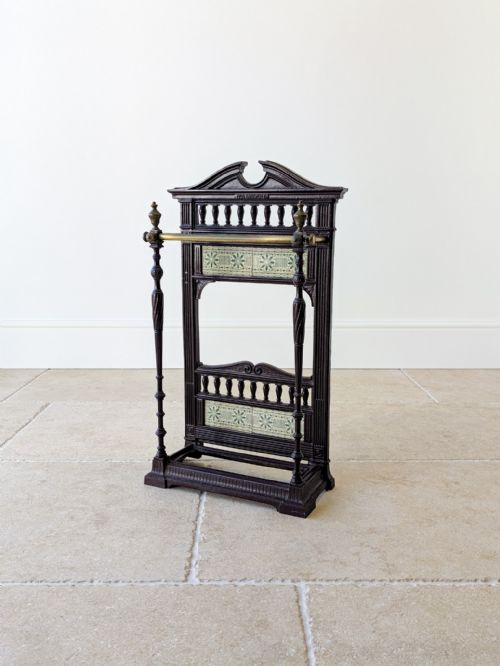
Even walking sticks needed artistic company, as proven by cast iron stands featuring vibrant ceramic squares.
What varies in quality
The distinction between tiers rests upon the execution of the ceramic design and the reputation of the tile producer or designer. Pieces incorporating named factory panels or identifiable artistic hands command attention through superior drawing and glaze depth.
Integration of the tile within the furniture carcass also dictates worth, where flush, secure setting and harmonious framing elevate the object beyond utilitarian construction.
Coalbrookdale·John Moyr Smith·Minton and Hollins·Ellen E Houghton·Minton
The Aesthetic Movement Tile Glossary
- Majolica
- A type of colourful lead-glazed earthenware popular during the nineteenth century. It provides the rich, glossy surface found on many decorative panels.
- Ebonised
- Wood treated to resemble expensive ebony through staining or painting. This dark finish is frequently deployed on furniture frames to make brightly coloured tiles stand out.
- Jardinier
- An ornamental pot or stand for holding plants. These items often incorporate ceramic tiles around their exterior bodies.
- Stick Stand
- A hall item designed for holding umbrellas and walking sticks. Examples in this category occasionally integrate cast iron or tile-backed panels.
Aesthetic Movement Tile: Frequently Asked Questions
Where were these tiles placed on furniture?
Makers typically set ceramic panels into the splashbacks of washstands, the central panels of hall stands, or directly into the tabletops of occasional and chess tables. This placement protected vulnerable wood from water damage while displaying artistic pottery.
In larger pieces like cabinets and bookcases, tiles often appear as frieze elements or decorative accents framing doors and drawers, drawing the eye toward specific pictorial motifs.
How do I identify this specific style?
Look for a distinct shift away from heavy high Victorian ornamentation toward stylized natural forms, asymmetrical arrangements, and Japanese-inspired motifs. The presence of characteristic pottery panels alongside ebonised wood or bamboo-turned supports usually signals the aesthetic approach.
Dates generally cluster in the final decades of the nineteenth century, reflecting the concerted rejection of mass-produced industrial clutter in favour of art-infused furnishings.
Are these pieces suitable for daily use?
Most items function well in contemporary homes provided they receive sensible care appropriate for antique timber and glazed ceramics. Washstands and hall stands continue to serve their original practical purposes in hallways and bedrooms.
Care should be taken to protect glazed surfaces from heavy impact, while wooden frames benefit from standard humidity control and occasional polishing.
Who designed these decorated tiles?
Notable ceramic artists and major manufactories produced the panels found within these furnishings, with firms like Minton supplying specialised artistic output. Individual designers contributed specific illustrative series, such as natural subjects or narrative sequences.
Identifying marks on the reverse of tiles or factory stamps on the woodwork often point directly to the originating pottery workshop.