


Glazed Earthenware Tiles
Glazed earthenware tiles bring centuries of hand-painted narrative, relief modelling and rich pigment directly to interior walls.
Glazed Earthenware Tiles
Glazed earthenware tiles encompass centuries of ceramic wall art, decorative plaques and architectural ornaments spanning the seventeenth to the twentieth centuries. Buyers searching for glazed earthenware tiles encounter diverse historical forms, from Dutch Delft wall plaques and manganese sequences to vibrant Arts and Crafts reliefs and Italian faience. European traditions dominate the selection, alongside Japanese roof ornaments and Persian Kubachi pottery pieces.
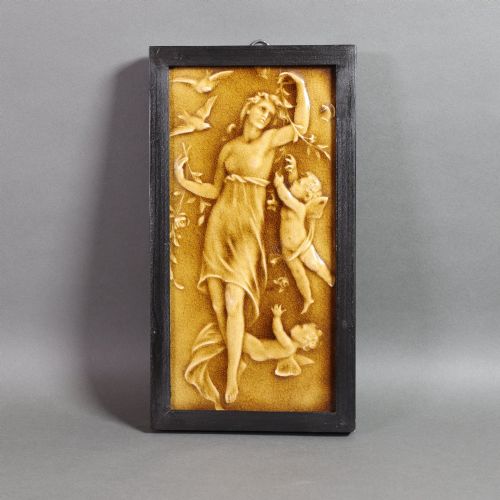
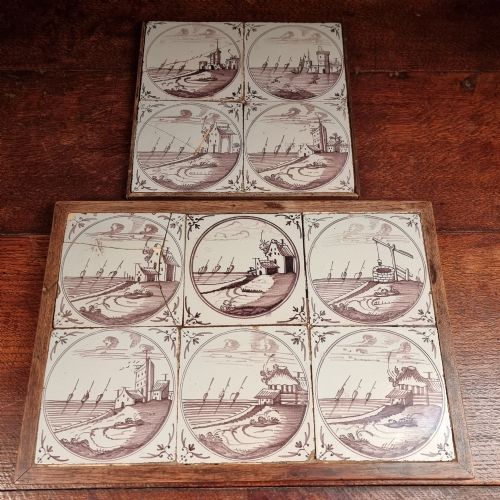
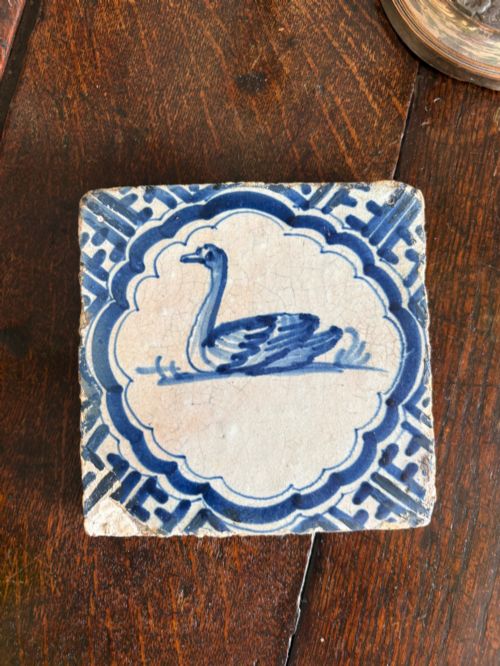
The inventory ranges from single framed decorative pieces to sets and pairs depicting flora, fauna, classical figures and religious scenes. Seventeenth and eighteenth-century pieces often feature tin glaze and cobalt pigment, while later Victorian and Edwardian examples showcase rich turquoise relief and Aesthetic Movement designs. These objects function primarily as wall art or architectural accents rather than utilitarian floor coverings.
What varies in quality
Execution of the painted brushwork dictates the visual success of earlier pieces, where confident, fluid lines separate accomplished workshop production from simpler output. The subtlety of cobalt shading and the registration of polychrome pigments determine the depth of the finished image.
For relief plaques, the crispness of the modelling defines the piece, preserving the fine details of hair, drapery and surrounding ornament. The stability of the glaze and the preservation of the original ceramic body through centuries of display also distinguish finer examples.
Materials recorded across the selection include traditional earthenware, ceramic, tin glaze, wood frames and cobalt pigment.
Minton and Hollins·Richard Ginori·Reginald Robert Tomlinson·Gio Ponti
The Glazed Earthenware Tiles Glossary
- Tin glaze
- An opaque white glaze made by adding tin oxide to a lead glaze, providing a smooth canvas for painted decoration. This technique forms the basis of traditional Delftware.
- Earthenware
- Porous pottery fired at relatively low temperatures, requiring a glaze to become impermeable to liquids. It serves as the primary ceramic body for historical decorative tiles.
- Polychrome
- Decoration utilising multiple distinct colours painted onto the ceramic surface. This approach contrasts with single-colour cobalt schemes.
- Faience
- European tin-glazed earthenware decorated with coloured pigments on a white glaze. The term covers various continental traditions of decorative wall plaques.
- Relief plaque
- A decorative ceramic panel featuring moulded ornament that projects outward from the flat background. These pieces often depict figurative or botanical scenes.
Glazed Earthenware Tiles: Frequently Asked Questions
How do I hang antique tiles?
Many historical tiles and plaques arrive securely mounted within custom wooden frames designed for wall display. Unframed pieces require specialist mounting systems that support the weight without damaging the ceramic body.
Avoid adhesives that apply permanent pressure or chemicals directly to the earthenware. Consult a professional framer to ensure the piece remains stable and easily removable.
Were these tiles used indoors?
Historical glazed tiles served multiple architectural functions, from decorative interior wall panels to exterior roof ornaments. Seventeenth and eighteenth-century Delft examples typically adorned domestic hearths and walls.
Later Victorian and Edwardian pieces were created specifically as framed art or interior wall plaques. Each piece indicates its intended environment through the delicacy of its glaze and framing.
How do I date an antique tile?
Dating relies on stylistic markers, glaze composition, pigment characteristics and the physical properties of the biscuit clay body. Seventeenth and eighteenth-century pieces often display characteristic tin-glaze shrinkage and specific cobalt palettes.
Nineteenth and twentieth-century examples frequently bear maker marks, registration numbers or distinct Arts and Crafts aesthetic traits that narrow the period of production.