


Earthenware Ceramic Tile
These earthenware ceramic tile pieces span centuries of hand-painted wall art, decorative plaques, and architectural ornaments from various European and Asian traditions.
Earthenware Ceramic Tile
An earthenware ceramic tile covers a range of wall art, decorative tiles, plaques, and roof ornaments spanning from the seventeenth century through the Edwardian period. Buyers searching for an earthenware ceramic tile encounter formats varying from single framed pieces to sets of multiple tiles and large ceramic plaques.
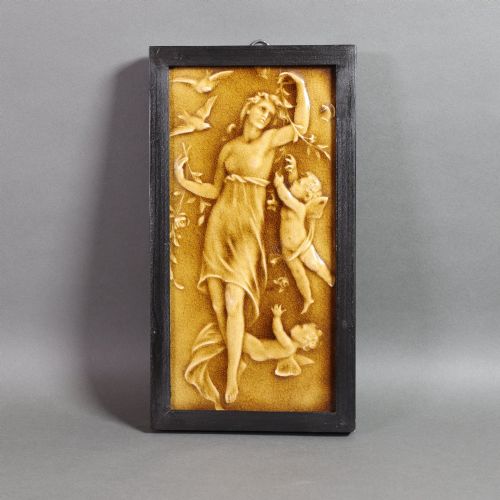
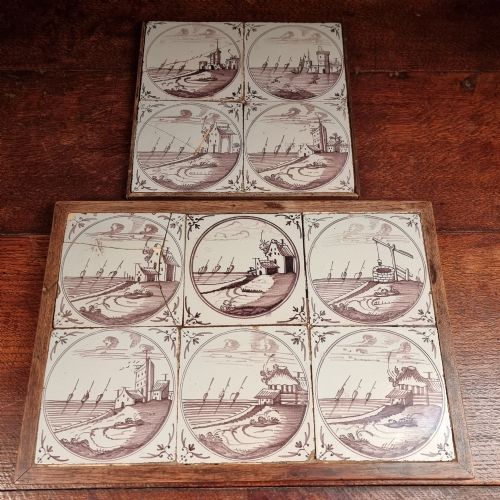
The selections include Dutch Delft designs with hand-painted motifs, Arts and Crafts reliefs, Aesthetic Movement pottery, and Italian faience. Makers from different periods utilise earthenware bodies combined with tin glazes, cobalt pigment, and polychrome finishes.
Early examples comprise seventeenth-century Dutch tiles and eighteenth-century devotional or biblical plaques, alongside nineteenth-century Japanese roof ornaments and twentieth-century designer pieces. Each earthenware ceramic tile reflects the domestic, religious, or architectural tastes of its specific period of origin.
Materials and production methods
Potters shape local clays into earthenware bodies before applying tin glazes or ceramic pigments to create a smooth surface for painting. Artisans frequently employ hand-painted techniques using cobalt pigment and polychrome colours directly onto the unfired or biscuit-fired ceramic base.
Glazed earthenware pieces undergo kiln firing to vitrify the surface coatings, resulting in durable finishes that preserve the painted motifs or relief details. Relief plaques involve moulding the clay to achieve three-dimensional pictorial scenes before glazing and firing.
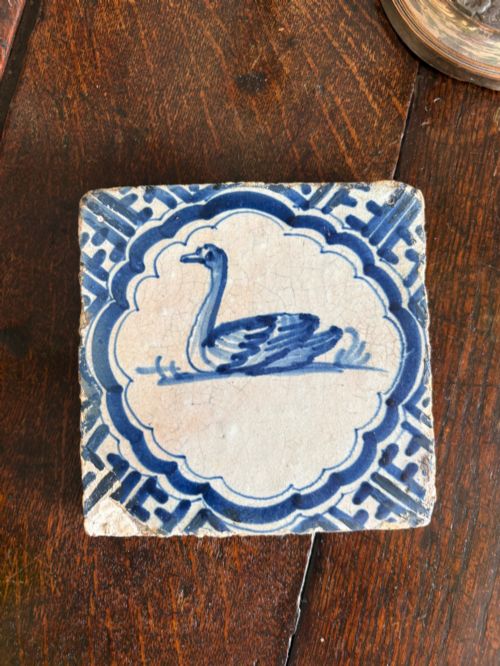
Several pieces depict cheerful children playing with goats and dogs after Clodion alongside swimming swans and cheetahs.
Understanding quality differences
The standard of painting and the crispness of moulded relief work distinguish finer pieces from simpler production items. Artisans executing detailed brushwork or complex figurative scenes achieve greater visual depth in the finished ceramic surface.
Condition of the glaze, integrity of the original earthenware body, and the presence of artist signatures or recognised factory attributions elevate individual items. Complete sets and well-preserved framed wall art retain stronger historical integrity.
Reginald Robert Tomlinson·Minton and Hollins·Richard Ginori
The Earthenware Ceramic Tile Glossary
- Earthenware
- Porous pottery fired at lower temperatures than stoneware or porcelain, requiring a glaze to achieve impermeability to liquids. It serves as the primary ceramic body for historical tiles and plaques.
- Tin Glaze
- An opaque white glaze containing tin oxide applied to earthenware, providing a smooth background for hand-painted pigments. This technique defines traditional Delftware production.
- Cobalt Pigment
- A metallic colourant producing deep blue hues under high kiln temperatures, widely utilised in traditional tile painting. It remains stable during firing and yields sharp decorative lines.
- Polychrome
- Decoration utilising multiple colours rather than a single pigment like blue or manganese. This approach appears on Dutch plaques and decorative earthenware items.
- Faience
- European tin-glazed earthenware decorated with coloured pigments, encompassing various regional styles from Italy and beyond. The technique supports intricate pictorial wall art.
Earthenware Ceramic Tile: Frequently Asked Questions
How do I hang a heavy ceramic tile?
Many historical tiles and plaques arrive within custom frames fitted with secure hanging hardware designed to distribute the weight evenly across the wall structure.
For unmounted tiles or large architectural plaques, consult a professional framer or conservator to install appropriate support brackets that protect the earthenware edges from pressure damage.
Can these tiles be cleaned safely?
Dust surfaces gently with a soft, dry cloth to remove everyday accumulation without introducing moisture to potentially porous earthenware bodies or aged glazes.
Avoid chemical cleaners, abrasive pads, or soaking, as historical tin glazes and hand-painted pigments can be sensitive to harsh cleaning agents.
How do I identify seventeenth-century Dutch tiles?
Seventeenth-century Dutch pieces often feature characteristic corner motifs such as spider heads or ox-heads surrounding hand-painted central subjects like animals or biblical scenes.
Examining the tile edges and the composition of the earthenware body helps determine the period alongside stylistic conventions of Dutch Delft production.
What is the difference between a tile and a plaque?
Tiles generally conform to standardised architectural dimensions intended for placement in walls or fireplaces, whereas plaques function primarily as standalone framed or unframed pieces of wall art.
Plaques frequently feature deeper relief modelling, devotional subjects, or signature marks intended for display as independent decorative objects.