
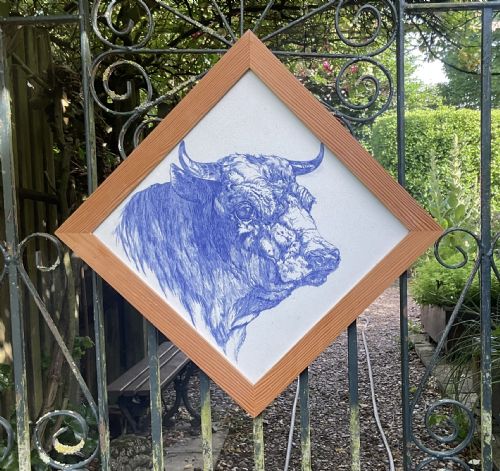


Antique Wall Tile
These antique wall tile examples bring centuries of hand-painted glaze and relief moulding straight into modern rooms as striking decorative panels.
Antique Wall Tile
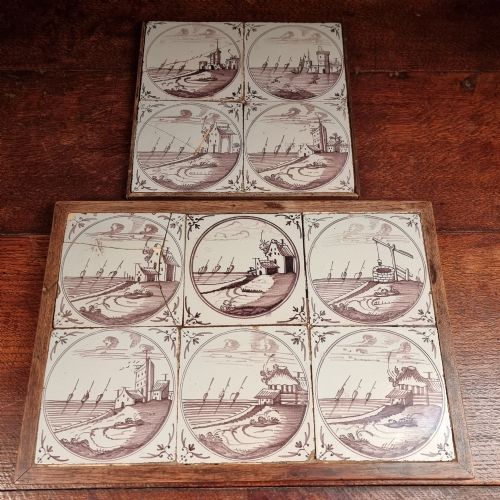
When you search for an antique wall tile, you encounter everything from individual tin-glazed earthenware panels to framed Victorian pictorial works and larger architectural ceramics. The pieces appearing here span centuries of domestic and monumental production, reaching back to seventeenth-century Delftware and seventeenth-century Kubachi pottery.
You are most likely to meet tin-glazed earthenware and glazed ceramic formats decorated with cobalt pigment or polychrome pigments. Many examples arrive framed as wall art or wall plaques, while others present themselves as architectural tiles or display cabinet elements.
How they were made
Potters shaped these objects from earthenware, terracotta, and ceramic bodies before applying tin glaze or transparent glazes to the surface. Artisans then painted motifs using cobalt pigment and polychrome colours, often firing the pieces multiple times to fix the pigments.
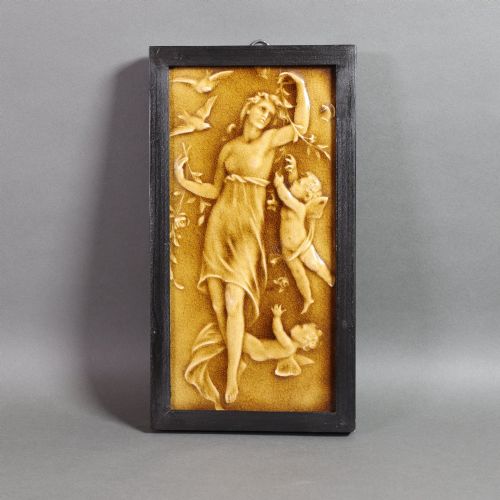
Relief work involved pressing clay into moulds to create raised designs, as seen in Arts and Crafts and Edwardian plaques. Wooden frames were frequently added later to protect the edges of fragile ceramic panels intended for hanging.
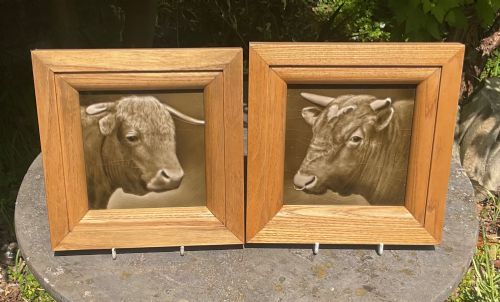
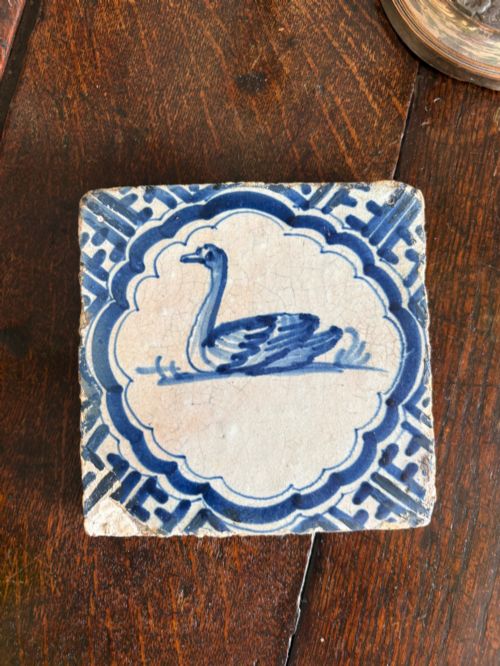
Cows, swans, cheetahs, and dancing maidens all find themselves permanently immortalised in fired clay across these historic walls.
What varies in quality
The sophistication of the hand-painted brushwork sets exceptional pictorial panels apart from standard utilitarian production. Artisans executing detailed subjects like Dutch Baroque swan motifs or complex figurative scenes demonstrate a superior command of line and pigment.
The depth of the glaze and the crispness of the moulded relief define the tactile appeal of the piece. Well-preserved surfaces retain their original gloss and colour intensity without excessive loss or dulling of the fired pigments.
Sherwin & Cotton·Mintons·Longwy·Architectural Pottery Co·William de Morgan
The Antique Wall Tile Glossary
- Tin Glaze
- An opaque white glaze containing tin oxide that provides a smooth surface for painting. It forms the characteristic ground of traditional Delftware.
- Cobalt Pigment
- A blue mineral colourant used extensively under the glaze to create deep blue designs. It withstands high firing temperatures without losing intensity.
- Polychrome
- The use of multiple colours in the decoration of a ceramic surface. Artisans apply various metal oxides to achieve different hues.
- Faience
- Tin-glazed earthenware produced in Europe, particularly associated with French and Italian traditions. The term describes ceramics covered in an opaque white glaze.
- Relief Plaque
- A decorative wall panel featuring moulded designs that project outward from the flat background. These pieces are often framed for display as independent art.
Antique Wall Tile: Frequently Asked Questions
How were antique tiles hung?
Many decorative pieces were originally set directly into walls, fireplaces, or furniture as part of an architectural scheme.
Over time, owners have added wooden frames to many examples so they can hang securely on walls as independent art.
What is Delftware?
Delftware refers to tin-glazed earthenware originating from the Netherlands, famously decorated in blue cobalt pigment.
These pieces often depict biblical scenes, flora, or fauna within distinct geometric borders.
Are these pieces waterproof?
While the fired ceramic and glaze layers are impervious to moisture, antique wall tiles are primarily decorative objects.
Exposing old mortar or unglazed edges to damp environments can damage the historic ceramic body.
How do I identify periods?
Stylistic clues such as Dutch Baroque painting conventions or Arts and Crafts motifs help narrow down the date of manufacture.
Glaze thickness, ceramic body composition, and occasional maker signatures or dates on the reverse provide further evidence.