



Arts and Crafts Tile
An arts and crafts tile brings hand-glazed colour and tactile relief into domestic furniture and wall displays.
Arts and Crafts Tile
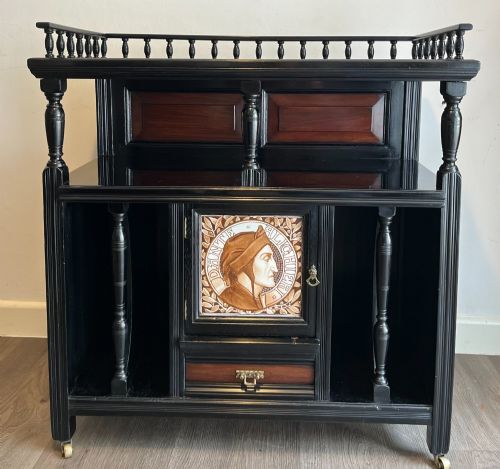
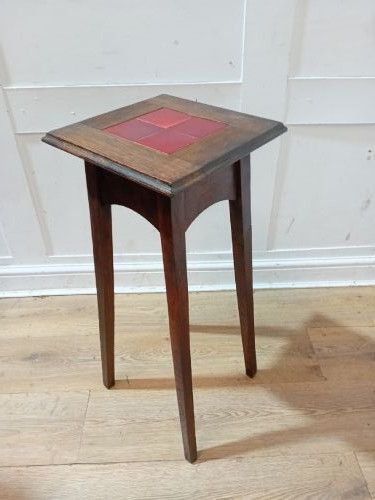
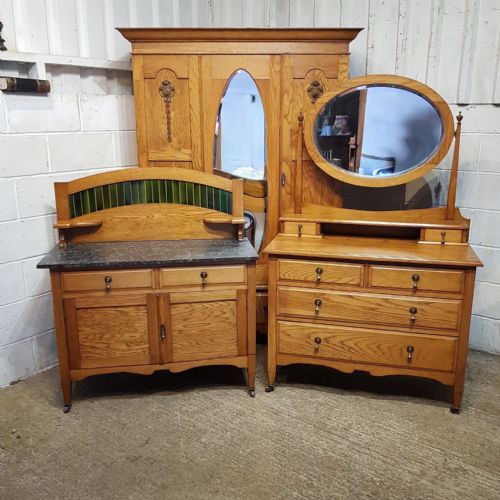
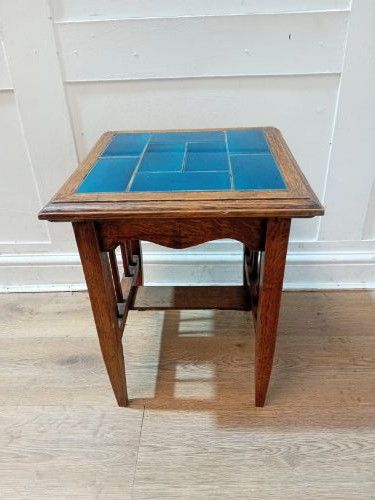
When you search for an arts and crafts tile, you find ceramic pieces integrated into occasional furniture, washstands, hall stands, and wall plaques. These items span the late Victorian period through the Edwardian era, showing both abstract motifs and figurative designs.
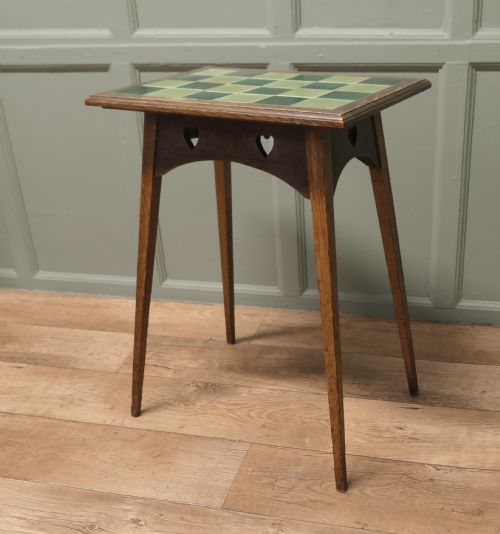
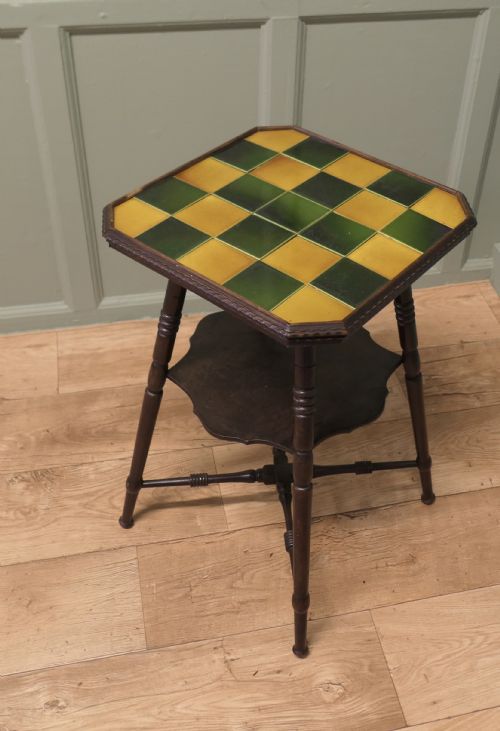
The most common formats on this page are inset tiles decorating the tops of oak side tables or forming the splashbacks of washstands and dressing chests. Makers mounted these durable ceramics into wooden frames to combine utility with decorative surface work.
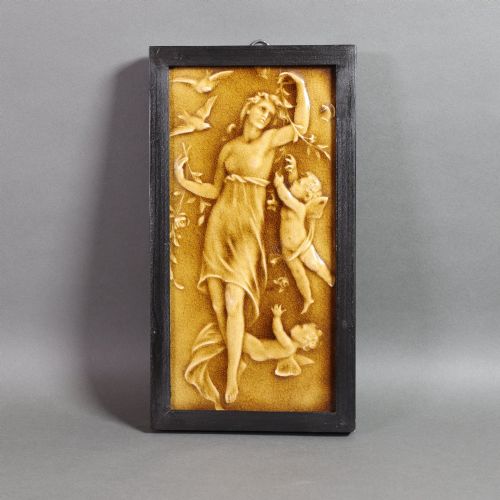
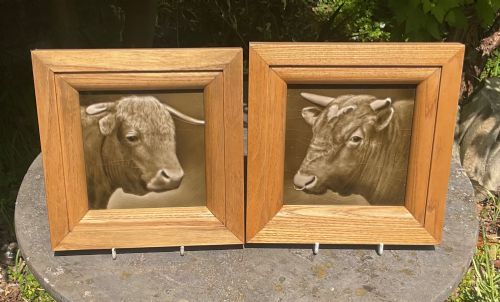
Beyond furniture insets, you will encounter framed wall plaques and architectural pottery pieces designed solely for display. These standalone ceramics showcase painterly glazes and relief modelling typical of the movement.
What varies in quality
Quality rests in the artistic ambition of the ceramic design and the crispness of the relief moulding. Standard commercial production yielded repetitive floral patterns, whereas pieces associated with prominent designers display nuanced brushwork and distinct aesthetic character.
The supporting woodwork dictates the overall standard of the piece. Superior examples utilise solid oak with careful jointing and thoughtful integration of the tile, avoiding clumsy framing or mismatched timber.
Even cows and bulls made the cut, immortalised in glazed ceramic relief by Victorian tile works.
Sherwin and Cotton·John Moyr Smith·Reginald Robert Tomlinson·Ellen E Houghton·William de Morgan·Shapland and Petter·Baillie Scott·Goodall and Co·Morris and Co
The Arts and Crafts Tile Glossary
- Relief tile
- A ceramic tile where the design is raised above the background surface rather than painted flat. This technique creates shadows and depth under room lighting.
- Architectural pottery
- Fired clay elements produced for structural or decorative wall integration. These items include fireplace surrounds and large framed pictorial plaques.
- Splashback
- The vertical panel rising behind a washstand or dresser top. Potters and cabinetmakers fitted these areas with ceramic tiles to protect wooden surfaces from water splashes.
- Occasional table
- A small, movable table used for specific tasks such as holding books or tea. Many examples in this category incorporate tiled surfaces to resist heat and moisture.
Arts and Crafts Tile: Frequently Asked Questions
How do I clean a tiled top table?
Wipe the ceramic surface gently with a damp cloth and mild soap, avoiding harsh chemical cleaners that might dull the glaze. Take care to keep excess water away from the surrounding wood frame.
Dry the piece thoroughly immediately after cleaning. Feed the wooden structure periodically with appropriate wax or polish to maintain the finish.
Were these tiles made for furniture?
Many tiles were manufactured specifically to be inset into tables, washstands, and cabinet splashbacks by furniture makers. These pieces were rebated into timber frames to create durable, heat-resistant surfaces.
Other examples began life as standalone wall plaques or architectural panels. These were often framed later or mounted directly into interiors for display.
How do I date an arts and crafts piece?
Examine the construction methods of the wooden frame alongside the style of the ceramic design. Pieces from the late nineteenth century often reflect Aesthetic Movement influences, while items from nineteen ten tend towards simpler forms.
Maker marks stamped on the reverse of unmounted tiles or stamps on the timber can confirm specific workshop origins. Stylistic clues such as relief depth and glaze characteristics also help narrow the timeline.
Can I use a washstand as a vanity?
These furniture items adapt well to modern bathrooms or bedrooms as washbasins or display surfaces. The original marble or tiled tops provide a practical, water-resistant area for daily use.
Ensure that any antique timber is protected from standing water or excessive humidity. Regular waxing helps preserve the wood against modern bathroom environments.