


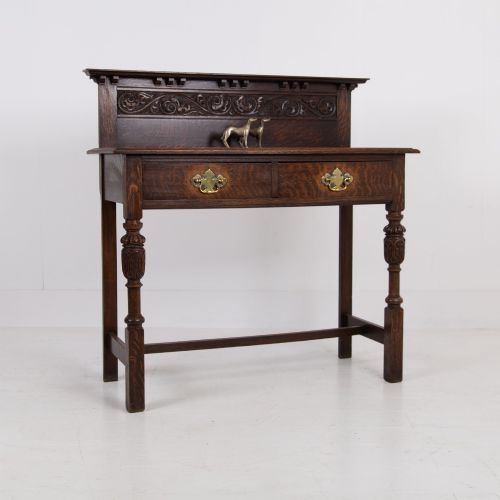
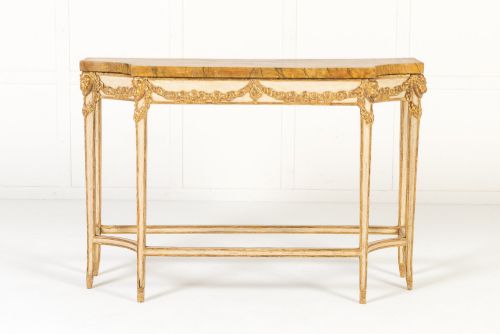
Antique Entryway Console Table
An antique entryway console table brings architectural presence and surface utility to a hallway, offering everything from restrained Georgian mahogany to ornate Victorian giltwood.
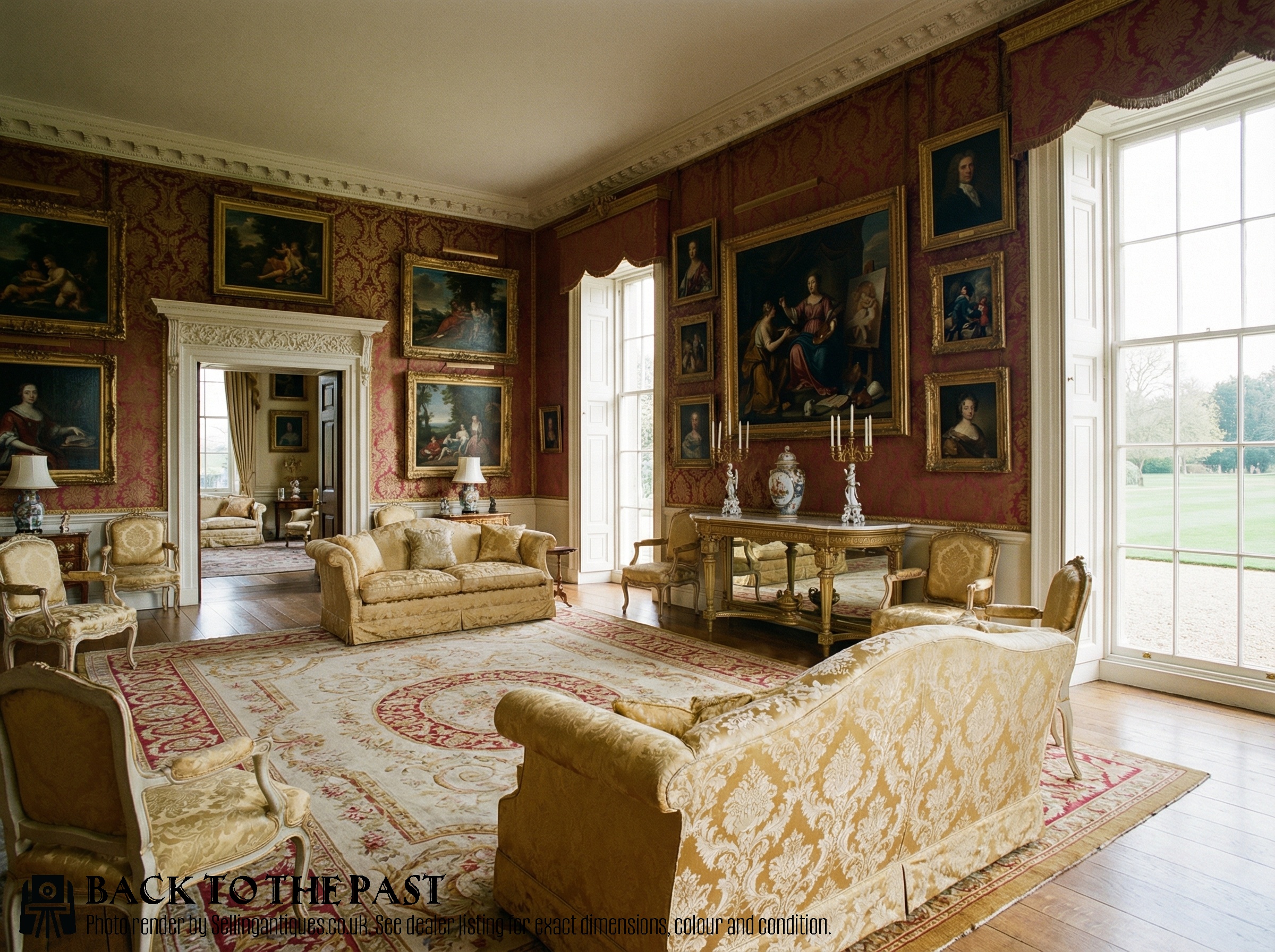
Identifying these console tables
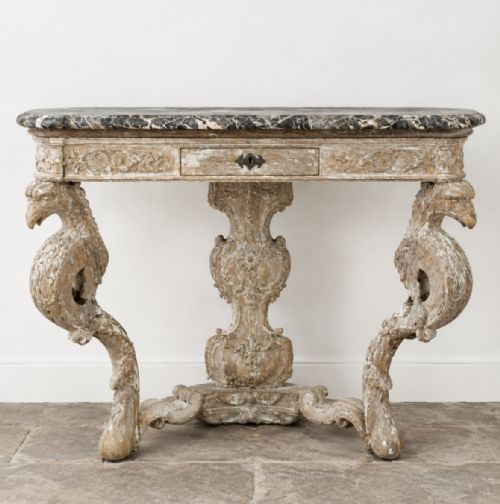
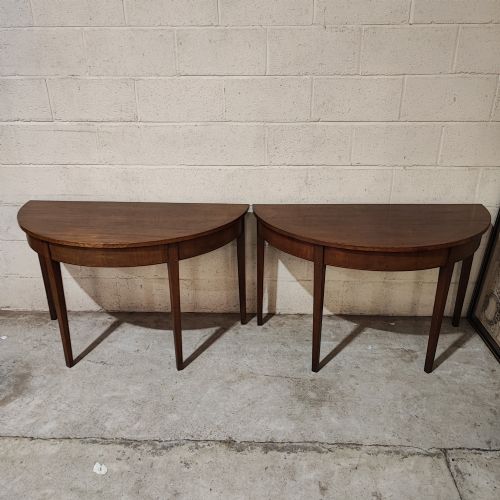
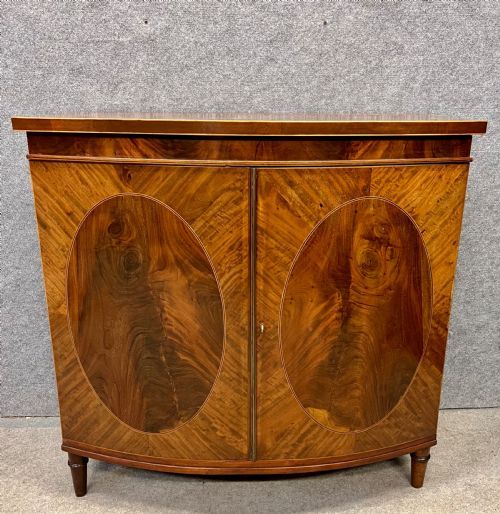
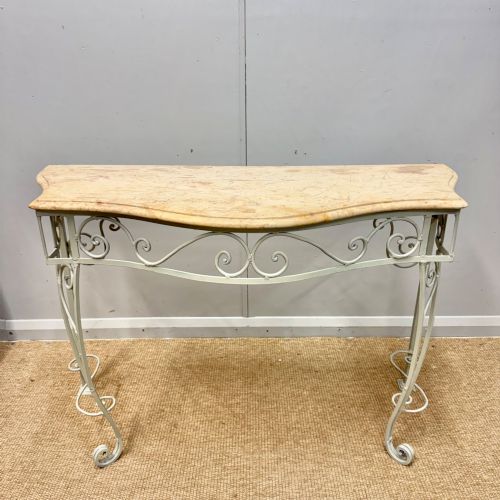
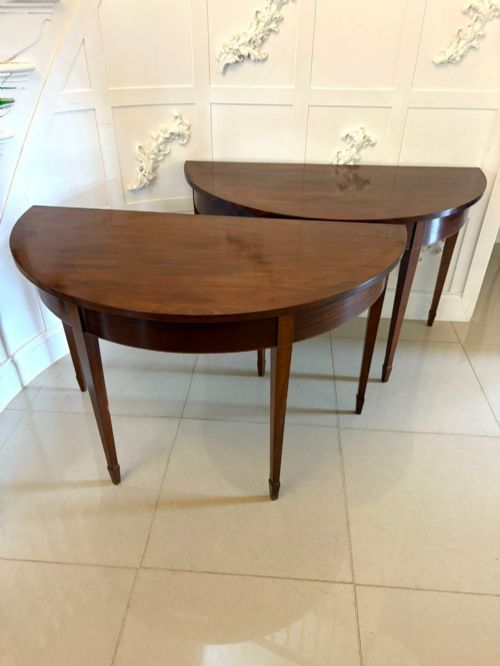
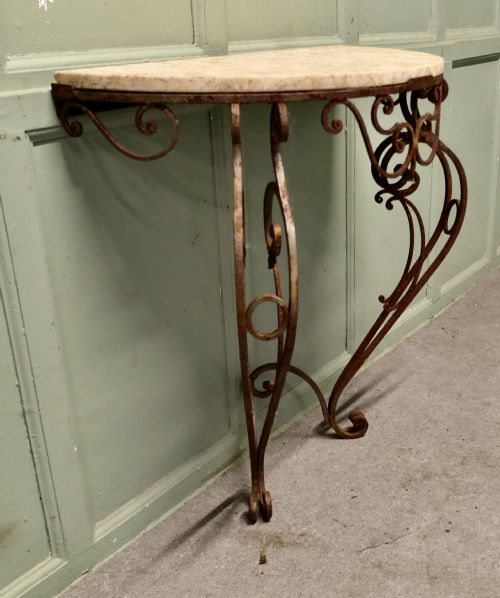
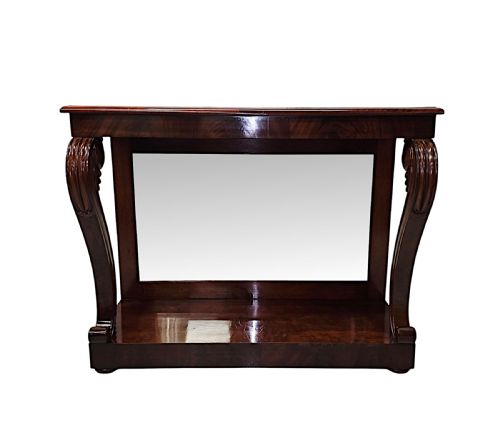
When searching for an antique entryway console table, you are examining a diverse collection of side tables, serving tables, and console tables designed to stand against a wall. The pieces available span the Georgian, Regency, and Victorian eras, alongside specific mid-nineteenth-century dates such as 1850 and 1860. You will frequently encounter forms described as demi-lune, bow front, or tall country house designs.
Origins and regional styles vary considerably across the selection, ranging from British mahogany examples to Italian Neoclassical and Genoese cream-painted pieces. Some items appear as matched pairs, particularly within Georgian mahogany and nineteenth-century country house groups, while others stand alone as singular serving tables. Forms extend from practical side tables to highly decorative gilded pieces intended to make an immediate visual impact upon entering a room.
Materials and construction
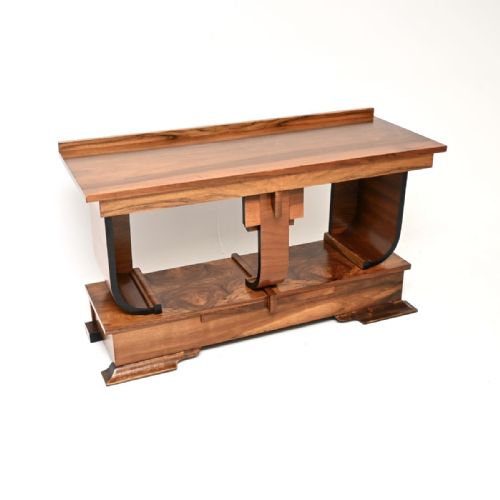
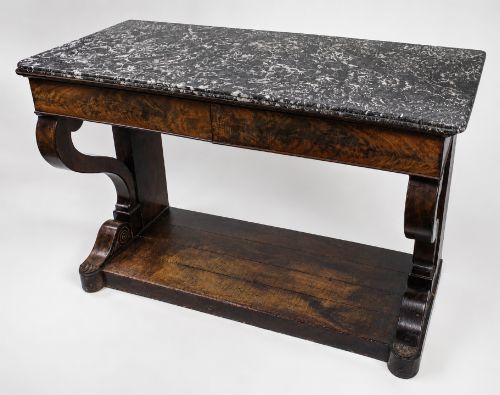
Makers utilised a rich palette of primary timbers, predominantly selecting dense mahogany and warm walnut for structural frames and tabletops. Decorative surfaces incorporated contrasting elements such as parcel gilding on cream-painted wood and elaborate giltwood carvings. Heavier configurations frequently employed marble tops, while glass, brass, and painted finishes added further textural contrast.
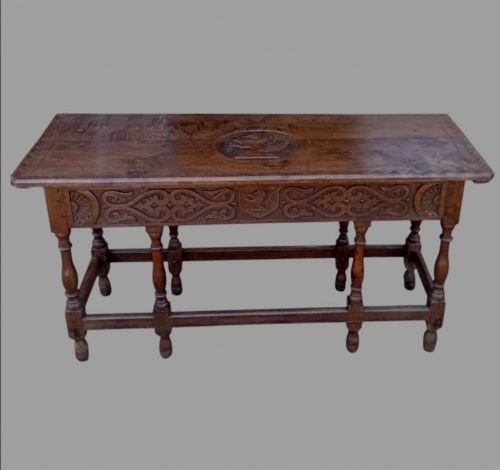
Joinery and surface detailing reflect the specific period of manufacture, from the clean architectural lines of Georgian cabinetmaking to the expressive carving of mid-nineteenth-century pieces. Italian Neoclassical and Genoese influences are visible in specialist paintwork and gilded accents applied over carved wooden structures. Each piece relies on traditional timber preparation and hand-finishing techniques appropriate to its stylistic origin.
Retail Price Guide 2026
Typical UK retail prices for entryway console table, calculated from the Sellingantiques database of over a million retail prices indexed since 2003. This retail price guide relies exclusively on Sellingantiques data; no external sources or auction records are used, so the figures do not describe the wider market.
Materials documented across the current inventory include mahogany, walnut, marble, giltwood, brass, glass, and painted wood.
Distinctions in quality
The upper tier of these tables is defined by the ambition of its design and the sophistication of its surface treatment, such as the intricate carving found on Victorian giltwood or the refined proportions of a Georgian demi-lune pair. Materials dictate much of this hierarchy, where heavy, well-figured marble slabs and high-grade mahogany distinguish more substantial commissions from standard side tables. The integration of regional decorative arts, including Genoese cream paint and parcel gilt details, separates standard utilitarian furniture from high-status interior furnishings.
Proportion and scale also govern the hierarchy, evident in tall country house dimensions and deliberate bow-front configurations that require specialist woodworking skill. Consistency between the primary timber frame and secondary decorative elements ensures a cohesive visual weight. Tables that retain their original physical relationship between base and tabletop, particularly heavy marble inserts, represent the more accomplished end of the manufacturing spectrum.
The Antique Entryway Console Table Glossary
- Demi-lune
- Having a half-moon shape, this term describes tables with a curved front and a flat back designed to sit flush against a wall. Such silhouettes were particularly popular during the Georgian period for smaller console designs.
- Parcel gilt
- A decorative technique where specific carved details or mouldings are highlighted with gold leaf over a painted or natural wood ground. It creates a subtle interplay between the base colour and the metallic highlights.
- Bow front
- A convex, outward-curving front section on a piece of case furniture or a side table. This shaping softens the rectangular geometry of an entryway and requires advanced woodworking competence.
- Giltwood
- Timber that has been coated with a thin layer of gold leaf or gold paint over a prepared gesso surface. This material is characteristic of decorative nineteenth-century console tables.
- Serving table
- A large side table traditionally used in dining rooms or grand halls for holding food and silver. Their robust construction and generous proportions make them suitable for substantial entryway placements.
Frequently Asked Questions
Where should an entryway console table go?
These tables are designed to sit flat against a hallway wall where floor space is measured and passage must remain clear. Their shallow depth allows them to anchor an entrance space without obstructing movement.
Parks, corridors, and primary reception foyers benefit most from these forms, providing a convenient surface for everyday items upon arrival.
Can these tables support heavy objects?
Many examples featuring heavy marble tops possess robust structural frames built to bear substantial weight without flexing. Timber-topped variations offer reliable everyday utility suited to lamps and decorative objects.
Assessing the thickness of the stone and the rigidity of the leg joints helps determine the appropriate daily load for each specific table.
How do I distinguish Georgian from Victorian tables?
Georgian pieces generally rely on restrained mahogany veneers, clean geometric lines, and understated classical proportions. Victorian examples often introduce heavier ornamentation, such as elaborate giltwood carving and more pronounced structural forms.
Examining the underlying timber preparation and the style of decorative carving reveals the prevailing aesthetic of the manufacturing era.
Are these tables usually found as pairs?
While many console tables exist as singular items, certain formal Georgian and nineteenth-century country house commissions were produced as matched pairs. Pairs are frequently symmetrical demi-lune or tall architectural designs intended to balance a grand interior.
Finding matching examples provides symmetrical options for flanking a large doorway or architectural feature in a spacious hall.