




Antique Enamel Spoons
These antique enamel spoons bring vibrant colour and intricate metalwork to the table, combining utility with miniature artistry.
Antique Enamel Spoons
Antique enamel spoons encompass a variety of small eating and serving implements, most frequently found as teaspoons, coffee spoons, and caddy spoons. Collectors encounter these pieces in single examples, pairs, or complete cased sets intended for display or formal service.
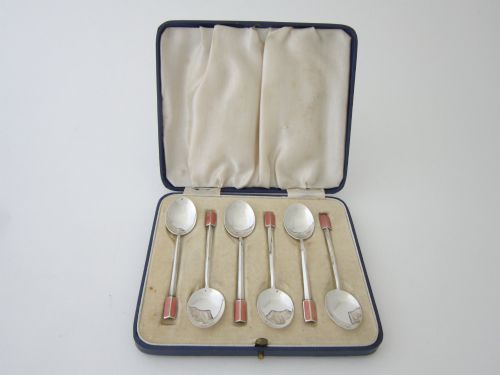
The selection ranges from British Art Deco designs to elaborate Imperial Russian cloisonné work, reflecting the diverse tastes of the late nineteenth and early twentieth centuries. Pieces often incorporate sterling silver, silver gilt, or base metals alongside coloured vitreous coatings.
Makers from Norway, Denmark, and England feature prominently alongside Russian workshops, demonstrating regional preferences for geometric patterns, floral motifs, and rich colour palettes.
How they were made
Silversmiths formed the base of each spoon from sterling silver or silver gilt, shaping the bowls and handles by hand or utilising early machine presses. Handles frequently incorporate cast or wire-applied decorative elements that frame the recessed areas destined to receive the colouring agent.
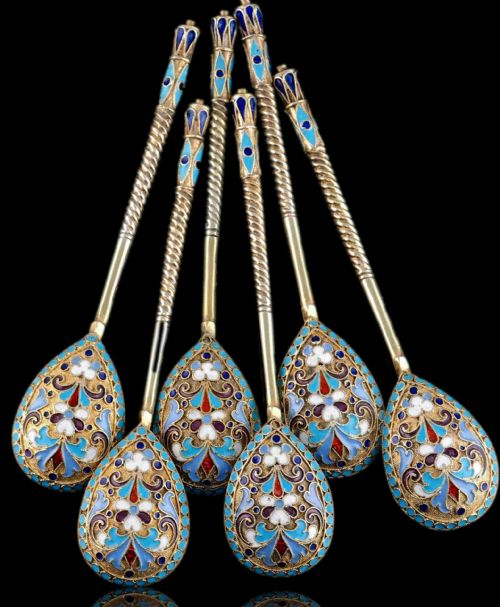
Craftsmen applied powdered glass to the metal surfaces, firing the pieces in kilns to fuse the vitreous enamel into a smooth, permanent coating. Techniques such as cloisonné required delicate metal wires soldered to the base to separate different hues of enamel before firing.
Design styles span Art Nouveau, Art Deco, Arts and Crafts, and Russian Revival periods across Scandinavian and British workshops.
What varies in quality
The distinction between ordinary and exceptional spoons often lies in the precision of the enamel work and the weight of the silver foundation. Fine examples display uniform colour distribution, smooth surfaces without pitting, and securely anchored wire partitions in cloisonné pieces.
Design complexity and maker attribution also elevate certain items above standard production wares. Pieces bearing hallmarks from recognised Scandinavian designers, Russian master silversmiths, or prominent English retailers command greater interest for their artistic execution.
David Andersen·Dmitrii Nikolaevich Nikolaev·Vasily Agafonov·Liberty & Co·Simon Groth
The Antique Enamel Spoons Glossary
- Cloisonne Enamel
- A technique where thin metal wires are soldered to a metal base to create compartments filled with coloured glass paste before firing. This method produces intricate, stained-glass-like patterns across the spoon bowl or handle.
- Vitreous Enamel
- A material made by fusing powdered glass to a metallic substrate through high-temperature firing. It provides a durable, glossy coloured surface that resists tarnishing.
- Silver Gilt
- Silver that has been coated with a thin layer of gold on its exterior surface. This treatment offers a rich golden appearance while retaining the underlying structure of solid silver.
- Caddy Spoon
- A short-handled spoon specifically designed for measuring loose tea leaves from a storage caddy. These often feature wide, shallow bowls and decorative handles well suited to enamel decoration.
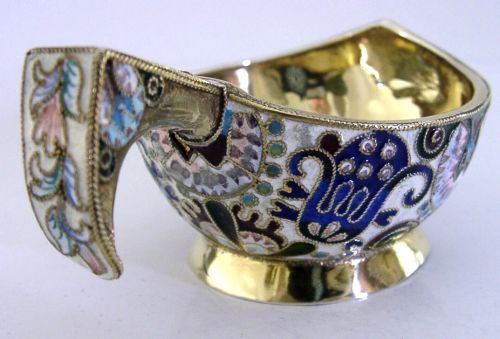
- Kovsh
- A traditional Russian boat-shaped drinking vessel or ladle form occasionally associated with spoon sets. These display similar cloisonné enamel motifs and precious metal construction.
Antique Enamel Spoons: Frequently Asked Questions
How were antique enamel spoons used?
These implements served specific domestic purposes, from stirring coffee and tea to measuring loose leaves from caddies. Many sets were reserved for formal entertaining and kept protected within fitted presentation cases.
Over time, smaller spoons transitioned from functional tableware into decorative cabinet pieces. Their delicate glass surfaces meant owners handled them with care during social gatherings.
How do I care for antique enamel spoons?
Gentle handling and careful storage prevent accidental chipping of the vitreous glass coatings. Cleaning requires warm water and mild soap, avoiding harsh silver dips that can seep beneath the enamel.
Displaying pieces away from direct sunlight preserves the vibrant pigments of the glass. Storing them in lined boxes or dedicated cabinets keeps the delicate silver and gilt finishes safe from friction.
How can I tell Russian pieces apart?
Russian spoons from the late nineteenth and early twentieth centuries typically feature distinct 84 zolotnik silver purity marks alongside Cyrillic maker stamps. They frequently employ elaborate cloisonné floral motifs in rich colour combinations.
In contrast, British and Scandinavian examples tend to display cleaner geometric lines associated with Art Deco or Arts and Crafts movements. Examining the weight and hallmark stamps helps clarify the origin of each set.
What periods do these spoons span?
The pieces available range from the late nineteenth century through the mid-twentieth century, capturing several distinct design movements. Victorian and Art Nouveau items sit alongside bolder geometric Art Deco and Mid-Century Modern creations.
Earlier examples often showcase traditional Russian and Danish craftsmanship, while later pieces reflect streamlined interwar aesthetics. Each era brought specific colour choices and manufacturing methods to the craft.