



Enamel Teaspoon Set
An enamel teaspoon set brings vibrant colour and fine metalwork to the table, making these boxed collections a bright find for collectors.
Enamel Teaspoon Set
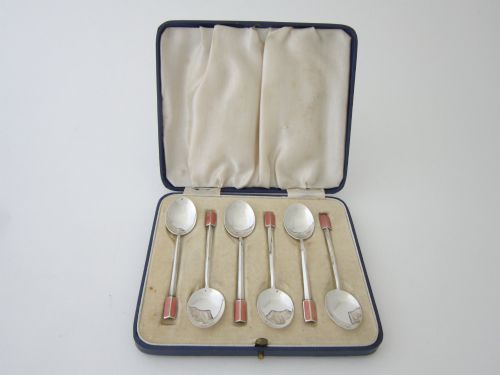
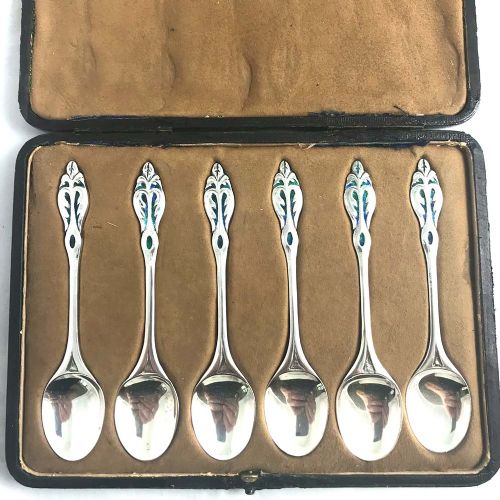
An enamel teaspoon set typically comprises matching spoons housed in fitted boxes lined with satin or velvet, often complete with leatherette outer cases. You will frequently encounter Art Deco designs alongside earlier pieces from the late nineteenth and early twentieth centuries.
The selections span British, Russian, Scandinavian and other European origins, often taking the form of teaspoons or smaller coffee spoons. Many sets include six pieces, though four-spoon configurations also appear in the record.
How they were made
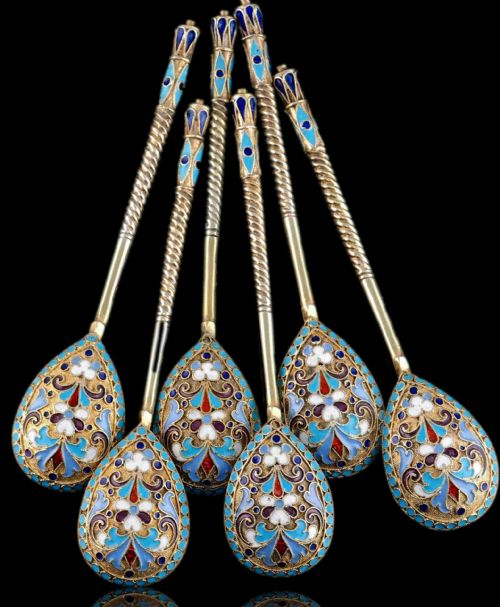
Silversmiths formed the spoons from sterling silver or silver gilt, employing techniques such as guilloche and basse taille enamel work to create patterned metallic surfaces beneath translucent glass. Cloisonne methods involved soldering thin wire to the metal base to outline cells filled with vitreous enamel before firing.
Presentation cases utilised wood or card covered in leatherette, fitted internally with plush velvet or satin to cradle each spoon securely in individual slots.
Materials across these listings include vitreous enamel, sterling silver, silver gilt, satin, velvet, and leatherette.
What varies in quality
The distinction between standard output and finer work lies in the execution of the enamel and the weight of the silver. Complex techniques like guilloche patterns under clear coloured glass demand precise craftsmanship that elevates certain pieces above plain enamelling.
The condition and completeness of the original fitted presentation box also influence the standing of a set, as original satin or velvet linings and intact leatherette exteriors preserve the context of the maker's output.
Dmitrii Nikolaevich Nikolaev·David Andersen·Liberty and Co·Simon Groth·Georg Jensen
The Enamel Teaspoon Set Glossary
- Guilloche
- An engraving technique that etches a precise, intricate geometric pattern into a metal surface before translucent enamel is applied over the top. This allows light to reflect through the coloured glass.
- Basse taille
- A method where the metal ground is decorated with low relief carving, visible beneath translucent or transparent enamel. The varying depths create rich shifts in colour and tone across the design.
- Cloisonne
- Enamelling work created by soldering thin metal wires onto a metal backing to form small compartments, which are then filled with vitreous paste and fired. Each cell contains its own distinct colour area.
- Vitreous enamel
- A material produced by fusing powdered glass to a metallic substrate at high temperatures, resulting in a durable and glossy coloured surface. It resists fading and maintains its hue over generations.
- Silver gilt
- Silver that has been coated with a thin layer of gold, often applied to the interior bowls or entire surfaces of spoons for a rich two-tone finish. This treatment protects the silver from tarnishing.
Enamel Teaspoon Set: Frequently Asked Questions
How were enamel teaspoon sets originally used?
These sets served formal afternoon tea rituals and after-dinner coffee service in middle and upper-class households. They were frequently reserved for special occasions and presented as wedding or anniversary gifts.
Because they were kept in fitted cases, many retained their original condition and presentation boxes over the decades.
How do I care for antique silver and enamel spoons?
Wash the spoons gently in warm soapy water using a soft cloth, avoiding abrasive dips or harsh silver polishes that can scratch the glass surface. Dry them thoroughly before returning them to their fitted velvet or satin slots.
Keep them away from direct sunlight and extreme temperature changes to protect the integrity of the vitreous enamel.
Are these spoons suitable for daily use?
While sturdy enough for occasional stirring, vintage and antique enamel pieces benefit from careful handling rather than heavy everyday service. The delicate glasswork and silver gilt can wear down with frequent washing in modern dishwashers.
Hand washing preserves both the metal finishes and the coloured enamel details for the future.
How can I tell Art Deco sets from older pieces?
Art Deco sets from the 1920s and 1930s often feature geometric motifs, clean lines, and bright rainbow colourways like guilloche enamel. Earlier nineteenth-century examples tend to display traditional florals, ornate handles, or detailed cloisonne work.
Maker marks and hallmarks on the reverse of the stems also help pinpoint the exact period of production.