

Antique Edwardian Brooch
An antique edwardian brooch brings delicate craftsmanship and soft stones from the early twentieth century directly to your lapel.
Antique Edwardian Brooch
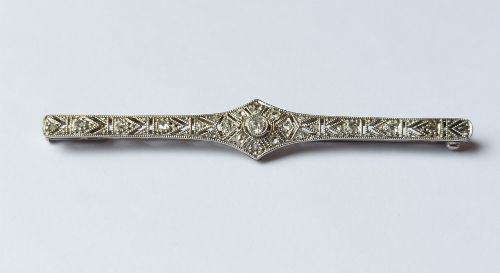
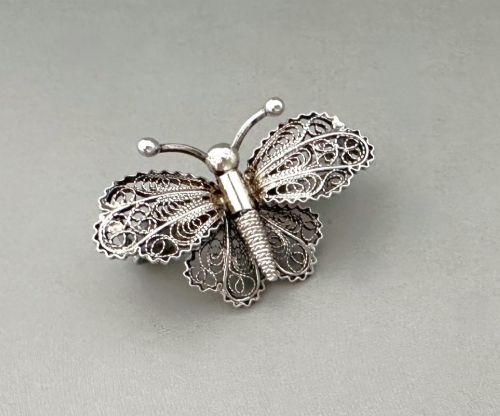
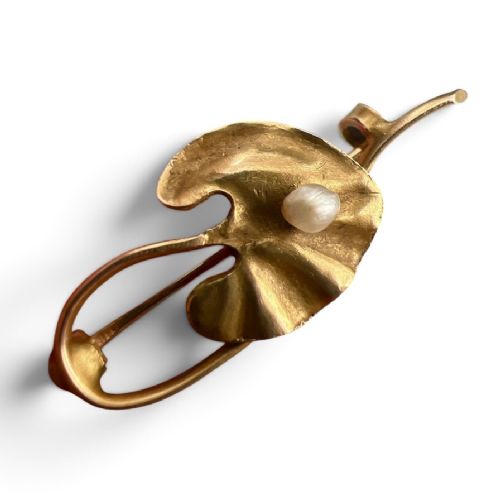
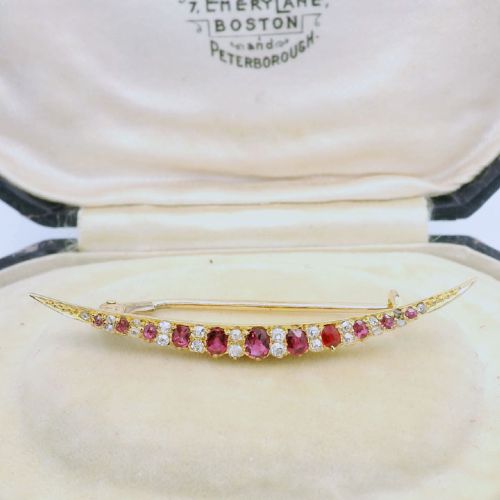
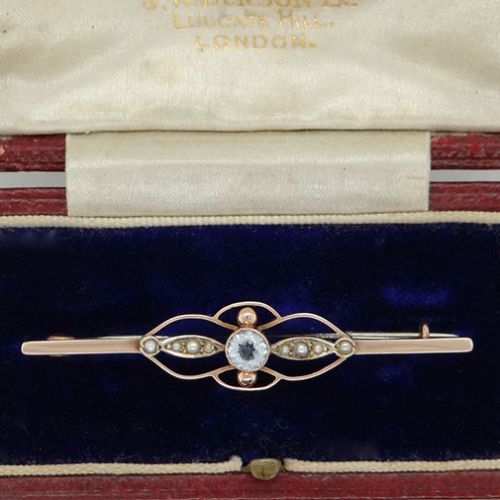
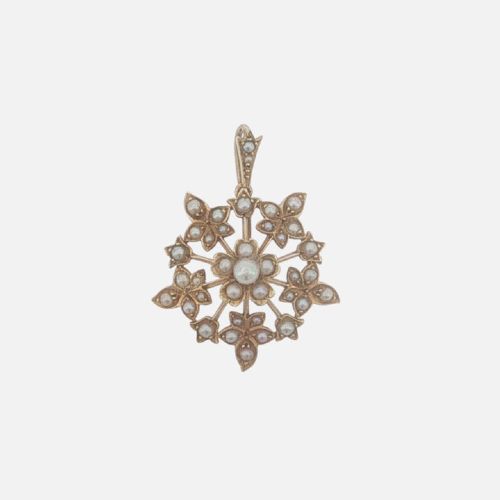
When you search for an antique edwardian brooch, you encounter delicate pieces of personal adornment shaped by the tastes of the early twentieth century. The period favoured graceful floral garlands, insects, bows, and geometric bar settings created to catch the light on evening wear or daytime tailoring.
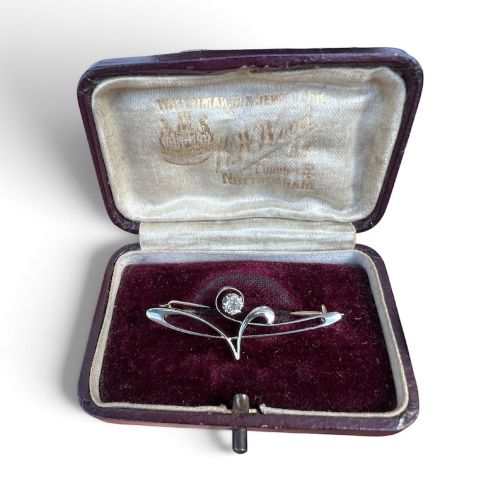
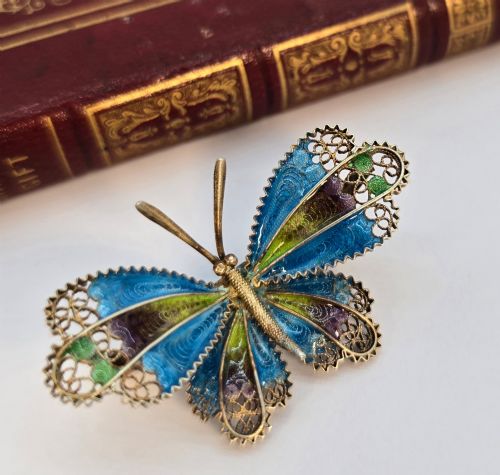
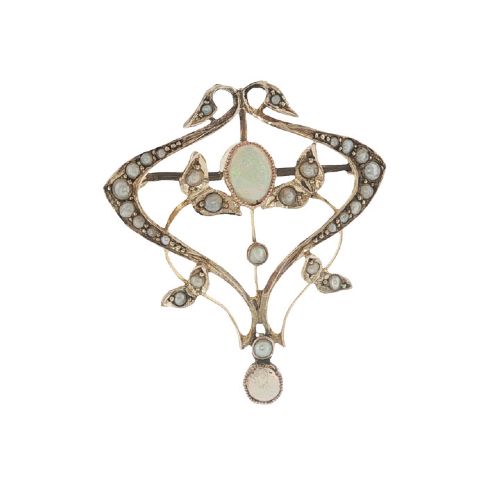
The aesthetic reaches beyond strict Edwardian dates into related Art Nouveau, Arts and Crafts, and Victorian revivals. This crossover brings familiar motifs like enamelled wings, intertwined hearts, and whimsical subjects such as owls, chicks, and walking sticks into the available selection.
Materials and Technique
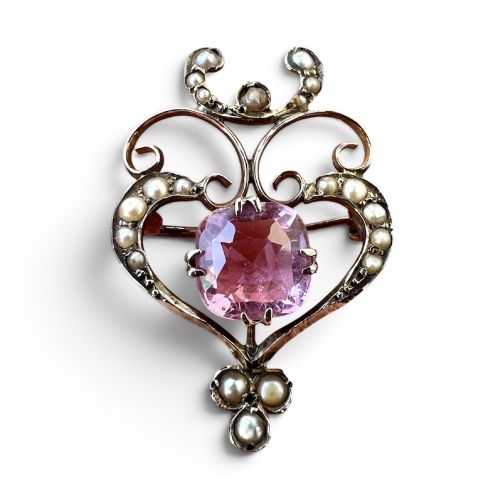
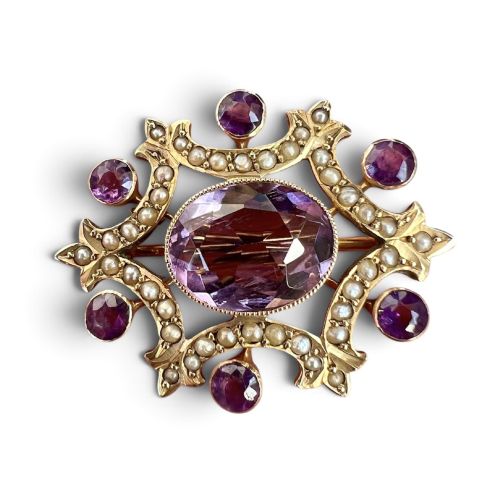
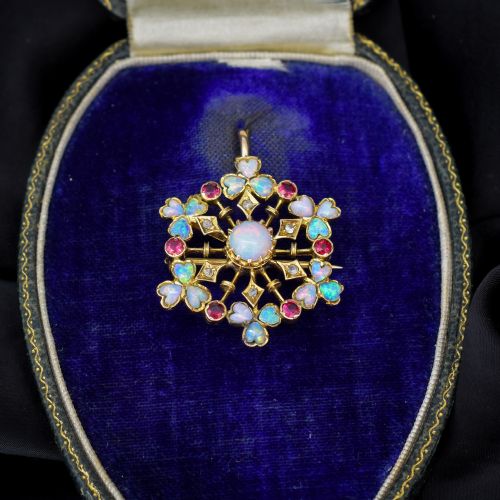
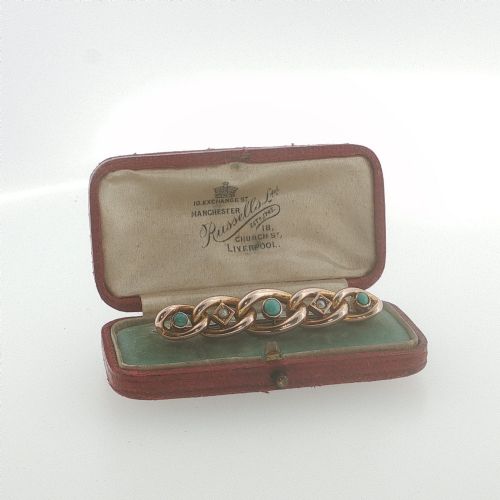
Goldsmiths of the era relied heavily on yellow and rose gold alloys alongside emerging platinum-topped silver techniques to mount stones securely. Seed pearls, aquamarines, amethysts, turquoises, and rubies were carefully set into intricate wirework, filigree, and collet settings.
Enamelling played a major role, particularly translucent guilloche enamel that added vivid colour to silver butterfly and flower motifs. Hand-carved gemstones and delicate millegrain edges completed the refined surface textures characteristic of the period's workshop output.
Natural opals, turquoise, amethysts, and aquamarines appear frequently alongside seed pearls across the available Edwardian and Art Nouveau inventory.
Distinctions in Execution
Quality rests upon the crispness of the metalwork and the uniformity of the seed pearls or diamonds chosen for the design. Master jewellers ensured that hinges, pin stems, and safety catches integrated seamlessly into the reverse without compromising the silhouette.
The depth of the hand-engraving and the preservation of delicate enamel surfaces distinguish standard production from exceptional studio pieces. Superior examples retain their original stones securely within balanced compositions that avoid crowding the precious metals.
Charles Horner·The Gaskins
The Antique Edwardian Brooch Glossary
- Bar brooch
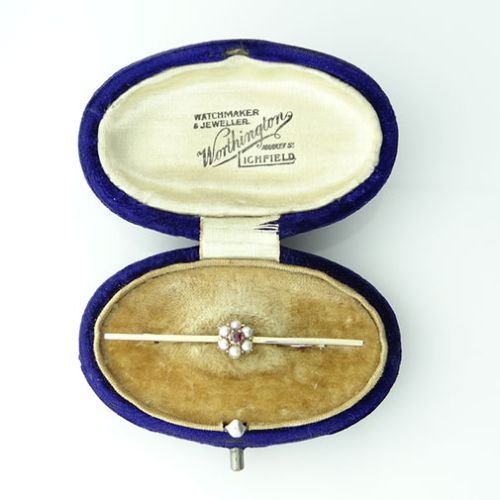
- A slender horizontal metal rod, often mounted with a central cluster of gems or enamel motifs. This form dominated everyday dress fasteners throughout the early twentieth century.
- Guilloche
- An intricate mechanical engraving technique that etches precise geometric patterns into metal before translucent enamel is applied over the top. This creates a shimmering, patterned depth beneath the coloured glass surface.
- Millegrain
- A decorative technique featuring a row of tiny, raised metal beads along the edges of a setting. It softens hard metal lines and provides a refined textural border around diamonds.
- Seed pearl
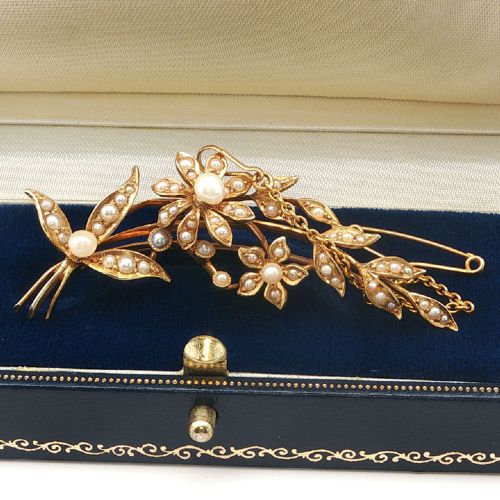
- A very small, naturally formed or early cultured pearl, frequently drilled and threaded onto fine wire. These tiny gems were clustered tightly to form flower petals, leaves, and soft background textures.
- Suffragette
- A descriptor for jewellery incorporating green, white, and violet stones, symbolising the political movement of the era. Common combinations feature peridots, pearls, and amethysts set together.
Antique Edwardian Brooch: Frequently Asked Questions
How were these brooches originally worn?
These ornaments were pinned securely to the high collars of Edwardian blouses, lapels of tailored jackets, or the centres of lace jabots. Women also used them to fasten scarves, shawls, and structural sashes during formal evening events.
Many versatile designs featured hidden loops or folding bails that allowed the wearer to detach the pin stem and suspend the piece from a gold chain as a pendant.
Can I wear an antique brooch every day?
Daily wear is entirely possible if you handle the antique mechanisms with reasonable care and store the piece safely when not in use. Ensuring the pin safety catch functions correctly prevents accidental loss during active movement.
Because these jewels often incorporate delicate seed pearls or soft enamel, avoid exposing them to harsh household chemicals, ultrasonic cleaning tanks, or rough physical impacts.
How do I distinguish Edwardian from Victorian pieces?
Edwardian designs typically exhibit a lighter, airier aesthetic with whiter metals like platinum and silver framing bright, openwork diamond patterns. Motifs lean towards light floral garlands, insects, and graceful bows.
Victorian pieces often display heavier gold weights, darker garnet or topaz stones, and more solid, closed-back settings that reflect a heavier, more sombre romantic sentiment.