




Antique Crown Brooch
These antique crown brooch pieces are regal symbols of power and devotion fashioned in precious metals and gemstones during the Victorian, Edwardian, and mid-century eras.
Antique Crown Brooch
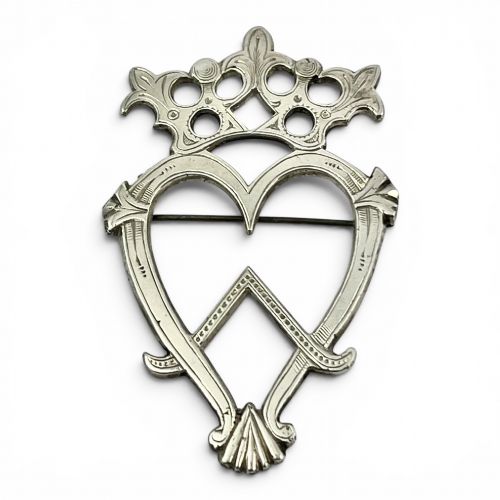
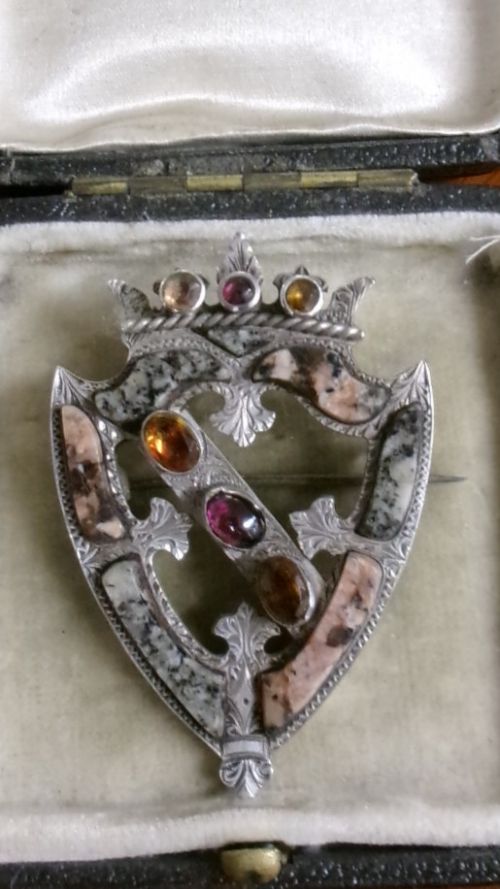
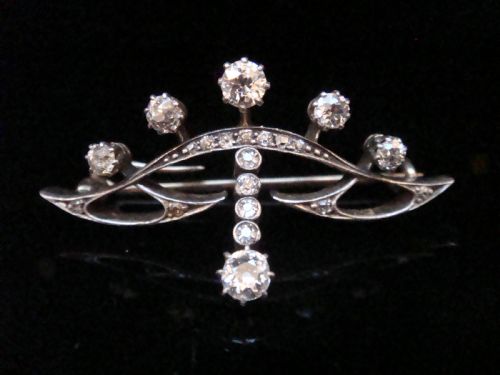
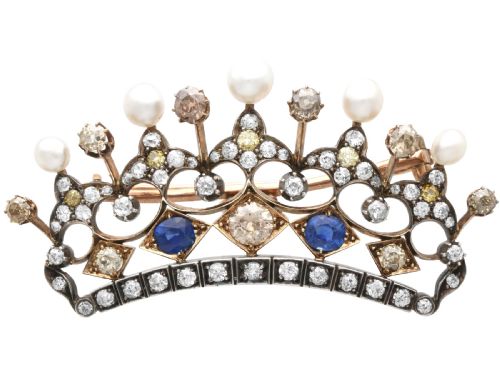
An antique crown brooch takes the form of royal regalia, coronets, and heraldic shields, often incorporating Scottish motifs or military insignia. You will frequently encounter Victorian pieces alongside Edwardian and mid-century interpretations.
The materials span silver, gold, and platinum, frequently illuminated by diamonds, pearls, enamel, rubies, emeralds, sapphires, and agate. These ornaments served as personal tokens of loyalty or expressions of patriotic sentiment.
Makers ranged from Scottish regional silversmiths to continental European workshops and noted Scandinavian designers such as David-Andersen. The survival of these jewels demonstrates the enduring appeal of royal iconography in personal adornment.
Distinguishing quality
Quality rests in the precision of the metalwork, the symmetry of the crown arches, and the selection of matched gemstones. Hand-cut diamonds and natural pearls elevate a piece above standard mass-produced output.
The depth and preservation of vitreous enamel, alongside clear hallmarks and maker's marks, separate ordinary examples from exceptional survivals of the jeweller's art.
Victorian wearers often pinned these royal crowns directly over their hearts to signal unwavering loyalty to crown and country.
The Antique Crown Brooch Glossary
- Coronet
- A small crown worn by nobility, frequently depicted in these brooches with crosses and strawberry leaves.
- Old-cut diamond
- A hand-faceted diamond shape typical of the Victorian and Edwardian periods, featuring a smaller table and larger culet.
- Agate
- A chalcedony gemstone commonly utilised in Scottish jewellery, often cut into hardstone panels and mounted in silver.
- Hallmark
- An official stamp indicating the metal purity, place of origin, and maker, stamped onto the reverse of the brooch.
- Articulated
- Designed with hinged or moving parts that provide flexibility and natural motion to the jewel when worn.
Antique Crown Brooch: Frequently Asked Questions
How do I date an antique crown brooch?
Dating relies on examining the metal purity marks, fastener types, and gemstone cutting styles.
Victorian pieces often display closed-back settings or distinct pin mechanisms, whilst Edwardian and mid-century items utilise lighter platinum mounts and different catch designs.
Were these brooches worn every day?
In the nineteenth century, smaller crown and shield brooches served as everyday fastenings for shawls, plaids, and cravats.
Larger diamond and gem-set versions were reserved for formal evening wear and special social occasions.
What is Scottish Revival jewellery?
Scottish Revival jewellery gained popularity during the Victorian era, particularly influenced by royal patronage at Balmoral. These pieces often combine silver, agate, and Celtic motifs in crown and shield formats.
Local silversmiths in towns such as Inverness produced distinctive regional variations of these designs.
How should I care for an enamel brooch?
Enamel requires careful handling to prevent scratching, chipping, or discolouration from moisture and harsh chemicals.
Store the brooch in a soft pouch away from direct sunlight and clean it gently with a dry microfibre cloth.