

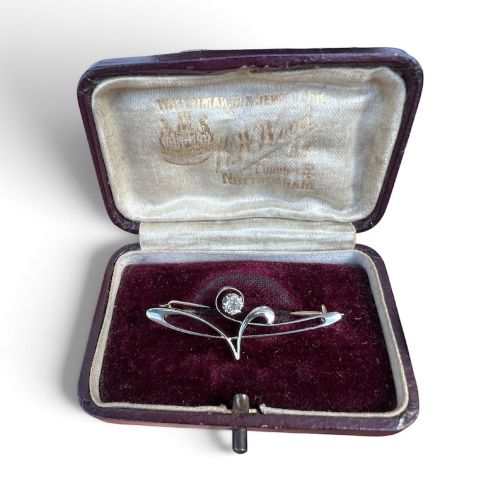


Platinum and Diamond Brooch
When you search for a platinum and diamond brooch, you enter a world of fine craftsmanship defined by period elegance and precious metals.
Platinum and Diamond Brooch
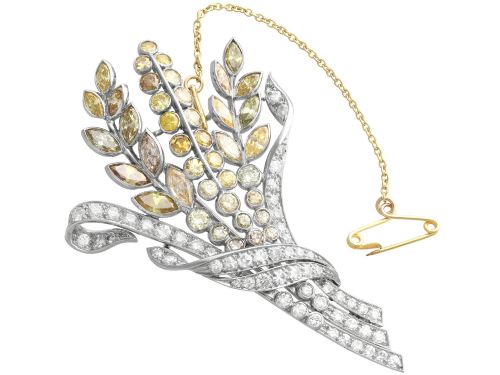
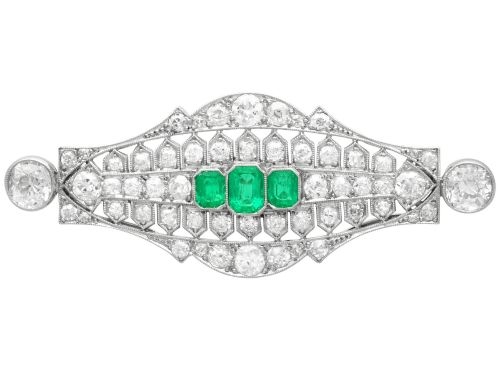
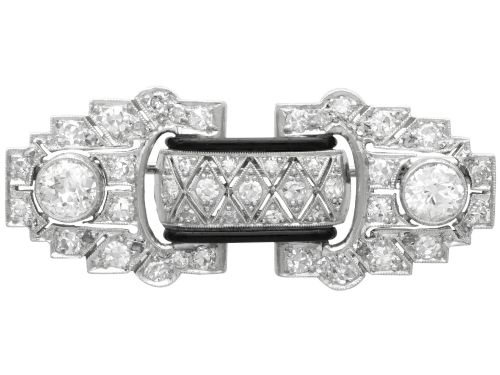
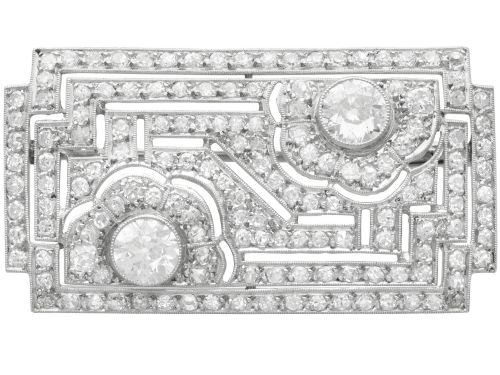
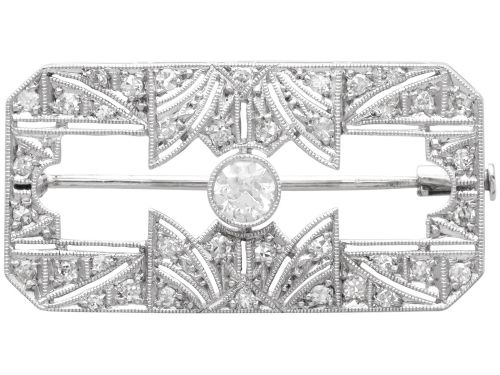
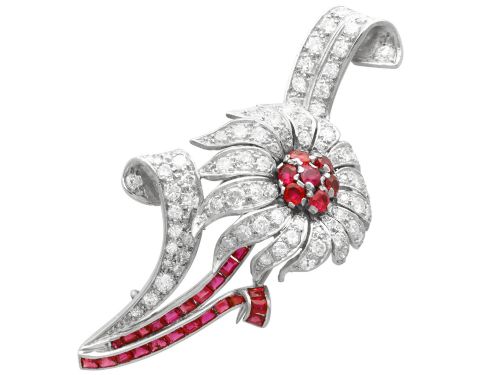
A platinum and diamond brooch combines the strength and white sheen of platinum with the brilliance of cut diamonds, often taking the form of bar brooches, floral clusters, or geometric Art Deco shapes. These pieces span several decades, including Edwardian, Victorian, Art Deco, and mid-century periods, reflecting the shifting tastes in jewellery design from delicate lacework patterns to bold, streamlined geometry.
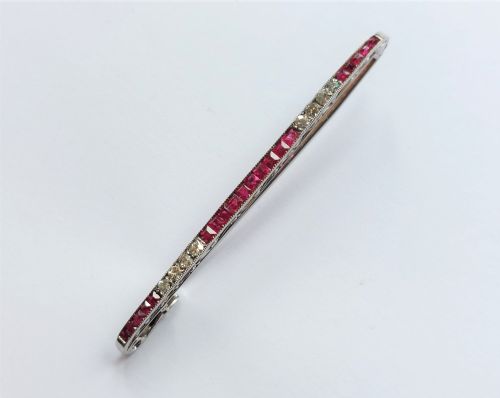
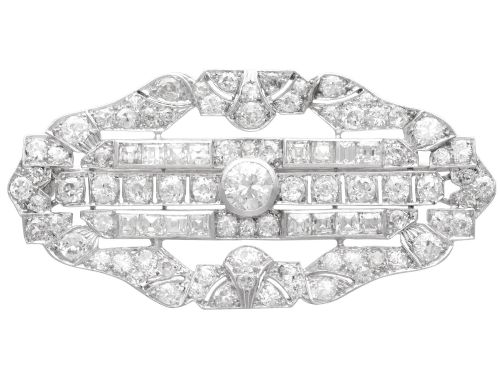
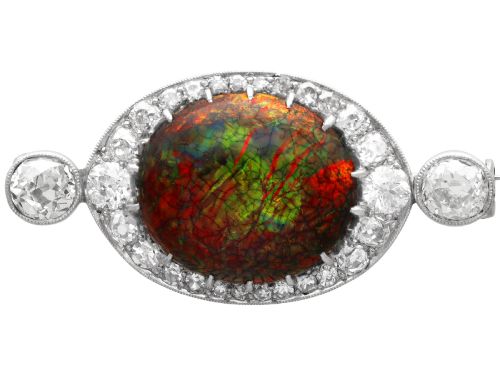
The most common examples you will encounter on this page date from the 1920s and 1930s, embodying the geometric symmetry and fine millegrain work characteristic of the Art Deco era. Alongside pure platinum settings, many pieces integrate combinations of 18ct white or yellow gold, sometimes paired with gemstones such as emeralds, rubies, sapphires, onyx, or pearls.
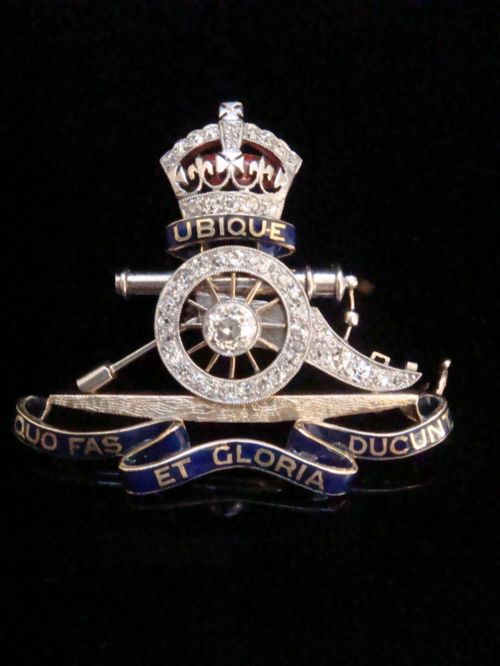
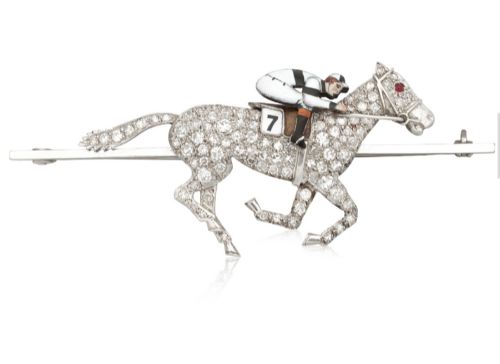
Beyond standard dress pins, the selection includes versatile pendant brooches, convertible double-clip designs, and themed motifs ranging from equestrian racing scenes to flying ducks and crescent moons. These jewels were originally pinned to lapels, evening gowns, or hats, serving as both ornamental focal points and status symbols for their wearers.
Materials and Techniques
Platinum emerged as the preferred metal for fine jewellery during the Edwardian and Art Deco periods because its remarkable tensile strength allowed goldsmiths to forge delicate, wire-like settings that held stones securely with minimal visible metal. Craftsmen frequently combined platinum with 18ct gold or platinum-topped gold bases to harness the structural benefits of both materials.
Gemstones were cut by hand, yielding old mine cuts, old European cuts, and transitional cuts that exhibit softer light dispersion than modern brilliant cuts. Artisans accented these diamonds with contrasting materials including black enamel, calibre-cut onyx, deep red rubies, and green emeralds, often finishing edges with precise millegrain beaded borders.
Platinum and Diamond Brooch Retail Price Guide 2026
Typical asking prices for platinum and diamond brooch among the pieces listed under this phrase on Sellingantiques today, from the lower quarter to the upper quarter. They describe what is for sale here now, not the wider market.
Some brooches take the form of flying ducks and racing horses, proving that past generations enjoyed wearing their hobbies pinned to their lapels.
Quality Variations
The distinction between standard examples and the finest items rests upon the precision of the metalwork, the symmetry of the design, and the quality of the set gemstones. Superior pieces display crisp, hand-pierced openwork and secure stone settings where every diamond matches in colour, clarity, and cut proportion.
Makers who supplied high-end clientele utilised heavier gauges of platinum and incorporated superior secondary stones, such as natural pearls, fine rubies, or high-carat sapphires. The presence of maker signatures or retail stamps further elevates a piece, indicating a higher level of workshop supervision and design pedigree.
Cartier Paris·Garrard & Co.
The Platinum and Diamond Brooch Glossary
- Millegrain
- A technique involving tiny, raised metal beads along the edges of a setting, creating a soft, textured border characteristic of Edwardian and Art Deco jewellery.
- Old European Cut
- A round diamond cut popular from the late nineteenth century through the 1930s, featuring a small table, high crown, and a large open culet.
- Bar Brooch
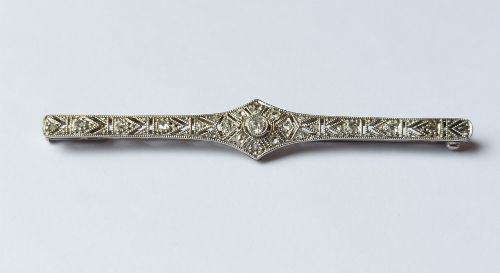
- A long, slender horizontal pin format that became exceptionally popular during the early twentieth century, frequently set with a central cluster of diamonds.
- Pendant Brooch
- A versatile item equipped with both a pin mechanism and a hidden loop, allowing the wearer to use it either pinned to clothing or suspended from a chain.
- Double Clip Brooch
- A structured ornament composed of two matching clips that lock together into a single large frame, offering multiple ways to style the jewellery.
Platinum and Diamond Brooch: Frequently Asked Questions
How do I wear a vintage brooch today?
These pieces pin securely onto jacket lapels, heavy wool coats, scarves, or the shoulders of evening dresses. You can also thread certain designs onto a chain to wear them as pendants.
For convertible items like double clips, you can separate the components to wear on two lapels simultaneously or join them back together for a statement centrepiece.
Are these brooches suitable for daily wear?
Platinum is an exceptionally durable and wear-resistant metal, making these items robust enough for regular use. However, the delicate settings and antique gemstones require mindful care.
You should avoid wearing them during physical activities or housework to protect the delicate millegrain work and prevent stone loss.
How do I tell an Edwardian brooch from Art Deco?
Edwardian pieces date from the early 1900s and lean towards organic, garland, and lace-like motifs inspired by nature, utilising platinum-topped gold and old-cut diamonds. They often feel lighter and more ethereal in their construction.
Art Deco items emerge in the 1920s and 1930s, favouring strict geometric lines, symmetry, strong colour contrasts with onyx or enamel, and pure platinum settings.
What is a platinum-topped gold brooch?
This construction method involves bonding a thin sheet of platinum to the front of an 18ct gold base structure. Goldsmiths used this technique before platinum working techniques were fully developed or to reduce the overall weight and cost of the item.
The front face presents the bright white surface required for diamonds, while the gold reverse provides hidden structural support.