
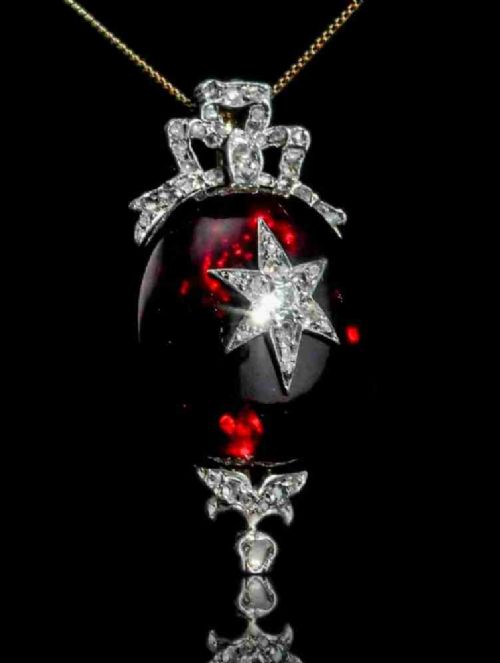


Convertible Diamond Pendant
A convertible diamond pendant adapts from a secure brooch to a suspended necklace, offering two distinct ways to wear antique jewellery.
Convertible Diamond Pendant
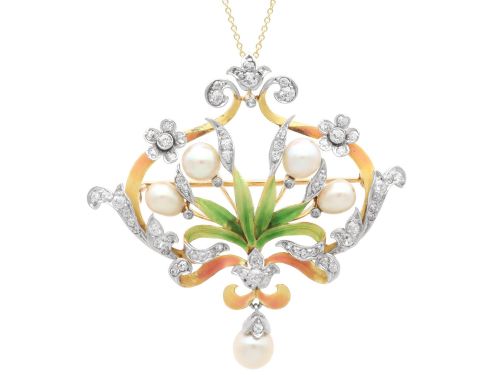
A convertible diamond pendant represents a dual-purpose piece of jewellery, functioning as both a brooch and a pendant depending on the wearer's preference. When you search for a convertible diamond pendant, you encounter versatile forms that transform effortlessly from a chest ornament to a neckpiece.
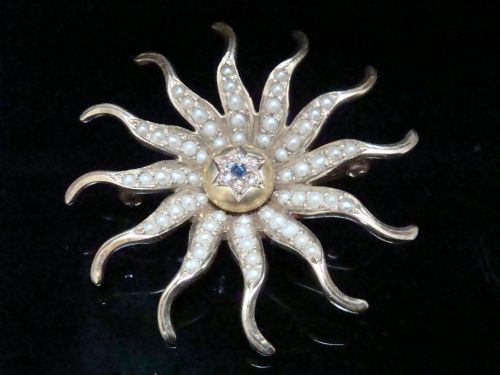
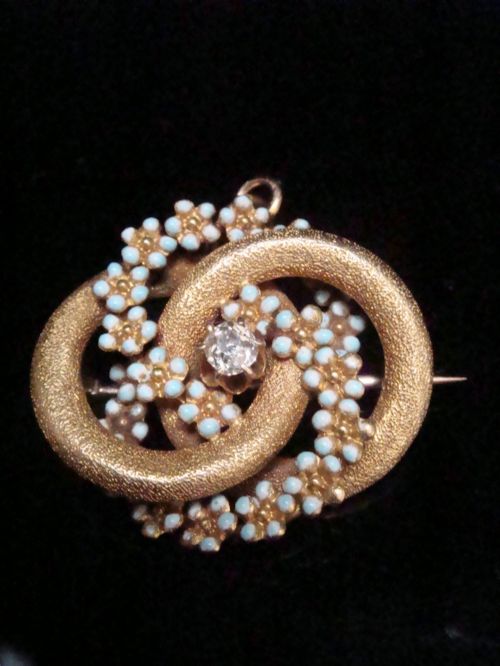
The selections span several distinct historical eras, including the Georgian, Victorian, Edwardian, and Art Deco periods. You are most likely to meet pieces configured as stars, flowers, butterflies, flies, bows, knots, and lavalieres, alongside convertible tiaras and double clip brooches.
The structural framework typically incorporates a detachable pin mechanism and a hidden or integrated loop for a chain. These dual configurations allowed historical wearers to alter their adornment between day and evening attire without changing the core stones.
Factors that distinguish quality
The refinement of the mechanical conversion fittings dictates much of the quality, where superior examples hide the transition hardware entirely while maintaining absolute structural security in both modes. A well-executed conversion mechanism operates smoothly without compromising the balance of the piece whether worn on a chain or pinned to fabric.
The quality of gem selection and the harmony of the overall motif further separate the output, particularly in complex floral, celestial, or zoomorphic configurations like starbursts and butterflies. Masterful claw or collet setting work ensures each diamond and accompanying gemstone catches the light effectively from every viewing angle.
Several insects, including bees, flies, and butterflies, wait quietly in silver and gold to perch on a lapel or dangle from a chain.
The Convertible Diamond Pendant Glossary
- Convertible diamond pendant
- An item of jewellery designed with removable or hidden mechanisms to transition between a brooch and a necklace pendant. This dual function was particularly popular during the nineteenth and early twentieth centuries.
- Brooch pendant
- A hybrid piece featuring both a pin fastening on the reverse and a loop or bail for suspension on a chain. It allows the wearer to pin the item directly to garments or hang it around the neck.
- Silver set
- A manufacturing technique where diamonds are set into a thin layer of silver mounted over gold. This historical method was utilised because silver's bright white surface enhanced the sparkle of diamond facets.
- Lavaliere
- A pendant design featuring a central stone or drop suspended below a main necklace section. Edwardian examples often incorporated intricate openwork platinum frames and cascading gemstones.
- Cabochon
- A gemstone shaped and polished with a smooth, rounded convex surface rather than faceted. This cut is frequently seen on opals, garnets, and tigers eye within these historical jewels.
Convertible Diamond Pendant: Frequently Asked Questions
How do convertible diamond pendants work?
These pieces feature hidden loops, screw fittings, or detachable pin stems that allow the main jewelled component to switch between a brooch and a pendant. The mechanical elements are engineered to remain discreet so that the conversion does not detract from the design.
When worn as a pendant, the pin mechanism locks flat or detaches entirely to rest comfortably against clothing. The bail or suspension loop often folds down or tucks behind the central motif when the piece is worn as a brooch.
Which periods do these pendants come from?
The available pieces originate from the Georgian, Victorian, Edwardian, and Art Deco eras, spanning the nineteenth and early twentieth centuries. Each period introduced distinct motifs, from romantic floral sprays and celestial starbursts to geometric platinum work.
Victorian and Edwardian examples frequently showcase natural pearls, coloured gems, and yellow gold, whilst later Art Deco pieces lean towards platinum and streamlined diamond configurations. Dating is typically determined by the mounting style, metal types, and setting techniques used.
What stones accompany the diamonds?
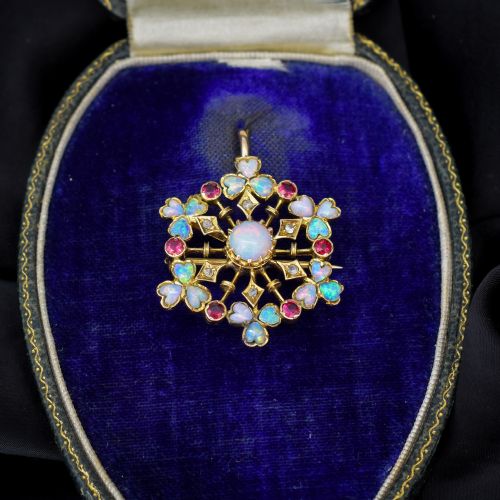
Alongside diamonds, these convertible jewels frequently incorporate natural pearls, rubies, opals, garnets, tigers eye, and labradorite. Coloured gemstones were often used to accent floral, insect, or celestial motifs.
Natural pearls and cabochon stones add texture and contrast to the sparkling diamond facets. The combination of materials depends heavily on the prevailing fashion of the specific era in which the piece was constructed.
Are original boxes usually included?
Original fitted presentation boxes occasionally accompany specific pieces, particularly those from the Edwardian period. These boxes are tailored to the exact contours of the convertible item and its specific components.
The presence of a period case provides additional context about the piece's history and original retail provenance. Such boxes typically feature velvet and silk linings designed to protect both the main jewel and any detachable fittings.