
Antique Ebonised Pedestals
Antique ebonised pedestals bring a dark, architectural presence to a room, offering a sturdy stage for sculpture or plants.
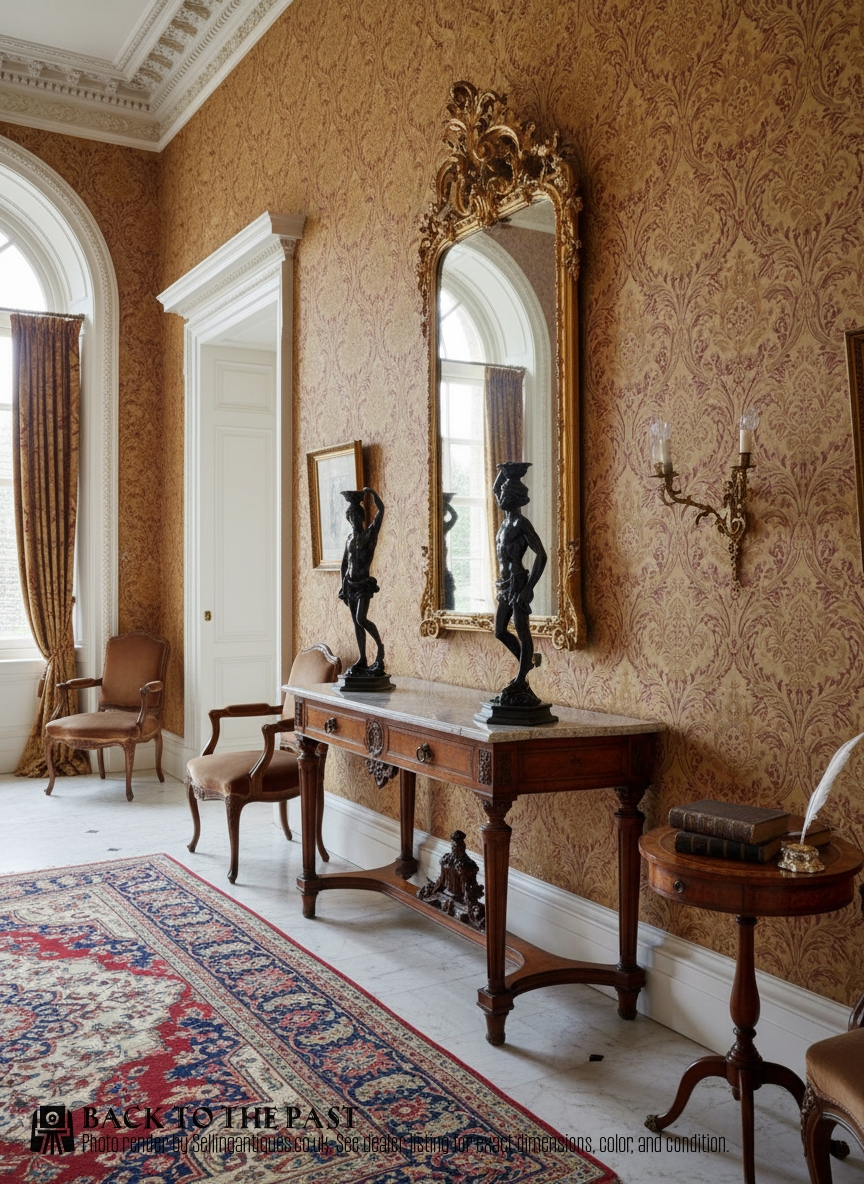
Antique Ebonised Pedestals
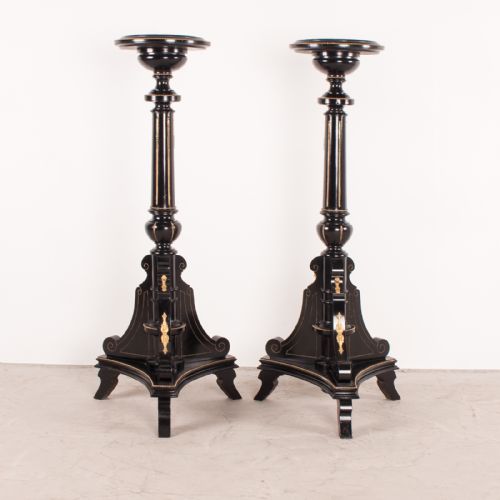
When you search for antique ebonised pedestals, you encounter tall, freestanding columns and display stands finished in a dark, blackened surface designed to imitate ebony. These supports emerge primarily from the nineteenth century, including Victorian and Aesthetic Movement iterations.
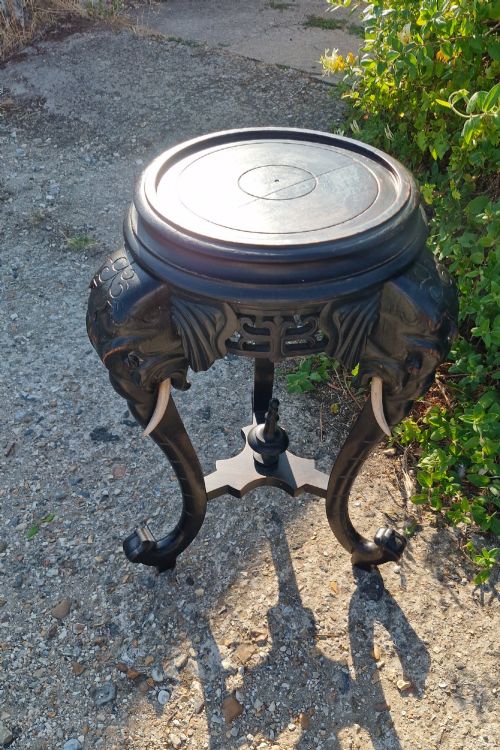
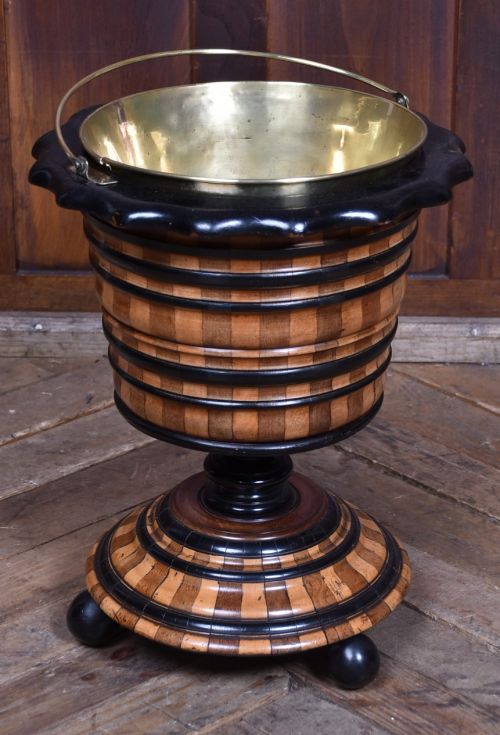
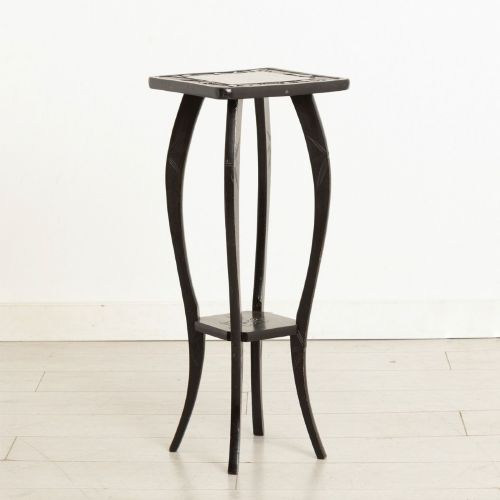
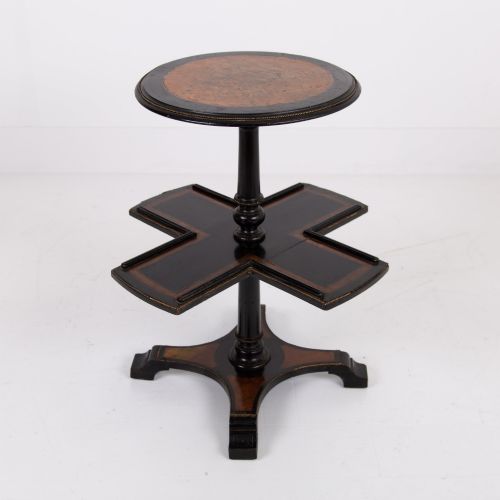
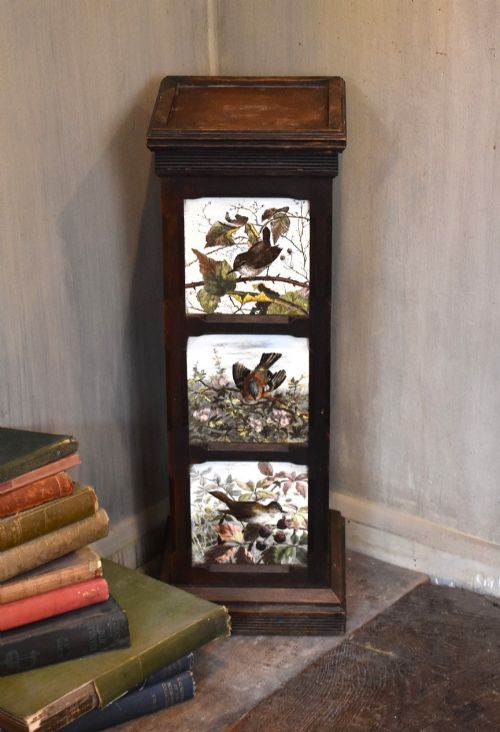
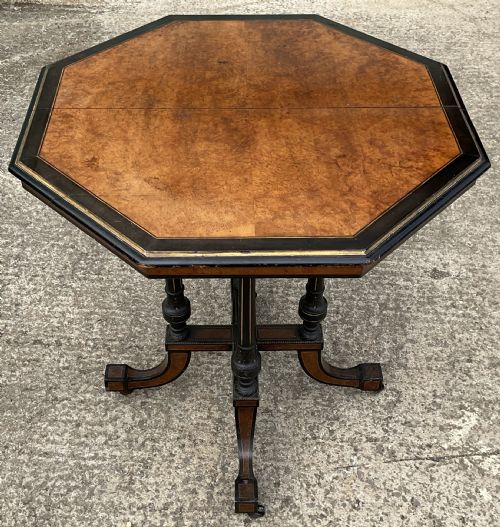
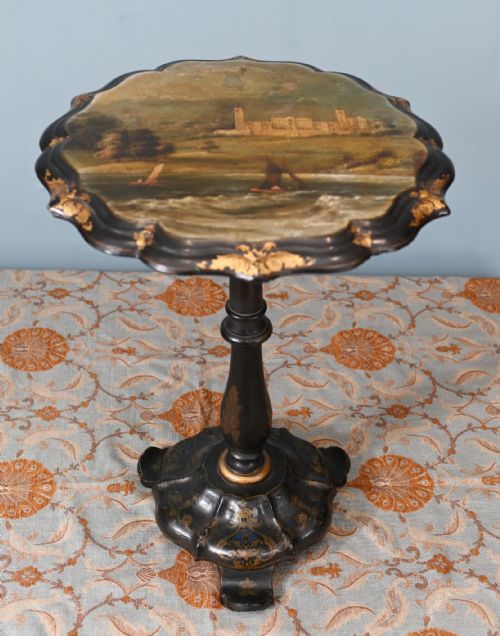
Makers shaped these stands from various timbers before applying the ebonising process, often pairing the dark finish with contrasting inlays, tiles, or porcelain plaques. Alongside dedicated pedestals and torcheres, related forms such as plant stands and occasional columns appear within the selection.
The surviving examples range from plain, functional display columns to highly decorative pieces featuring brass inlay, bone, or carved details. They served historically to elevate decorative objects, urns, or lamps within principal reception rooms.
How they were made
Craftsmen typically utilised dense hardwoods or fruitwoods as a base, applying a chemical stain or black polish to achieve the characteristic deep, uniform ebonised coloration. This finish mimics the costly tropical wood while allowing the use of sound domestic timber frames.
Many of the finer pieces incorporate contrasting materials set directly into the dark ground, including brass wire inlay, bone sections, ceramic tiles, and porcelain components. Structural joinery relies on traditional methods suited to supporting weight vertically without warping.
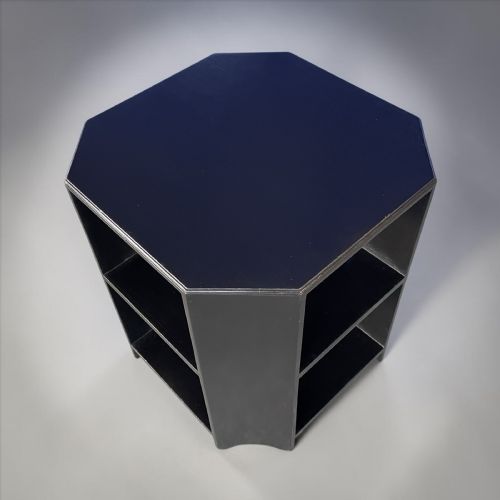
The listings span the nineteenth and twentieth centuries, incorporating Victorian, Aesthetic Movement, and Art Deco styles alongside standard pedestals and plant stands.
What varies in quality
Quality rests upon the crispness of the carving, the precision of any inlaid brass or bone work, and the integrity of the ebonised finish itself. Surfaces that retain their deep, satin lustre without excessive flaking or crude over-painting indicate superior original execution.
The presence of integrated decorative elements such as hand-painted tiles, porcelain mounts, or complex architectural turnings elevates an ordinary stand into a work of distinct craftsmanship. Makers who employed secondary luxury timbers beneath or alongside the black finish generally produced higher-grade furniture.
Jackson and Graham·Edwards and Roberts·Druce and Co London·Liberty of London·Gillow and Co
The Antique Ebonised Pedestals Glossary
- Ebonised
- Wood treated with stain, dye, or polish to simulate solid ebony. This dark finish gained immense popularity during the Victorian and Aesthetic periods.
- Torchere
- A tall, slender stand or candlestick designed to hold a light source or display an ornament. These pieces often feature tripod bases or column shafts.
- Marquetry
- Decorative veneer work forming pictures or geometric patterns using various woods. Makers sometimes combined lighter materials with ebonised grounds for high contrast.
- Aesthetic Movement
- A late nineteenth-century design style emphasising visual beauty over narrative content. Pieces from this movement often incorporate Japanese-inspired motifs and ebonised finishes.
- Ormolu
- Gilded bronze applied as mounts or decorative feet on furniture. It provides a bright metallic contrast against dark timber surfaces.
Antique Ebonised Pedestals: Frequently Asked Questions
What is an ebonised pedestal?
An ebonised pedestal is a tall, vertical stand made from wood treated with a dark finish to resemble ebony. These pieces provide an elevated surface for displaying sculptures, urns, and vases.
They function primarily as decorative furniture, adding architectural weight and contrast to interior spaces.
How do I date a pedestal?
Dating relies on observing the timber species, construction methods, and stylistic details such as incised gilt lines or turnings. Nineteenth-century examples often display specific stylistic markers like Aesthetic Movement tile inserts.
Comparing the joinery and finish wear to known period pieces helps narrow down the decade of manufacture.
Where should I place one?
These stands suit corners, hallway entrances, or empty wall spaces where a vertical element breaks up horizontal lines. They safely hold heavy decorative items at eye level.
Ensure the placement protects the stand from heavy foot traffic and direct moisture.
Are all black stands ebony?
Almost none of these stands consist of solid ebony, which was prohibitively expensive and heavy. Makers used alternative hardwoods like oak, walnut, or beech, applying a special black finish to achieve the look.
Close inspection of the underside or joints usually reveals the lighter base timber beneath the dark surface.