


Victorian Decorative Statue
These Victorian decorative statue selections bring together bronze, porcelain, and carved wood into rooms that value character and historical weight.
Victorian Decorative Statue
A victorian decorative statue encompasses a wide range of sculptural objects, from bronze animal studies and porcelain figures to cast iron doorstops and carved wooden birds. Buyers encounter works cast in metal, modelled in ceramic and bisque porcelain, and carved from ebony or alabaster.
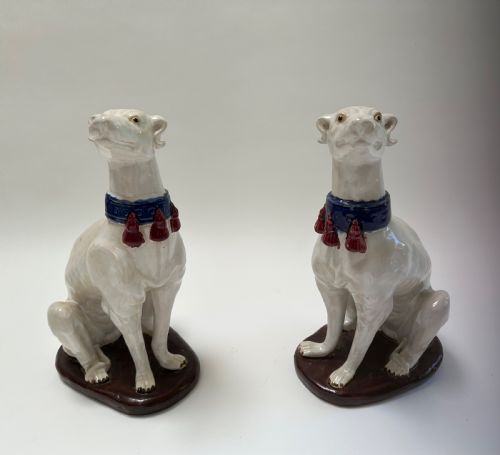
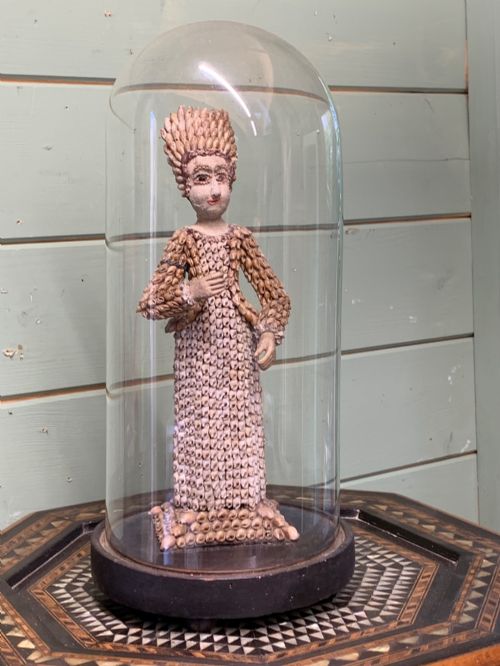
The assortment spans classical revival subjects, animalier studies, and folk art, originating from English, French, German, and Italian workshops. Figures range from small cabinet pieces to large floor-standing bronzes and majolica pairs.
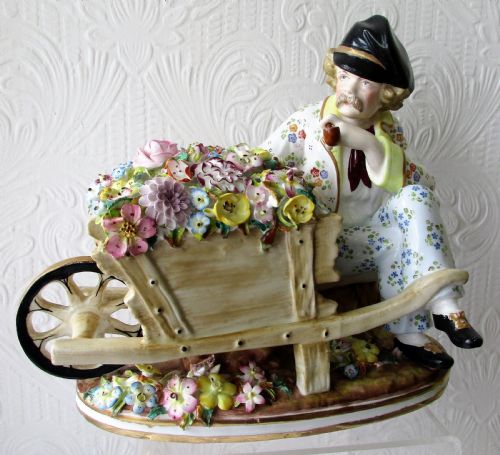
Porcelain figurines and bronze sculptures dominate the selection, reflecting nineteenth-century domestic taste for narrative and naturalistic display. Many pieces double as functional items, including table lamps, timepieces, and oil lamps.
Materials and methods
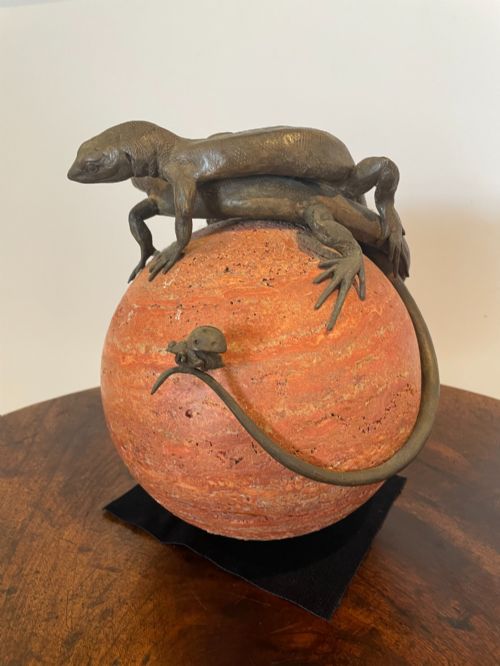
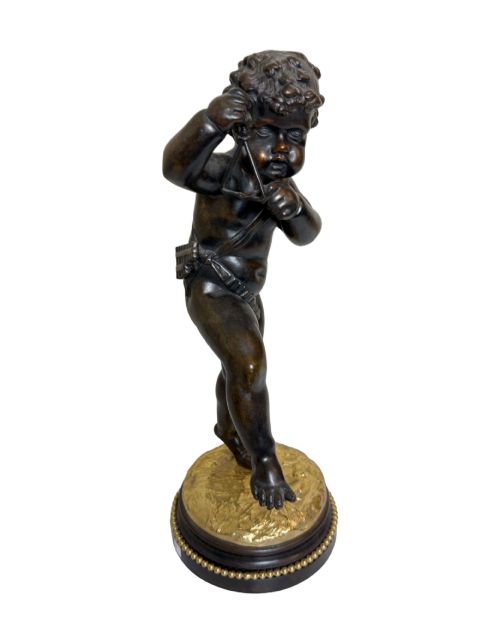
Bronzes are typically cast using the lost-wax method, then finished with cold-painting, gilding, or patination to accentuate anatomical detail in subjects like lizards, bulls, and human figures.
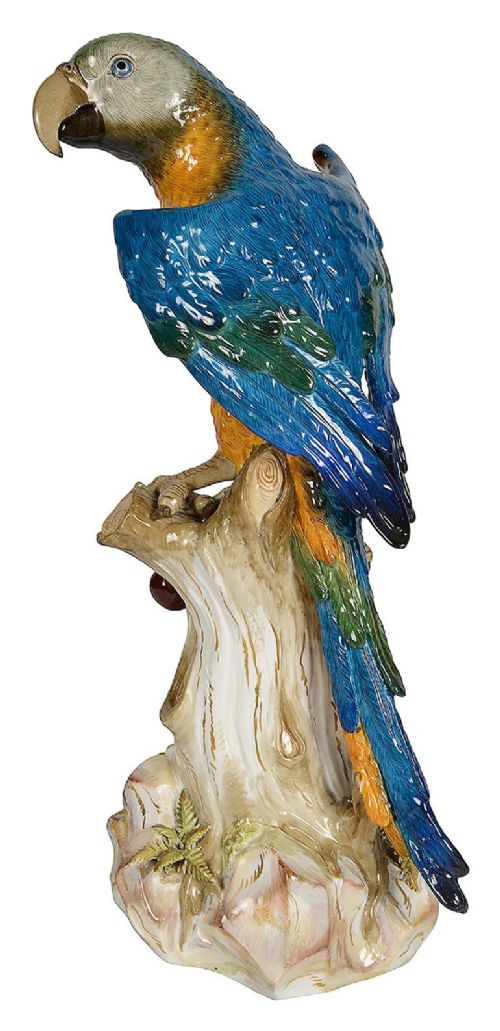
Ceramic pieces involve hard-paste porcelain, majolica, and bisque, often hand-painted with enamel colours and finished with gold leaf accents before kiln firing.
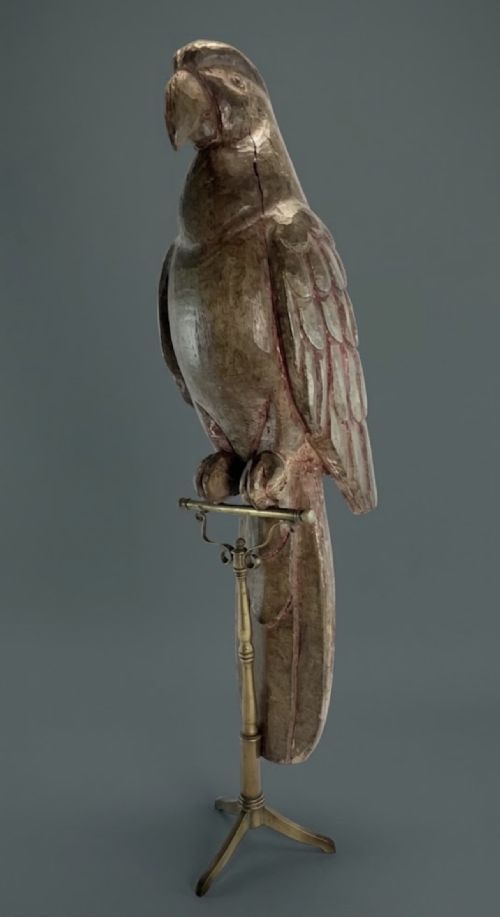
Carved works utilise dense timbers like ebony and wood, paired occasionally with brass stands, alabaster bases, or marble pedestals.
Lord Nelson stands ready as a heavy cast iron doorstop, guarding Victorian hallways against draughts.
Assessing the work
Quality rests in the crispness of the casting or the fineness of the carving, where facial expressions, drapery folds, and animal musculature remain sharp rather than smoothed over by wear or hurried production.
Surface finish dictates value, distinguishing original patination, hand-painted polychrome enamels, and cold-painted pigments from later respray or cleaning damage.
Completeness of pairs and original mounts, such as matching bronze plinths or fitted bases, elevates the standing of sculptural groups and figural lamps.
John Bevington·Goldscheider pottery·John Wenlock Rollins·Emile Picault·James Hadley·C. G. Schierholz·Isidore Jules Bonheur·Sitzendorf
The Victorian Decorative Statue Glossary
- Animalier
- A nineteenth-century artistic focus on the realistic portrayal of animals, seen frequently in bronze studies of dogs, bulls, and wildlife.
- Bisque porcelain
- Unglazed, white ceramic porcelain with a matte, marble-like texture that gained popularity for detailed figural groups and piano babies.
- Cold-painted bronze
- Bronze sculpture painted with oil or enamel paints after casting, rather than subjected to heat patination.
- Majolica
- Low-fired earthenware coated with an opaque white tin glaze and painted with brightly coloured metal oxides.
- Parian
- A fine-grained, unglazed porcelain resembling white marble, developed in Victorian Britain for classical busts and literary figures.
Victorian Decorative Statue: Frequently Asked Questions
How do I date a bronze statue?
Dating relies on stylistic clues, foundry marks, and the quality of the patination. Nineteenth-century pieces often exhibit hand-finishing work that later reproductions lack.
Examine the underside for casting seams, bolt types, and wear patterns consistent with age. Archival records and artist signatures further anchor the period of production.
Where were these statues placed?
Victorian interiors accommodated these sculptures on mantelpieces, entrance hall pedestals, and library tables. Many served as decorative centrepieces within formal reception rooms.
Functional variants like doorstops, oil lamps, and timepieces sat in daily-use areas, combining utility with ornamental display.
What is an animalier bronze?
Animalier sculptures depict animals in naturalistic poses, capturing movement and anatomical accuracy. These works became prominent across French and English foundries during the nineteenth century.
Common subjects include dogs, bulls, and birds, cast in bronze and finished with detailed patination.
How should I clean antique porcelain?
Dust unglazed bisque and painted porcelain gently with a soft, dry brush. Moisture can damage delicate enamel work or dissolve old repairs.
Avoid chemical cleaners entirely, as nineteenth-century pigments and gold leaf accents react poorly to modern solvents.