



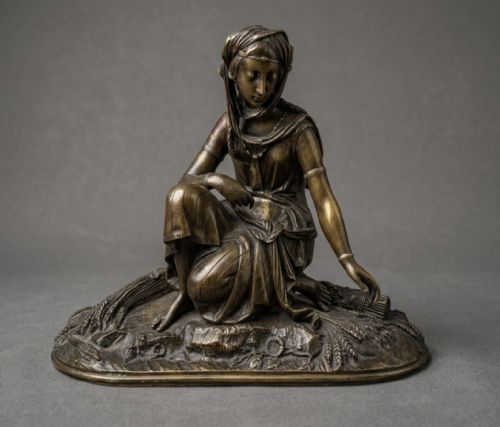


Orientalist Female Figure Sculpture
An orientalist female figure sculpture brings nineteenth-century romance and exotic narrative into a room with striking presence.
Orientalist Female Figure Sculpture
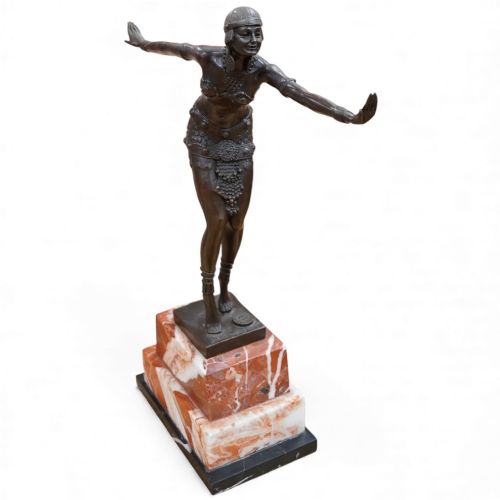
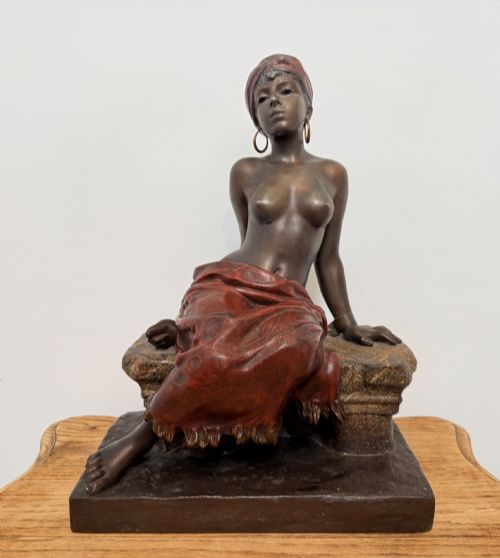
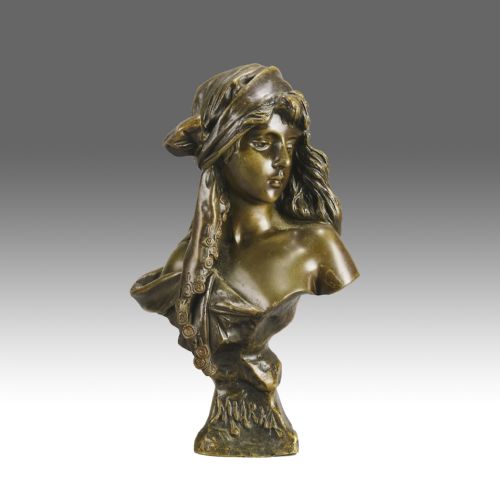
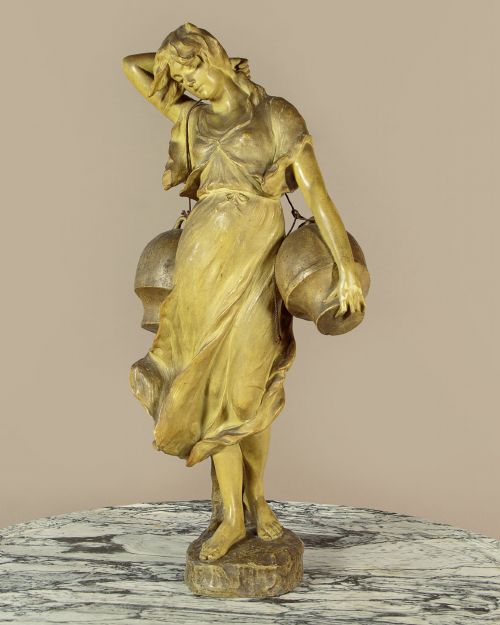
An orientalist female figure sculpture represents women from Middle Eastern, North African, and Asian cultures through European artistic traditions of the nineteenth and early twentieth centuries. These works appear in forms ranging from cabinet figurines to life-size statues, capturing subjects like water carriers, dancers, and noble figures.
The versions most common here span the Victorian era, Art Nouveau, and Art Deco movements, with French and Viennese foundries dominating the output. Cast bronzes and painted terracottas represent the primary forms, though carved alabaster and glazed earthenware also appear.
Such sculptures often draw on theatrical themes, literary characters, and romanticised travel accounts popular among European collectors of the period. Makers utilised distinct regional aesthetics, shifting from nineteenth-century academic realism to the stylised curves of Art Nouveau and the geometric lines of Art Deco.
How they were made
Foundries created the metal pieces using the lost-wax casting method or sand casting, which allowed for intricate detail in robes, hair, and jewellery. Artisans then applied cold-painted polychrome finishes, chemical patination, or gilt highlights to enhance the textural depth of the bronze or brass surfaces.
Ceramic and terracotta versions relied on skilled moulding followed by hand-painting and glazing, sometimes incorporating enamel details for costume decoration. Sculptors working in marble and alabaster carved directly from the block, exploiting the natural grain to suggest the soft folds of drapery and skin.
Some Austrian bronze dancers come tucked inside tiny opening brass sarcophagi, offering a secretive glimpse of a miniature figure within.
What varies in quality
Quality rests on the crispness of the chase work in metal casts and the subtlety of the polychrome or patinated surface treatment. Superior pieces retain their original cold-painted colours without heavy repainting and exhibit sharp facial expressions and clean fingers and toes.
The reputation of the foundry and the distinct signature of the artist elevate a piece above anonymous factory output. Heavier gauge metal, well-fitted multi-part construction, and undamaged terracotta or alabaster indicate higher original workshop standards.
Emmanuel Villanis·Edouard Drouot·Franz Bergman·Goldscheider·Georges-Charles Coudray·Guillot·Royal Dux·Arthur Waagen·Royal Worcester·Claire Colinet·Demetre Chiparus
The Orientalist Female Figure Sculpture Glossary
- Cold-painted bronze
- A technique where bronze sculptures are painted with oil or enamel colours after casting, rather than being fired in a kiln. This finish is delicate and prone to flaking if handled improperly.
- Patination
- The chemical process or natural ageing that colours the surface of bronze and other metals. Artists often manipulated this process to achieve specific brown, green, or near-black tones.
- Lost-wax casting
- A metalworking process where a wax model is used to create a mould, allowing for complex and undercut designs. It ensures each cast captures fine sculptural details.
- Spelter
- An alloy of zinc and lead used as a cheaper alternative to bronze during the nineteenth century. It is lighter and more brittle than true bronze.
Orientalist Female Figure Sculpture: Frequently Asked Questions
How do I clean my bronze sculpture?
Dust the surface gently with a soft, dry brush to prevent dirt accumulation in the crevices. Avoid using water, soap, or chemical polishes, as these can strip the original patina.
Apply a very thin coat of microcrystalline wax occasionally if the bronze appears dry, buffing it off completely with a clean cloth.
Are cold-painted bronzes fragile?
Yes, the paint layer sits on top of the metal without high-temperature firing, making it vulnerable to scratching and moisture. Care must be taken to display them away from direct sunlight and humid areas.
Handling should be kept to a minimum to preserve the original pigment on the robes and skin.
How can I tell bronze from spelter?
Bronze is heavier, colder to the touch, and yields a dull, resonant ring when tapped gently. Spelter feels lighter, softer, and can show a greyish or flaky metal underneath any worn paint.
Most high-end nineteenth-century figures used genuine bronze, while cheaper decorative pieces utilised spelter.
Where should I place a terracotta figure?
Terracotta requires a stable indoor environment away from sudden temperature shifts and dampness. Because the fired clay is porous, it absorbs moisture and can crack if exposed to frost or high humidity.
Display the piece on a sturdy shelf or cabinet where it will not be bumped, as protruding fingers and drapery are vulnerable to chipping.