


Antique Ceramic Water Carrier
An antique ceramic water carrier captures the romanticism of nineteenth and early twentieth century orientalism, bringing sculptural elegance and historic artistry directly into your home.
Antique Ceramic Water Carrier
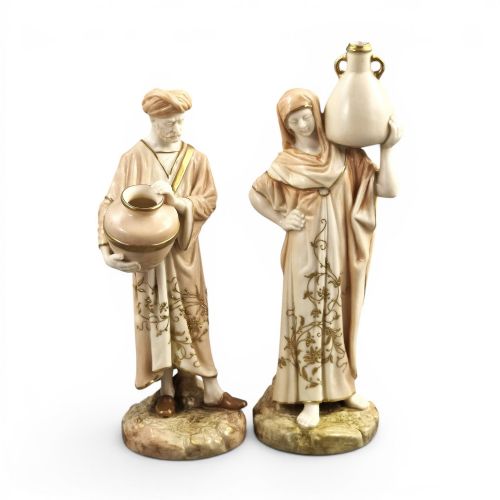
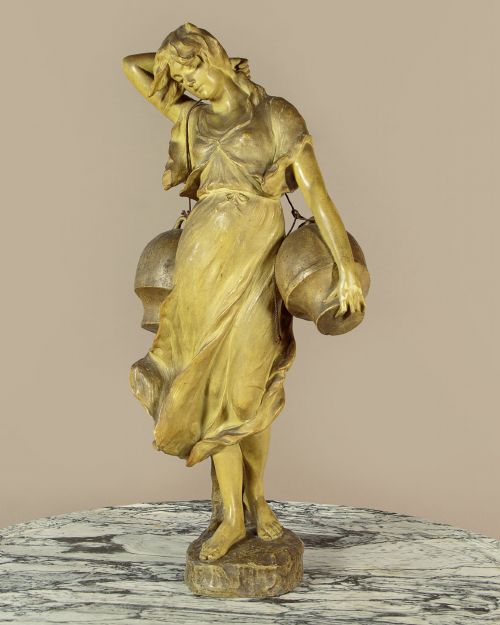
An antique ceramic water carrier typically takes the form of a porcelain or terracotta figurine depicting a woman carrying a vessel, jug, or basket. These pieces span from the late nineteenth century into the Edwardian period, often reflecting the fascination with Orientalist subjects popular during those eras.
The versions you are most likely to encounter on this page range from Victorian and Edwardian examples to specific Art Nouveau interpretations. Makers such as Royal Worcester and Royal Dux dominate these listings, offering both individual figures and balanced pairs.
Materials and methods of manufacture
Surface decoration frequently involved delicate enamel work, gilt, and gold leaf highlights. Certain workshops applied specialised finishes like Patent Metallic glazes to add a distinct sheen and texture to the ceramic surface.
Several ladies carry wicker baskets rather than jugs, proving that even ceramic water carriers occasionally needed to stop at the market.
Distinguishing quality in figures
The application of glaze and enamel dictates much of the visual appeal. Subtle shading, precise gilding, and well-preserved surface finishes indicate higher workshop standards during production.
Royal Worcester·James Hadley·Goldscheider·Royal Dux·Turn Porcelain
The Antique Ceramic Water Carrier Glossary
- Biscuit porcelain
- Unglazed porcelain fired once to leave a matte, porous surface resembling white marble. This finish highlights the sculptural detail of the figurine without surface glare.
- Turn-Teplitz
- A notable ceramics production centre in Bohemia associated with Art Nouveau figures and orientalist designs. Pieces from this region often exhibit distinctive styling.
- Orientalism
- An artistic movement drawing inspiration from the cultures of the Near East and North Africa. In these ceramics, it manifests in the attire and subject matter of the figures.
- Patent Metallic
- A specialised ceramic finish developed in the late nineteenth century to impart a metallic sheen to glazed surfaces. It creates an iridescent effect on specific design elements.
- Enamel
- Coloured glass paste fused to the ceramic body through firing to add permanent surface decoration. It provides rich colour accents on garments and accessories.
Antique Ceramic Water Carrier: Frequently Asked Questions
How do I date these figures?
Dating relies on maker marks, stylistic indicators such as Art Nouveau curves or Victorian Orientalist motifs, and the specific ceramic body used. Records from factories like Royal Worcester and Royal Dux provide precise production windows for many pieces.
Examining the base for impressed numbers, stamps, or painted signatures often clarifies the exact period of manufacture.
Where were these water carriers made?
These figures originated in prominent European ceramic manufacturing centres during the Victorian and Edwardian periods. Key production hubs included British potteries in Worcester and Bohemian workshops in Teplitz.
Each region brought distinct regional techniques and aesthetic traditions to the sculpting and glazing processes.
How should I display them?
These figures suit stable, prominent surfaces such as mantelpieces, sideboards, or dedicated display cabinets where their sculptural form can be appreciated from multiple angles. Due to their ceramic composition, placing them away from high-traffic areas prevents accidental knocks.
Good lighting enhances the enamel details, gilt highlights, and subtle textures of the porcelain or terracotta bodies.