
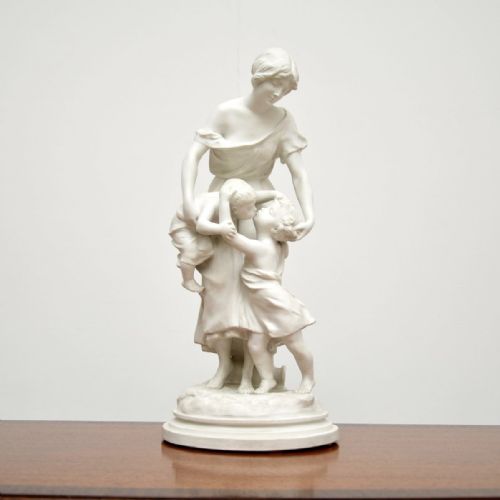


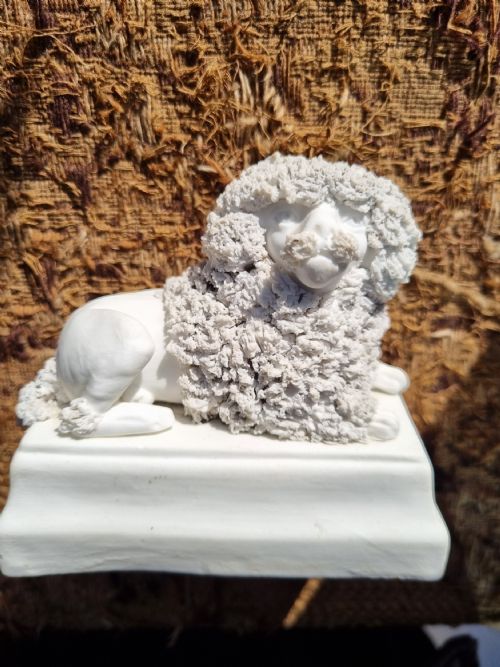
Bisque Porcelain Ornament
A bisque porcelain ornament brings unglazed, matte ceramic detail into a room, offering the soft texture and sculptural depth that collectors prize.
Bisque Porcelain Ornament
A bisque porcelain ornament captures fine sculptural detail through unglazed ceramic surfaces, representing the core of what you encounter when searching this phrase. The pieces span the nineteenth century, Victorian era, and early twentieth century, originating from French, English, and Bohemian workshops.
The selection centres on figural groups, busts, vases, and decorative sculptures depicting human figures, animals, and mythological subjects. Pairs of figures and individual statues dominate the offerings, ranging from modest cabinet pieces to large mantle displays.
Nineteenth-century examples frequently showcase neoclassical or rococo revival influences, while later items drift into art nouveau and Victorian orientalism. These objects served primarily as interior parlour decorations during their original domestic context.
Assessing quality and execution
Quality rests upon the crispness of the modelling and the subtlety of hand-finished details such as fingers, facial expressions, and clothing folds. Finer pieces maintain sharp definition across the unglazed surface without blurring the underlying contours.
The choice of porcelain body plays a significant role, with dense parian porcelain and fine biscuit wares offering a superior tactile weight and smoother finish than standard earthenware substitutes. Maker attribution and the precision of applied enamel or gilt work further distinguish standard decorative wares from exceptional items.
Some Victorian piano babies were sculpted lying entirely flat on their stomachs, presumably to ensure they stayed put during enthusiastic musical performances.
Royal Dux·Sevres·Minton·Copeland·Chantilly·Vion et Baury
The Bisque Porcelain Ornament Glossary
- Bisque porcelain
- Unglazed ceramic ware that has been fired once, leaving a matte, porous surface with a texture similar to marble. This finish became popular in the nineteenth century for capturing fine sculptural detail.
- Parian porcelain
- A fine-grained type of biscuit porcelain developed in Britain to imitate carved marble. It contains a high proportion of feldspar, which melts during firing to give the material a semi-translucent quality.
- Rococo revival
- A nineteenth-century design style drawing on eighteenth-century French motifs, characterised by asymmetrical scrolls, naturalistic floral elements, and ornate decorative flourishes.
- Piano baby
- A small ceramic or bisque figurine placed on the silk shawl of a piano during the Victorian era. These pieces often depict infants or children in playful poses.
- Biscuit porcelain
- An alternative term for bisque porcelain, referring to pottery that has undergone a single firing and remains unglazed.
Bisque Porcelain Ornament: Frequently Asked Questions
What is bisque porcelain?
Bisque porcelain is ceramic ware that has been fired in a kiln without the application of a glossy glaze. This leaves the material with a matte, porous finish that resembles carved white marble.
Craftsmen favoured this unglazed state because it preserved the sharpest details of the original clay modelling without the softening effect of liquid glass coatings.
How do I clean unglazed porcelain?
Cleaning unglazed bisque porcelain requires dry methods such as a soft brush or a dry sponge to lift dust from the porous surface. Wet cleaning can cause dirt to sink deeper into the unglazed clay.
Avoid using harsh chemical cleaners or abrasive cloths that might scratch or stain the delicate matte finish of the ornament.
Were these figures made as pairs?
Many nineteenth-century figural ceramics were produced as symmetrical pairs to adorn mantelpieces, sideboards, or large tables. These matching pieces typically depicted complementary subjects like water carriers or seasonal labourers.
Single figures also exist alongside these pairs, having been produced individually or separated from their original groupings over time.
How can I date a bisque ornament?
Dating a piece involves examining the style of dress, sculptural conventions, and any stamped factory marks or incised numbers on the base. Victorian and nineteenth-century examples often display registration marks or specific maker stamps unique to that era.
Stylistic shifts from neoclassical severity to elaborate rococo revival or art nouveau forms provide further clues to the decade of manufacture.