


Pair of Carved Statues
A pair of carved statues brings symmetry and sculptural weight to a room, offering matching figures shaped by hand from wood, stone, or marble across centuries.
Pair of Carved Statues
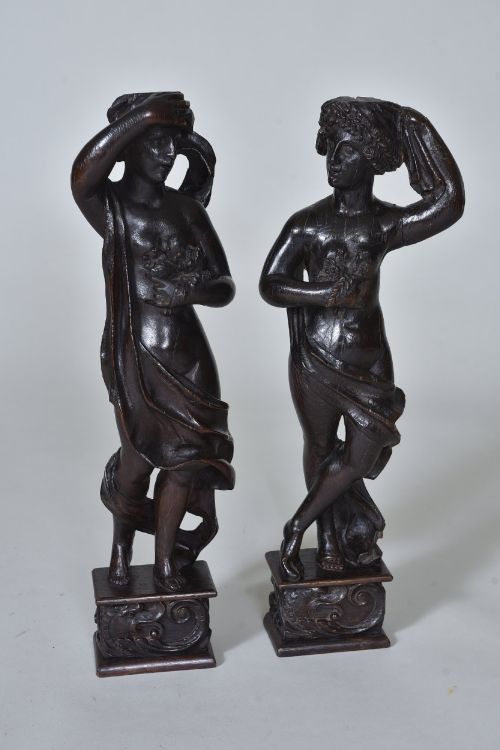
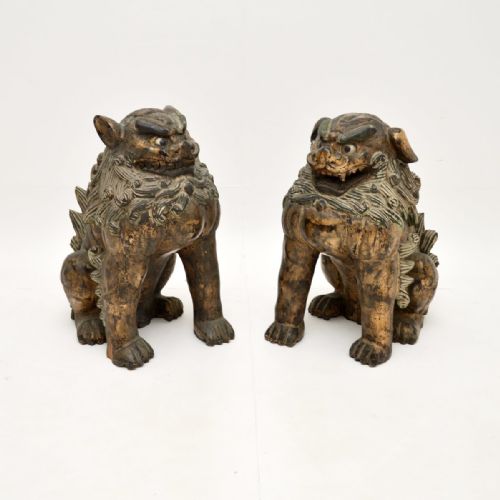
A pair of carved statues consists of two matching sculptural figures designed to balance a mantelpiece, entrance hall, or garden setting. These pieces span centuries of craftsmanship, appearing as animal figures, human forms, mythical beasts, and architectural elements.
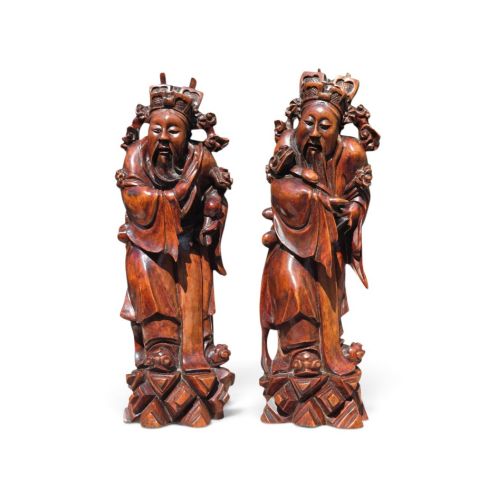
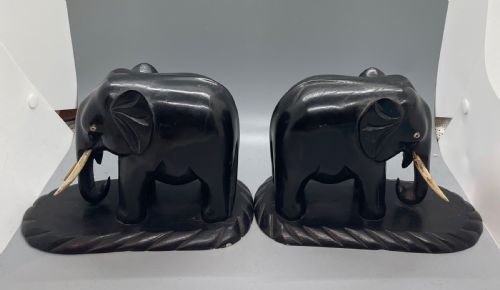
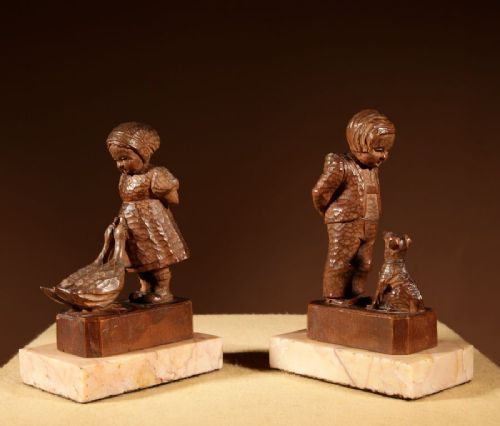
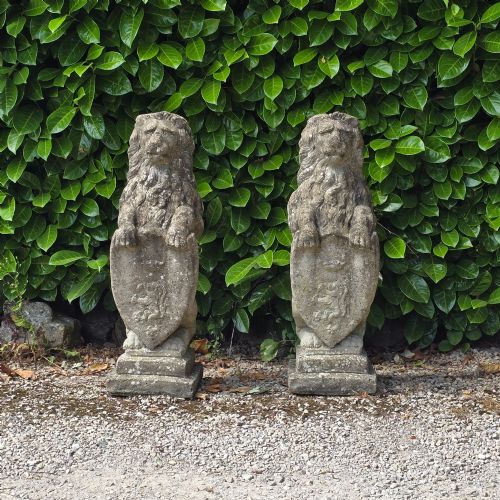
The most common examples on this page stem from the nineteenth and twentieth centuries, taking the form of Black Forest animals, Chinese hardwood figures, and Italian stone or marble lions. Buyers encounter everything from small wooden bookends to monumental garden statuary.
Origins stretch from European workshops and Swiss carvers to Qing Dynasty China and Anglo-Indian studios, reflecting diverse cultural traditions in sculptural pairs. Each set retains the distinct stylistic markers of its period, whether Baroque, Art Deco, or Folk Art.
Materials and methods
Carvers shaped these pieces primarily from woods such as oak, limewood, teak, and hardwood, often employing hand tools to achieve intricate surface detail. Artisans also utilised stone, marble, alabaster, limestone, and bone, depending on the intended weight and setting of the figures.
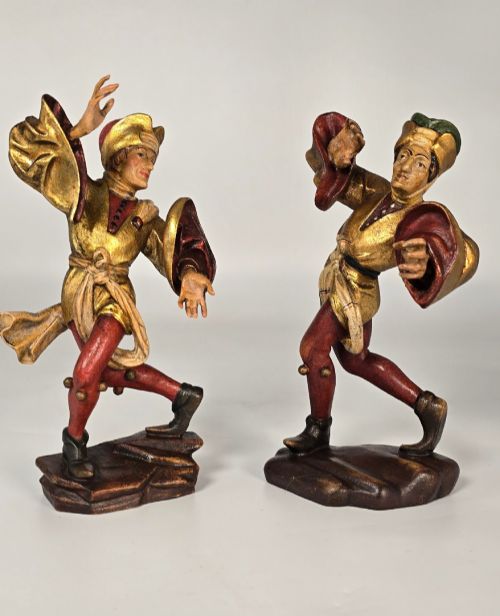
Finishes vary according to regional tradition, incorporating polychrome paint, gold leaf, lacquer, and ebonisation to protect and define the carved surface. Guilds and regional workshops passed down specific sculpting and joining techniques across generations, ensuring structural cohesion in larger figures.
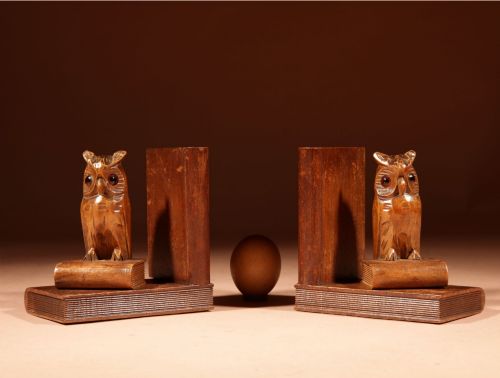
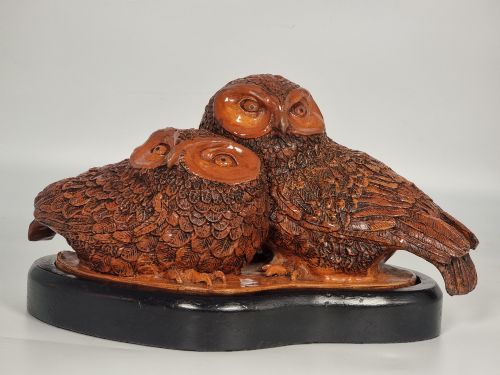
Among the carved animals standing guard, an amusing pair of owls shares space with stone water buffaloes and bookbinding bears.
Evaluating sculptural quality
Original surface preservation heavily influences the standing of a piece, with undisturbed patinas, authentic gilding, and early polychrome paint retaining greater visual integrity. Matched proportions and balanced stances between the two figures demonstrate the care taken during their creation.
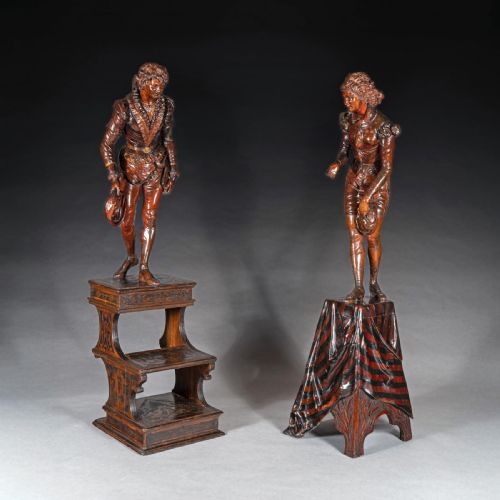
Bright And Sons·Valentino Besarel
The Pair of Carved Statues Glossary
- Black Forest
- A style of wood carving originating from the Swiss and German border regions, typically depicting bears, owls, and forest animals in limewood or oak. These pieces often exhibit deep relief and naturalistic textures.
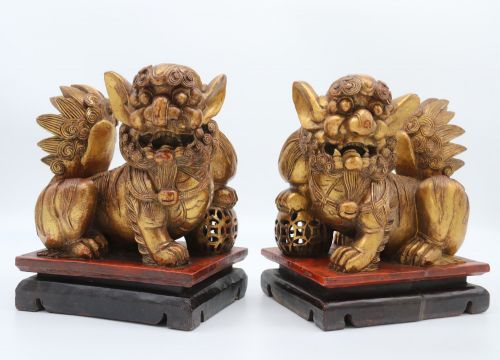
- Foo Dog
- A traditional Chinese guardian lion, usually shown in pairs guarding entrances or sacred spaces. They are frequently rendered in carved hardwood, stone, or porcelain.
- Grand Tour
- A nineteenth-century tradition where travellers collected classical sculptures and architectural models in Italy. These tourist pieces often utilised serpentine marble or alabaster.
- Serpentine Marble
- A dark green, mottled stone prized by Italian sculptors for its smooth finish and rich colour variation. It appears frequently in nineteenth-century animal models and architectural ornaments.
- Polychrome Paint
- A multi-coloured surface decoration applied to wood or stone sculptures. It highlights anatomical details and drapery on figures from various periods.
Pair of Carved Statues: Frequently Asked Questions
How do I style a pair of carved statues?
Place matching figures symmetrically on mantelpieces, consoles, or pedestals to anchor a room's focal point. Ensure the scale of the statues complements the surrounding furniture and architectural proportions.
Allow adequate lighting to highlight the carved textures and surface finishes of the wood or stone. Avoid crowding the figures with too many surrounding objects so their silhouettes remain distinct.
Were these statues meant for indoor or outdoor use?
Many examples on this page are carved from wood, limewood, and delicate stone, making them strictly suited for interior display. These indoor pieces require stable humidity and temperature away from direct sunlight.
Heavier items formed from limestone, granite, or durable marble were designed for gardens and exterior architectural placement. Weathered surfaces on stone figures often indicate long periods spent outdoors.
How can I tell the period of a wooden carving?
Examine the tool marks, wood species, and wear patterns across the surface of the figures. Eighteenth-century oak pieces often display hand-adzed backing and deeper shrinkage cracks, while nineteenth-century works show finer mechanical aids.
Stylistic cues such as Art Deco streamlining or Victorian ebonising provide clear temporal boundaries. Comparing the carving depth and patina with dated examples helps confirm the era.
What is the difference between a matched pair and an original pair?
An original pair was carved together by the same hand or workshop to sit as complementary counterparts. These figures share identical timber stocks, wear characteristics, and subtle chisel techniques.
A matched pair brings together two separate statues of similar size, subject, and period that were originally created apart. Dealers unite them later based on their shared aesthetic and dimensions.