



Christian Wooden Figure Sculptures
These Christian wooden figure sculptures range from pre-16th century carvings to nineteenth-century devotional works, offering tangible pieces of religious history for your home.
Christian Wooden Figure Sculptures
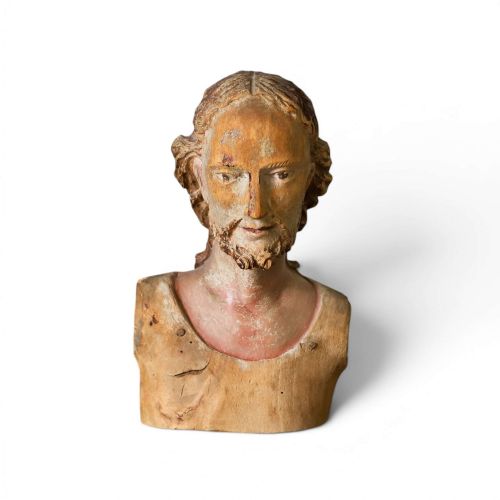
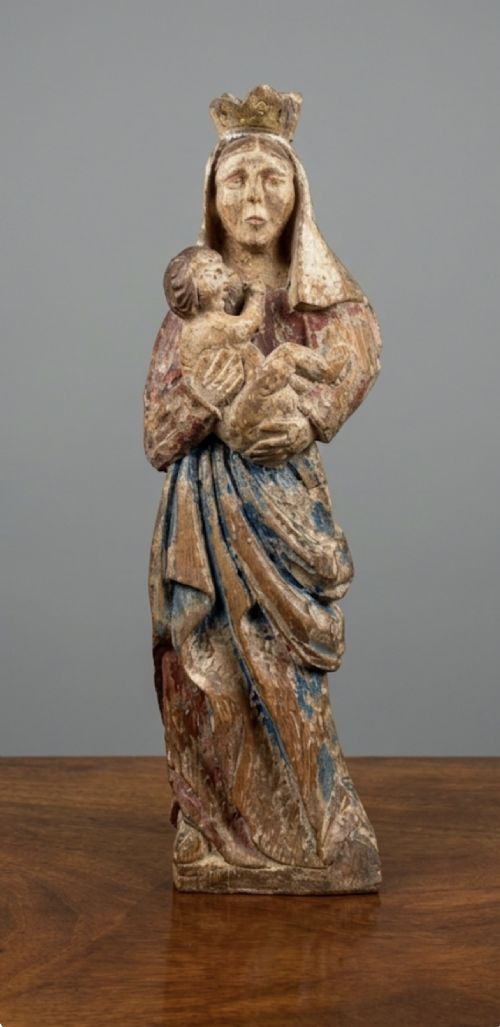
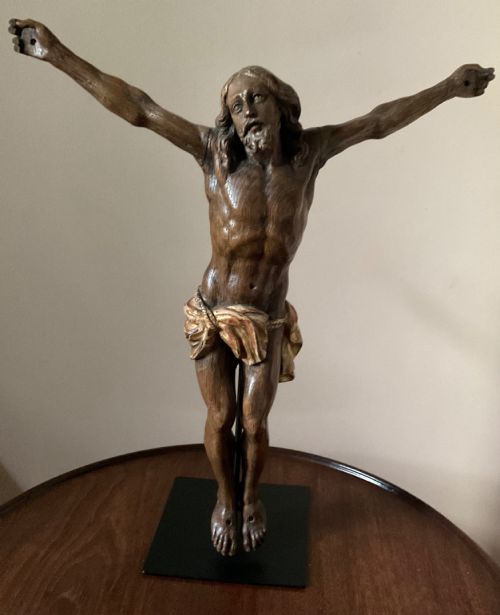
When you search for Christian wooden figure sculptures, you encounter devotional carvings spanning multiple centuries, from pre-sixteenth century pieces to nineteenth-century revivals. The selection includes representations of Mary and Jesus, the Madonna and child, corpus Christi figures, and busts of saints such as St. Paul.
You are most likely to meet oak and polychrome examples on this page, originating from regions such as Italy, Germany, and the Low Countries. These forms include wall sculptures, free-standing statues, and detailed busts created for religious observance.
Materials and construction
The makers relied primarily on oak and olive wood as foundational materials, shaping the timber through hand-carving techniques. These pieces often received a layer of gesso to prepare the wooden surface for further decoration.
Angels and saints keep silent watch across these centuries, carved from sturdy oak and draped in stubborn flakes of gold leaf.
Assessing quality
Quality rests in the depth and precision of the carving, particularly in the rendering of facial expressions and the folds of drapery. Sculptures that retain their original polychrome paint and gold leaf display a higher degree of historical integrity.
The origin and period also influence the character of the piece, with earlier pre-sixteenth century and seventeenth-century works showing distinct regional carving traditions. The preservation of the wood surface dictates the visual impact of each sculpture.
The Christian Wooden Figure Sculptures Glossary
- Polychrome
- Decorated in a variety of colours. This technique was frequently applied to wooden religious figures to create realistic depictions.
- Gesso
- A plaster mixture used as a coating for a base before painting. It provided a smooth surface for applying polychrome paint and gold leaf.
- Corpus Christi
- Latin for the body of Christ. This term specifically describes sculptures of the crucified Christ without the cross.
- Pieta
- A subject in Christian art depicting the Virgin Mary cradling the dead body of Jesus. These works often appear in early European wood carvings.
- Gold leaf
- Gold beaten into extremely thin sheets used for gilding. It highlights specific details and brings radiance to ecclesiastical sculptures.
Christian Wooden Figure Sculptures: Frequently Asked Questions
How old are these sculptures?
The pieces span from the pre-sixteenth century through to the nineteenth century, encompassing various historical periods.
Specific dates are attributed based on stylistic evidence, material use, and regional carving characteristics.
Where were these figures made?
Origin locations include Italy, Germany, and the Low Countries, reflecting distinct European ecclesiastical traditions.
Regional workshops utilised local timbers like oak and olive wood to produce these devotional objects.
What is polychrome paint?
Polychrome refers to the multi-coloured paint application found on the surface of many historical wooden sculptures.
This finish was often applied over a gesso layer to enhance the realism and devotional appeal of the figure.
How should I display them?
Many examples are designed as wall sculptures or free-standing figures suited for interior placement.
Placing them away from direct heat sources helps protect the antique wood and original surface finishes.