



Carved Timber Sacred Art
Carved timber sacred art brings centuries of devotion into a room, offering tactile presence through historic wood figures and panels.
Carved Timber Sacred Art
Carved timber sacred art encompasses religious sculptures, statues, figures, and wall panels created for veneration and contemplation across multiple centuries. A buyer searching this phrase encounters devotional works ranging from medieval pieces to later folk art interpretations.
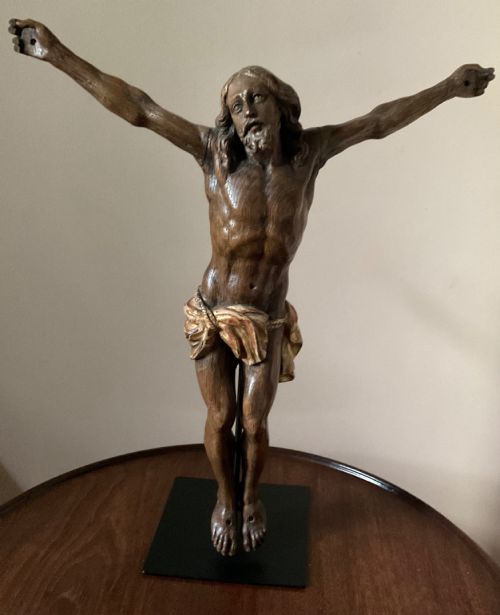
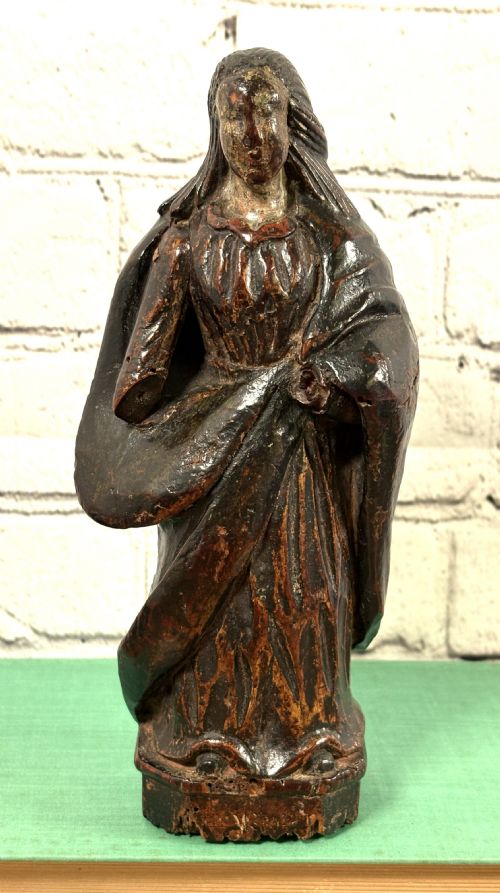
The versions most frequently met on this page span the seventeenth, eighteenth, and nineteenth centuries, alongside pre-sixteenth century examples. Common forms include figures of saints, the Virgin Mary, and corpus Christi carvings originating from continental workshops.
Makers and regional styles vary considerably, moving from late gothic expressions to baroque detailing and German folk art traditions. Each object reflects the devotional requirements and sculptural vernacular of its specific period and origin.
Materials and construction methods
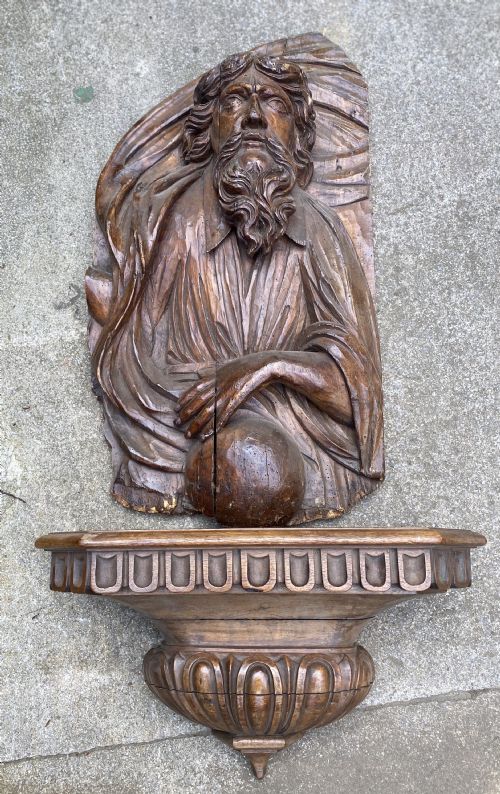
The pieces rely on a variety of timbers suited to intricate carving, notably limewood, oak, pine, applewood, fruitwood, and walnut. Artisans selected these woods for their grain and stability, allowing for deep relief and fine facial detailing on figures and panels.
Surface treatments frequently involve polychrome paint, parcel gilt, and natural waxed finishes that have weathered over centuries. These applications protected the timber while adding visual splendour to figures intended for altars and private shrines.
Keep an eye out for the subtle smile of a medieval saint, caught by a carver who clearly enjoyed his day at the bench.
Evaluating sculptural quality
The integrity of the timber and the depth of the surviving tool marks also define the standard of a piece. Retaining early surface layers without excessive later restoration preserves the historical authenticity prized by collectors.
Franz Keller
The Carved Timber Sacred Art Glossary
- Polychrome
- Painted in several colours. This surface treatment was widely applied to wood sculptures to enhance realism.
- Parcel Gilt
- Partially gilded with gold leaf or powder. It highlights specific garments or halos on sacred figures.
- Limewood
- A fine-grained hardwood favoured by continental carvers. It allows for microscopic detail without splitting.
- Corpus Christi
- The body of Christ on the cross. These figures form the central focus of historic crucifixes.
- Anna Selbdritt
- An iconic grouping showing Saint Anne, the Virgin Mary, and the infant Jesus. This subject appears frequently in late gothic woodcarvings.
Carved Timber Sacred Art: Frequently Asked Questions
How do I date a wood carving?
Dating relies on tool marks, timber choice, and stylistic markers such as drapery folds and facial expressions. Comparing these elements with documented examples from the same century provides reliable guidance.
Changes in polychrome pigments and the natural ageing of woods like oak, limewood, or pine offer further clues to a piece's true era.
Were these figures painted originally?
Many sacred carvings were finished with gesso and polychrome paint, though centuries of cleaning have left some down to bare timber. Traces of original pigment often survive in recessed folds.
Collectors value both brightly painted surfaces and pieces that have mellowed to exposed wood over long periods.
How should I care for historic carvings?
Keep wooden sculptures away from direct heat sources and sudden humidity shifts to prevent the timber from splitting. A stable indoor climate is essential for preserving ancient wood.
Dust gently with a soft, dry brush and avoid applying modern polishes or cleaning agents to historic surfaces.
Where were these sculptures displayed?
These works originated in churches, private domestic shrines, and wayside chapels as focal points for prayer. Larger statues stood on altars while panels hung on interior walls.
Today, they integrate well into modern interiors as standalone sculptural objects placed on consoles or mounted securely.