


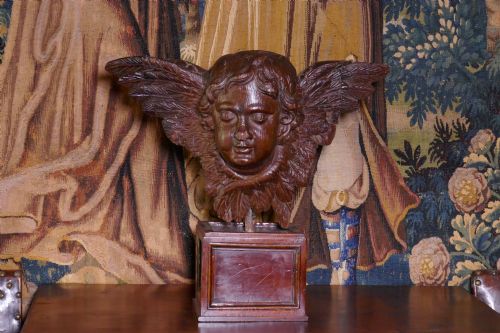

Ecclesiastical Carved Head
An ecclesiastical carved head brings centuries of devout craftsmanship and solemn character directly into a room.
Ecclesiastical Carved Head
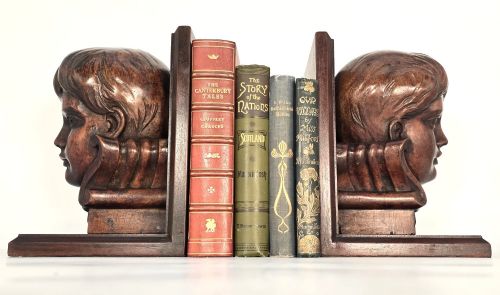
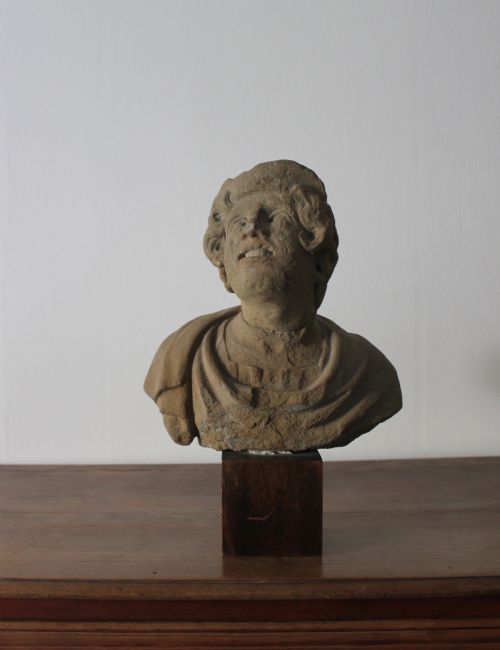
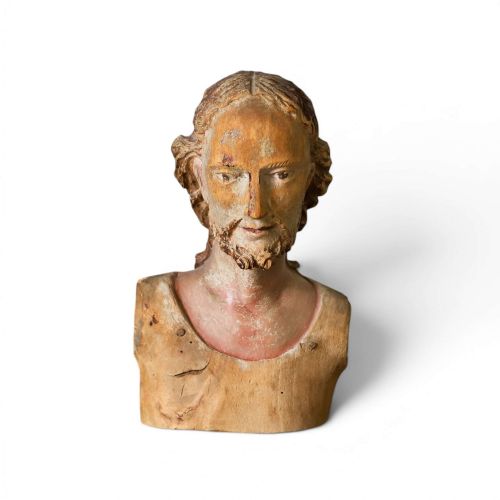
An ecclesiastical carved head encompasses sculptural fragments, architectural salvage, and devotional figures drawn from centuries of religious art. Buyers searching for an ecclesiastical carved head encounter wall sculptures, bookends, and panels depicting saints, monks, and cherubs.
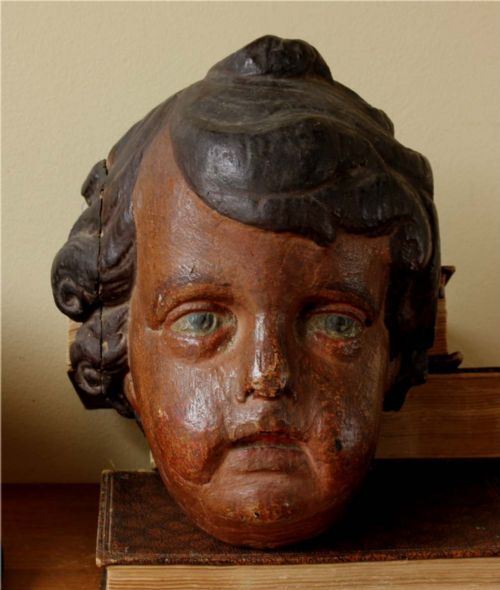
The most common versions on this page are oak and polychrome cherub heads originating from the seventeenth and eighteenth centuries, alongside nineteenth-century Gothic revival studies and pre-sixteenth century stone busts.
These pieces function as striking focal points in a study or library, often presented as wall carvings or mounted busts rather than complete statues.
Materials and methods
Many wooden examples received layers of gesso, gold leaf, or polychrome paint to enhance their devotional appearance and catch candlelight in dim interiors. Stone and sandstone pieces relied entirely on chisel work, capturing solemn expressions through the direct removal of material.
Several cherub heads stare out across the centuries with expressions of mild astonishment, proving that divine messengers also possessed personality.
Quality and execution
The distinction between average and exceptional work lies in the depth of relief and the vitality of the carving. Master carvers imbued wooden and stone faces with expressive individuality, whereas lesser pieces rely on rigid symmetry and shallow cutwork.
The survival of original surface treatments, such as polychrome pigments and gold leaf, significantly elevates a piece. Later overpainting or stripped surfaces alter the visual integrity of an ecclesiastical carved head, shifting focus away from the original hand of the maker.
The Ecclesiastical Carved Head Glossary
- Polychrome
- Painted in several colours. This surface treatment was frequently applied to wooden sculptures and cherub heads to create a lifelike devotional appearance.
- Cherub
- A winged angelic spirit. These figures appear frequently in baroque panels and carved wooden bookends.
- Putto
- A figure of a small chubby male child, often winged. They feature prominently in Italian and French baroque carvings on this page.
- Poppy head
- An ornamental finial atop the end of a bench or pew. These architectural elements often take carved floral or figural forms in Gothic design.
- Gesso
- A plaster mixture used as a smooth base for paint or gold leaf. Artisans applied it to wood before gilding.
Ecclesiastical Carved Head: Frequently Asked Questions
What are ecclesiastical carved heads made of?
These pieces are carved from various hardwoods including oak, mahogany, walnut, and olive wood, as well as sandstone and stone. Many wooden examples feature gesso, gold leaf, or polychrome paint finishes.
Surviving surfaces often show the age and handling of the material through worn pigments or darkened timber patina.
How were these carved heads used originally?
They served as architectural salvage, church furnishings, poppy heads on pews, and devotional panels in religious settings. Some functioned as wall sculptures or architectural ornaments within baroque and Gothic interiors.
Over time, many were separated from larger structures and preserved as standalone sculptural fragments.
How do I date an ecclesiastical carved head?
Dating relies on stylistic clues such as baroque curves, Gothic revival motifs, and the specific characteristics of the wood or stone. Examining tool marks and the composition of underlying gesso layers also helps determine the period.
Pieces range from pre-sixteenth century stone to nineteenth-century revival work.
How do I display an antique carved head?
These sculptures suit placement on bookshelves as bookends, mounting on walls as panels, or resting on a mantelpiece as a study. Their neutral wood tones and aged stone surfaces blend easily into diverse interior styles.
Secure mounting is essential for heavier stone and dense hardwood pieces.