Gillers Antiques Ltd has dated this piece to the 1880s.
Its colour, texture and mineral composition are visually consistent with fine Badakhshan-type lapis from the historic Sar-e-Sang deposits in Afghanistan, although the geographical origin has not been laboratory tested.
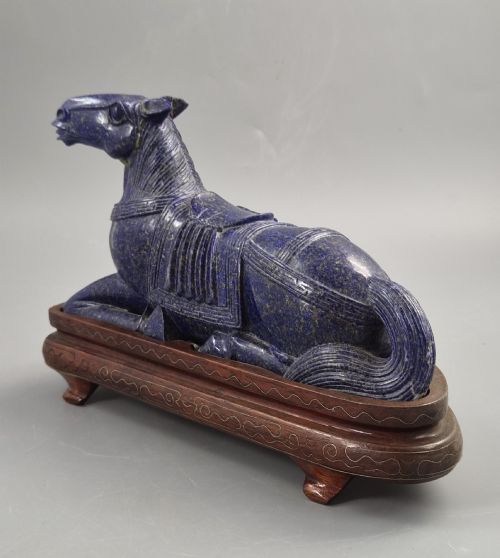
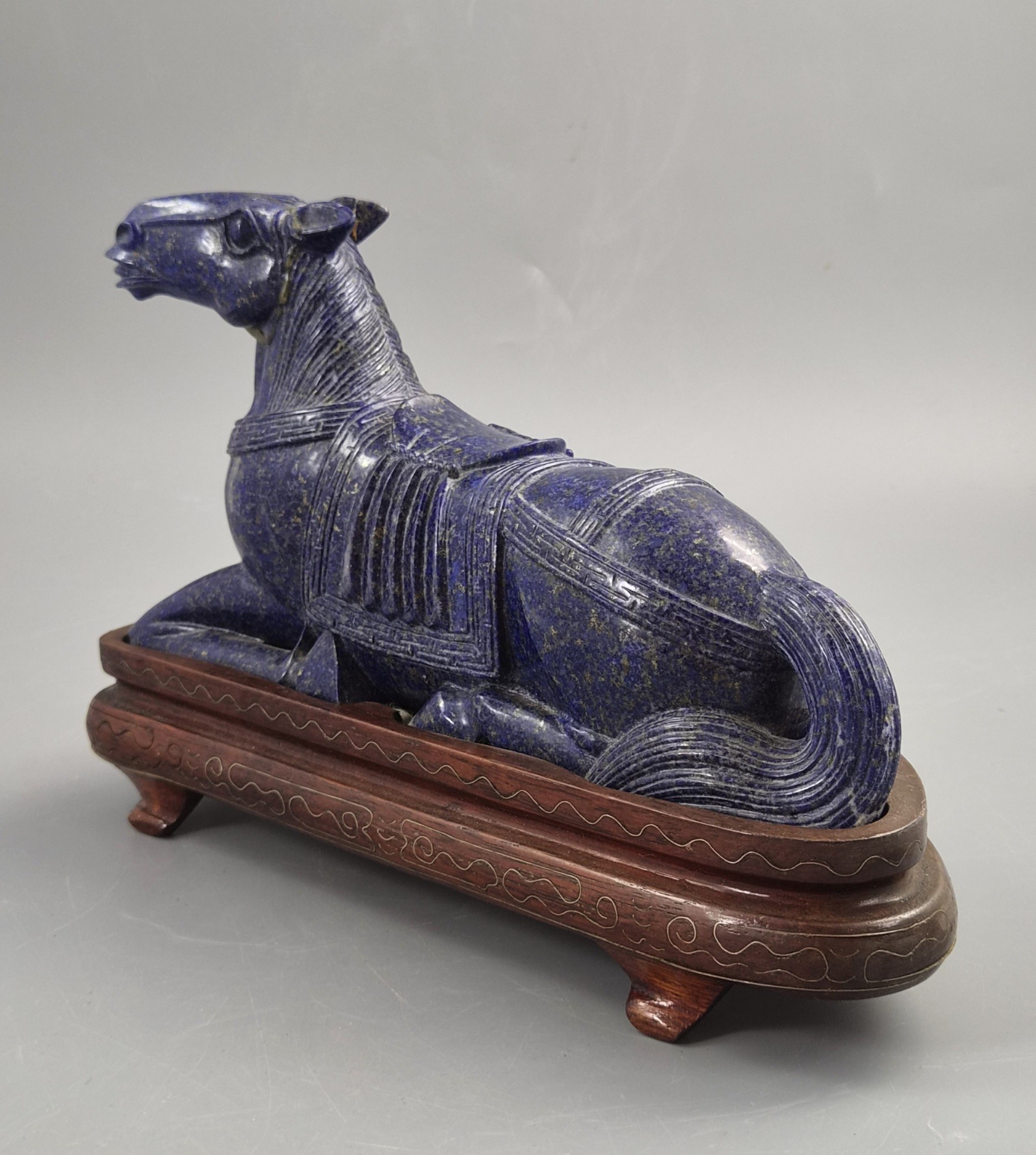
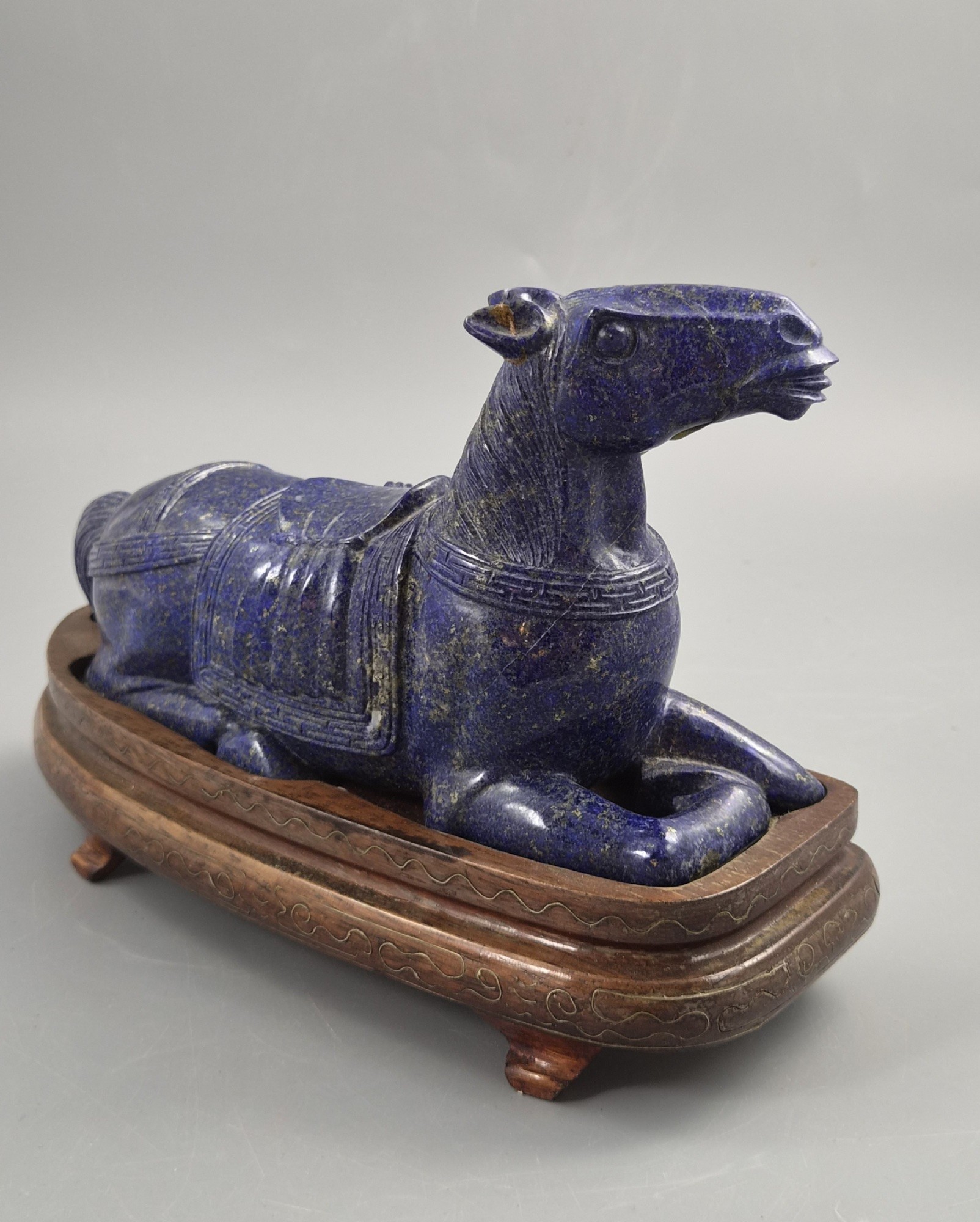
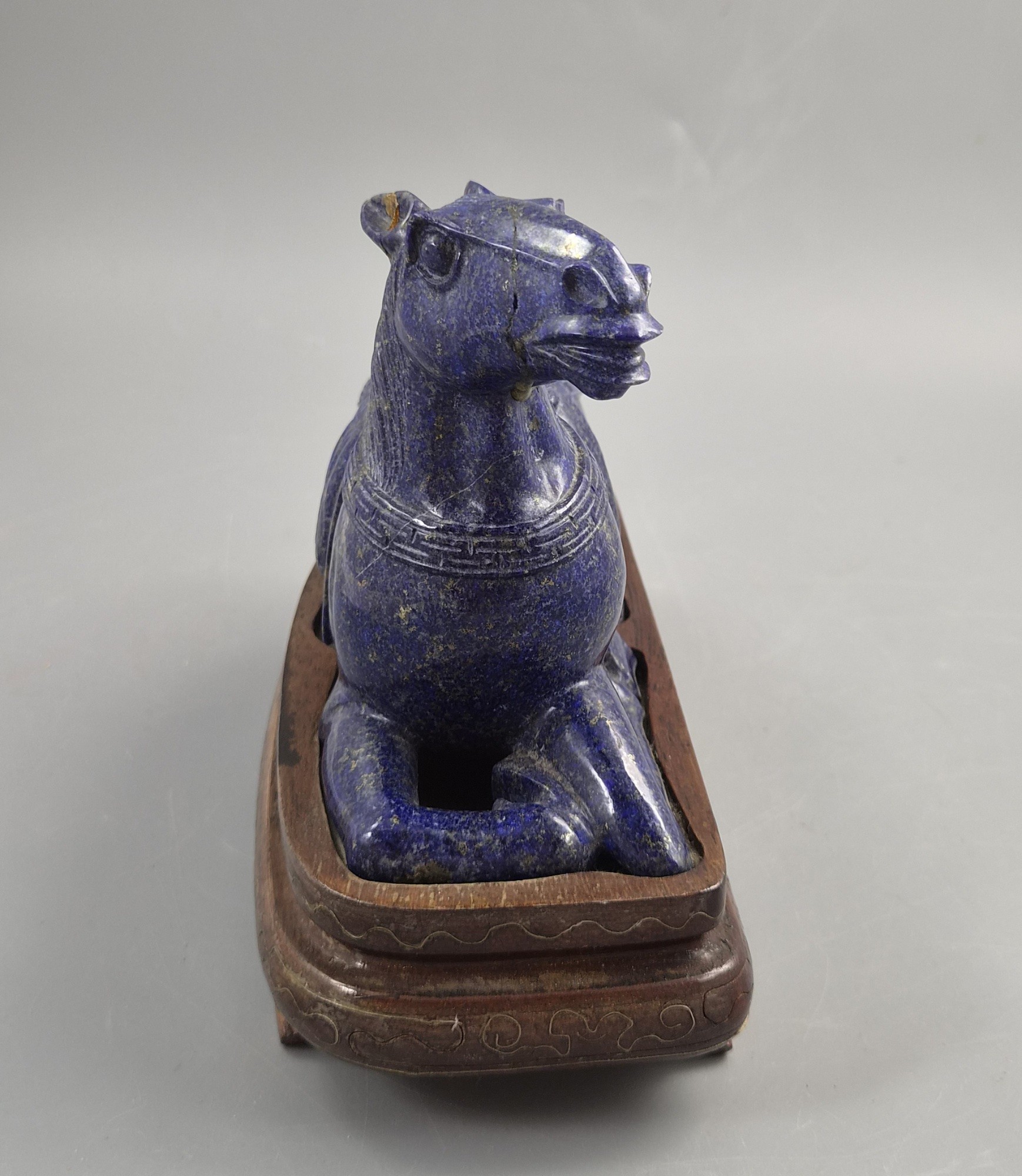
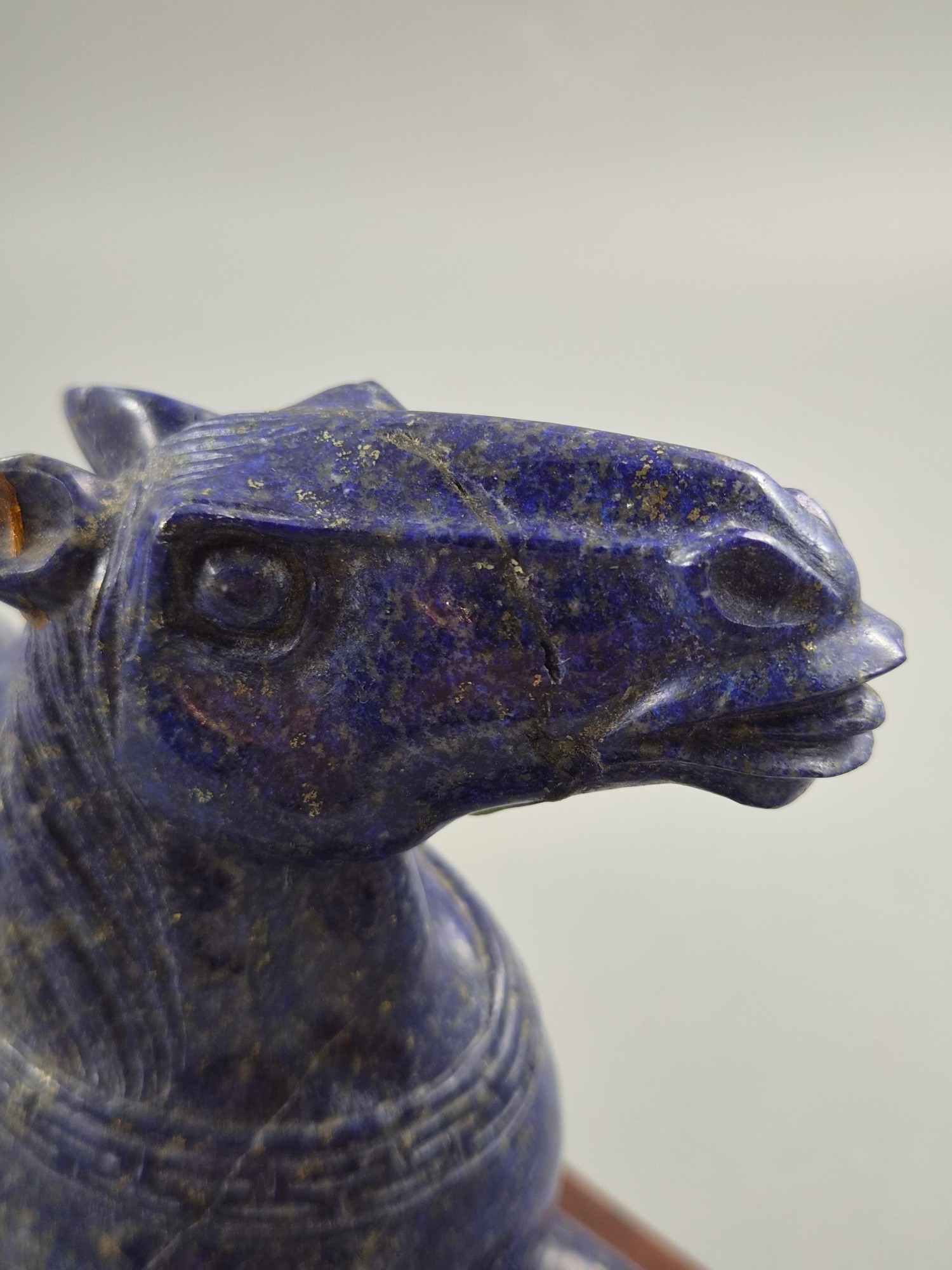
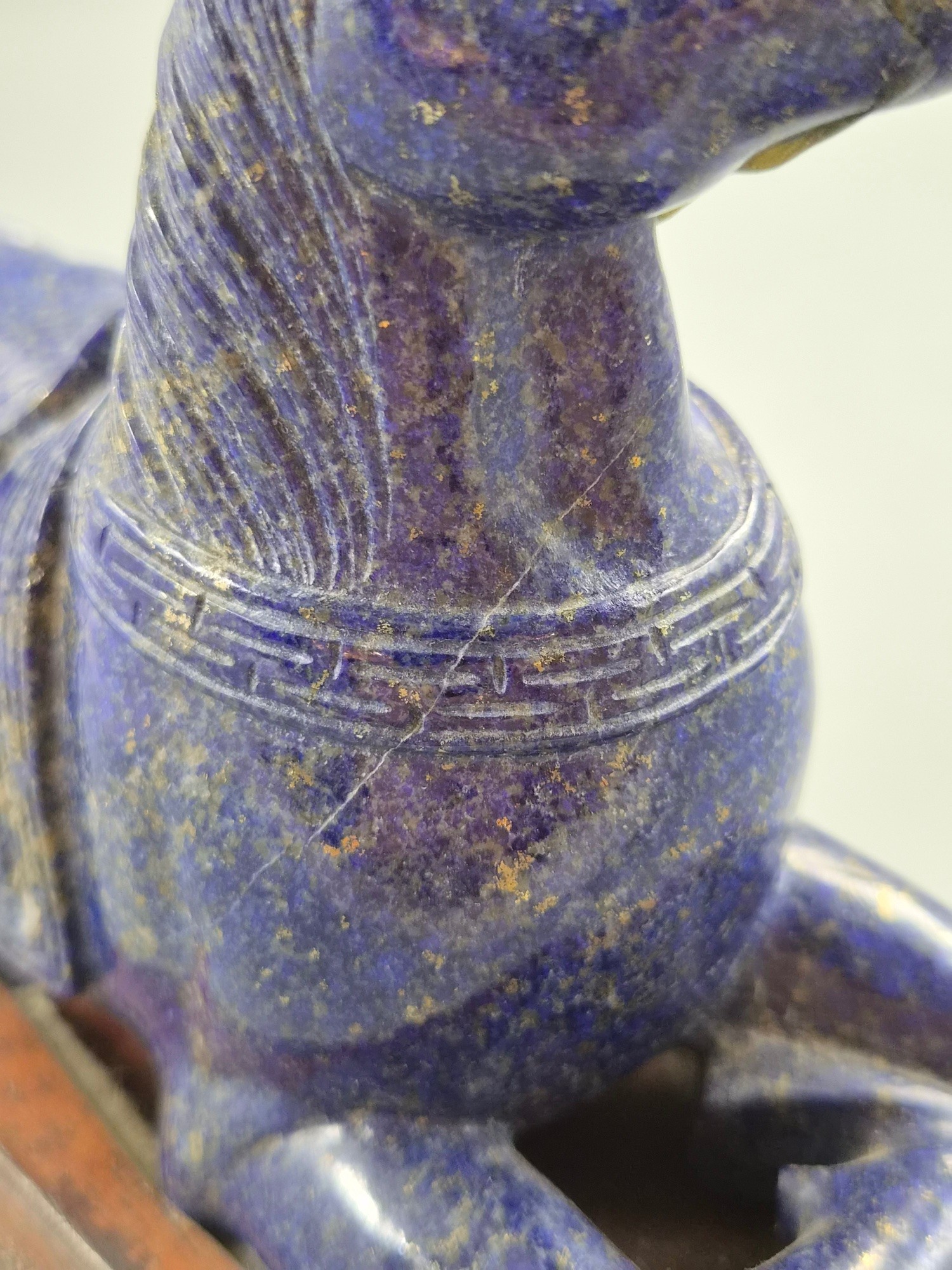
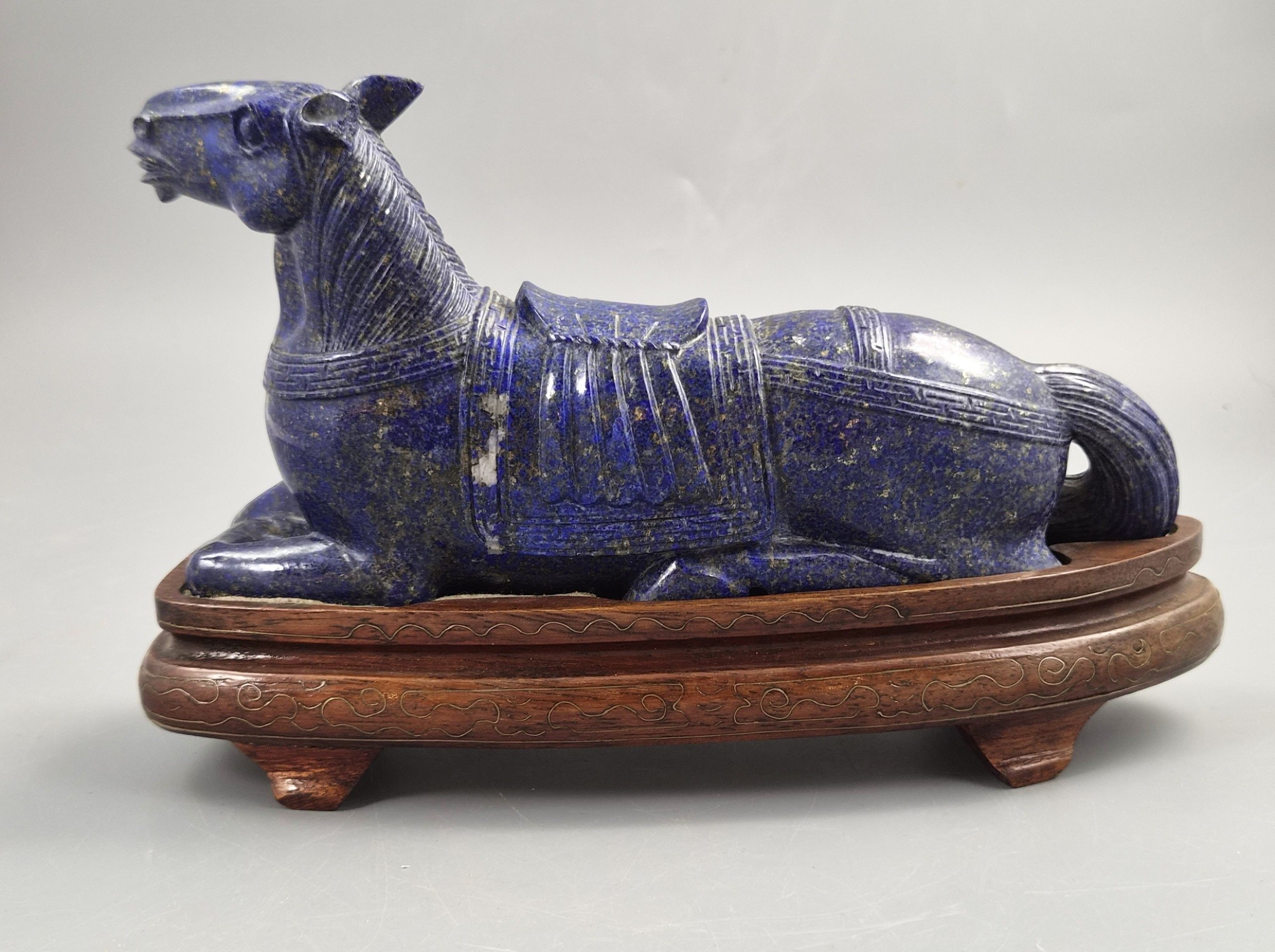
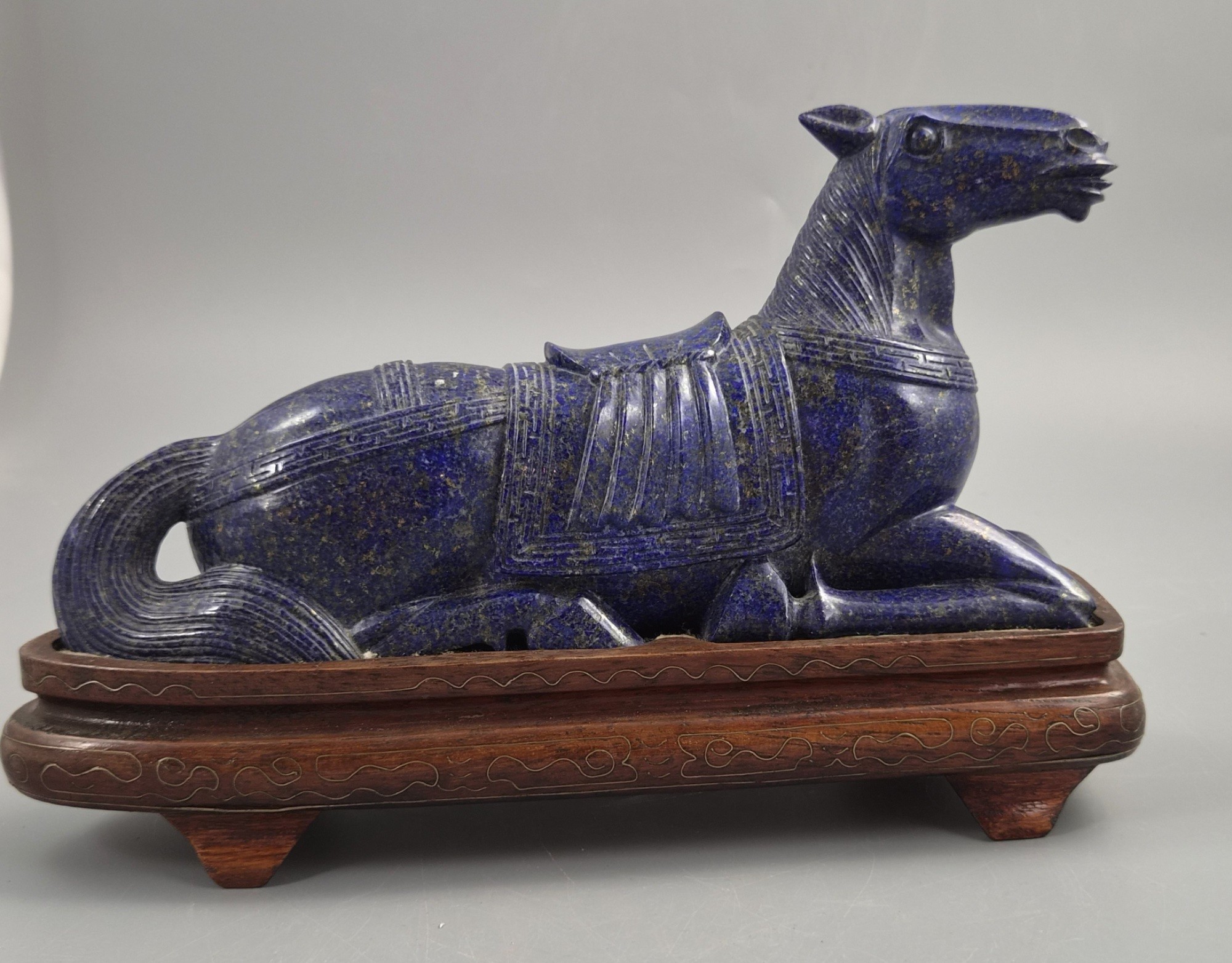
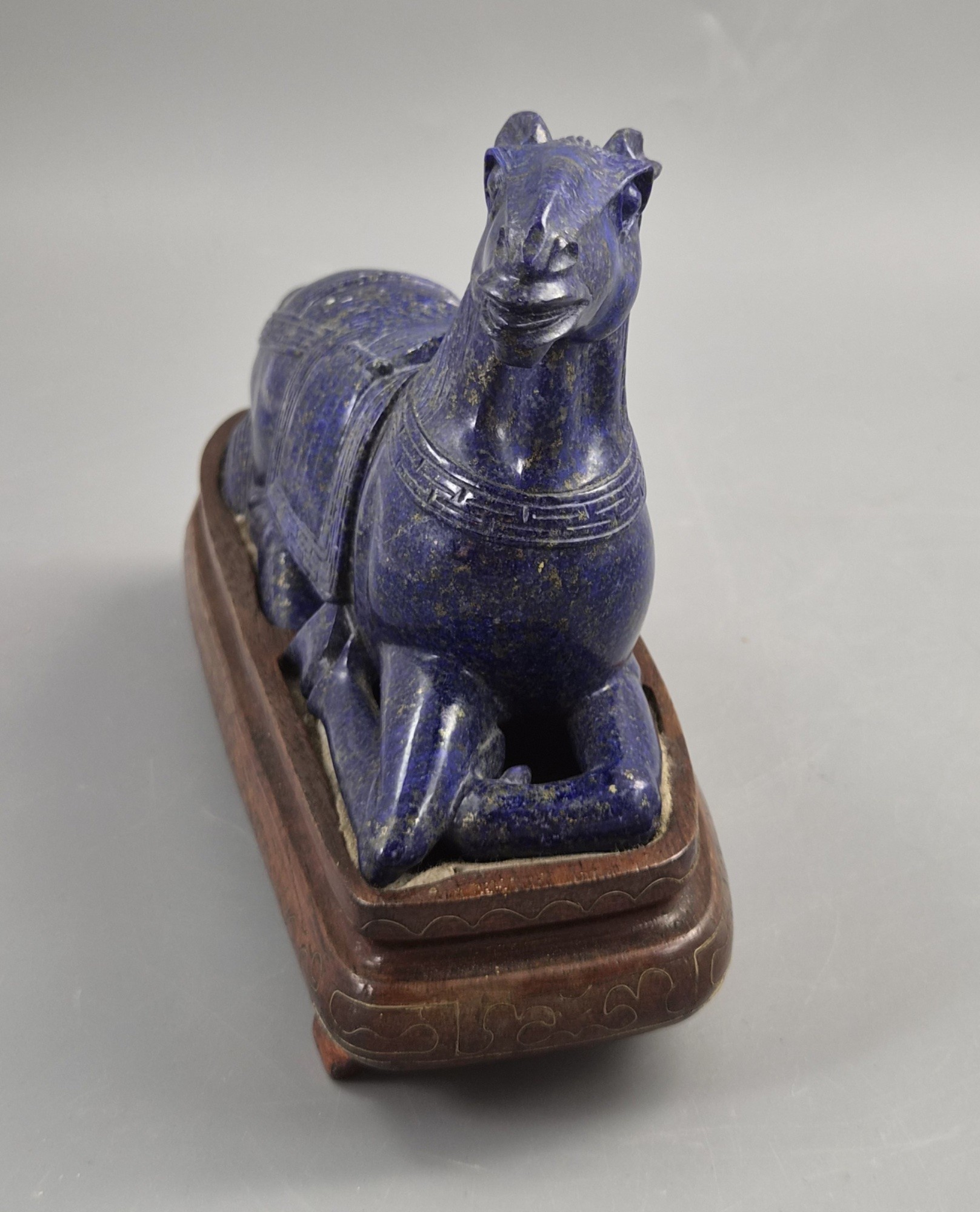
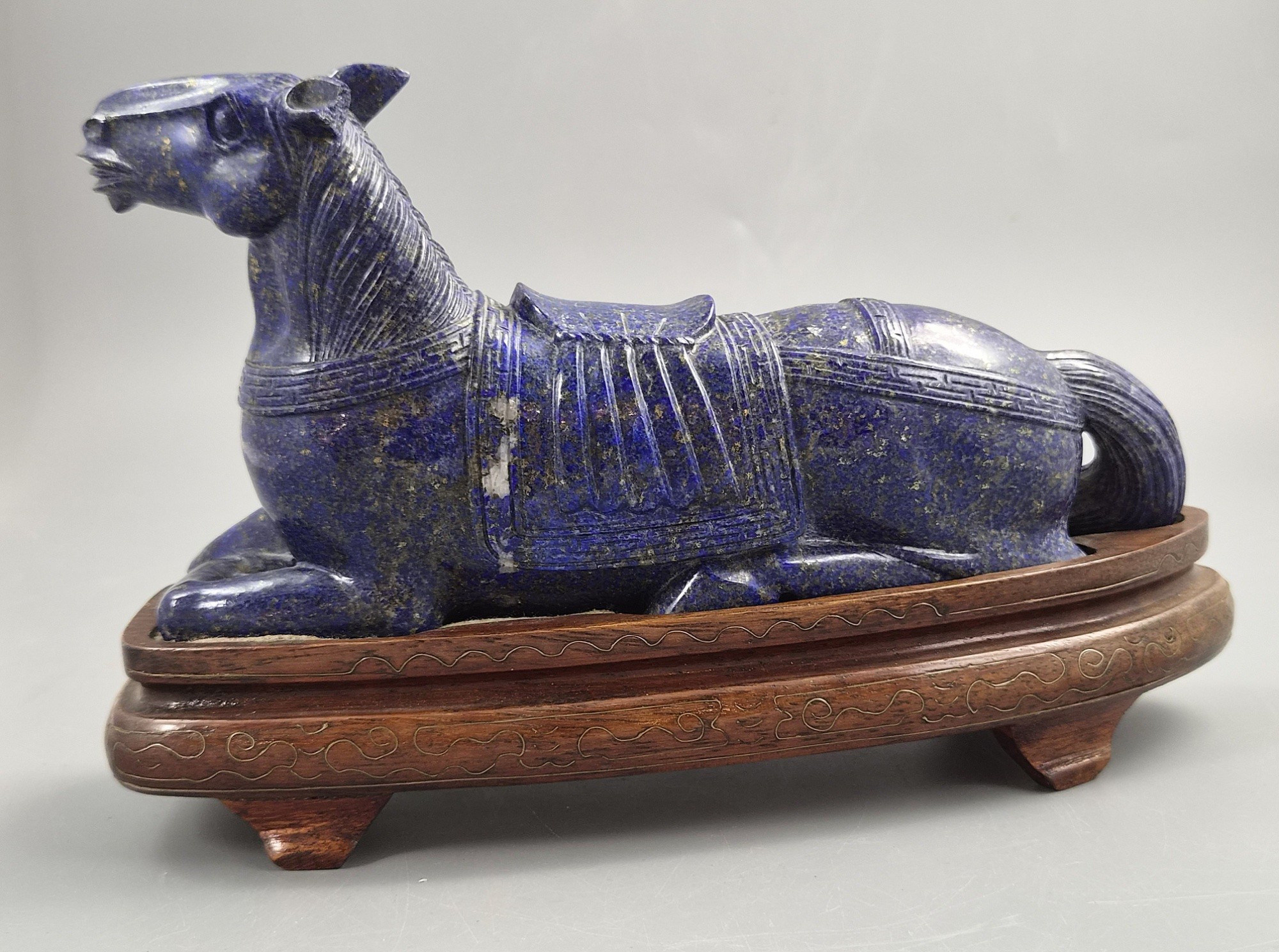
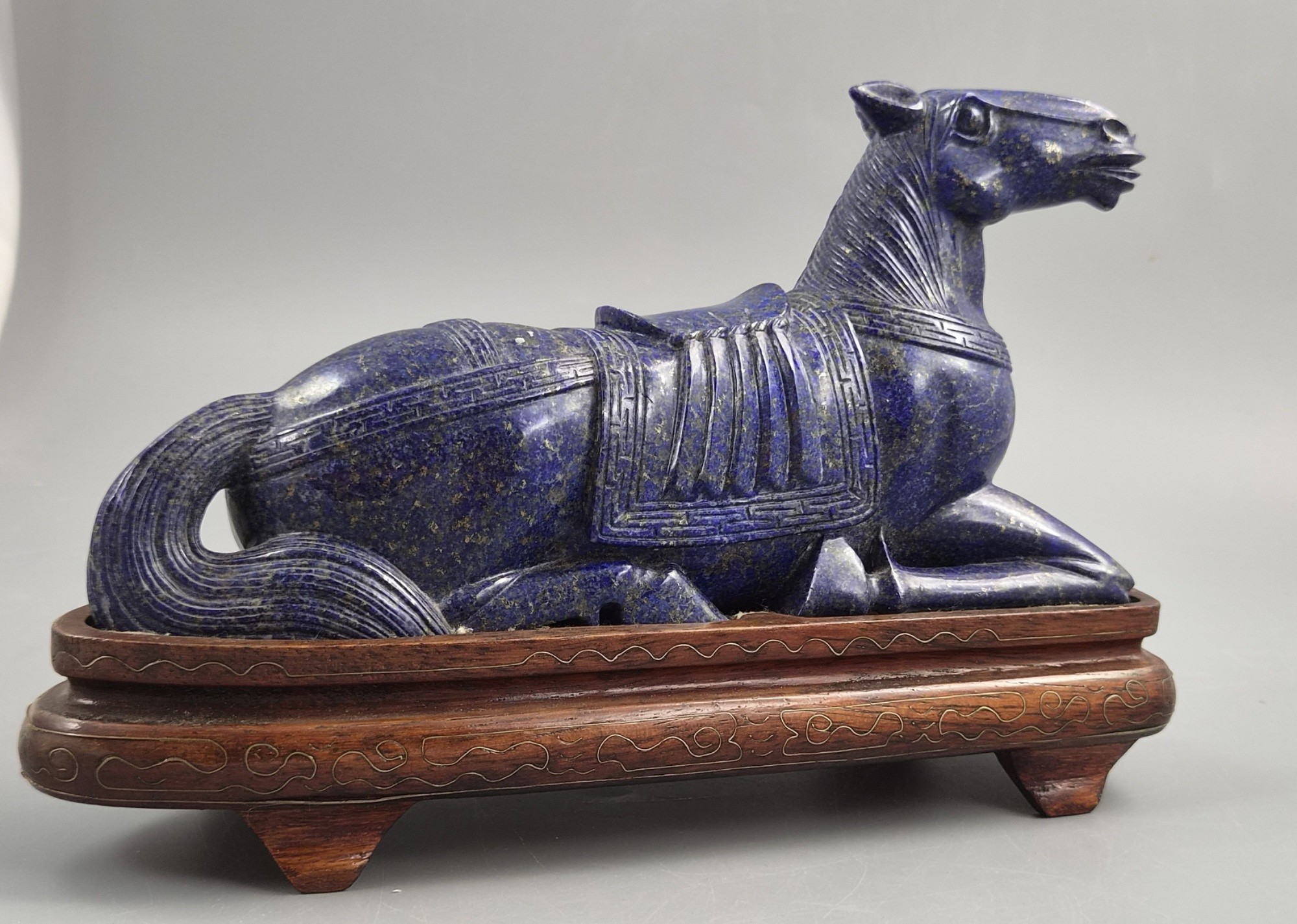
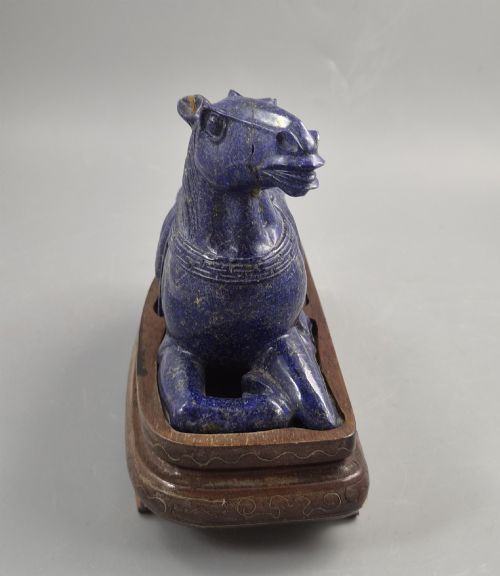
The horses form a complementary pair, modelled recumbent with their heads turned. Particular attention has been given to the saddles, pleated saddle cloths, crisply incised key-fret borders, harness straps, combed manes and long flowing tails. The confident continuous carving is finer and more complex than that found on most commercial lapis carvings.
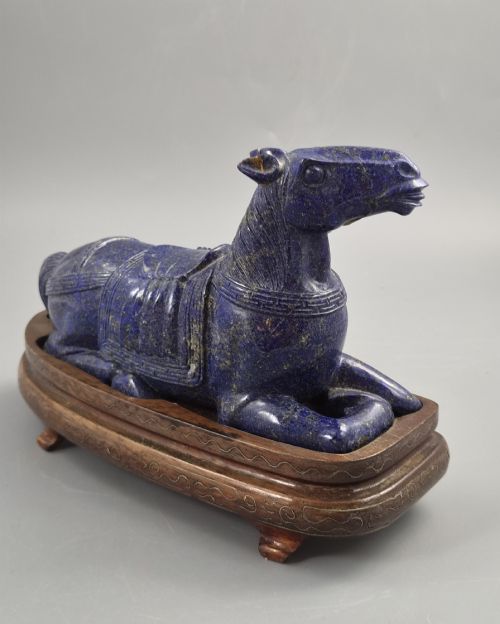
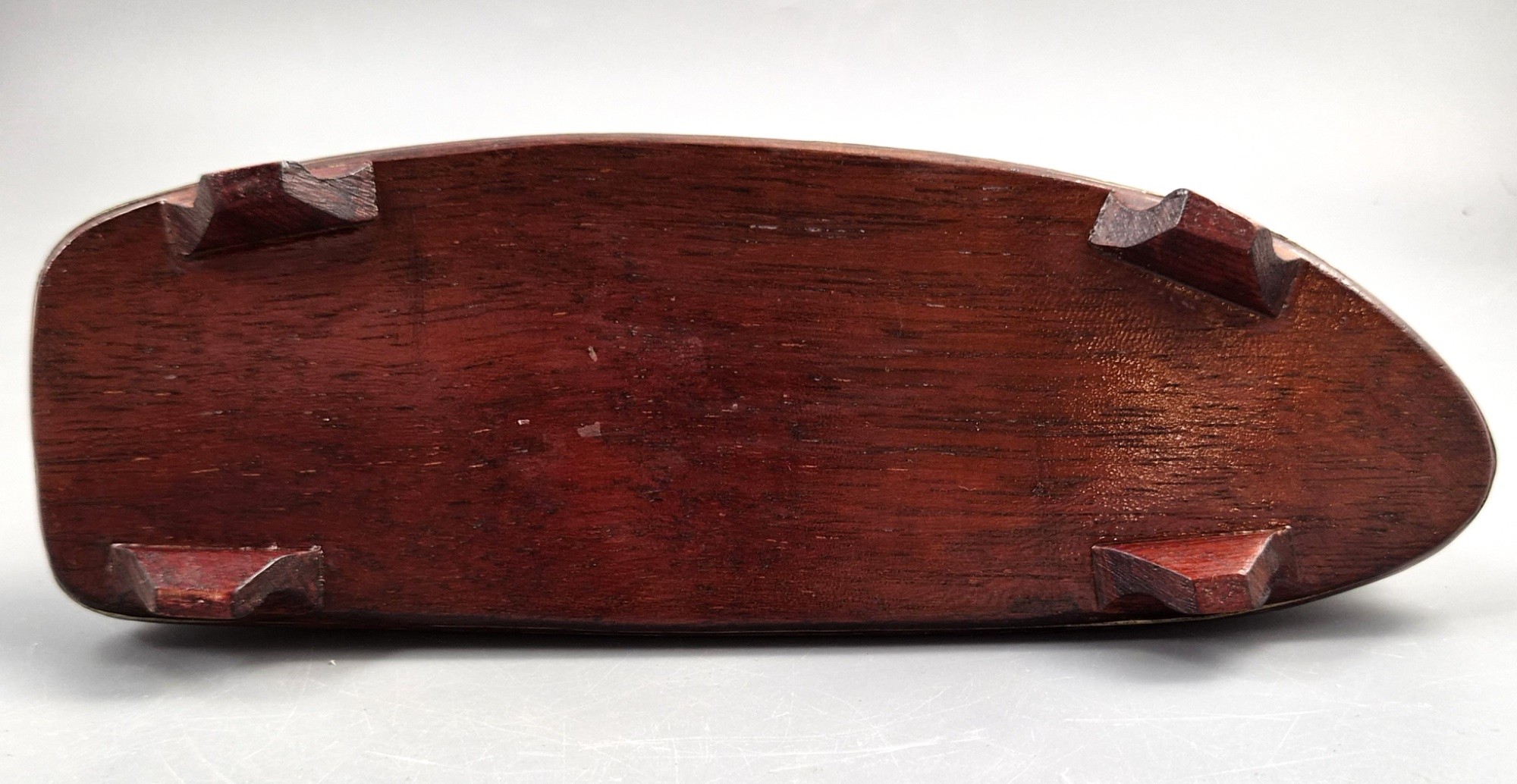
The stands are an important part of the ensemble. Each horse sits within a deep recessed bed carved precisely to its individual lower contours. Old textile cord survives around the perimeter as the original cushioning and retaining material between the stone and wood. This traditional method of mounting, together with the age, construction and wear of the stands, supports the late Qing attribution. The dense reddish-brown hardwood stands are decorated with white-metal wire inlay forming ruyi cloud scrolls and linear borders. A preliminary chemical test produced a reaction consistent with silver; no professional XRF or assay has been undertaken, and the material is therefore described as white metal, apparently silver.
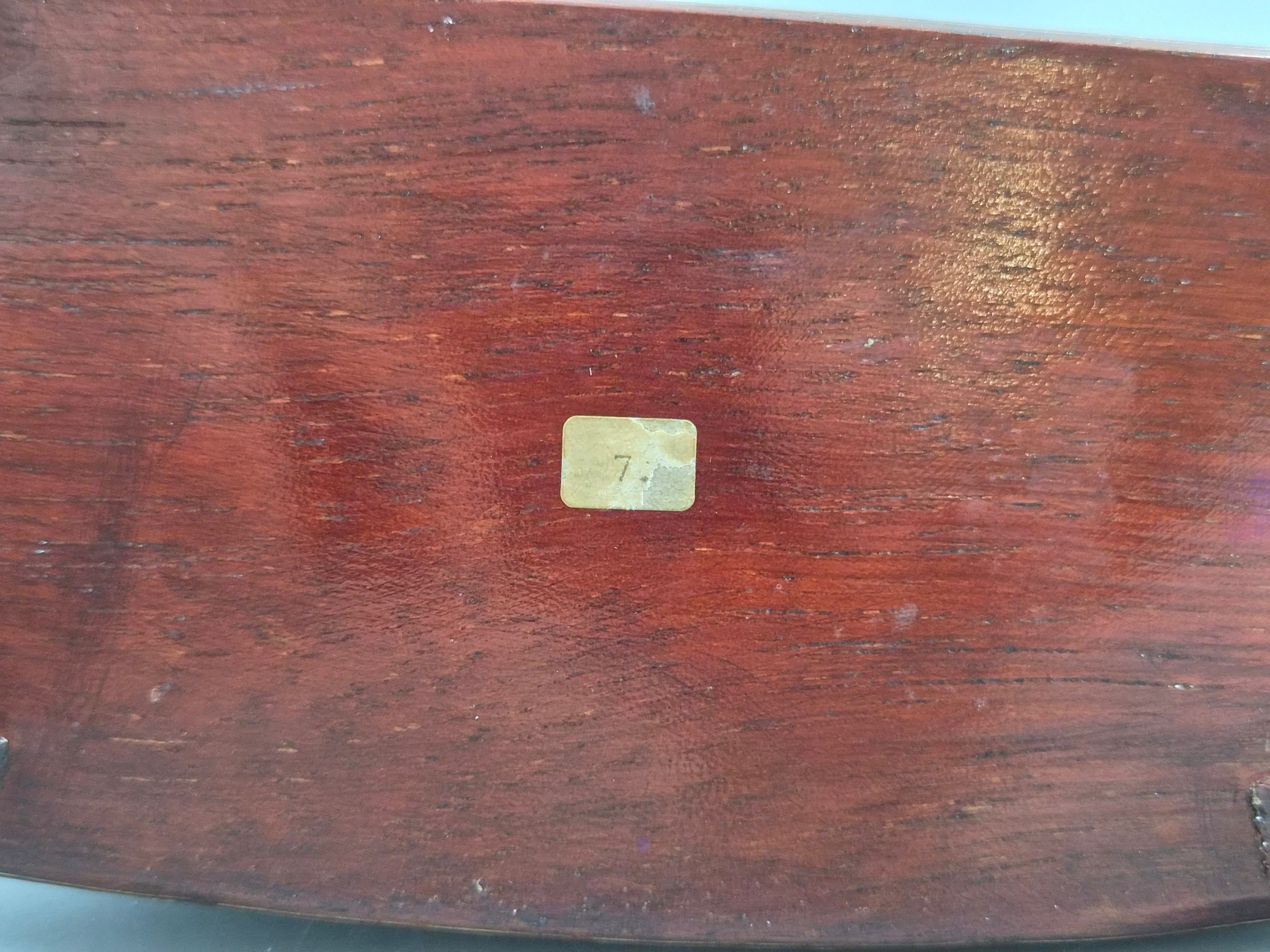
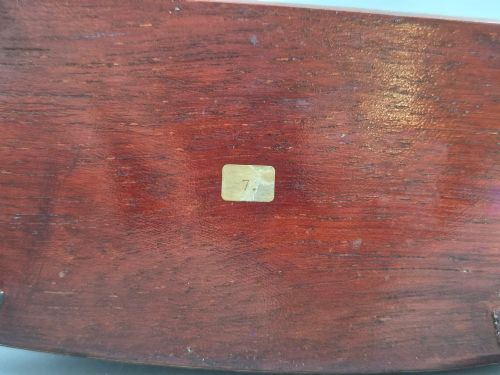
One stand retains an old wax-type inventory label numbered 7. A matching label bearing the same number was formerly present on the second stand but no longer survives. The shared number indicates that the two horses were recorded as a single pair under one inventory number in an earlier collection.
The scale is central to their rarity. Including their stands, the horses measure about 25.5 to 26 cm long and each weighs over 2 kg. Large, closely matched blocks of richly coloured lapis are difficult and costly to source, and most lapis horses on the market are substantially smaller and more schematic, without individually fitted and inlaid period stands. The combination of scale, matched natural material, accomplished carving, bespoke presentation and earlier collection history gives the pair strong appeal for a serious collection of Chinese hardstone carving, as well as a commanding decorative presence.
Dimensions and weights, including stands. Horse 1: height 17 cm; length 25.5 cm; depth 8.5 cm; weight 2093 g. Horse 2: height 17 cm; length 26 cm; depth 9.2 cm; weight 2329 g.
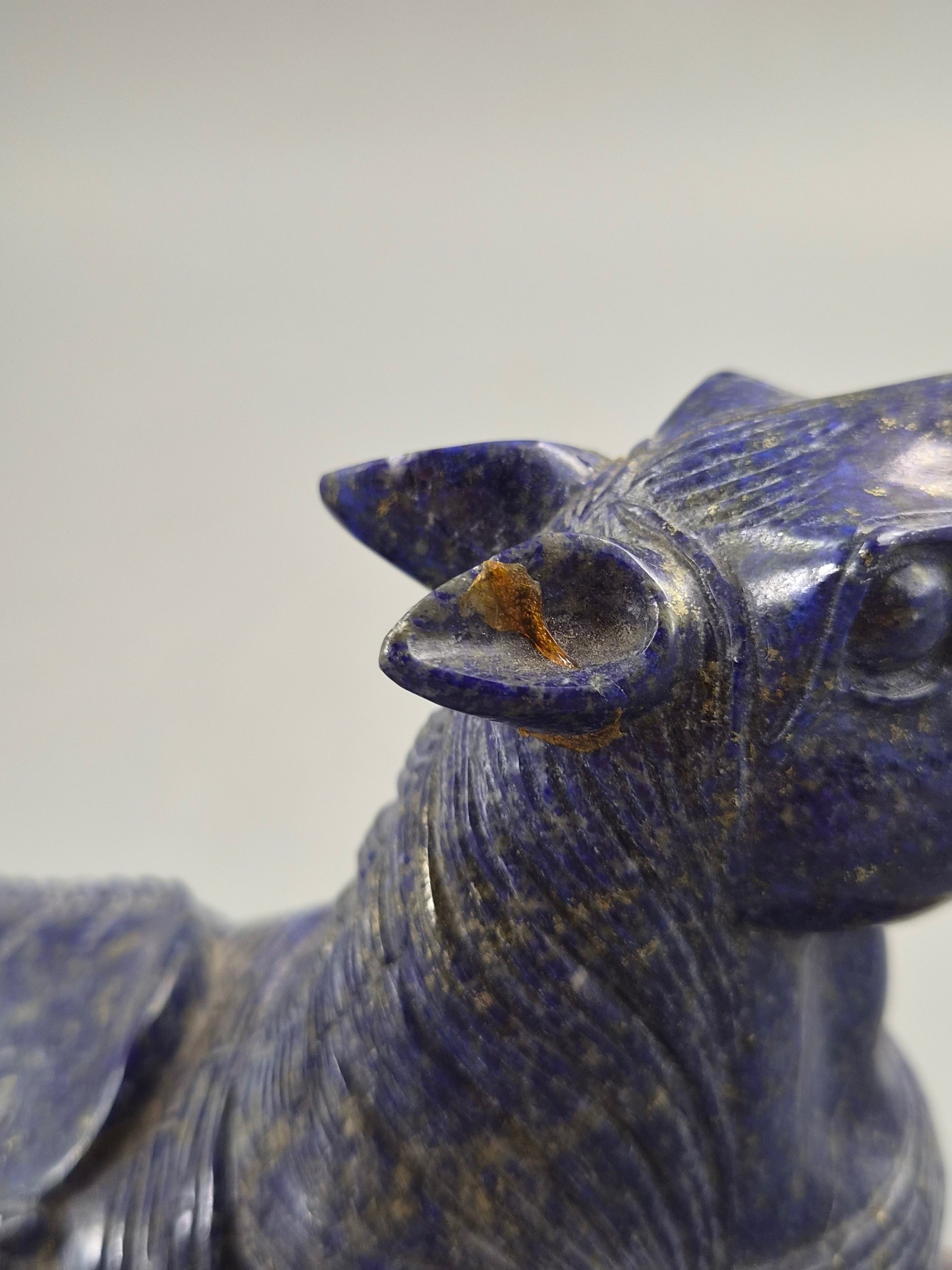
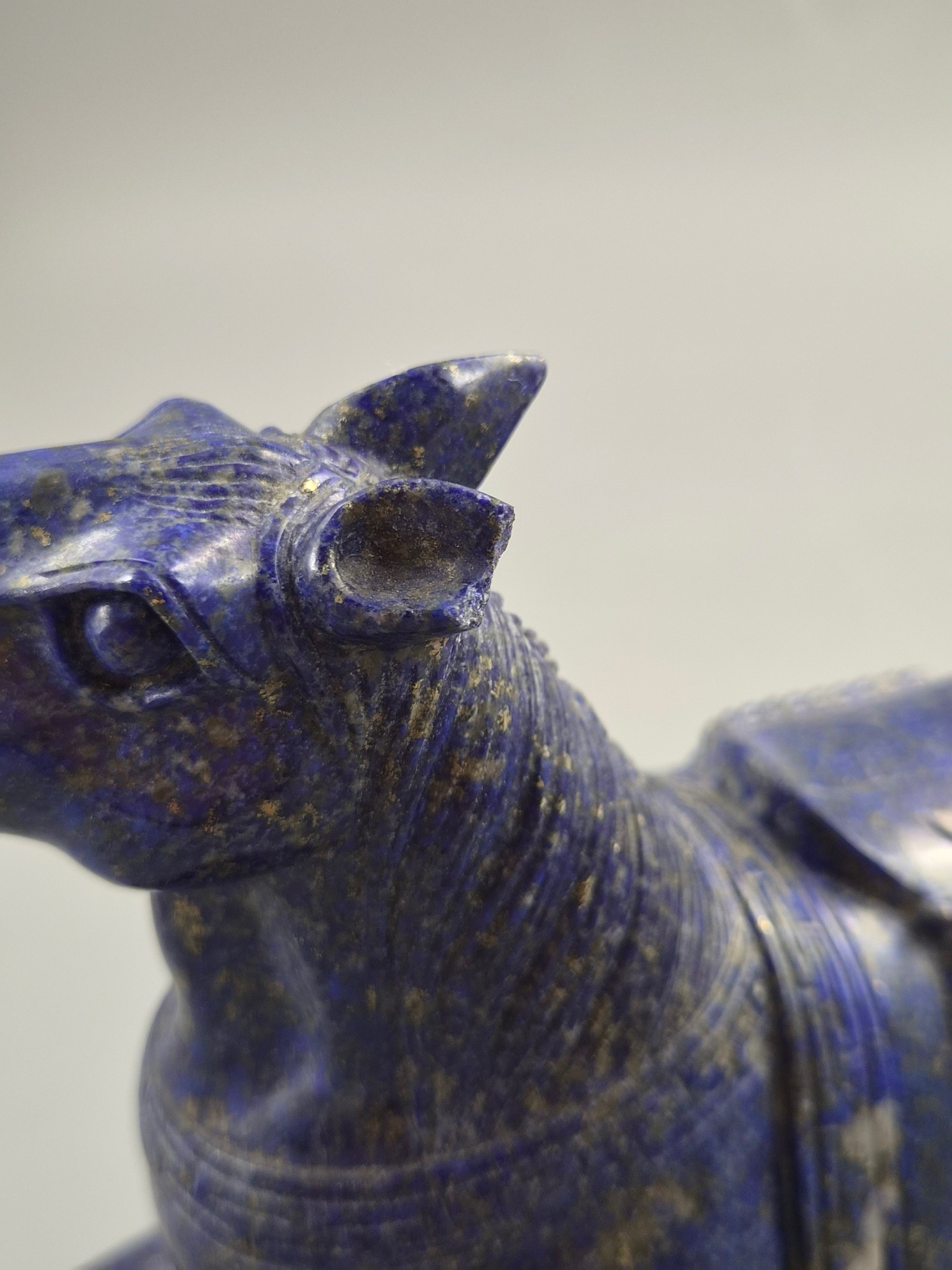
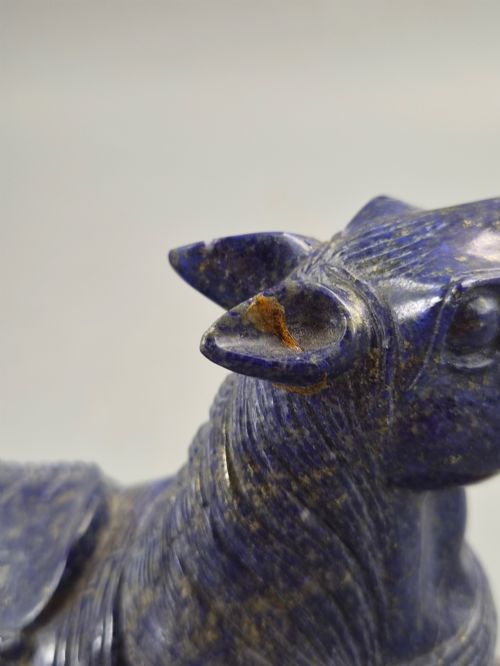
Condition. Horse 1, with the label 7: the right ear has been reattached and the muzzle has received a professionally executed adhesive repair. A fine surface fissure crosses the chest; under ultraviolet examination it does not appear to extend deeply into the stone. No other damage or restoration was detected under UV examination. Horse 2: a small chip to the left ear. A fine natural mineral vein runs along the right side of the chest; this is part of the stone's natural structure rather than a fracture. Otherwise in excellent condition, with no additional restoration detected under ultraviolet examination. Please study the accompanying photographs carefully as they form an integral part of this description. If you have any questions, we will be happy to answer them. The item will be shipped with full tracking and insurance. Shipping costs include handling, packaging and postage.
Gillers Antiques Ltd has dated this piece to the 1880s.

You can view the stock and full dealer information on the Gillers Antiques Ltd Profile Page
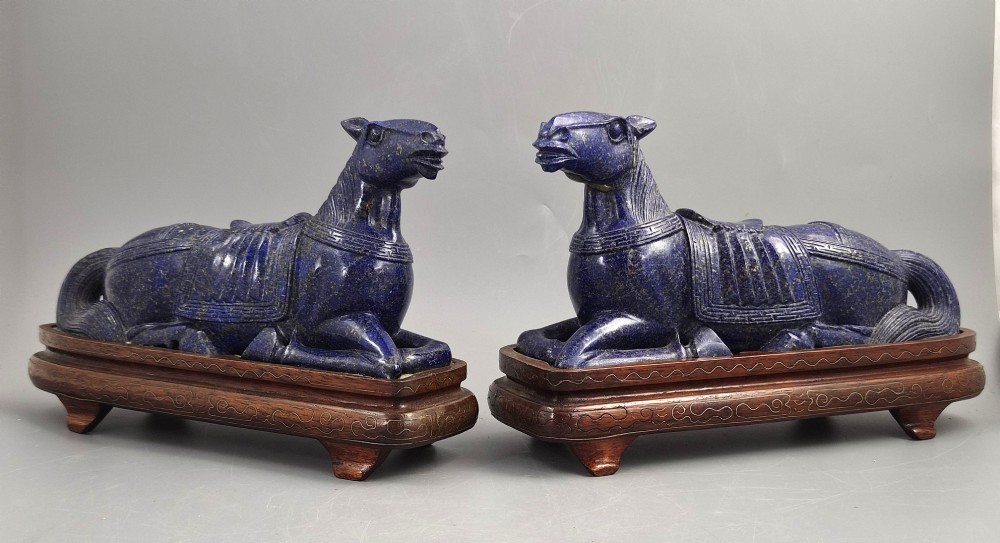
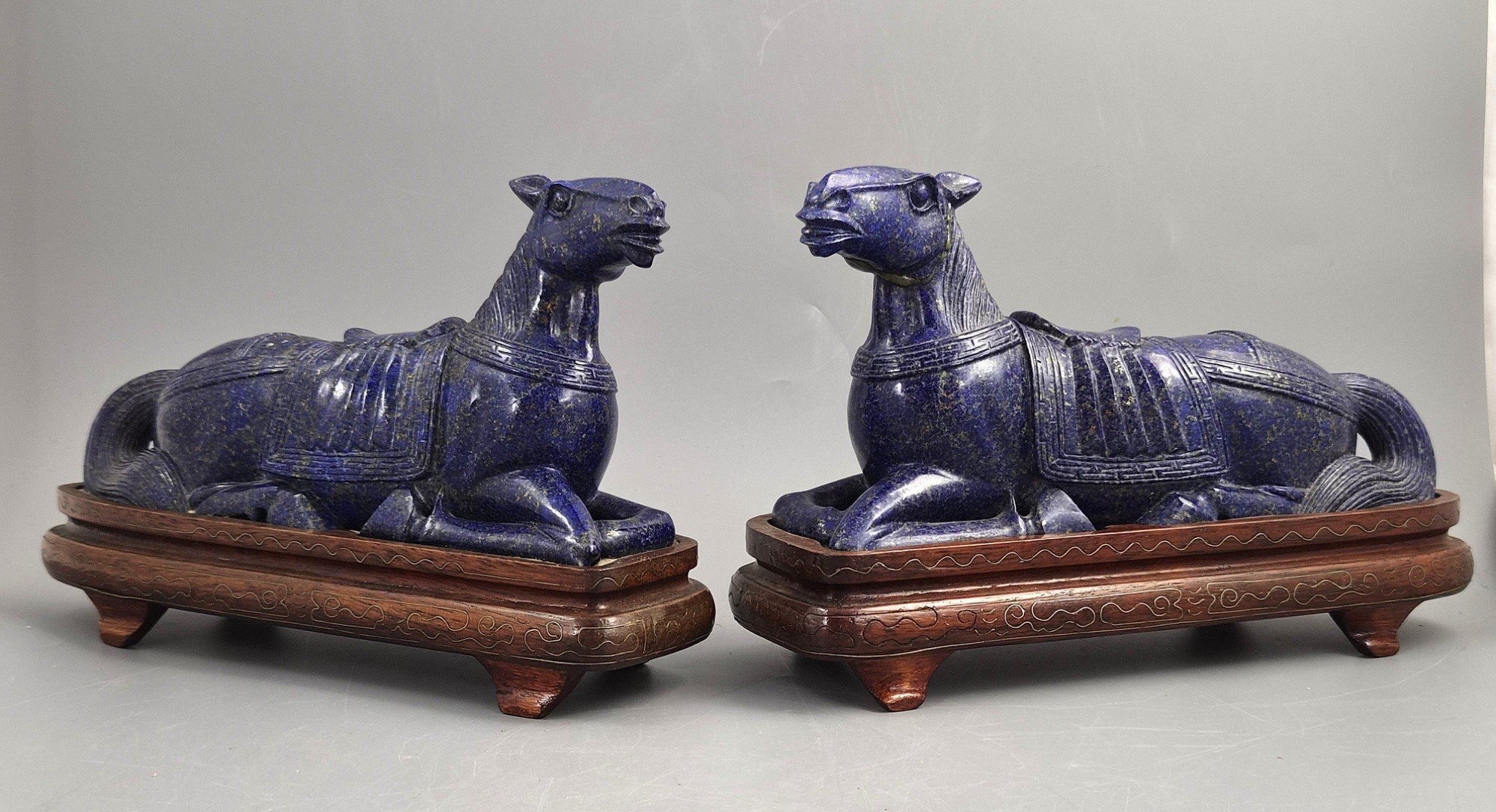
Large Pair Chinese Lapis Lazuli Recumbent Horses on Silver Inlaid Stands, Late Qing