


Antique Earthenware Dog
These antique earthenware dog figures are enduring mantle ornaments that bring character and historic charm to any room.
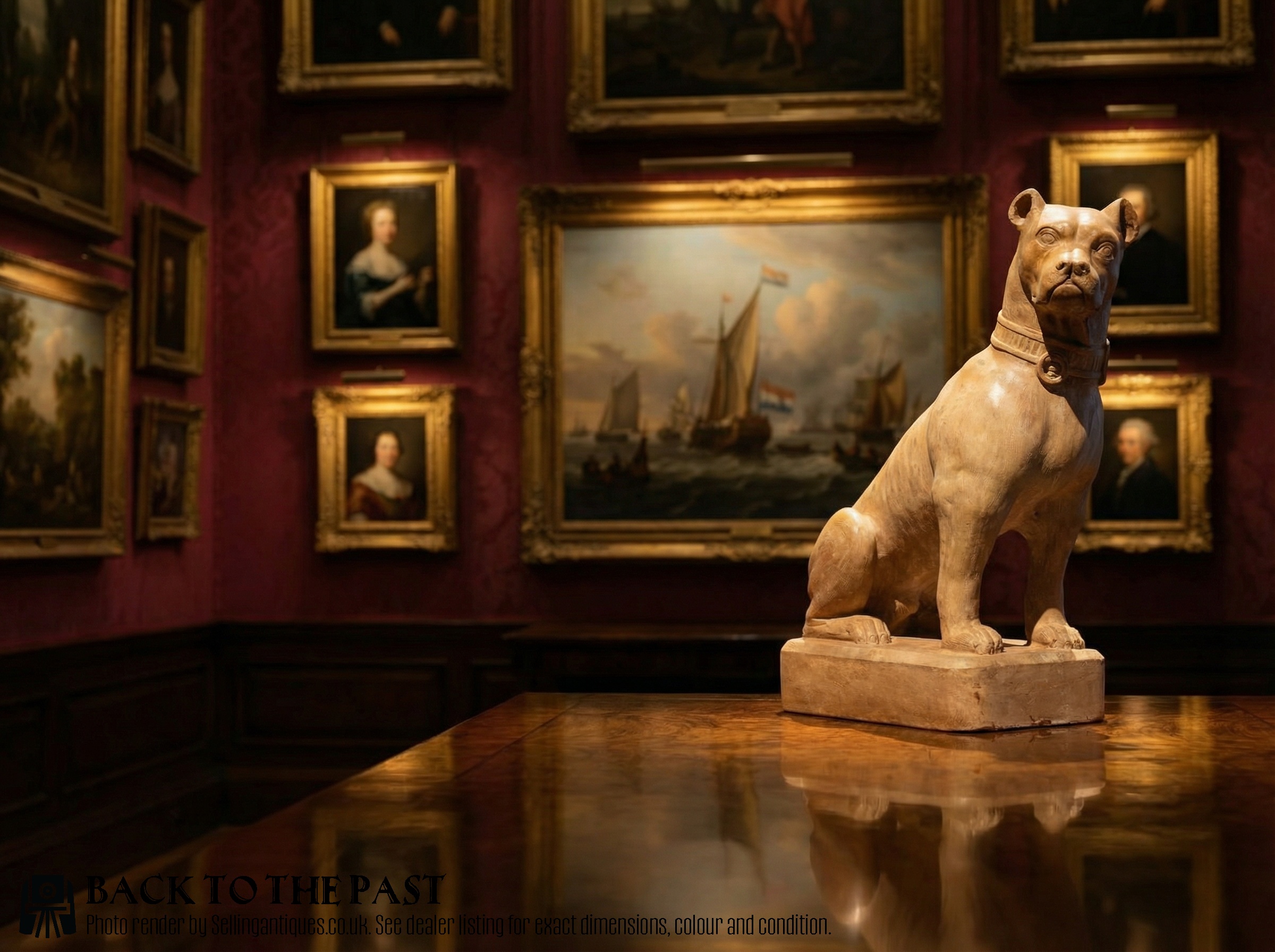
Antique Earthenware Dog
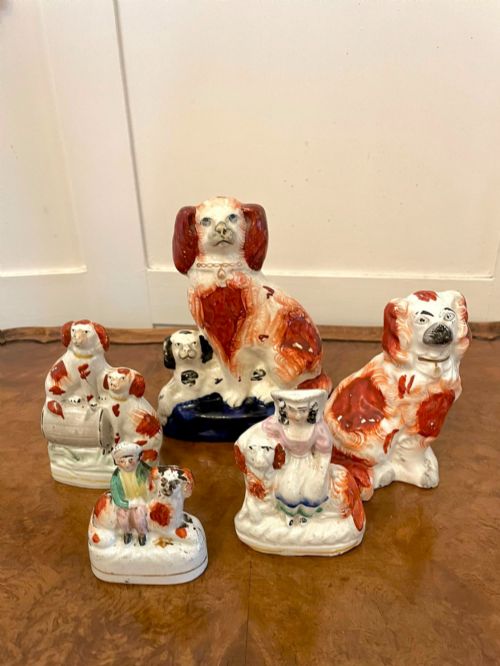
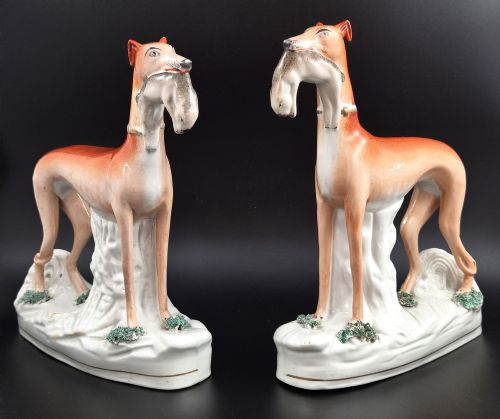
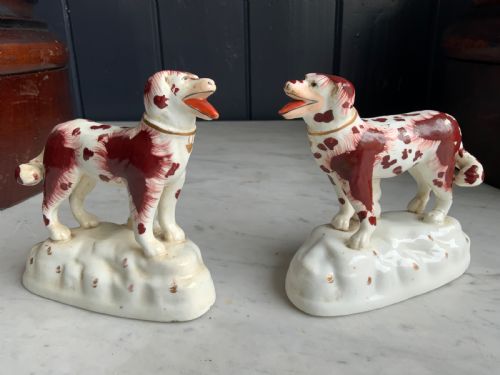
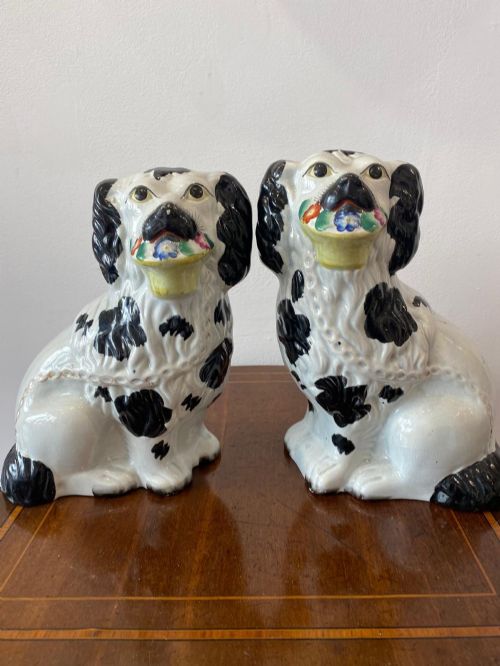
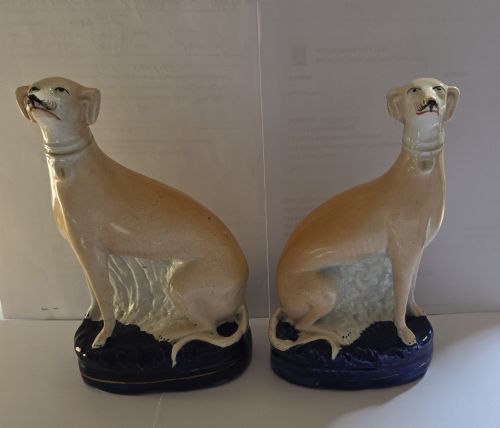
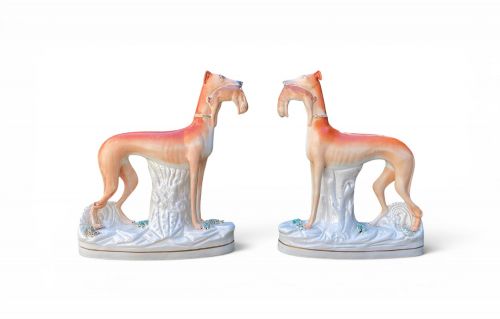
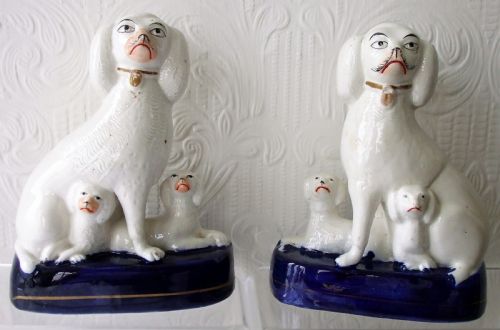
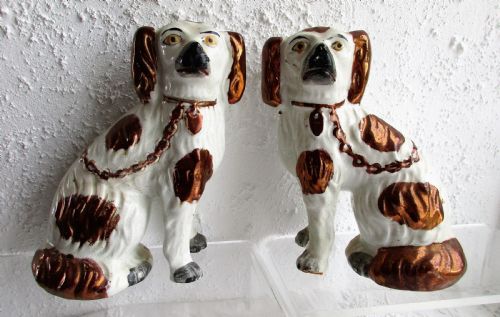
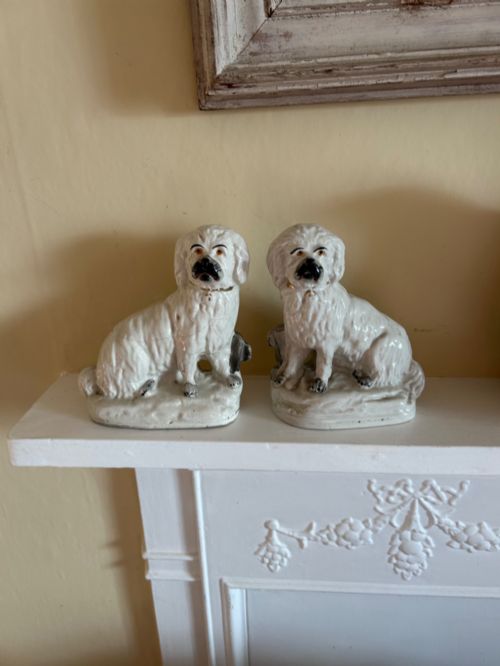
When you search for an antique earthenware dog, you enter a field dominated by Victorian Staffordshire figures. These pieces range from spaniels and poodles to greyhounds and pugs, frequently found as matched pairs intended for the mantelpiece.
Makers produced these ceramic figures in various sizes, from miniature poodles to unusually large hounds. Some examples serve practical functions such as money boxes or quill holders alongside standard decorative figurines.
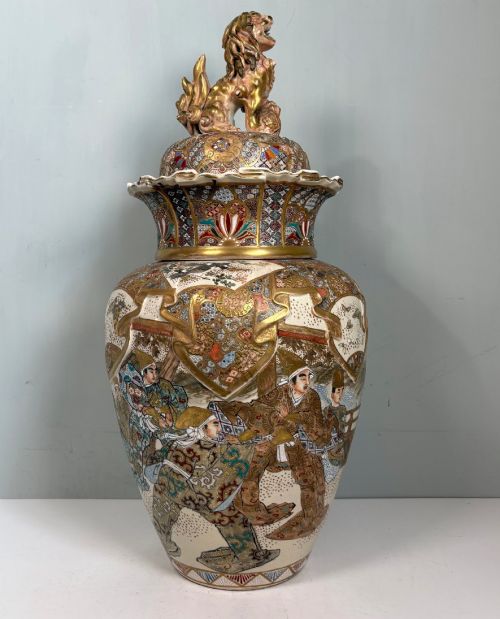
The aesthetic stretches from mid-nineteenth-century domestic spaniels to Japanese Meiji period Shishi figures and Satsuma vessels. Most examples on this page, however, belong to the Victorian Staffordshire tradition.
Materials and Construction
Potters shaped these figures from earthenware clay before applying a glaze to the surface. Many pieces incorporate lead glaze to create a glossy finish that protected the underlying body.
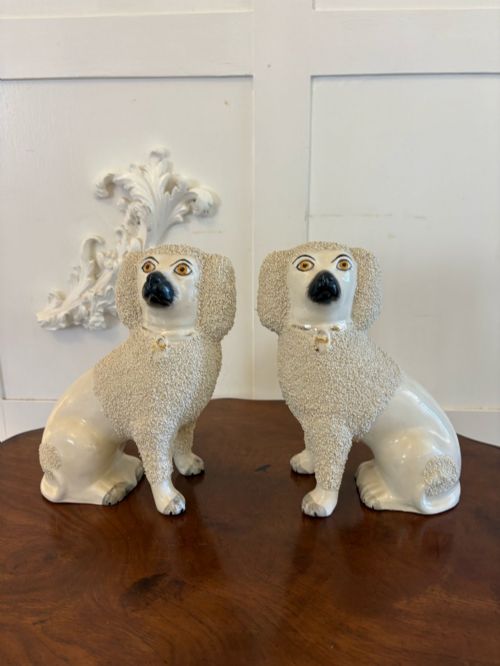
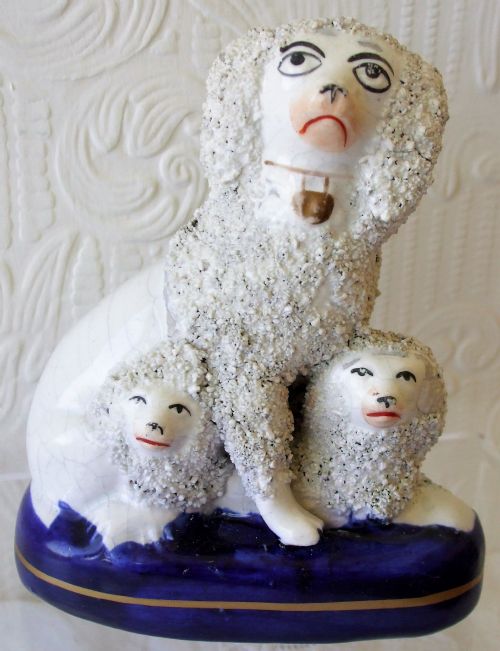
Workers added colour through enamel paint and highlights of gold leaf or gilt. Some specialised models utilised textured woolly clay applications to represent the curled coats of poodles.
Some nineteenth-century poodles were dressed in actual clay curls resembling sheep wool to achieve a fluffy texture.
Assessing Quality and Execution
The distinction between ordinary production and superior work lies in the crispness of the moulding and the care taken with hand painting. Finer examples display detailed facial expressions and controlled enamel work rather than hurried brushstrokes.
Matched pairs that have survived intact without extensive restoration hold greater appeal for collectors. The retention of original gilt highlights and clean glaze surfaces also distinguishes better specimens.
Thomas Parr
The Antique Earthenware Dog Glossary
- Earthenware
- A porous pottery body fired at lower temperatures than stoneware or porcelain. It requires a protective glaze to hold liquids and achieve a smooth surface.
- Staffordshire
- A generic term for ceramic pieces produced in the Staffordshire potteries of England. This region manufactured the vast majority of nineteenth-century figure groups.
- Enamel Paint
- Vitreous pigments applied over the fired glaze and subjected to a second, lower temperature kiln firing. This technique allowed makers to achieve a wide palette of surface colours.
- Comforter Spaniels
- The common name given to the seated spaniel figures placed on Victorian mantelpieces. They often appear in pairs facing inwards towards one another.
- Shishi
- A traditional Japanese guardian lion figure also known as a Foo Dog. These ceramic models derive from Buddhist temple sculpture traditions.
Antique Earthenware Dog: Frequently Asked Questions
What are Staffordshire dogs?
Staffordshire dogs are ceramic mantle ornaments made in the English pottery districts during the nineteenth century. They primarily depict spaniels, greyhounds, and poodles.
Potters created these figures in matched pairs to sit on either side of a fireplace. They served purely decorative roles in Victorian homes, though some variations functioned as money boxes.
How do I date an antique earthenware dog?
Dating relies on stylistic clues, clay bodies, and painting techniques typical of specific decades. Mid-Victorian pieces often feature simpler hand-painted markings and distinct glaze pooling.
Later Victorian and Edwardian examples shifted towards different moulding standards and brighter enamel palettes. Examining the base and the crazing of the glaze also helps determine age.
Were these dogs meant to be toys?
These ceramic figures were strictly decorative items intended for display on mantelpieces or side tables. Their hollow earthenware construction made them unsuitable for handling by children.
Many middle-class Victorian households used pairs of spaniels to signal respectability and comfort. They occupied prominent positions in the domestic parlour rather than the nursery.
How do I clean an antique ceramic dog?
Dust the surface gently with a soft dry brush to remove accumulated dirt. Avoid using chemical cleaners or submerging the piece in water.
Moisture can penetrate older, cracked glazes or damage delicate enamel paints and gold leaf highlights. Professional conservation advice should be sought for heavily soiled items.