




Antique Ceramic Hounds
These antique ceramic hounds bring nineteenth-century animal sculpture into your home with expressive modelling and historic character.
Antique Ceramic Hounds
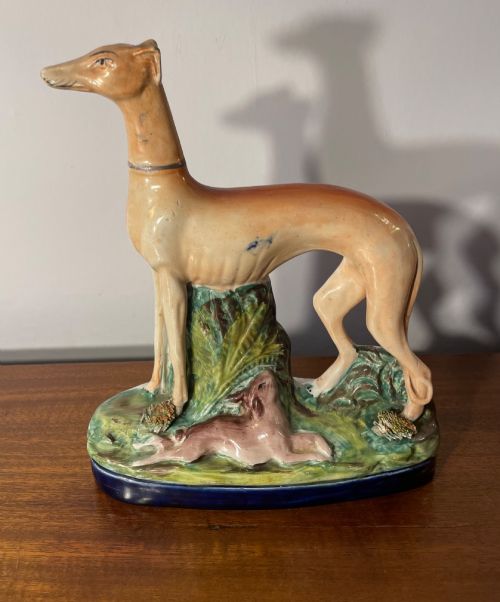
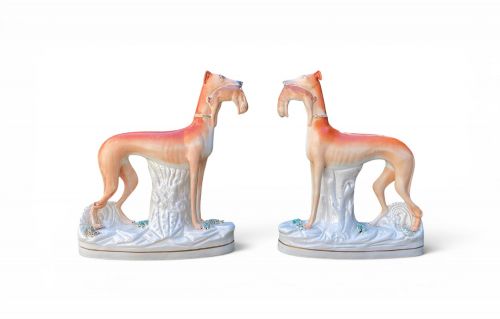
When you search for antique ceramic hounds, you encounter figures that capture the strong forms of greyhounds, setters, and hunting dogs produced across the nineteenth century.
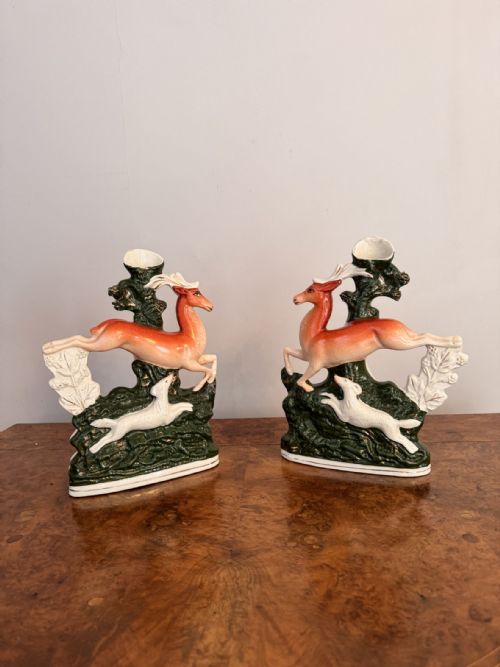
The Staffordshire potteries dominate the selections, offering pairs of seated greyhounds, spill vases, and hunting groups made during the Victorian era.
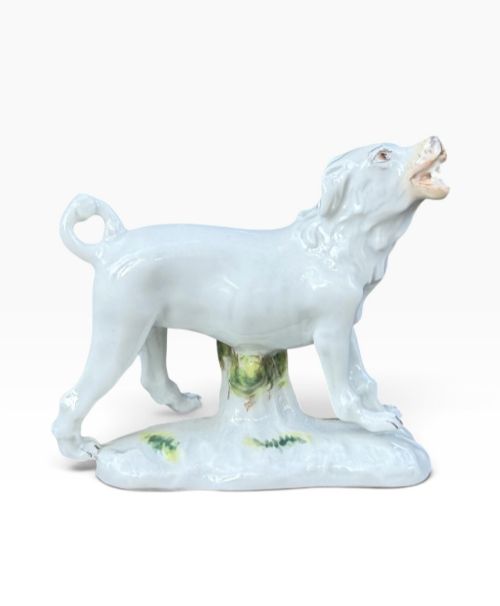
Beyond earthenware figures, the grouping extends to porcelain examples from continental factories, Chinese export porcelain, and large terracotta sculptures.
Assessing quality and finish
Quality rests upon the crispness of the modelling and the precision of the hand-painted enamel details on the animal's face and coat.
The depth of the glaze and the preservation of the original enamel paint distinguish workshop output from mass production.
Some nineteenth-century greyhound figures doubled as functional inkwells, keeping guard over your desk while holding your writing ink.
Thomas Parr·Enoch Wood factory·Phillips and Bagster·Meissen·Royal Dux
The Antique Ceramic Hounds Glossary
- Spill vase
- A hollow pottery vessel with an attached holder designed to contain wooden spills for lighting pipes and fires. These often incorporate figures of hounds or deer at the base.
- Parian ware
- A fine-grained unglazed porcelain resembling white marble, developed during the nineteenth century. It allows for high detail in sculptural figures of hunting dogs.
- Earthenware
- Porous pottery fired at lower temperatures, commonly used for Staffordshire figures and coated in lead glaze. It forms the foundation of most nineteenth-century animal models.
- Enamel paint
- Vitreous pigments applied over the glaze and fired again at a lower temperature. This technique provided the bright surface colours on Staffordshire dog coats.
Antique Ceramic Hounds: Frequently Asked Questions
How do I date an antique ceramic hound?
Dating relies on the stylistic markers of the ceramic body, the palette of the enamel paint, and whether the base is flat or hollowed.
Staffordshire pieces from the mid-nineteenth century often display vent holes and specific underglaze colourations typical of Victorian manufacturing methods.
Were these figures meant for display?
Most Staffordshire greyhounds and porcelain dogs served as mantelpiece ornaments, decorative groups, or practical items such as inkwells and spill vases.
Their owners placed them in parlours to signal an affinity for country pursuits and canine companionship.
What is the difference between earthenware and porcelain dogs?
Earthenware dogs are heavier, opaque pottery bodies finished with lead glazes or enamel paint, characteristic of English regional potteries.
Porcelain hounds, such as those from German factories or Chinese export kilns, feature vitrified, translucent white bodies fired at much higher temperatures.
How should I clean my ceramic hound?
Dusting with a dry, soft brush is the safest method for preserving nineteenth-century enamel paint and delicate lead glazes.
Avoid immersing old earthenware in water, as crazed glazes can absorb moisture and damage the historic clay body underneath.