
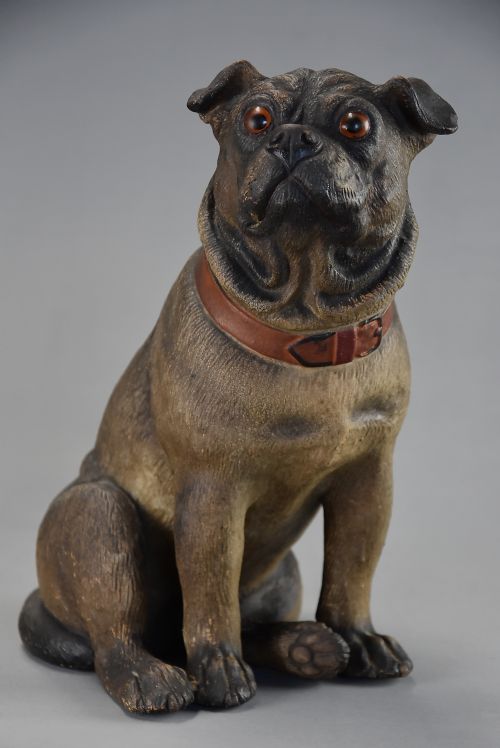
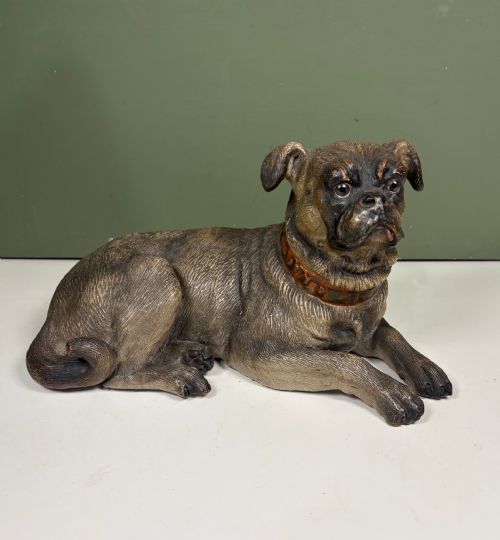
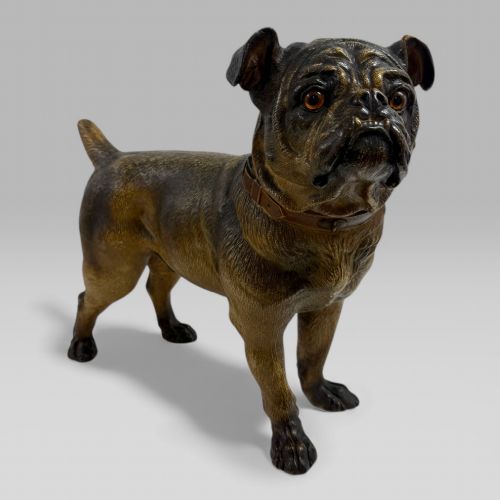
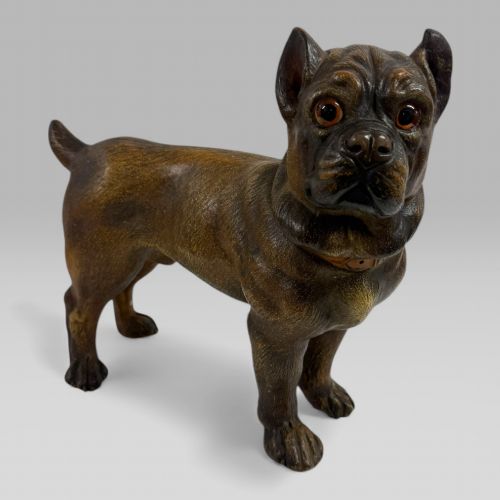


Terracotta Dog Sculpture
These terracotta dog sculpture pieces bring character to a room through fired earth, capturing breeds from pugs to greyhounds across the nineteenth and early twentieth centuries.
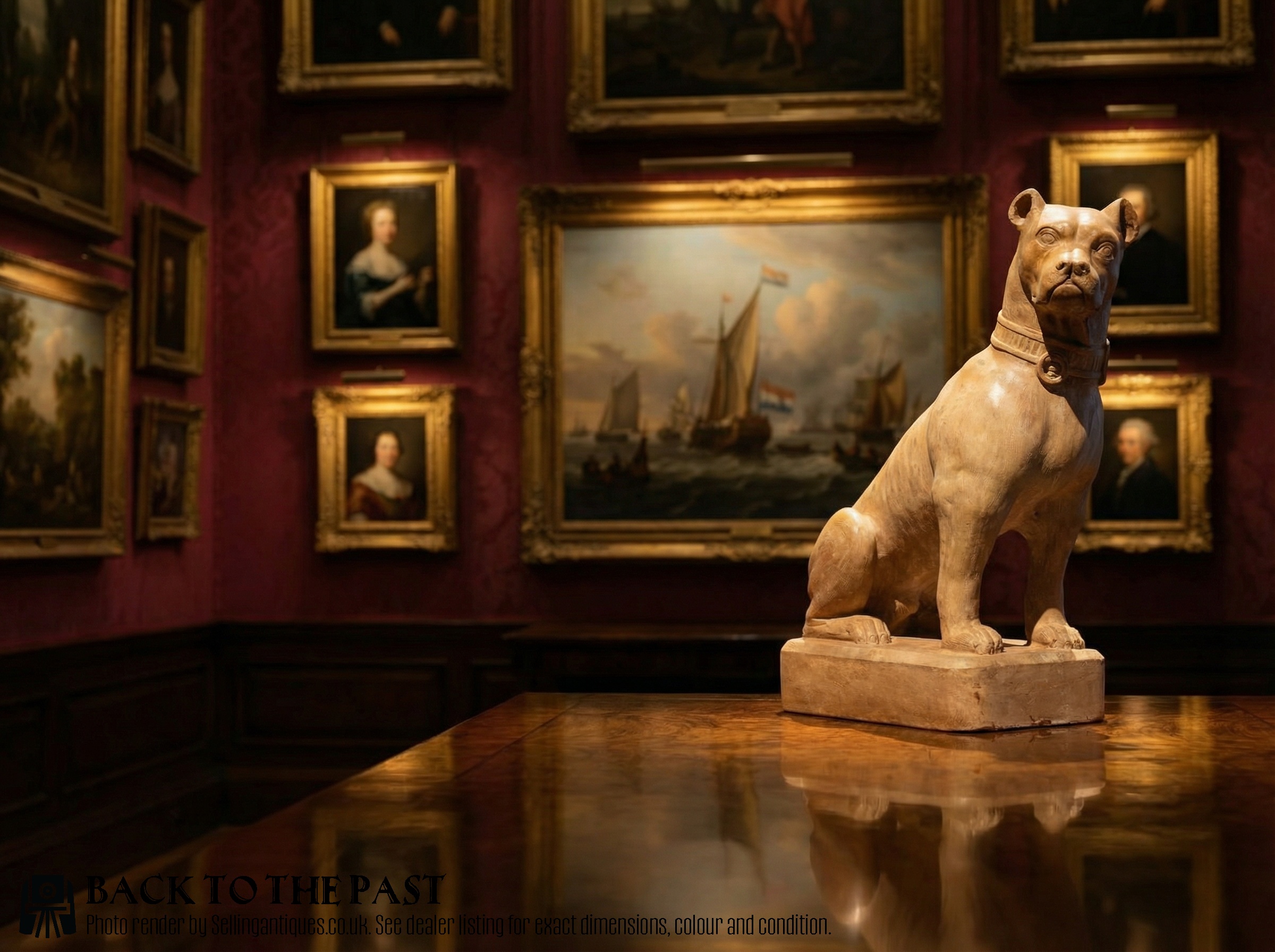
Terracotta Dog Sculpture
A terracotta dog sculpture captures domestic pets and temple guards in fired clay, originating mainly from the nineteenth and early twentieth centuries. These works range from small mantel ornaments to imposing life-size figures created in European and Chinese workshops.
Buyers encounter various forms including seated pugs, recumbent hounds, and sculptural groups involving children. Each piece reflects the sculptural tastes of Victorian, Edwardian, and Art Nouveau makers working in earthenware and ceramic.
How they were made
Makers shaped these sculptures from terracotta, earthenware, and ceramic, employing moulds or modelling the clay by hand before firing. The porous clay body provided a stable base for subsequent surface decoration.
Post-firing treatments included the application of lead glaze or enamel paint, alongside cold painted finishes that brought realism to eyes, collars, and coats. Glass elements occasionally appeared in specific decorative details to enhance the lifelike expression.
Some nineteenth-century pugs stand ready for duty at life-size scale, outsized domestic sentinels guarding the hearth without ever demanding a walk.
What varies in quality
The sculptural fidelity of the model determines the upper tier of quality, seen in the anatomical accuracy of life-size pugs and hounds rather than generic canine forms. Master modellers captured muscle structure, expression, and posture with acute observation.
Surface finish preservation separates superior examples from heavily restored pieces, particularly where cold painted enamel or lead glaze remains intact. The crispness of the original moulding and the prestige of documented Austrian or French makers elevate individual sculptures.
Thomas Parr·Foucher·Bernard Bloch·Royal Dux
The Terracotta Dog Sculpture Glossary
- Terracotta
- A porous fired red earthenware clay used widely for sculptural figures and decorative ornaments. It forms the primary material base for the majority of these canine sculptures.
- Animalier
- A nineteenth-century artistic style focusing on the realistic portrayal of animals. French and Austrian makers applied this approach to render dogs with naturalistic poses.
- Lead glaze
- A glossy vitreous coating fused to the pottery surface during firing to seal the porous clay. It imparts a shiny protective layer across the earthenware body.
- Foo Dog
- A traditional Chinese style of guardian lion-dog sculpture often executed in ceramic or pottery. These temple figures serve a protective symbolic function.
Terracotta Dog Sculpture: Frequently Asked Questions
How do I identify an Austrian pug?
Austrian pugs from the nineteenth century often appear in life-size proportions with realistic wrinkles and folded ears, frequently modelled in terracotta.
These pieces commonly exhibit cold painted enamel surfaces or impressed registry marks characteristic of central European ceramic production from that period.
Where were life-size dog sculptures placed?
Life-size terracotta dogs served as imposing hall ornaments, garden adjuncts, or fireside companions in Victorian and Edwardian interiors.
Their substantial weight and durable earthenware construction suited both sheltered interior environments and covered entranceways.
What is cold painted terracotta?
Cold painting involves applying pigment directly onto fired clay without subjecting the piece to a secondary kiln firing.
Because the paint sits on the porous surface rather than fusing with a glaze, surviving examples often show natural rubbing and wear from age.
How do Staffordshire dogs differ?
Staffordshire pottery greyhounds and spaniels typically date to the mid-nineteenth century and employ earthenware finished with glossy lead glazes.
Unlike Austrian terracotta sculptures, these British mantel figures often feature simplified forms and spotted or gilded surface decoration.