


Brown Ceramic Dog
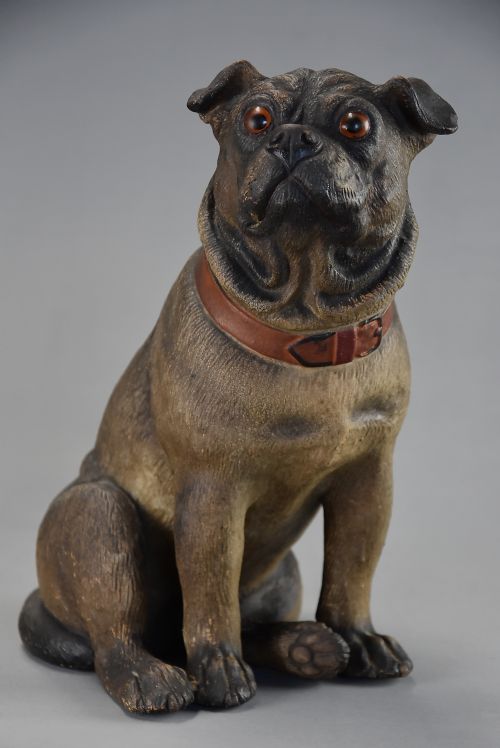
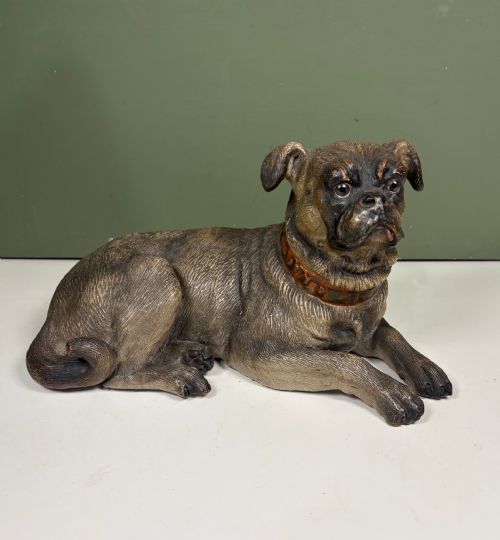
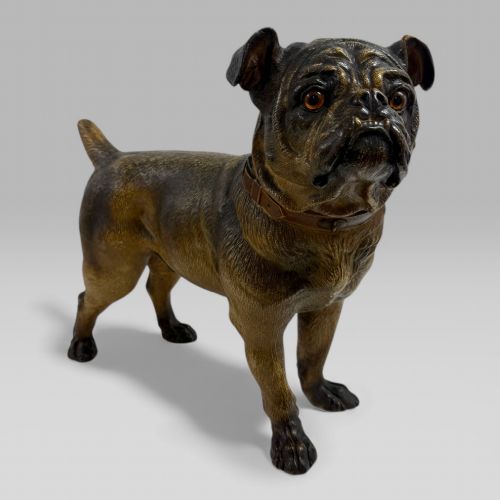
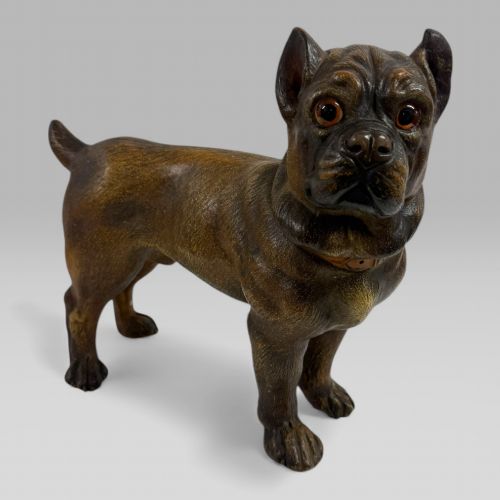
These brown ceramic dog figures range from Staffordshire spaniels to life-size Austrian pugs, offering animal lovers charming traditional sculpture for the home.
Brown Ceramic Dog
A brown ceramic dog represents popular domestic pets and mythical guardians shaped from clay, earthenware, and terracotta across the nineteenth and twentieth centuries. These figures appear frequently as pairs of Staffordshire spaniels, pugs, and greyhounds, alongside Chinese pottery Buddhist lions and Japanese Bizen models.
Makers produced these decorative objects in various forms, including mantelpiece ornaments, nursery mugs, Toby jugs, and large-scale sculptures. The selections span Victorian, Edwardian, and Art Deco periods, encompassing European and Asian workshop traditions.
How they were made
Potters shaped these figures using earthenware, terracotta, and stoneware, frequently applying a coloured glaze to render the coats of spaniels, pugs, and lions. Some pieces incorporate glass eyes to heighten realism, while others rely entirely on painted enamel details over fired ceramic bodies.
Workshops utilised moulding and hand-modelling techniques to produce both small nursery mugs and life-size sculptures. Artisans then fired the clay and applied surface decoration, ranging from simple monochrome glazes to intricate polychrome finishes.
Listings feature earthenware, terracotta, and stoneware bodies decorated with glazes and enamel across the Victorian and Edwardian periods.
What varies in quality
Quality separates through the crispness of modelling in the clay and the subtlety of the glaze application. Master modellers captured realistic posture and expression in breeds like pugs and greyhounds, whereas simpler mass-produced items show softer contours.
The sophistication of the painted or glazed surface distinguishes superior examples from standard factory output. Artisans who achieved depth of colour and precise facial detailing elevated utilitarian pottery into fine decorative sculpture.
Wedgwood & Co. Ltd·Bernard Bloch
The Brown Ceramic Dog Glossary
- Terracotta
- A porous reddish-brown earthenware clay used unglazed or glazed for sculptural figures. Sculptors utilised this material for life-size dog models and decorative animalier pieces.
- Staffordshire
- A major pottery manufacturing region in England known for earthenware mantle figures. Potters there produced prolific pairs of spaniels, greyhounds, and pugs.
- ShiShi
- A traditional Japanese term for a stone or ceramic lion dog guardian figure. These mythical beasts display stylised curls and fierce expressions.
- Toby Jug
- A pottery jug shaped as the full figure of a recognisable character or person. Examples exist depicting animals alongside human subjects.
- Stoneware
- A heavy, dense ceramic fired at high temperatures until vitrified. This body resists moisture and provides durability for utilitarian mugs and figures.
Brown Ceramic Dog: Frequently Asked Questions
How were ceramic dog figures used?
Owners placed these ceramic figures primarily as decorative ornaments on mantelpieces, sideboards, and nursery tables. Some iterations served functional purposes, such as children's mugs or jugs.
Larger terracotta sculptures stood directly on the floor as hall or parlour decorations, while pairs of lion dogs guarded entryways.
How do I identify a Victorian piece?
Victorian ceramic dogs often display typical nineteenth-century glaze palettes, craquelure, and traditional Staffordshire moulding styles. Examining the base reveals unglazed clay and ageing consistent with nineteenth-century manufacture.
Makers frequently added distinct details like glass eyes or copper lustre highlights during this era.
What is a Foo Dog?
Foo dogs are traditional Chinese guardian lions, known in Chinese as Shiwan Buddhistic Lion Dogs. Artisans rendered them in pottery and porcelain to protect sacred spaces and homes.
These figures feature stylized manues, fierce jaws, and often appear seated with one paw resting on a ball or cub.