


Antique Pug Figurine
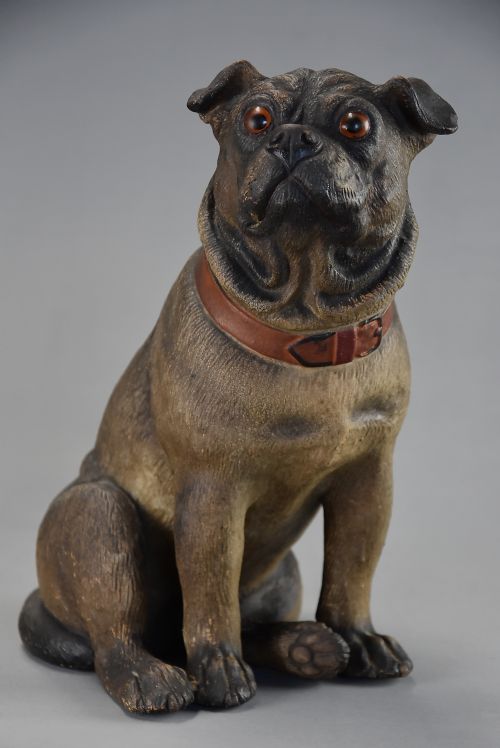
An antique pug figurine brings domestic charm to a room, capturing the compact build and alert posture of the breed in materials ranging from earthenware to cold painted bronze.
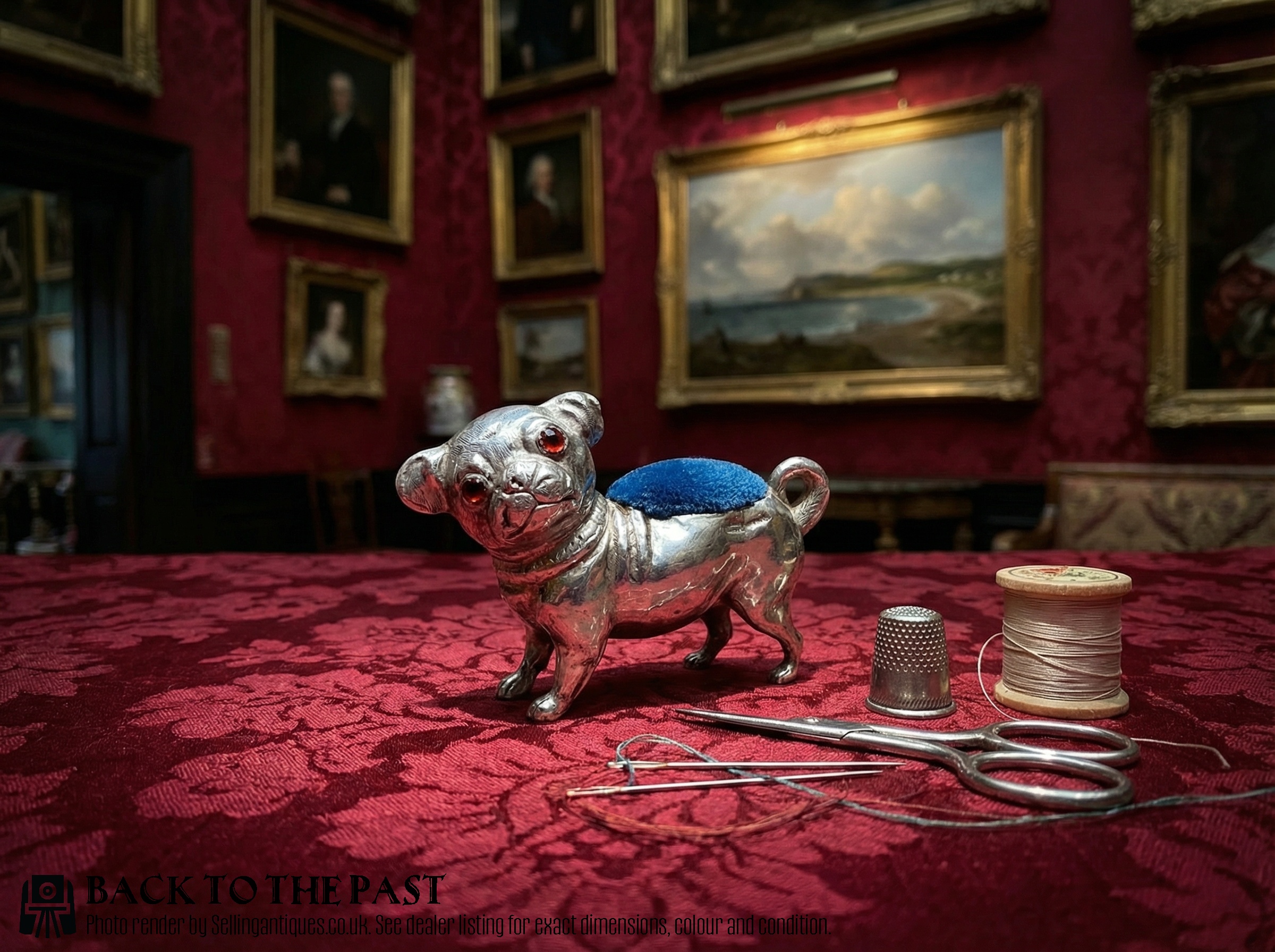
Antique Pug Figurine
The search for an antique pug figurine reveals a variety of domestic ornaments and functional items created across the nineteenth and early twentieth centuries. These pieces cross several design traditions, including Victorian novelty items, Georgian pottery pieces, and Austrian cold painted bronzes.
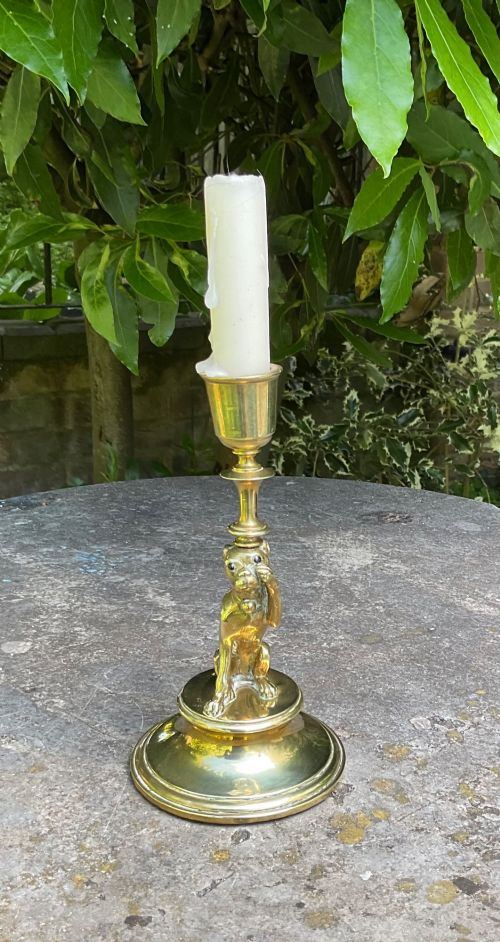
Buyers frequently encounter ceramic and terracotta models, alongside smaller bronze sculptures and novelty silver pin cushions. Forms vary from simple mantel ornaments to practical items like candlesticks, pepper pots, and inkwells.
Origins span British potteries, such as Staffordshire works, and continental European foundries, particularly Austrian makers working in terracotta and bronze. This mix provides collectors with diverse examples of nineteenth and early twentieth century animalier art.
Materials and construction
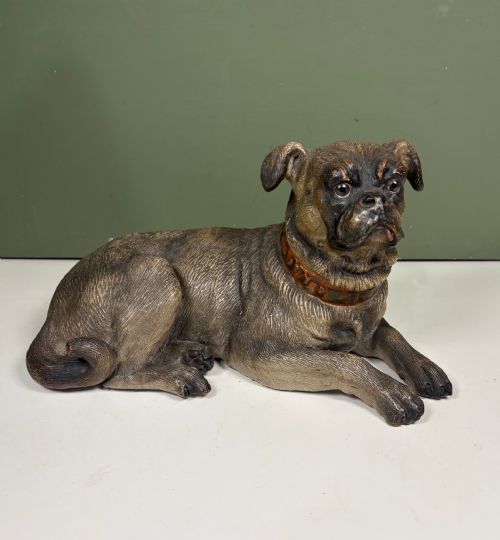
Makers utilised traditional ceramic techniques, shaping earthenware and pottery into canine forms before applying hand-painted surface details or ceramic glazes. Terracotta pieces, particularly those from Austrian workshops, often received careful surface decoration to mimic the natural coat and wrinkled expression of the breed.
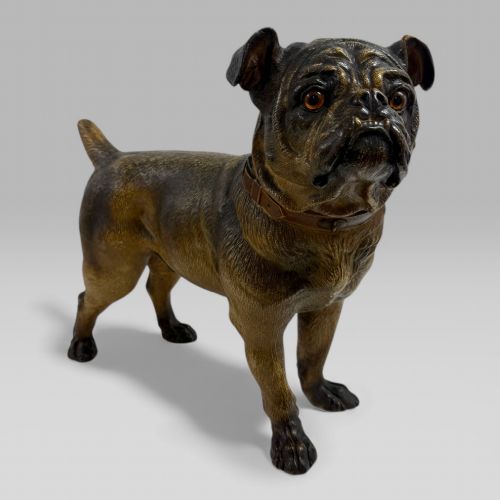
Metalwork items relied on casting processes, seen in the production of cold painted bronze figures and brass or pewter novelty accessories. Cold painting involved applying polychrome paint over a metallic base, a technique that required steady handwork to achieve realistic shading.
Materials appearing in current inventory include glass, terracotta, earthenware, bronze, brass, pottery, and silver.
Assessing quality and execution
Quality in these figures rests primarily on the naturalism of the modelling and the precision of the hand-painted details. Finer examples capture the characteristic facial folds and muscular stance of the pug with anatomical accuracy, whereas simpler pieces rely on basic casting or moulding.
The preservation of original surface finishes significantly influences the character of a piece. Well-preserved cold painted surfaces or original ceramic glazes retain their intended polychrome depth, showing minimal wear from handling over the decades.
Bernard Bloch Austria
The Antique Pug Figurine Glossary
- Animalier
- A term describing nineteenth-century art focusing on the realistic portrayal of animals. Sculptors in this tradition studied animal anatomy closely.
- Cold painted bronze
- Metal sculpture painted with non-heat-setting paints after casting. This technique was widely used in Vienna for small decorative figures.
- Terracotta
- Fired unglazed clay of a brownish-red colour. It serves as a durable medium for both life-size sculptures and smaller decorative models.
- Novelty item
- An object designed with an amusing or unusual twist, often serving a dual practical purpose such as an inkwell, pepper pot, or pin cushion.
- Staffordshire pottery
- Earthenware produced in the potteries of Staffordshire, England. Figures from this region are known for their distinct folk art appeal.
Antique Pug Figurine: Frequently Asked Questions
What materials were used for these figures?
Makers employed a broad selection of materials, including terracotta, pottery, earthenware, and ceramic glaze. Metal versions utilised bronze, brass, pewter, and silver.
Surface decoration frequently involved hand-applied paint, particularly on cold painted bronzes and terracotta models from Austrian workshops.
How were these decorative items used?
Many examples served purely as decorative mantel ornaments or larger sculptures placed within domestic interiors. Others combined decoration with utility.
Functional pieces included candlesticks, inkwells, pepper pots, and silver pin cushions designed for desk or dressing table use.
How can I tell the period of a piece?
Dating relies on stylistic markers and manufacturing techniques associated with specific eras like the Georgian, Victorian, and Edwardian periods. For example, Staffordshire pottery dogs often date to the early nineteenth century, while Austrian cold painted bronzes typically belong to the late nineteenth or early twentieth century.
Examining the base and surface wear also helps determine the approximate age.
Where were these pug figures manufactured?
Production centred in two main geographic areas: British pottery works, particularly in Staffordshire, and continental European foundries, especially in Austria.
Austrian workshops specialised in terracotta models and cold painted bronzes, whereas British makers focused primarily on earthenware and pottery.