




Austrian Painted Terracotta Sculpture
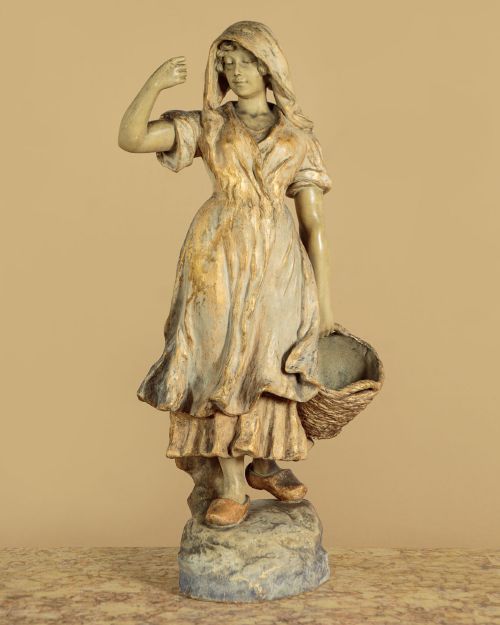
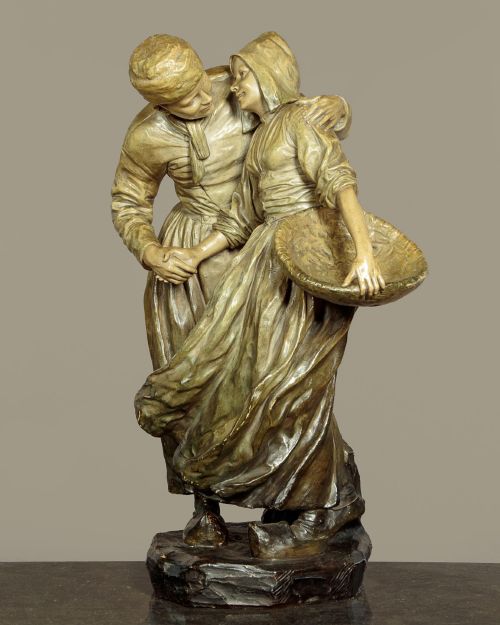
These austrian painted terracotta sculpture pieces bring lifelike presence and vibrant colour into a room, capturing human figures and animals with immense character.
Austrian Painted Terracotta Sculpture
Most pieces date from the late nineteenth century through to nineteen hundred, encompassing Victorian, Art Nouveau, and Austrian Terracotta styles. You find both life-size animal figures and substantial human sculptures or figurines.
Makers and manufacturers from this period used moulded clay to create expressive forms, applying surface pigments to bring out fine details in costume and expression.
How they were made
These works utilise terracotta and earthenware, shaped through moulding or modelling techniques to achieve detailed anatomical and textural forms. Once fired, the clay bodies received applications of paint, polychrome paint, or pigment to render realistic skin tones, clothing, and animal coats.
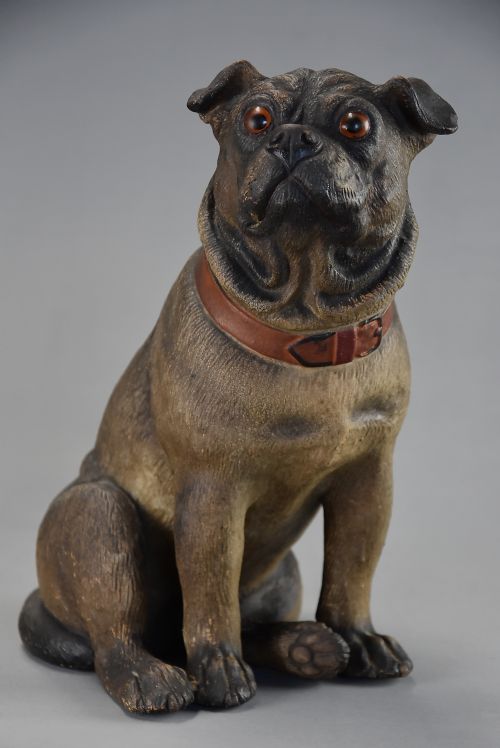
Some creations incorporate supplementary elements such as glass alongside the ceramic body, adding varied textural contrast to the finished sculpture.
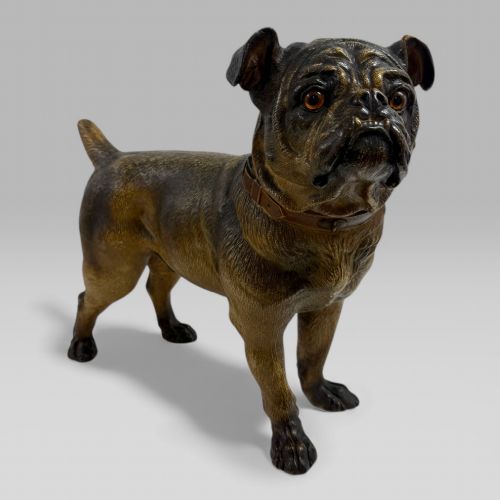
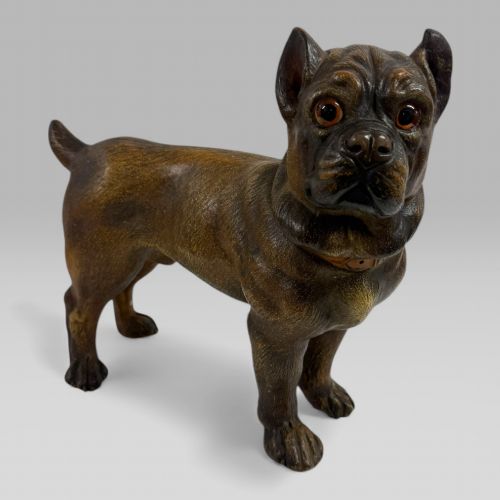
Lifelike pug dog sculptures dominate the animal subjects, capturing every wrinkle with ceramic charm.
What varies in quality
Quality rests in the crispness of the initial moulding and the skill with which the polychrome paint or pigment was applied to the earthenware surface. Finer examples display subtle shading on human faces and realistic detailing on animal subjects like pug dogs.
The sophistication of the modelling separates standard decorative figures from works bearing the marks of prominent makers such as Goldscheider or Bernard Bloch.
Goldscheider·Bernard Bloch·Ernst Whaliss
The Austrian Painted Terracotta Sculpture Glossary
- Terracotta
- A porous fired earthenware clay body, typically reddish-brown in colour. It serves as the primary structural medium for these sculptures.
- Animalier
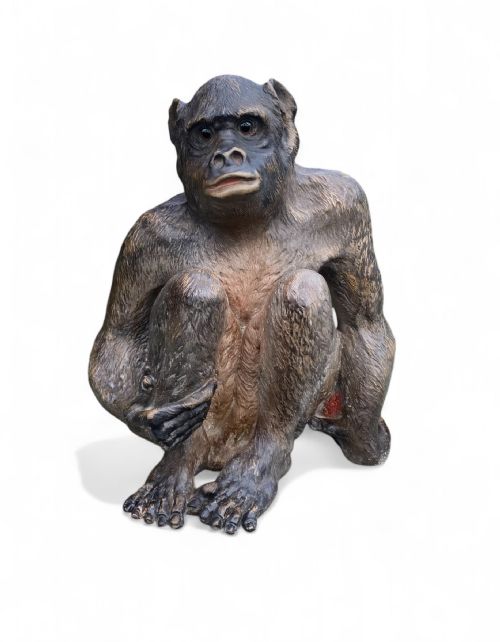
- A style focusing on the realistic depiction of animals. This approach appears frequently in models of pugs and chimpanzees.
- Art Nouveau
- An international style of art and architecture prominent around nineteen hundred. It influences the flowing lines of female busts and figures.
Austrian Painted Terracotta Sculpture: Frequently Asked Questions
What periods do these sculptures date from?
The pieces span the Victorian period, the late nineteenth century, and around nineteen hundred. Styles range from Victorian animalier to Art Nouveau.
Most dates cluster between eighteen eighty and nineteen hundred, reflecting the peak manufacturing years of Austrian ceramic works.
Are these sculptures life size?
Certain animal sculptures, particularly the pug dog models, are described as life-size. Other pieces take the form of tabletop figures, busts, and figurines.
Dimensions vary considerably depending on whether the subject is a large dog or a female bust.
What animals are commonly represented?
Pug dogs appear frequently in various sizes, alongside a chimpanzee figure. These animalier pieces show realistic modelling of fur and posture.
Human subjects complement the animal figures, featuring young women, fisher girls, and named busts.
How should I care for painted terracotta?
Keep the pieces in stable indoor conditions away from moisture and direct sunlight. Terracotta is porous and the surface pigment can be sensitive.
Dust gently with a dry, soft cloth rather than using liquid cleaners or damp cloths on the painted surfaces.