






Antique Earthenware Animal Figures
These antique earthenware animal figures capture domestic pets, farm animals, and exotic beasts in modelled clay, modelled for mantelpieces and parlours.
Antique Earthenware Animal Figures
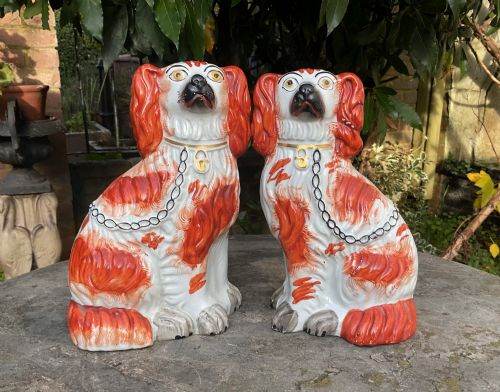
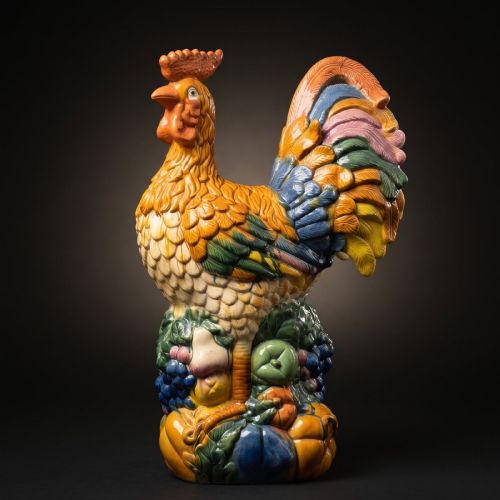
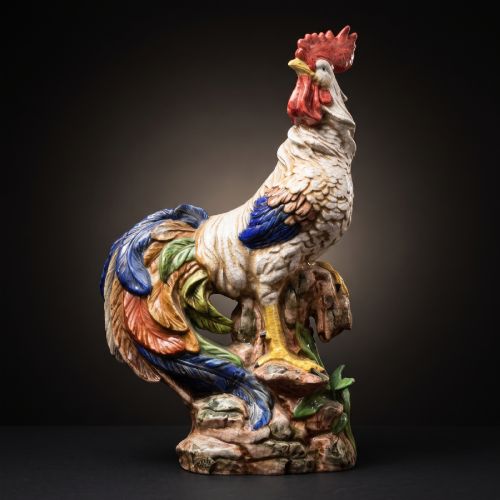
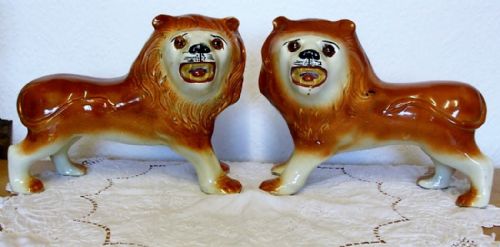
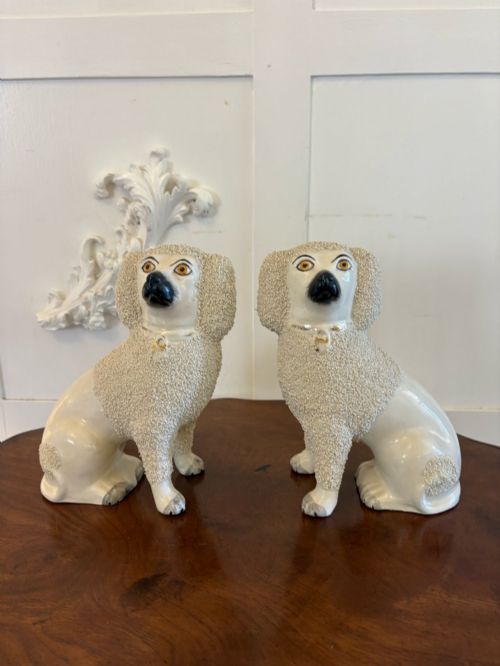
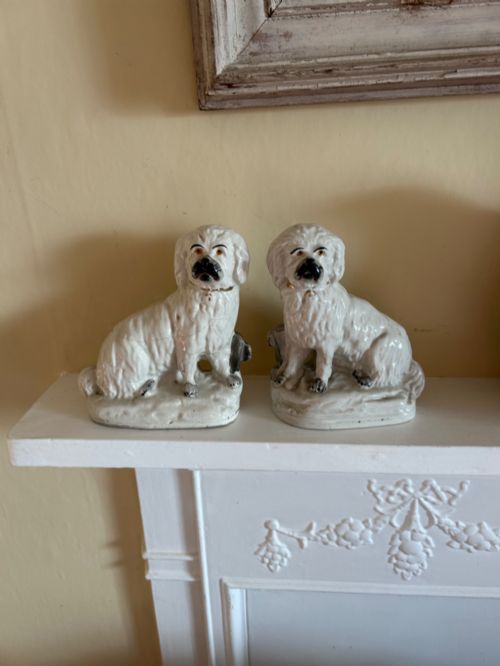
When you search for antique earthenware animal figures, you encounter a varied collection dominated by Staffordshire pottery dogs, lions, and farm animals from the nineteenth century. These ornamental ceramic pieces take the form of decorative figurines, spill vases, and bookends designed for domestic display during the Victorian era. Alongside British mantel ornaments, the selection includes Dutch Delft blue and white cows, Italian terracotta cockerels, and French terracotta sculptures.
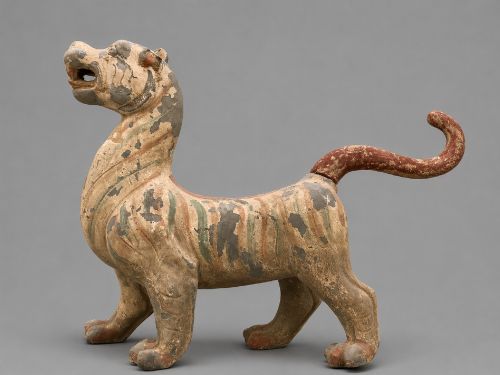
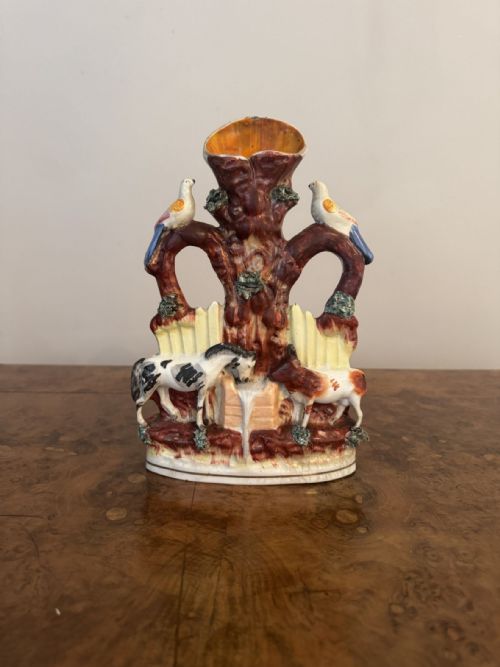
The subjects range from domestic poodles, spaniels, and sheep to exotic creatures such as zebras, leopards, and mythical Han Dynasty guardian beasts. Many examples are modelled as pairs, frequently depicting recumbent lions or seated poodles facing one another across a hearth. Other variations incorporate utilitarian functions, serving as inkwells or holding spill vases behind the central animal group.
Materials and construction methods
Makers shaped these earthenware animal figures using porous ceramic bodies finished with various decorative surfaces. Pearlware, an early refined earthenware with a pale glaze, provides the foundation for several pieces dating to the earlier nineteenth century. Lead glaze and treacle glaze impart deep amber and brown sheens, particularly on nineteenth century lions and dogs.
Antique Earthenware Animal Figures Retail Price Guide 2026
Typical asking prices for earthenware animal figures among the pieces listed under this phrase on Sellingantiques today, from the lower quarter to the upper quarter. They describe what is for sale here now, not the wider market.
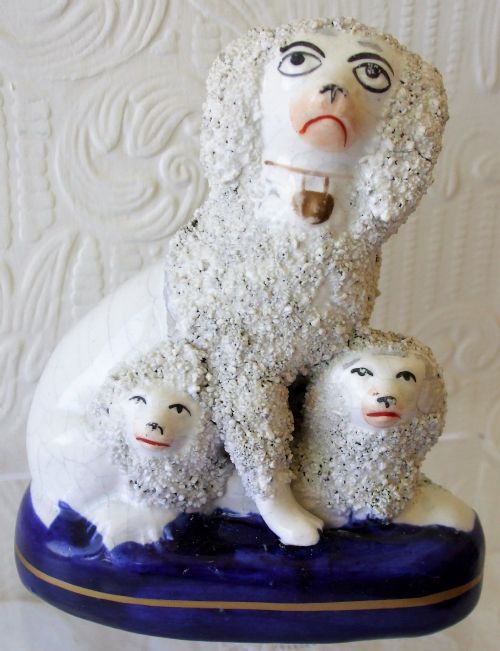
Poodles dominate the canine roster, sporting elaborate clay curls that kept Victorian mantelpieces company.
Distinctions in standard and execution
The modelling of the animal form marks the primary division between standard and superior pieces. Finer examples display crisp anatomical definition in the paws, fur, and facial expressions, whereas weaker pieces show soft or blurred moulding from worn production moulds. The application of enamel and glaze also distinguishes the work, with careful hand-painting achieving sharper markings on coats and eyes.
The presence of named makers or attribution to known potteries elevates certain figures above anonymous factory production. Pairs that survive intact without later restoration hold greater consistency than mismatched components or heavily repaired groups. The depth and clarity of the lead glaze or treacle finish directly influence the visual presence of the ceramic body.
Rockingham Pottery·Bernard Bloch Austria·Bavent In Normandy
The Antique Earthenware Animal Figures Glossary
- Pearlware
- A refined earthenware developed in the late eighteenth century featuring a thin glaze that pooled with a faint bluish tint. It serves as the base body for many early nineteenth century figures.
- Spill vase
- A hollow ceramic tube attached behind a figure designed to hold wooden spills for lighting candles or fires. These vessels frequently accompany figures of lions or dogs.
- Treacle glaze
- A dark, translucent brown lead glaze that produces a rich, glossy finish on nineteenth century pottery. It appears prominently on earthenware lions and dogs.
- Terracotta
- Fired, brownish-red clay left unglazed or treated with a thin slip. Continental European workshops utilised this material for sculptural animals and figures.
Antique Earthenware Animal Figures: Frequently Asked Questions
What animals appear most often?
Staffordshire poodles, lions, and sheep dominate the British pieces in this selection, accompanied by cows, greyhounds, and cats.
Exotic subjects such as leopards, zebras, and mythical beasts also appear among the nineteenth century works.
Were these figures purely decorative?
Most served as ornamental mantel figures, arranged in matched pairs to decorate Victorian parlours and living spaces.
Certain pieces incorporated practical elements, functioning as inkwells or holding spill vases behind the animal subject.
How do I date these ceramics?
Stylistic indicators, such as the modelling typical of the Victorian period or earlier pearlware bodies, help establish approximate decades.
Pottery marks and manufacturing techniques associated with specific nineteenth century factories provide further chronological markers.
What is pearlware?
Pearlware is a type of refined earthenware developed to imitate Chinese porcelain by using a glaze containing a small amount of cobalt.
This creates a subtle bluish pooling effect in crevices, characteristic of pieces produced in the late eighteenth and early nineteenth centuries.