



White Earthenware Spaniel Figures
White earthenware spaniel figures are quintessential Victorian mantelpiece ornaments, prized by collectors for their charming symmetry and hearth-side history.
White Earthenware Spaniel Figures
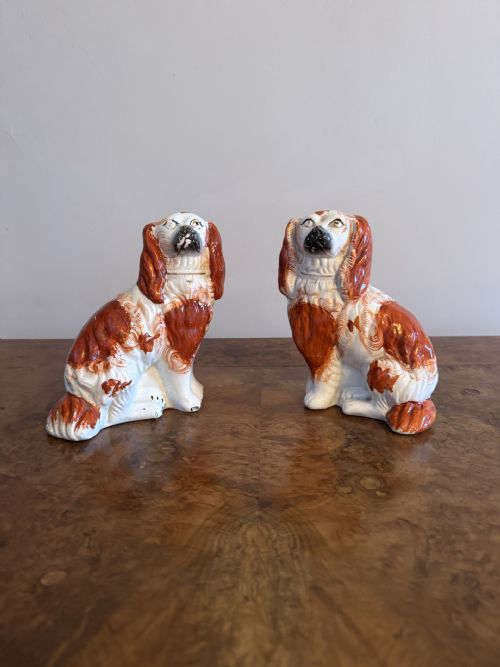
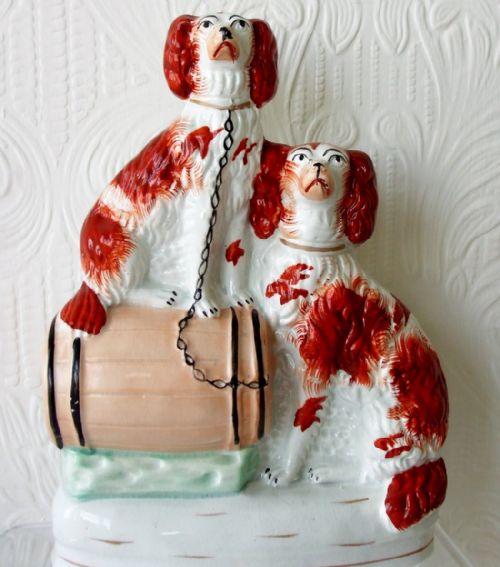
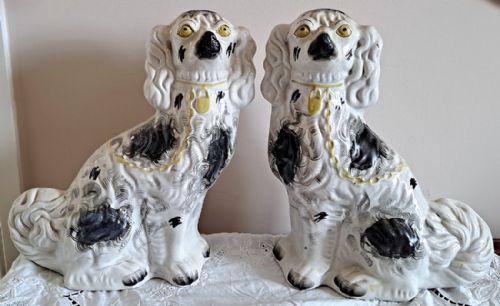
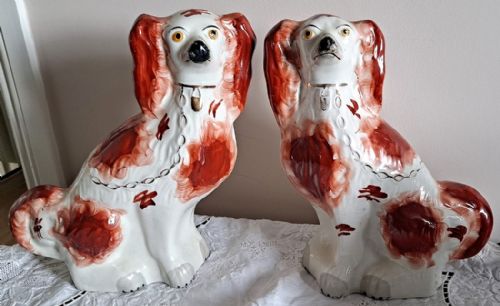
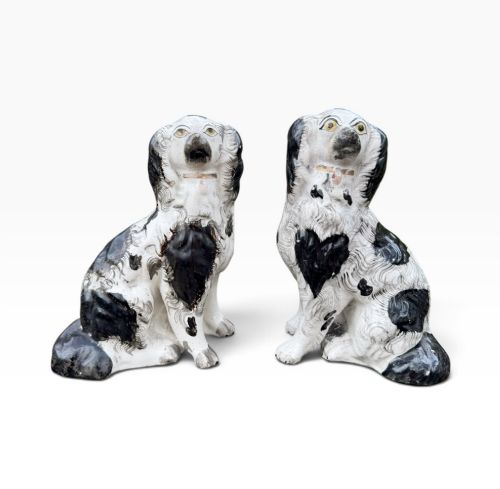
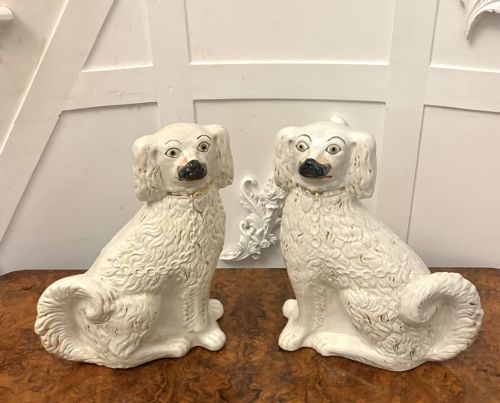
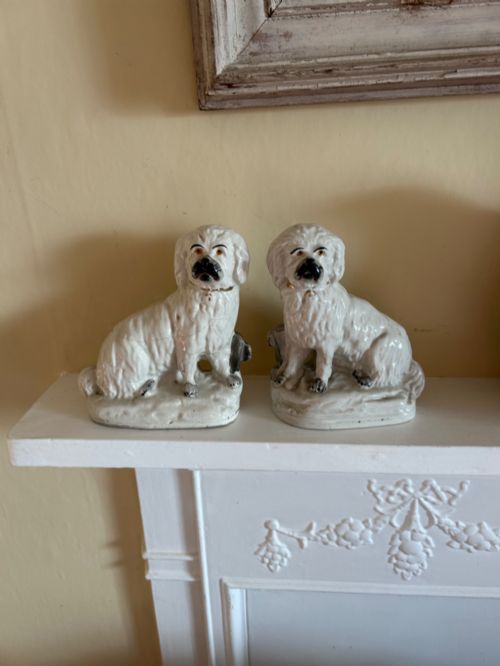
White earthenware spaniel figures represent one of the most recognisable forms of nineteenth-century Staffordshire pottery, traditionally modelled as seated pairs to grace the fireplace. These decorative objects take various domestic and functional shapes, appearing as standard comforter spaniels, money boxes, inkwells, and clock groups.
The examples found here date principally from the Victorian era, spanning the middle decades of the nineteenth century through to the turn of the twentieth century. While spaniels dominate the selection, related canine subjects such as Maltese terriers and dogs accompanying musicians also emerge from this potting tradition.
Materials and construction
Potters shaped these figures from local earthenware clay, often utilising slip-casting or pressing techniques within two-piece moulds before firing the bodies to create a porous ceramic base. Artisans then applied a smooth lead glaze to seal the surface.
White Earthenware Spaniel Figures Retail Price Guide 2026
Typical asking prices for white earthenware spaniel figures among the pieces listed under this phrase on Sellingantiques today, from the lower quarter to the upper quarter. They describe what is for sale here now, not the wider market.
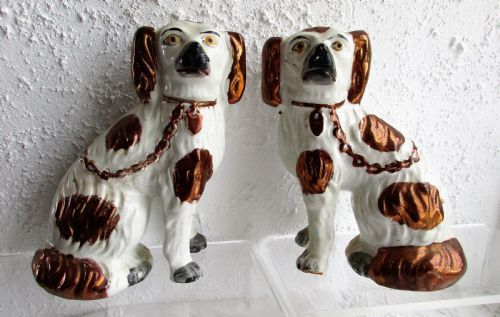
Listings span the Victorian era, incorporating earthenwares finished with lead glazes, hand-applied enamels, and copper lustre.
Factors of quality
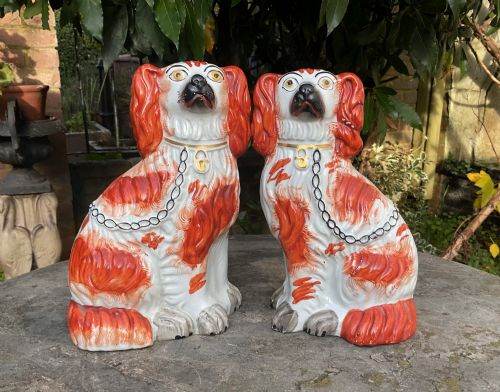
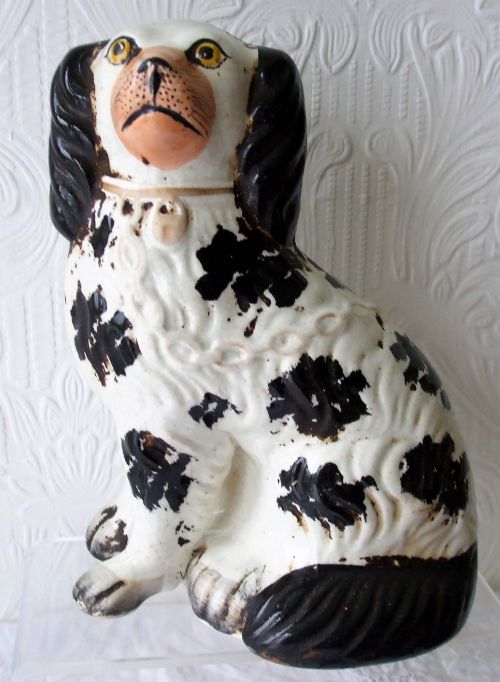
The distinction between ordinary and superior pieces rests on the crispness of the moulding and the care taken with the hand-painting, particularly around the eyes, muzzle, and gilt collars. Finer examples retain bright, clean enamel colours without excessive fading or careless paint run from the firing process.
Proportion and scale also dictate desirability, with larger matched pairs or unusual functional forms such as money boxes and clock groups demanding closer attention from collectors than standard standing or seated figures.
Beswick
The White Earthenware Spaniel Figures Glossary
- Comforter spaniel
- A ceramic dog figure modelled after Queen Victoria's own pets, traditionally positioned on either side of the fireplace to watch over the hearth. These pairs form the bedrock of nineteenth-century Staffordshire canine pottery.
- Earthenware
- A porous ceramic body fired at lower temperatures than stoneware or porcelain, requiring a vitreous glaze to ensure it holds liquid or resists moisture. This material formed the standard substrate for Victorian mass-produced figures.
- Lead glaze
- A glossy liquid coating containing lead oxide applied to ceramic pieces before a secondary kiln firing to produce a shiny, protective finish. It gives these antique figures their characteristic reflective sheen.
- Enamel
- Opaque glass-based paint applied over the fired glaze to add colour to ceramic figures. Artisans used these pigments for the red patches, black snouts, and facial markings on the pottery dogs.
White Earthenware Spaniel Figures: Frequently Asked Questions
What are comforter spaniels?
Comforter spaniels are ceramic dog figures modelled after the King Charles spaniels popularised by Queen Victoria during the nineteenth century. Potters produced them in matching left and right orientations to sit at either end of a mantelpiece.
These figures often feature gilded chains and lockets, reflecting the pampered status of the royal pets they immortalised.
How were these figures displayed?
Victorian households traditionally placed pairs of Staffordshire spaniels on the mantelpiece facing inward toward each other. This symmetrical arrangement suited the formal decorative tastes of nineteenth-century parlours.
Beyond simple ornaments, some examples served practical domestic purposes as money boxes, inkwells, quill holders, or clock surrounds.
How do you date nineteenth-century spaniels?
Dating relies on assessing the potting weight, the vibrancy and palette of the enamel colours, and the presence of crazing in the lead glaze. Earlier nineteenth-century examples often exhibit finer modelling and distinct hand-painted facial expressions.
Markings are uncommon on these utilitarian figures, meaning stylistic clues and wear patterns provide the primary evidence for age.
Are these dogs always found in pairs?
Many Staffordshire spaniels were manufactured and sold as matched pairs designed to sit symmetrically on either side of a fireplace. However, single figures do survive due to accidental separation or breakage over the decades.
Collectors generally prefer complete matched pairs, though individual dogs remain popular for smaller display spaces.