



Antique Display Server
An antique display server combines surface utility and presentation, offering storage and display space through Victorian, Georgian and Edwardian forms.
Antique Display Server
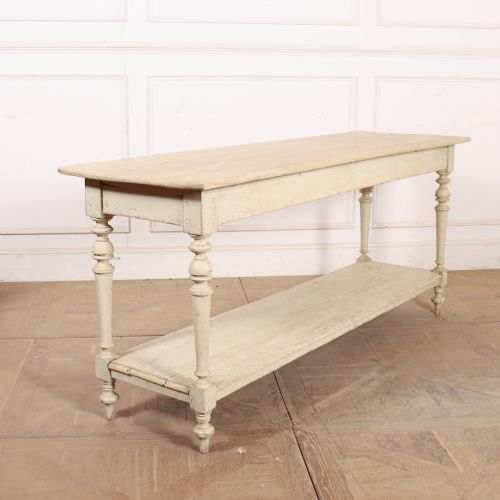
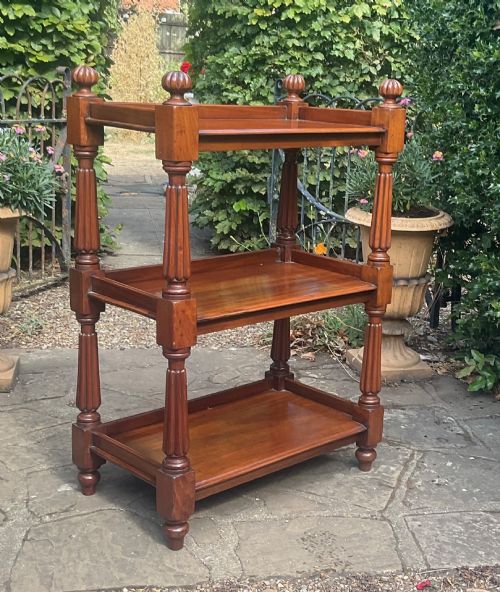
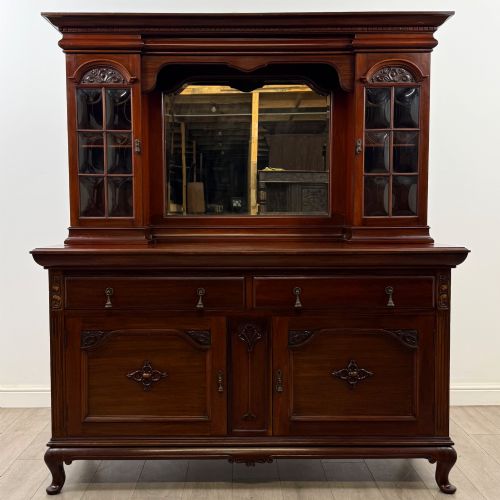
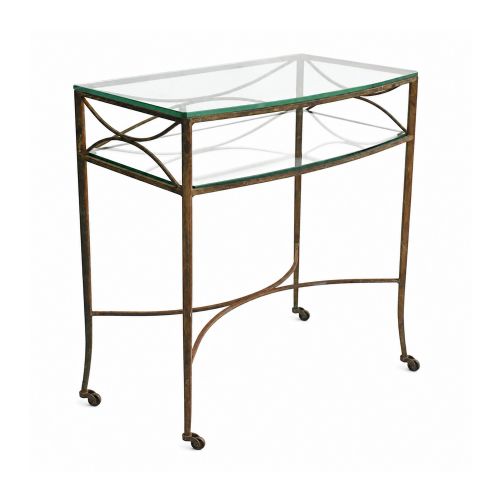
When searching for an antique display server, buyers encounter various large dining and entertaining furniture pieces designed to hold, serve and exhibit tableware or food. The selection spans distinct forms including sideboards, buffets, chiffoniers, credenzas and tiered serving tables from several centuries.
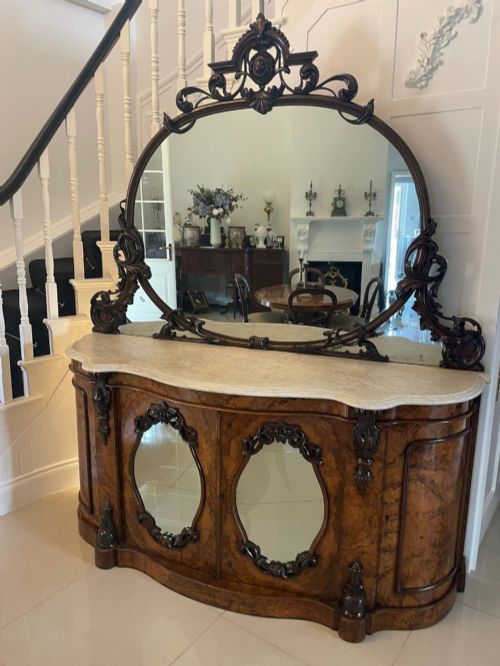
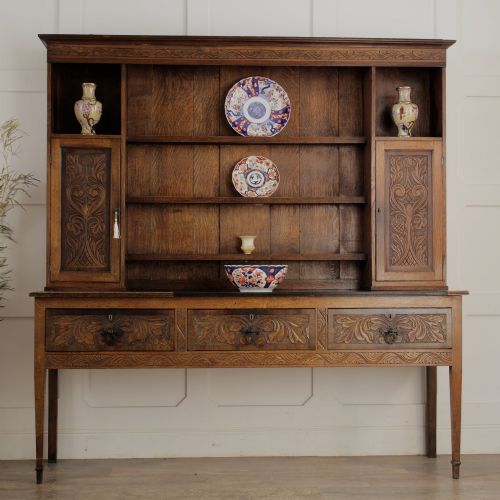
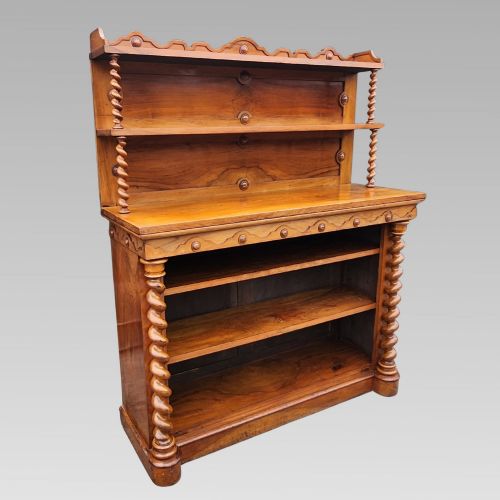
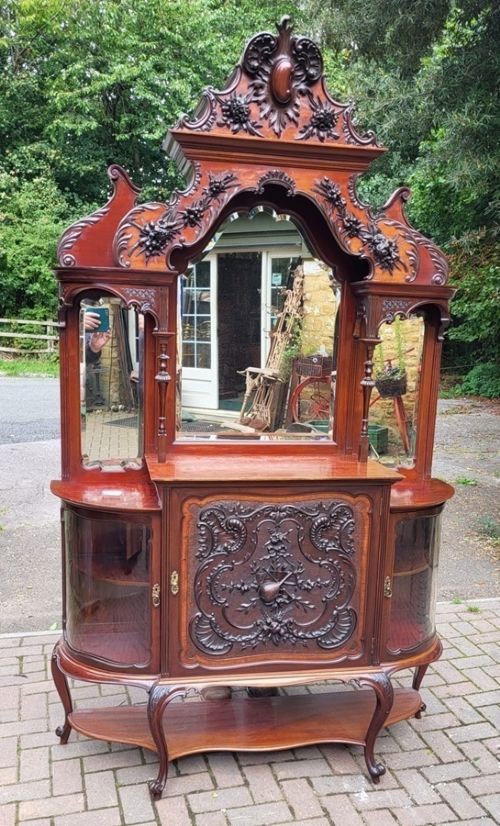
The Victorian era provides the highest concentration of pieces on this page, often featuring burr walnut, mahogany and integrated mirror backs. Earlier Georgian examples tend toward timber-focused forms like dumbwaiters, while later Edwardian and Arts and Crafts pieces introduce lighter oak structures.
These servers function primarily as room anchors that combine enclosed storage with open tops or shelving for display purposes. They originate from British, French and Continental workshops, reflecting regional dining customs and cabinet-making traditions.
Materials and construction methods
Cabinet makers utilised dense hardwoods such as mahogany, oak and walnut as structural carcasses, frequently applying decorative veneers like burr walnut or flame mahogany to primary display surfaces. Secondary timbers such as pine appear in concealed interior framing.
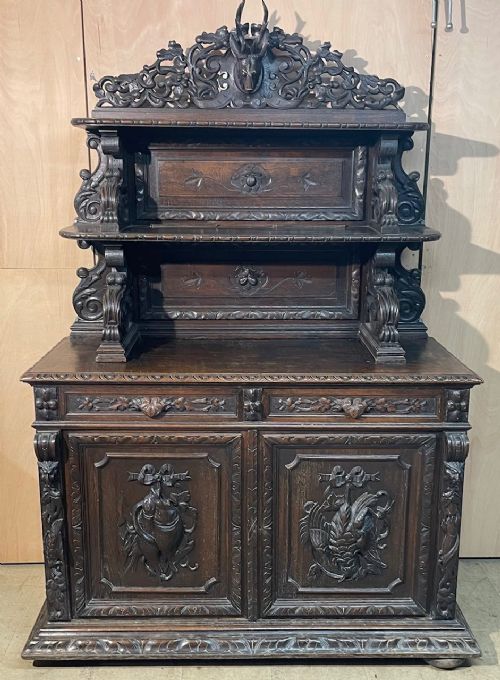
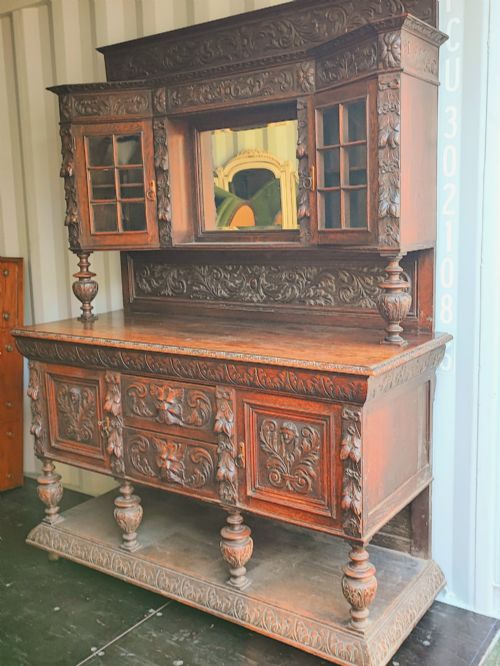
Decorative embellishments rely on hand carving, marquetry inlay, ebonisation and applied mouldings rather than cast components. Glass inserts, brass hardware and integrated mirror plates complete the construction of the display-oriented pieces.
Among the servers sits a pianist's lounge music cabinet, proving that Victorian makers built storage for every domestic hobby.
Factors determining quality
The grade of timber selection and veneer matching dictates visual hierarchy, with continuous grain patterns and rich natural figuring separating superior examples from plain stock. Superior pieces employ dense, well-seasoned hardwoods that resist warping across large door and panel surfaces.
Joinery execution defines structural integrity, seen in the precision of drawer dovetails and the stability of applied carvings. Original surface patination and intact hardware contribute significantly to the standing of a piece.
Shapland and Petter
The Antique Display Server Glossary
- Credenza
- A low dining room cabinet used for serving food and displaying plate, often featuring cupboards and drawers beneath a flat top. The Victorian iterations frequently incorporate an elevated mirror back.
- Chiffonier
- A compact sideboard or low cabinet developed in the early nineteenth century, typically fitted with enclosed shelving below and sometimes a small gallery above. They serve smaller dining spaces or drawing rooms.
- Dumbwaiter
- A tiered serving table with rotating or fixed circular trays mounted on a central pillar, designed for holding dishes without servants present. Georgian versions rely on graduated mahogany tiers.
- Etagere
- A set of open shelves for displaying ornaments, china or small decorative objects. These tiered stands prioritise visual presentation over enclosed storage.
- Pollard oak
- Oak timber taken from trees that have been pollarded, producing wood with dense, knotty burr formations. Cabinet makers utilised these highly figured veneers for decorative drawer fronts and panels.
Antique Display Server: Frequently Asked Questions
What is an antique display server?
An antique display server is a piece of dining room furniture designed for holding food, storing tableware and exhibiting decorative objects. These items range from Victorian mirror-backed credenzas to Georgian dumbwaiters and Edwardian sideboards.
They function as focal points in dining spaces, combining practical cabinetry with display surfaces for porcelain, silver and glass.
How do I date a sideboard?
Dating relies on timber choices, construction techniques and stylistic motifs characteristic of specific periods. Victorian pieces often use burr walnut with carved mirror backs, while Georgian items favour solid mahogany and simpler proportions.
Examining internal drawer construction, such as hand-cut dovetails and secondary timber use, also helps establish the era of manufacture.
Where were these servers used?
These servers primarily inhabited the dining rooms of large houses and town residences, where servants staged courses before presentation. Smaller chiffoniers and side cabinets also appeared in drawing rooms and parlours.
In modern interiors, they transition easily into living spaces and hallways as storage consoles and display surfaces.
How do I care for antique wood?
Maintaining antique timber requires stable indoor humidity away from direct heat sources and sunlight to prevent veneer cracking and fading. Regular dusting with a dry lint-free cloth preserves the finish.
Occasional application of appropriate wax feeds the wood and maintains the historical patina without building up chemical residues.