
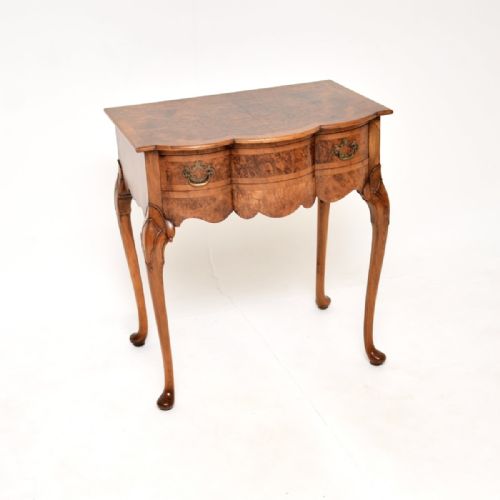
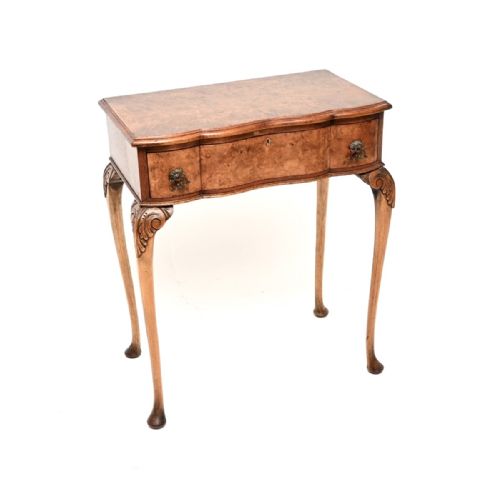


Serpentine Walnut Server
These serpentine walnut server pieces bring curved frontlines and rich timber figures into dining rooms and halls.
Serpentine Walnut Server
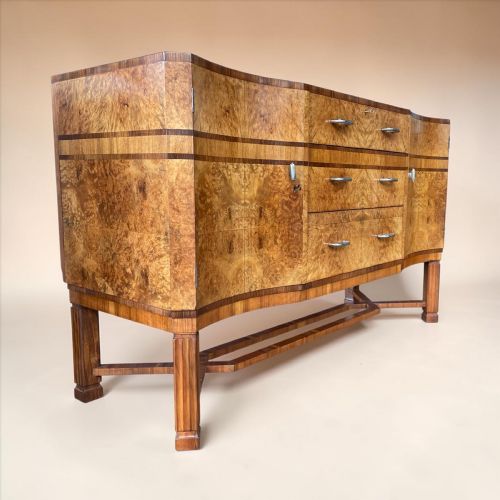
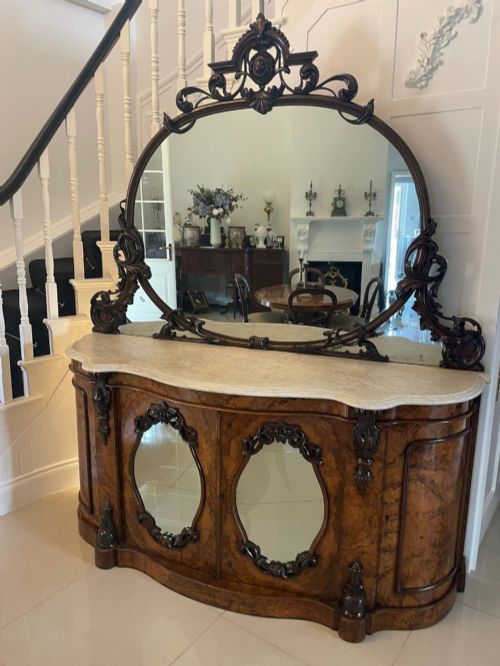
You will most commonly meet server and sideboard formats from the nineteen-thirties, alongside Victorian buffets and console tables from the mid-nineteenth century. These items function equally well as serving surfaces for dining spaces or as decorative console tables in hallways.
How they were made
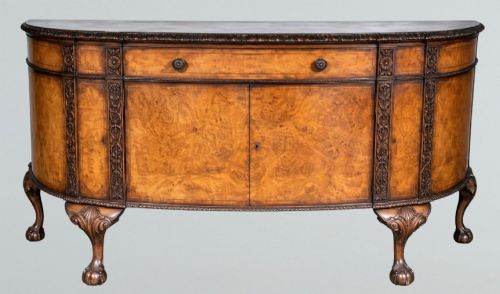
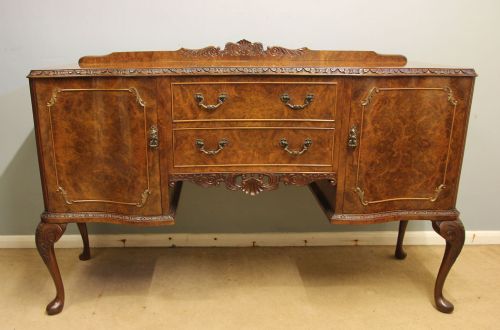
Cabinet makers utilised burr walnut and plain walnut veneers applied over solid hardwood foundations to create the striking patterned surfaces seen across these forms. The characteristic curved serpentine shape required expert timber bending and precise sawing to maintain structural integrity along the front edge.
Hardware details such as brass fittings, chrome elements, and glass components were integrated to complement the polished wood finishes. Carved mirror backs also appear on Victorian iterations, adding height and reflective depth to the primary serving surface.
The listings here combine burr walnut veneers with brass hardware and glass elements across mid-nineteenth century and twentieth-century forms.
What varies in quality
The sophistication of the timber figuring and the precision of the veneer matching across the curved serpentine drawer fronts establish the visual grade of each piece. Superior examples display seamless grain continuity around the complex bends of the cabinet.
The depth of the hand-applied polish and the integrity of the underlying hardwood construction distinguish finer workshop output from more utilitarian furniture production. Original hardware mounts and well-fitted internal cutlery storage further separate standard items from superior commissions.
Epstein
The Serpentine Walnut Server Glossary
- Serpentine
- A curved furniture front characterised by a convex centre flanked by concave ends, creating an S-shaped contour.
- Burr Walnut
- Timber taken from the warted excrescences of walnut trees, prized for its swirling, highly decorative grain patterns.
- Credenza
- A dining room storage cabinet or sideboard, often featuring doors and drawers for serving and tableware containment.
- Buffet
- A sideboard or low cupboard designed specifically for serving food and displaying dining vessels.
- Console Table
- A table fixed against a wall, frequently supported by decorative legs or brackets rather than standard four-leg freestanding frames.
Serpentine Walnut Server: Frequently Asked Questions
What is a serpentine walnut server used for?
These pieces serve primarily as dining room surfaces for presenting food or storing cutlery and linen inside fitted drawers and cupboards. They also function effectively in entrance halls as decorative console tables.
The undulating curved front provides a softer visual footprint than standard straight-edged cabinets while maintaining generous surface area for display.
How do I date a serpentine walnut server?
Dating relies on stylistic markers such as Victorian mirror backs, nineteen-twenties proportions, or nineteen-thirties Art Deco influences. The choice of hardware, including brass or chrome handles, also points toward specific manufacturing decades.
Examining the construction methods inside the drawers and the composition of the secondary timbers helps confirm the era of production.
Are these servers difficult to place in modern interiors?
The compact proportions of many surviving server and console formats allow them to fit easily into modern dining spaces, hallways, or living rooms. Their warm walnut tones and figured grain patterns blend readily with various interior aesthetics.
The curved serpentine front helps the piece sit comfortably without dominating smaller rooms.
How do Queen Anne revival pieces differ from Art Deco ones?
Queen Anne revival examples typically feature cabriole legs, shell carvings, and traditional proportions echoing eighteenth-century design principles. Art Deco pieces focus on streamlined silhouettes, geometric handling, and smooth veneer surfaces.
Both styles utilise the same fundamental walnut timbers and serpentine shaping, but express them through different decorative vocabularies.