
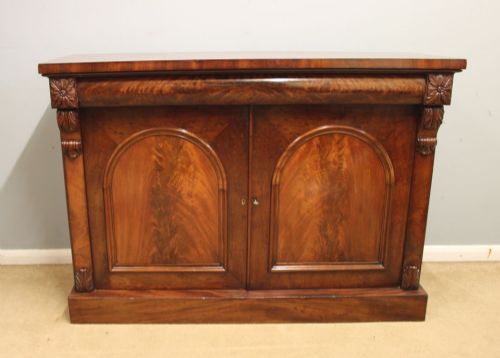
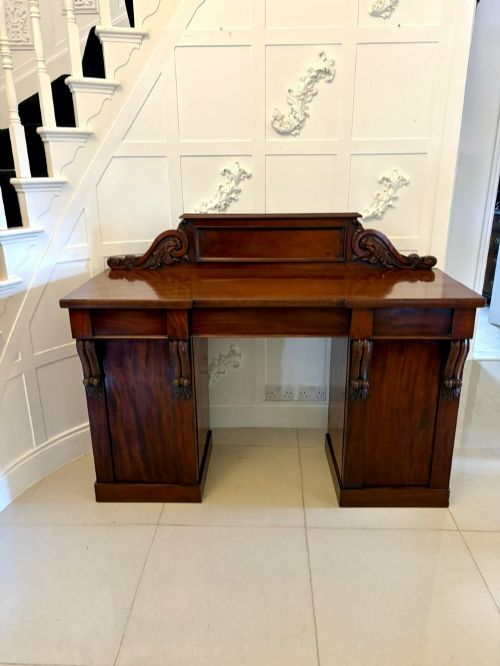
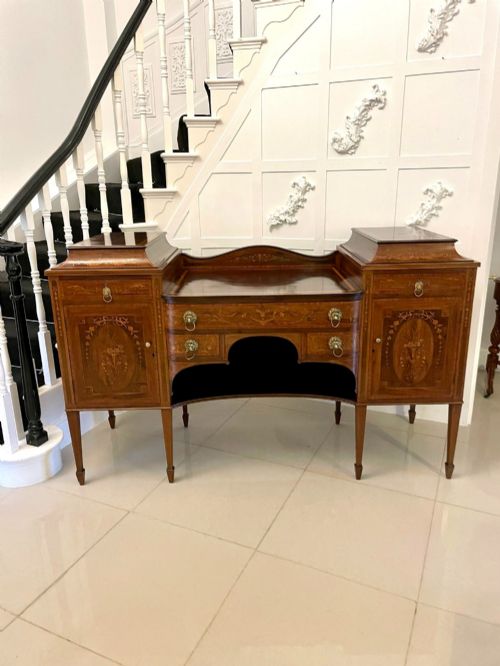
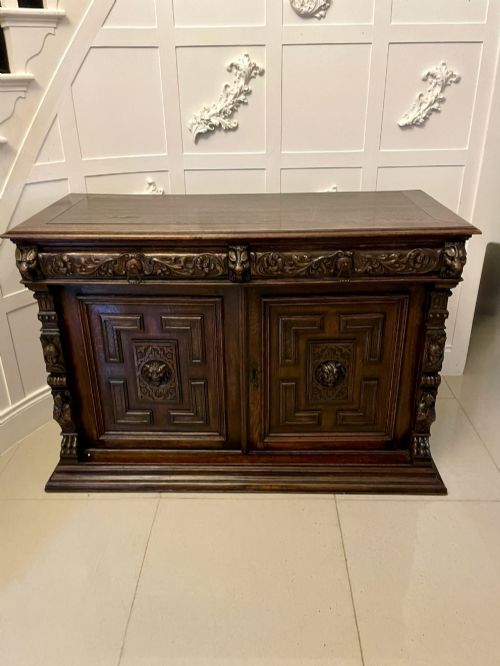
Antique Dining Room Cabinet
An antique dining room cabinet anchors the room with substantial presence, serving storage and display through generations of polished timber.
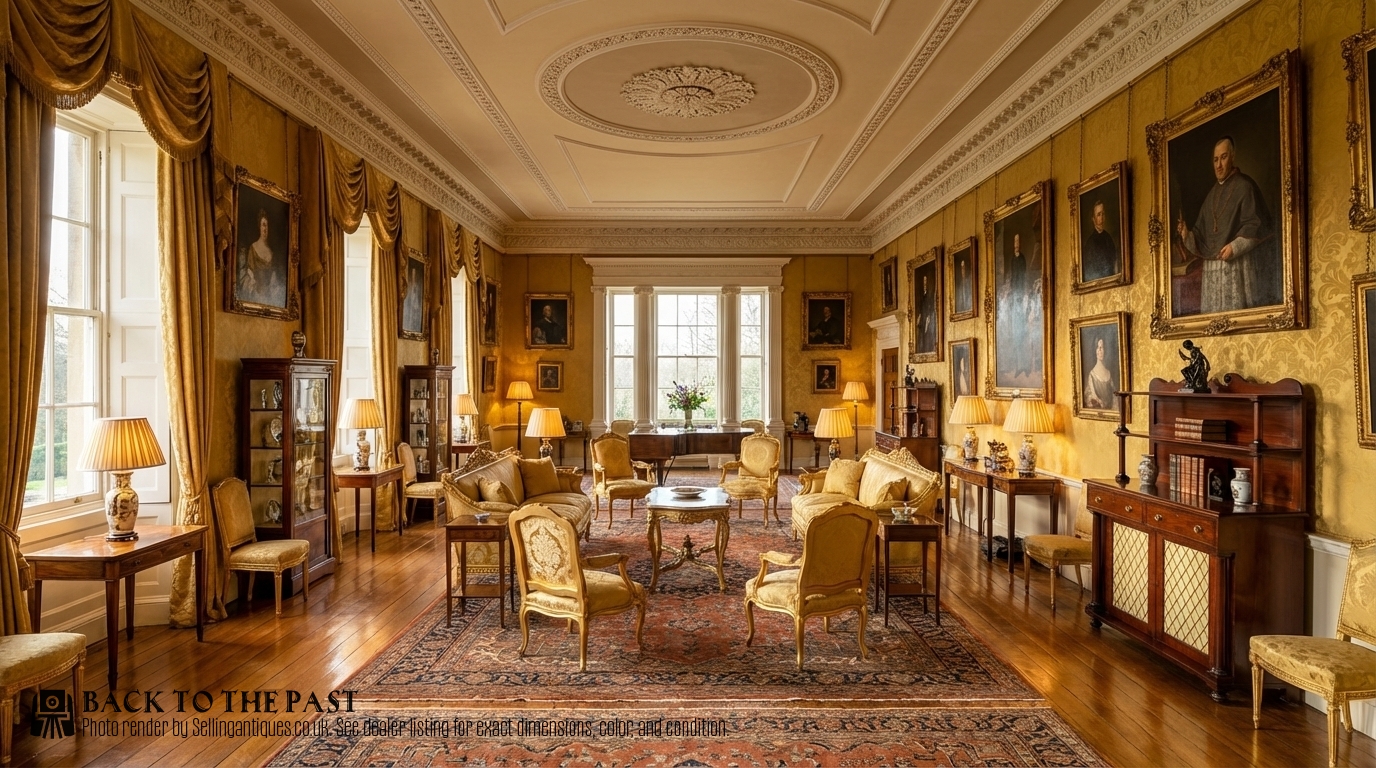
Antique Dining Room Cabinet
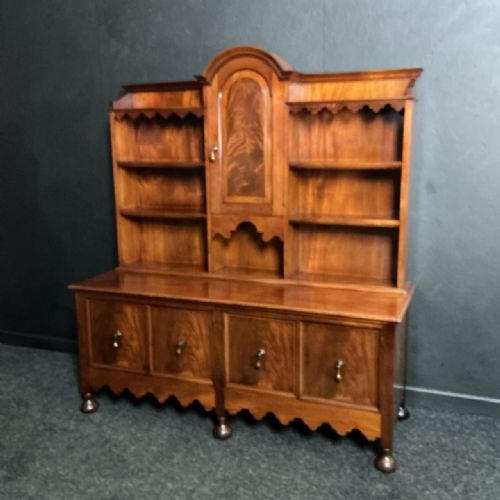
An antique dining room cabinet encompasses a variety of large serving and storage pieces, most commonly encountered here as sideboards, credenzas, chiffoniers, and dressers. These items emerge from periods spanning the Georgian era through the Victorian, Edwardian, and Art Deco years.
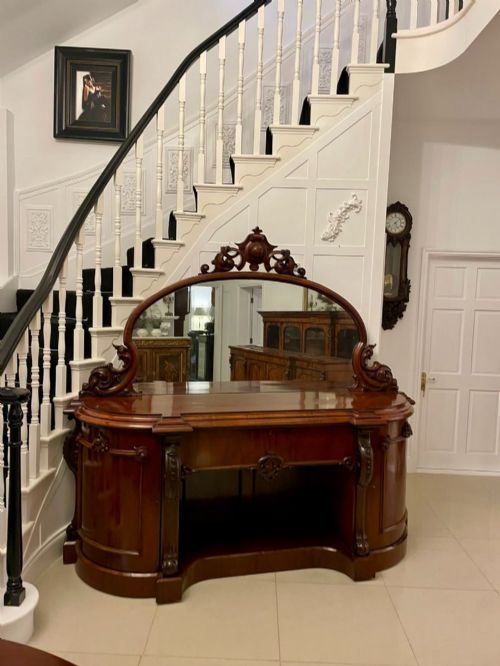
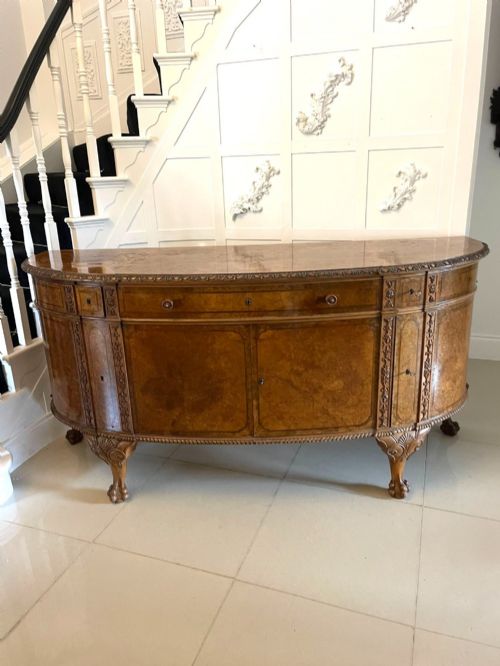
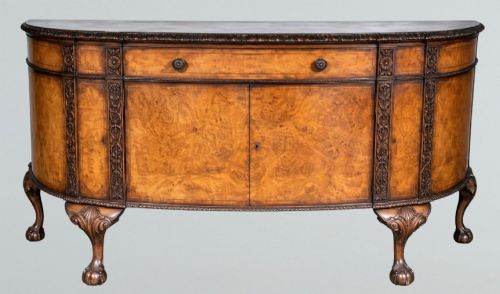
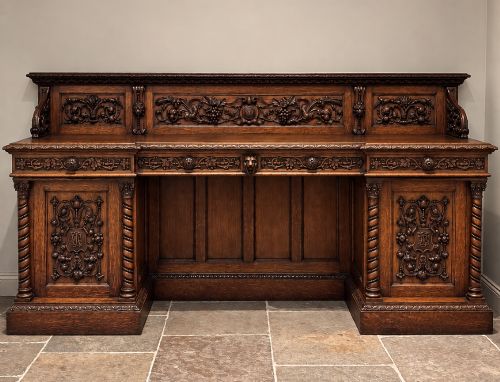
The most frequent form on this page is the mahogany or oak sideboard, often bearing mirrors, carved details, or bow fronts designed to fit the dining spaces of past centuries.
Makers and workshops produced these timber forms across Great Britain, utilising native and imported woods to equip formal dining rooms with practical serving surfaces and enclosed shelving.
Materials and Technique
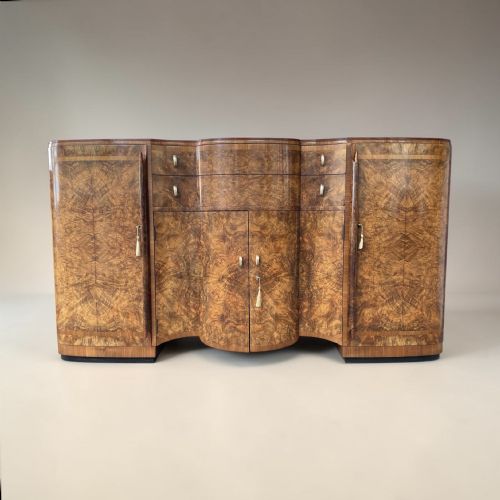
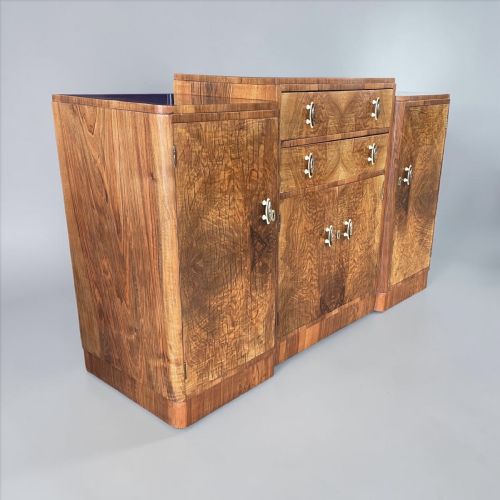
Joiners and cabinet makers built these pieces primarily using solid mahogany, oak, and walnut, frequently applying veneers such as burr walnut and flame mahogany to visible surfaces for striking grain patterns.
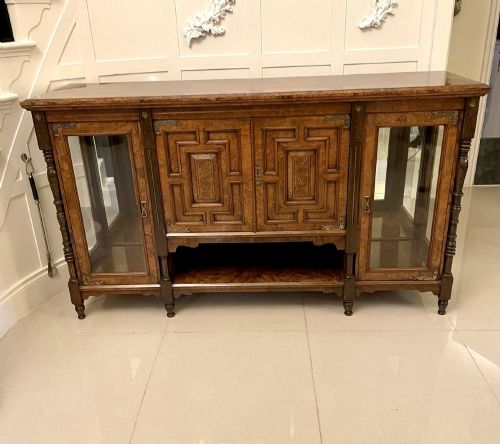
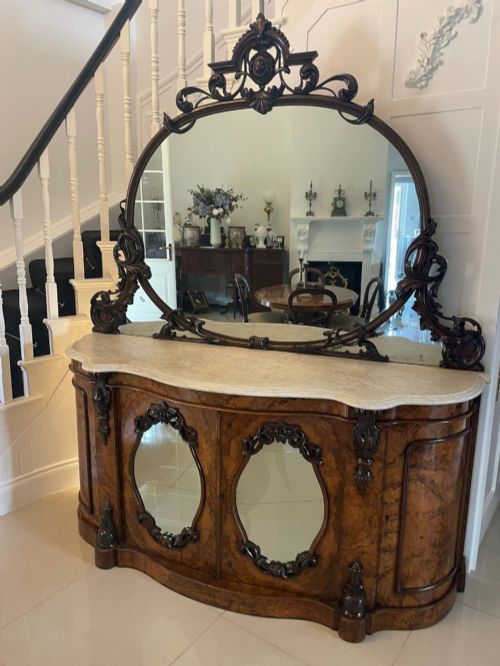
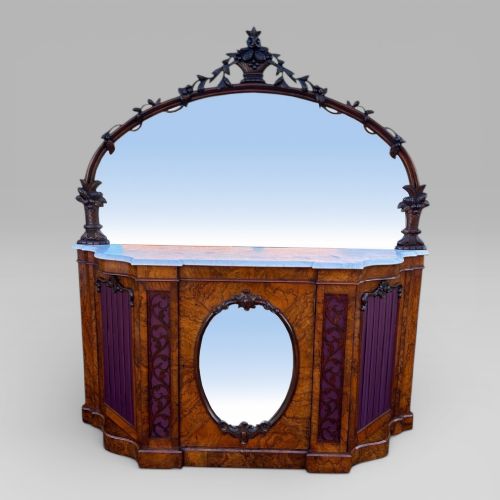
Secondary construction details include brass hardware, glass panels for display sections, and occasional marble tops on credenzas, alongside hand-carved ornamentation and inlaid marquetry.
Traditional joinery methods bind the frames, drawers, and cupboard doors together, relying on the natural strength of hardwood and precise fitting rather than modern adhesives.
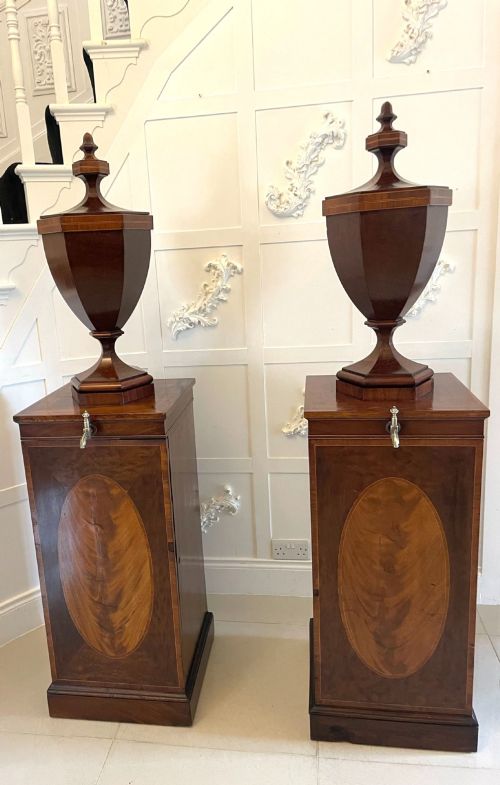
Recorded forms include bow-fronted sideboards, mirror-backed credenzas, marble-topped servers, and wine urns on pedestals.
Distinctions in Standard
The distinction between standard examples and superior pieces rests on the choice of timber and the ambition of the carving. Highly figured veneers, deeply carved mirror backs, and substantial proportions separate exceptional commissions from utilitarian workshop output.
Attribution to documented makers or retailers adds notable weight to a piece, as does the survival of original brass fittings, marble slabs, and integrated cutlery storage.
The crispness of hand-carved details and the integrity of the timber framing demonstrate the skill invested by the original maker.
Hewetsons London·Maurice Adams·M D Miller and Sons Nottingham
The Antique Dining Room Cabinet Glossary
- Credenza
- A low cabinet or sideboard used for serving food and displaying decorative objects. It often includes central cupboards flanked by curved glass doors.
- Chiffonier
- A compact sideboard developed in the nineteenth century, typically featuring a shelf above enclosed lower cupboards. These were designed for smaller dining rooms or parlours.
- Marquetry
- The art of applying small pieces of veneer to a structure to form decorative patterns or pictures. Craftsmen used contrasting timbers to create floral or geometric designs.
- Burr walnut
- Timber taken from the growth on a walnut tree where the grain has grown in a deformed, swirling manner. It produces highly decorative patterned surfaces when sliced into veneer.
- Breakfront
- A piece of furniture where the central section projects forward from the flanking sections. This architectural arrangement adds depth and shadow to large sideboards.
Antique Dining Room Cabinet: Frequently Asked Questions
What is the difference between a sideboard and a chiffonier?
Sideboards are generally larger dining room pieces designed for extensive storage and serving. They often feature multiple drawers and large cupboards.
Chiffoniers are more compact variants of the nineteenth century. They usually incorporate a raised shelf on top and smaller lower cabinets.
How do I identify an Edwardian cabinet?
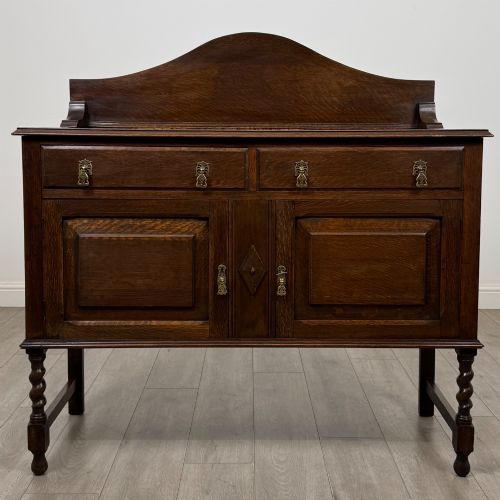
Edwardian pieces often display lighter timbers, simpler lines, and delicate inlay work. They frequently utilise mahogany and show influences of earlier Georgian revivals.
Barley twist legs and lighter proportions distinguish these dining room cabinets from heavier Victorian predecessors.
Were these cabinets used only in dining rooms?
While primarily built for dining spaces to hold silver, linen, and wine, many variations found their way into drawing rooms and hallways. Credenzas and chiffoniers frequently doubled as display furniture for parlours.
Large oak and mahogany sideboards, however, remained anchored to the dining room due to their scale.
How should I care for a mahogany dining cabinet?
Keep timber cabinets away from direct heat sources and strong sunlight to prevent the mahogany or veneer from drying and splitting. Regular dusting with a dry, soft cloth maintains the polished surface.
Apply traditional wax sparingly when the wood appears dry, buffing it gently to preserve the natural lustre.