


Antique Cylinder Secretary Desk
An antique cylinder secretary desk combines a rounded roll top with a concealed writing surface, offering a clever way to hide correspondence.

Antique Cylinder Secretary Desk
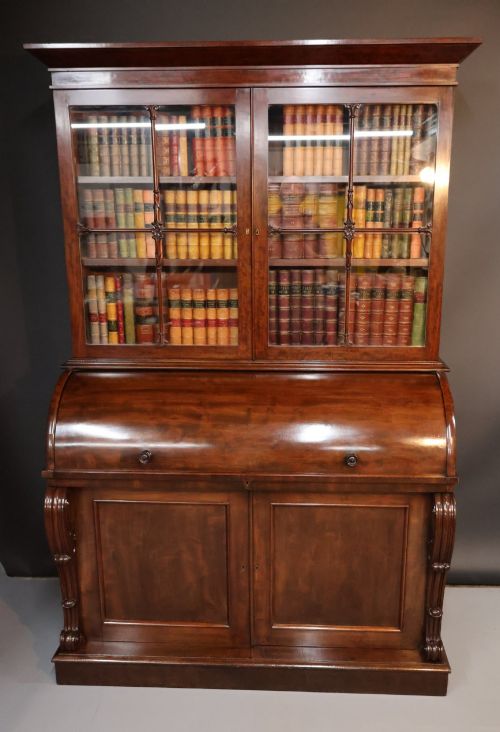
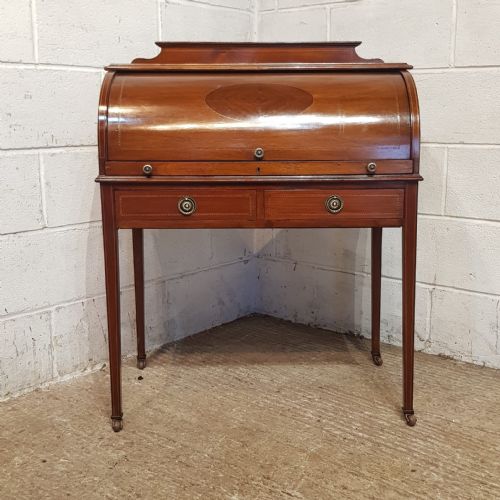
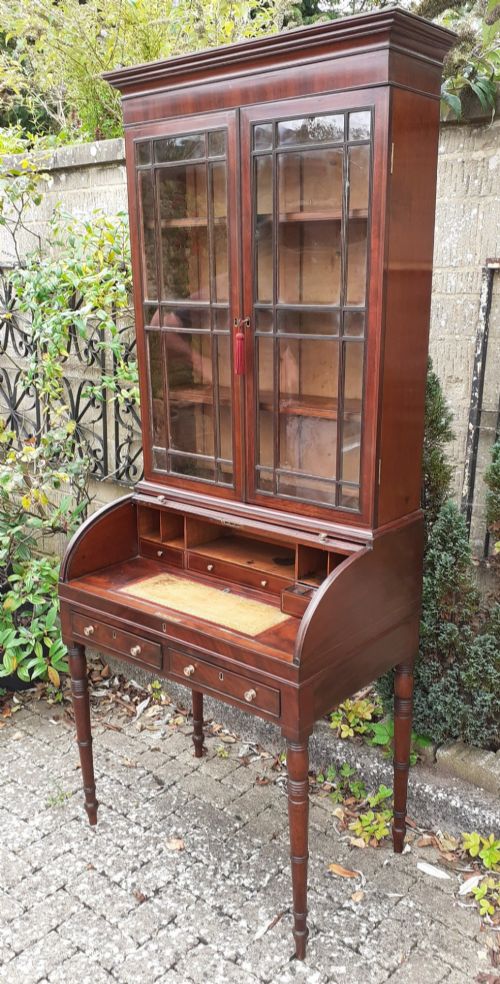
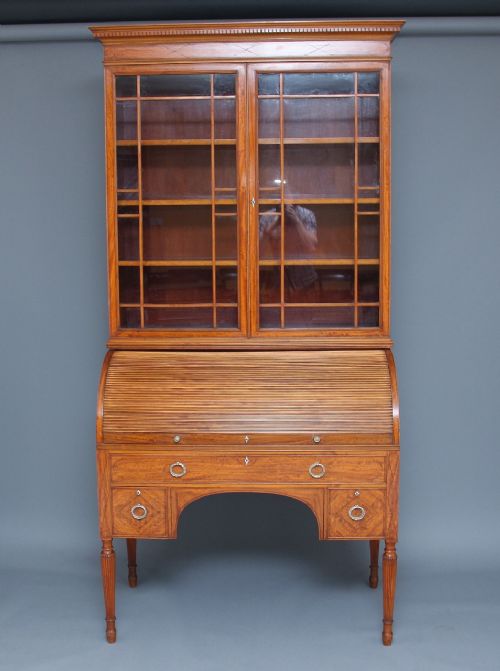
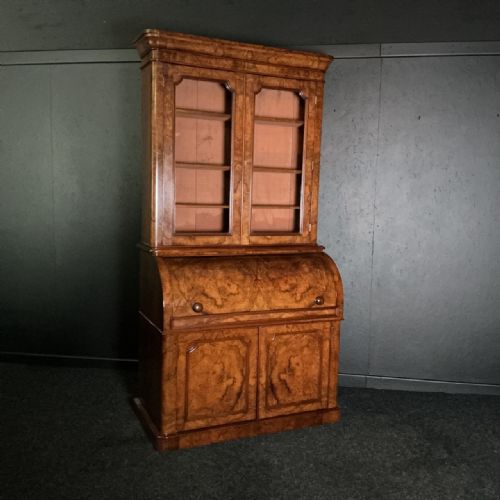
An antique cylinder secretary desk provides a private writing space enclosed by a curved wooden shutter that rolls back to reveal pigeonholes and drawers. These pieces range from compact Edwardian examples to grand Georgian and Victorian bureau bookcases fitted with upper shelving.
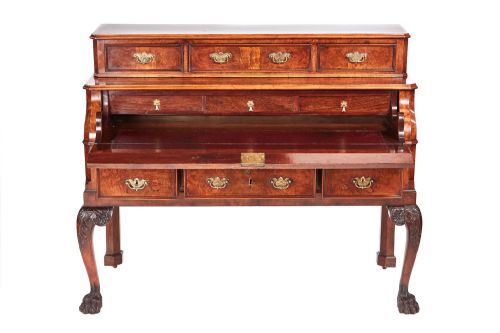
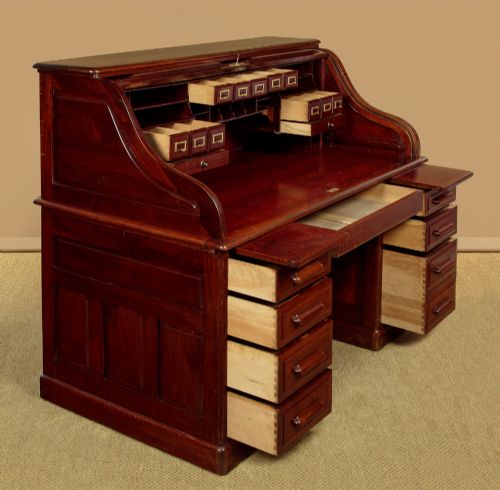
The common form on this page pairs the rotating cylinder front with a pull-out writing slide lined in leather. Makers integrated these mechanical desks into domestic libraries and studies across the eighteenth and nineteenth centuries.
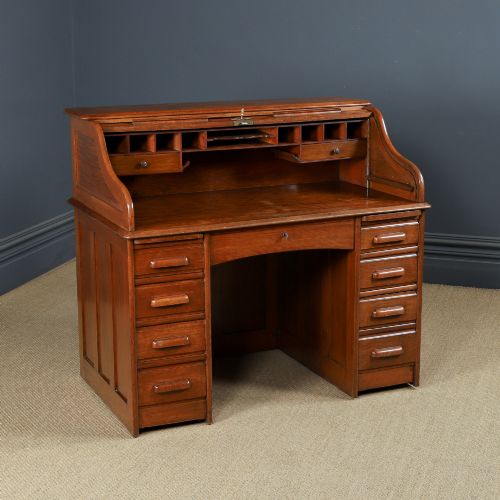
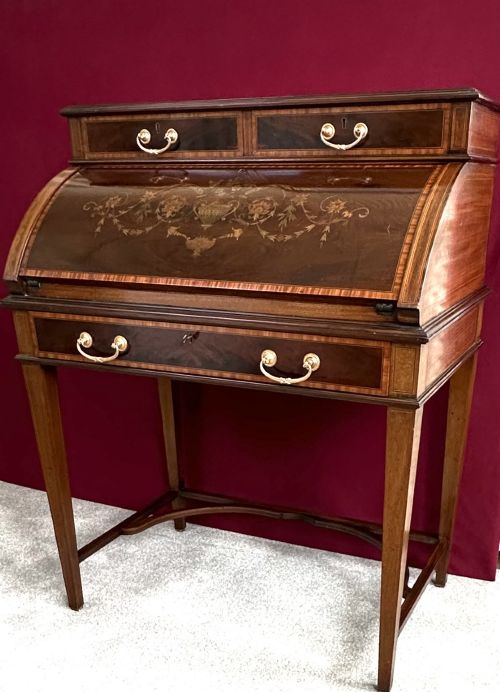
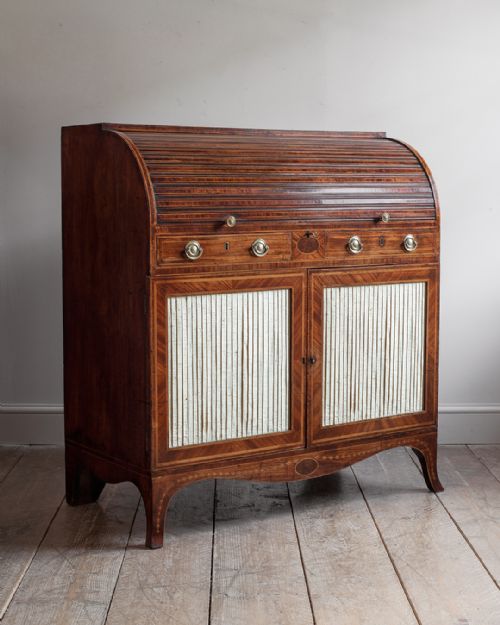
Originating in Britain, France, and America, these desks often feature marquetry inlay, tambour slats, or glazed bookcase tops. Buyers encounter regional variations from Sheraton Revival satinwood cabinets to heavy oak office furniture.
How they were made
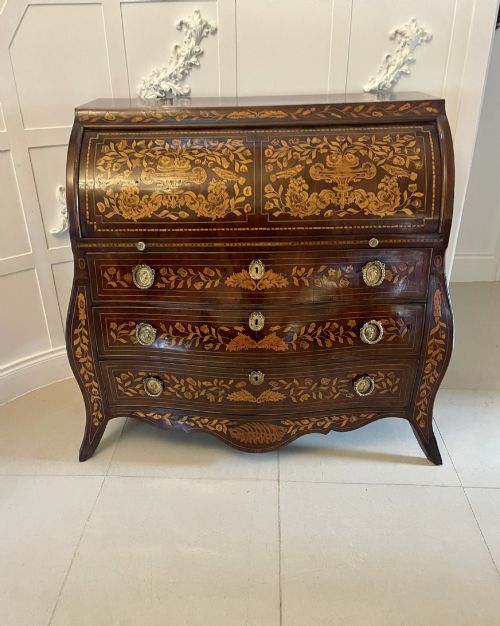
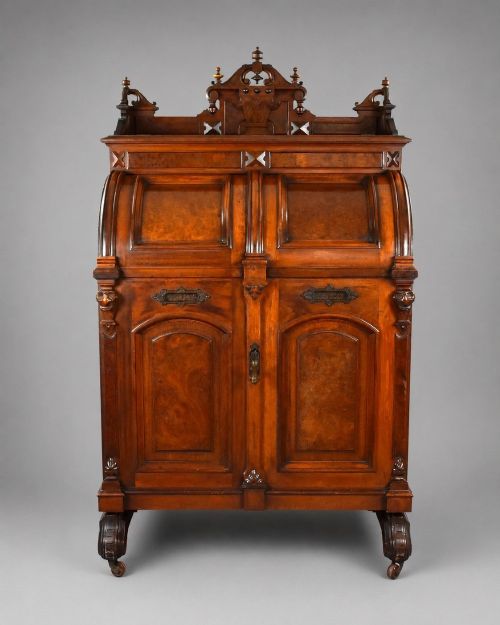
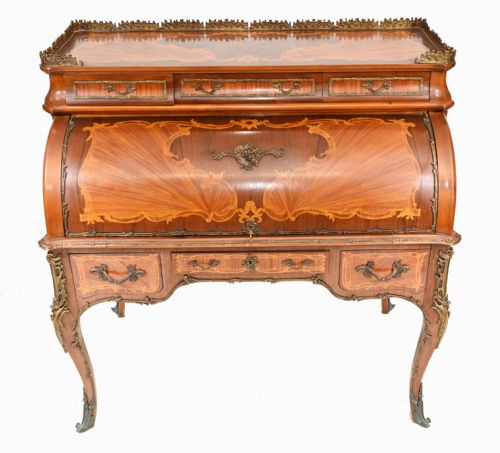
Cabinetmakers constructed these desks using solid timbers like mahogany, walnut, and oak, often applying veneers of satinwood or burr walnut across the curved cylinder fronts. Marquetry and parquetry inlay required precise hand-cutting of contrasting woods to form floral and geometric patterns.
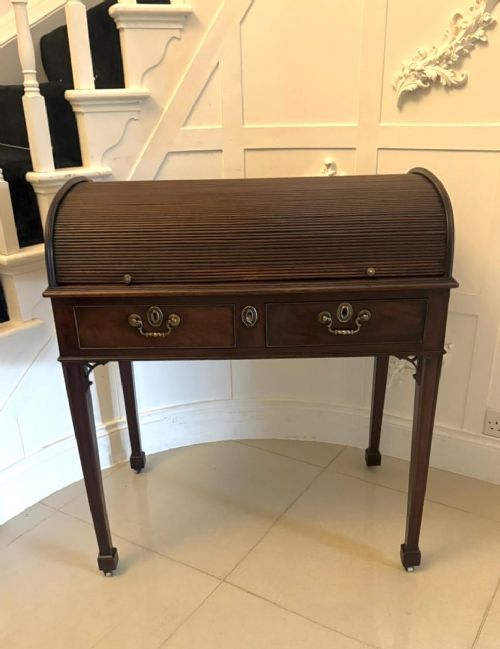
The sliding cylinder mechanism relies on closely fitted slats glued to a canvas or leather backing that travels along internal grooves. Brass handles, hinges, and escutcheons secured the drawers and doors, while tooled leather provided a durable surface for writing.
Some nineteenth-century examples hide secret compartments behind miniature false drawers inside the cylinder drum.
What varies in quality
The smoothness of the cylinder action distinguishes fine cabinet work from stiffer mechanisms that bind in their tracks. Precision in the joinery ensures the curved shutter glides evenly into the desk body without catching.
The choice of timber and complexity of decorative inlay dictate the tier of craftsmanship. Pieces featuring matched burr veneers, intricate floral marquetry, and original brass fittings stand apart from simpler utility models.
Tudor & Burrey·Edwards & Roberts·Wooton Desk·Wiggers
The Antique Cylinder Secretary Desk Glossary
- Cylinder desk
- A writing desk featuring a rounded, quarter-circle wooden shutter that conceals the writing surface and interior pigeonholes when closed.
- Tambour
- A flexible shutter made from narrow strips of wood glued to a fabric backing, allowing it to slide around a curved track.
- Marquetry
- Decorative veneer work formed by fitting together small pieces of coloured wood, shell, or bone to create pictorial designs.
- Bureau bookcase
- A combination furniture piece featuring a writing desk below an enclosed set of shelving with glass or wooden doors.
- Writing slide
- A pull-out shelf positioned above the kneehole or drawers to extend the available writing space.
Antique Cylinder Secretary Desk: Frequently Asked Questions
How does a cylinder desk work?
The curved wooden shutter runs along hidden grooves inside the cabinet carcass. Pulling the writing slide forward often retracts the cylinder automatically.
Internal linkages connect the sliding writing surface to the rotating drum. This movement uncovers the fitted interior drawers and pigeonholes in one smooth motion.
What is the difference between a bureau and a cylinder desk?
A traditional bureau uses a flat flap hinged at the bottom that folds down to form the writing slope. This flap rests at an angle when closed.
A cylinder desk encloses the workspace with a rounded, rotating drum rather than a flat folding panel. The interior arrangement remains fully upright and accessible behind the curved shutter.
Were these desks used in offices or homes?
Wealthy households placed them in private libraries, drawing rooms, and ladies' boudoirs for managing personal correspondence. Elaborate satinwood and marquetry versions suited formal reception rooms.
Heavier oak and walnut variants served business environments and estate offices. Commercial models often included larger proportions and integrated shelving for ledgers.
How do I identify the period of a cylinder desk?
Eighteenth-century examples often display satinwood veneer, delicate stringing, and neoclassical marquetry motifs. Proportions tend to be lighter and more refined during the George III and Sheraton periods.
Victorian and Edwardian versions introduce heavier timber choices like burr walnut and oak alongside mechanical improvements. Late nineteenth-century pieces frequently adopt revival styles or utility office formats.