
Antique Credenza with Doors
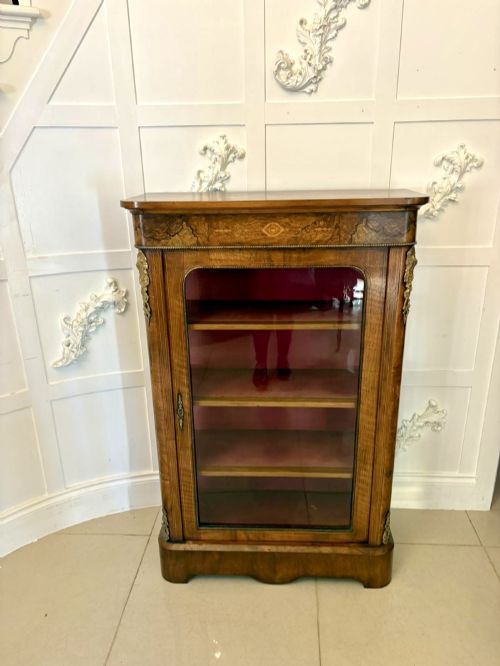
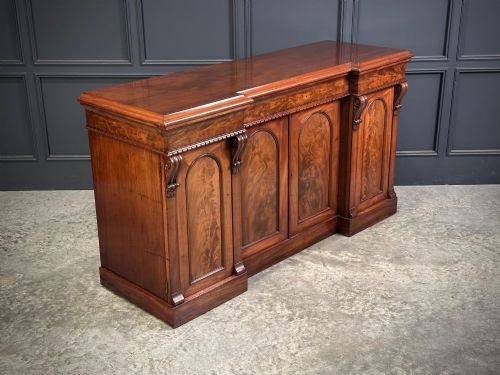
An antique credenza with doors brings low, formal display and closed storage into a room, most often met here in Victorian burr walnut.
Antique Credenza with Doors
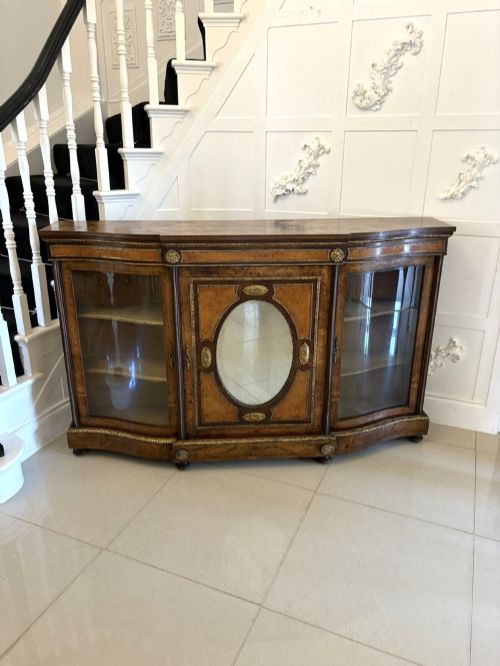
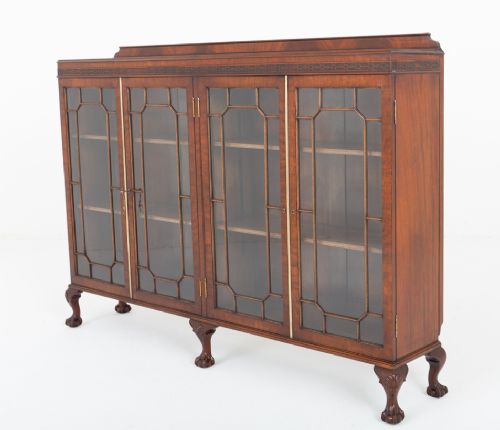
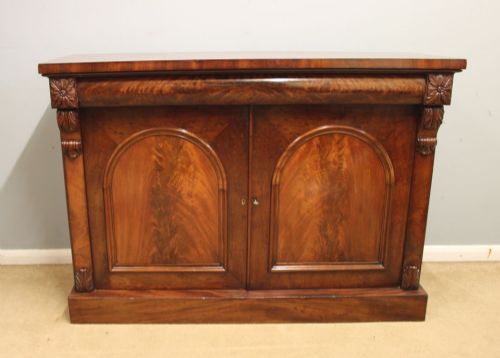
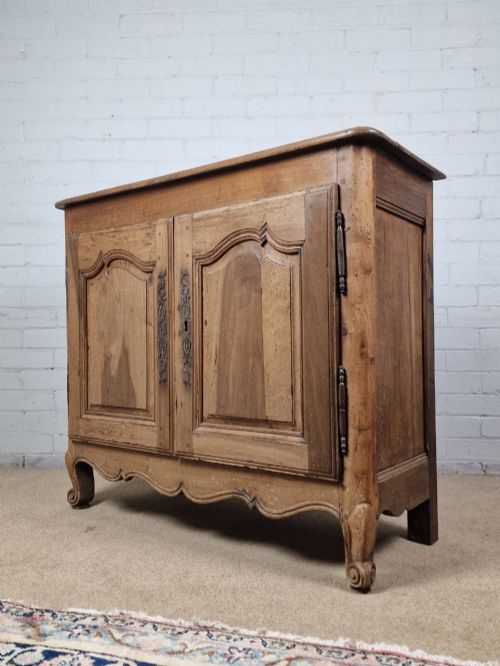
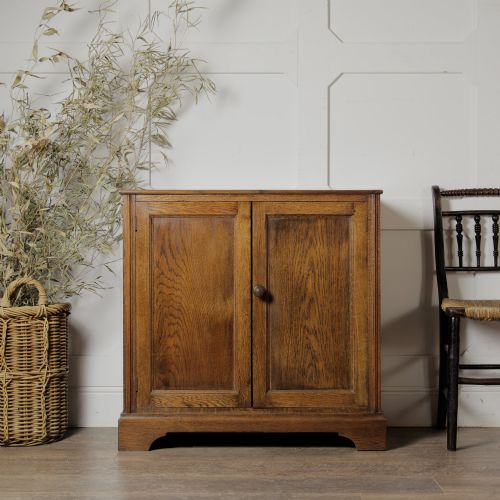
An antique credenza with doors sits low to the ground and traditionally combines central cupboard storage with flanking glazed or mirrored display compartments. The pieces catalogued here span periods from the Georgian era through to the Edwardian period, encompassing related forms such as chiffoniers and side cabinets alongside standard credenzas.
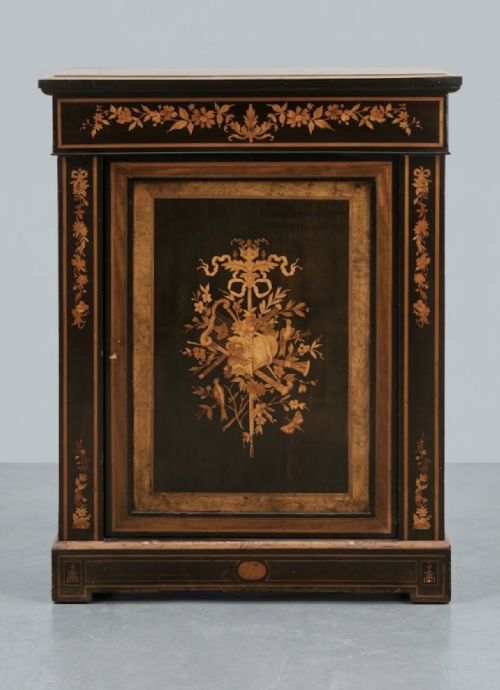
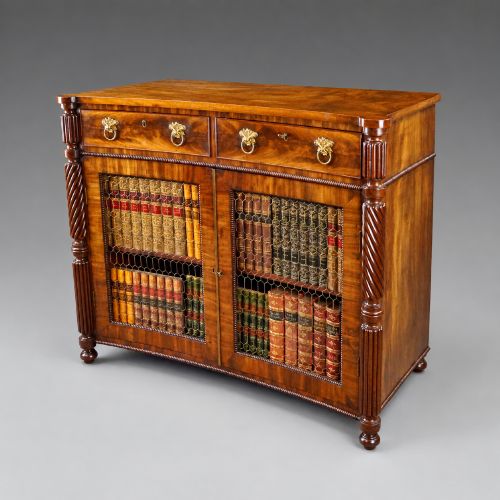
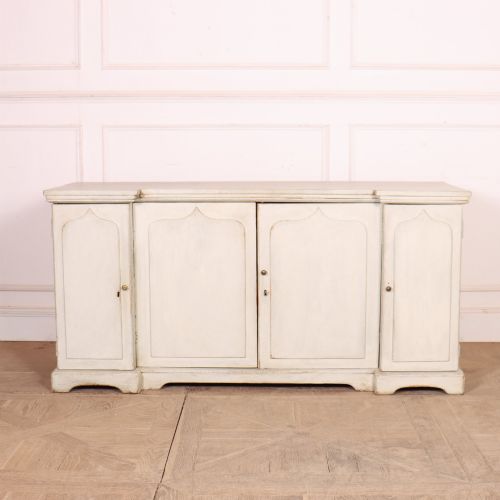
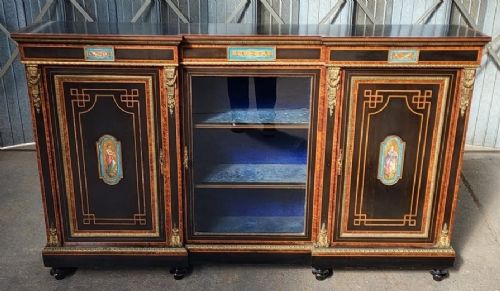
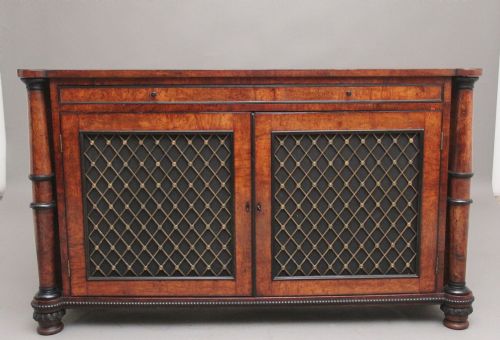
Victorian examples in burr walnut dominate the selection, frequently decorated with ormolu mounts, intricate marquetry inlay and mirrored doors. Regency and Georgian iterations lean towards figured mahogany, rosewood and goncalo alves, sometimes featuring brass inlay or Gothic panelled doors.
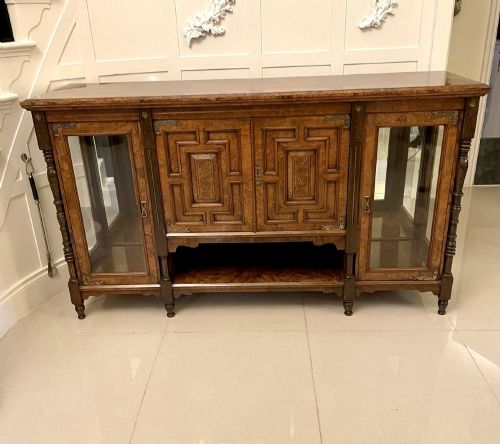
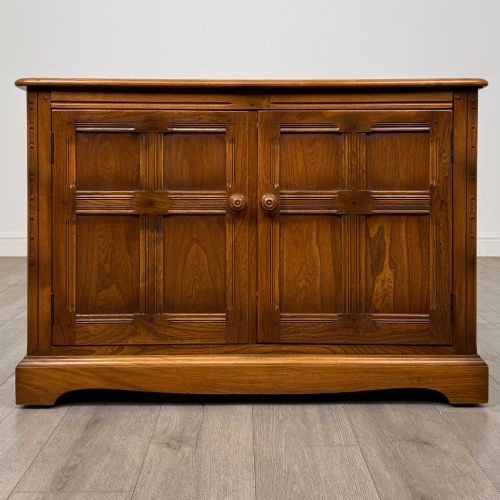
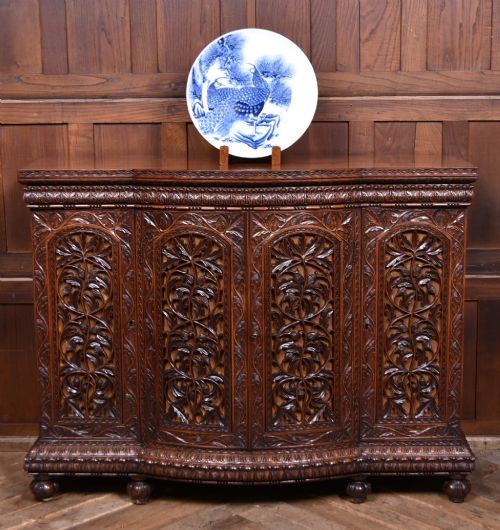
The layout generally prioritises a balanced front elevation, often with a breakfront profile or curved end cabinets. Buyers encounter varying configurations of doors, from solid timber panels to glass fronts designed for displaying ceramics and books.
How they were made
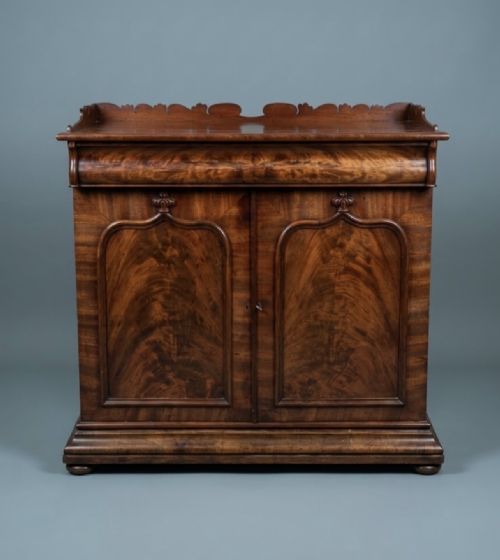
Cabinet makers utilised dense tropical hardwoods and indigenous timbers, laying decorative veneers such as burr walnut, rosewood, amboyna and pollard oak over stable secondary woods. These figured veneers were carefully matched and book-ended across door panels and friezes to create symmetrical visual patterns.
Gilding and metalwork played a significant role in embellishing the higher-status pieces, with cast ormolu mounts screwed or pinned to the carcase. Fine brass stringing and inlay work were frequently embedded directly into the wood surface to accent the structural outlines of doors and plinths.
Glass panels were hand-cut and silvered for mirror-backs or fitted as clear panes within glazed doors to protect the interior contents. Traditional joinery methods, including dovetailed drawer construction and mortise and tenon frames, ensured the structural integrity of these heavy cabinets.
Some Victorian cabinet makers hid small drawers behind architectural pilasters, ensuring a secret spot for stray visiting cards.
What varies in quality
The choice of timber veneer dictates much of the initial visual impact, with deeply figured burr walnut and richly grained rosewood marking out superior examples. The complexity of the marquetry and the precision of brass inlay further separate standard production from master craftsmanship.
Mounts and hardware reveal the maker's investment in the piece, where finely chased ormolu details contrast with simple brass handles. The quality of the interior carcase timber and the smoothness of door alignment demonstrate the original standard of workshop assembly.
Gillows·Robert Strahan
The Antique Credenza with Doors Glossary
- Credenza
- A low cabinet, originally Italian, adapted in Victorian England for drawing rooms to display ornaments and store books behind doors.
- Chiffonier
- A compact sideboard popular during the Regency and Victorian periods, typically featuring doors enclosing shelves beneath a low superstructure.
- Ormolu
- Gilded bronze used for decorative mounts and framing on high-status 19th-century cabinet furniture.
- Burr walnut
- A prized timber veneer sourced from the irregular growths of the walnut tree, noted for its swirling, highly figured grain pattern.
- Amboyna
- An exotic, dense burl wood from Southeast Asia with a rich brown colour, utilised for luxury inlay and crossbanding.
- Marquetry
- The art of applying decorative pieces of veneer to a structure to form intricate geometrical or floral designs.
Antique Credenza with Doors: Frequently Asked Questions
What is the difference between a credenza and a chiffonier?
A credenza is typically a low, symmetrical cabinet featuring central doors flanked by curved or straight side compartments, designed primarily for formal reception rooms. A chiffonier is generally smaller and often includes a short shelf or back tier above the main surface.
While both provide enclosed storage behind doors, chiffoniers emerged earlier in the 19th century as versatile serving pieces, whereas credenzas evolved later to emphasise decorative display through mirrors and glass.
How do I care for polished wood surfaces?
Maintain timber finishes by avoiding direct sunlight and excessive temperature fluctuations that can cause veneers to lift or crack. Use a soft, dry cloth for regular dusting rather than silicone sprays.
Apply a traditional beeswax sparingly when the wood appears dry, buffing it gently to preserve the natural lustre of the French polished surface.
Were these cabinets used in dining rooms?
Some larger variants with cupboards and top shelves served dining functions for storing linens and tableware, but many were built for drawing rooms. Victorian drawing room pieces prioritised display over heavy storage, reflecting their role in entertaining guests.
Lower credenzas acted as surface space for lamps and decorative objects while concealing books or collection items behind doors.
How can I tell a Victorian piece from a Regency one?
Regency cabinets often display cleaner architectural lines, architectural brass inlay, and dark rosewood or mahogany timbers influenced by classical motifs. Victorian pieces frequently showcase heavier proportions, elaborate burr walnut veneers, and profuse marquetry or ormolu mounts.
Mirror-backs and carved walnut crestings are characteristic of the later Victorian era rather than the earlier Regency period.