
Victorian Burr Walnut Cupboard
A victorian burr walnut cupboard brings rich, swirling grain and deep nineteenth-century warmth into a room.
Victorian Burr Walnut Cupboard
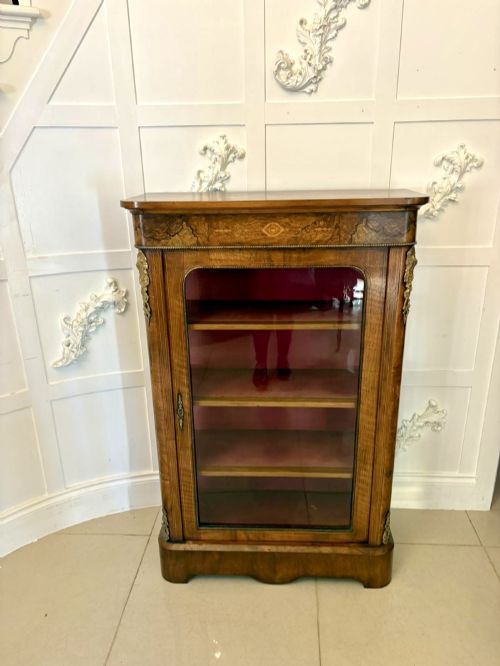
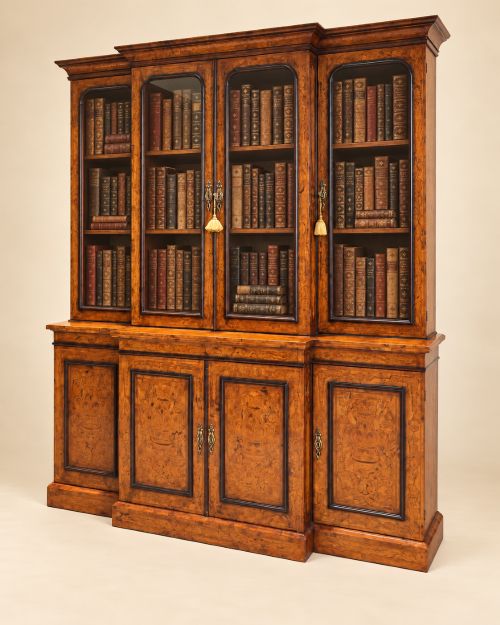
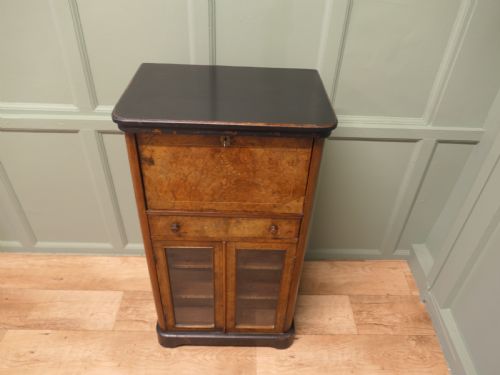
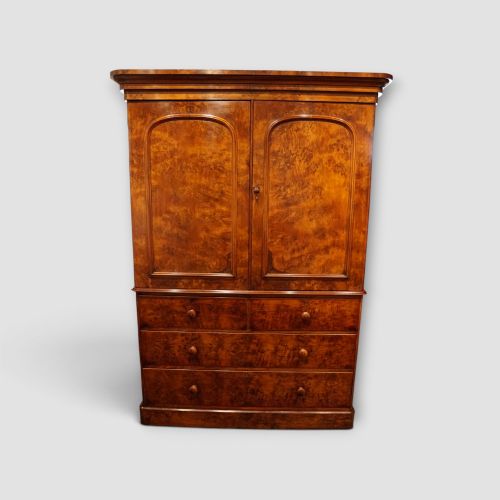
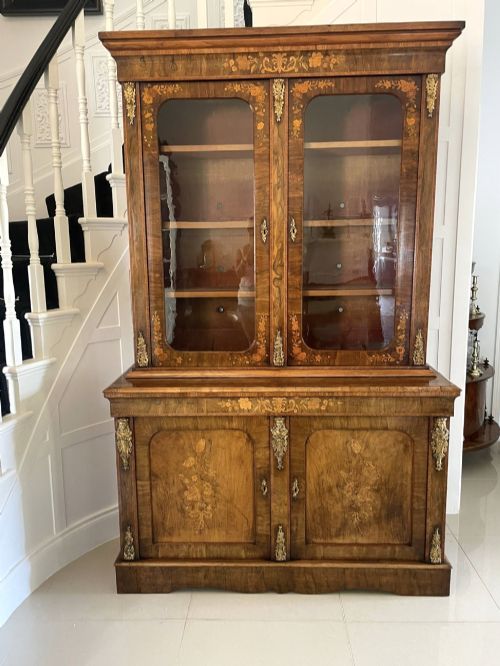
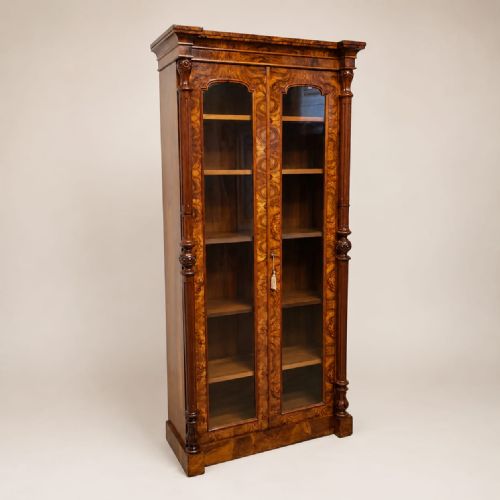
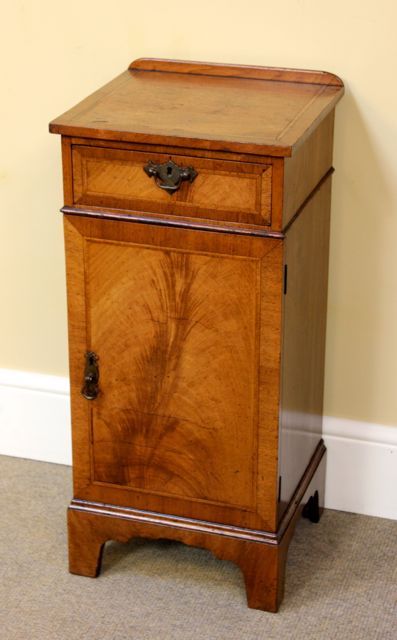
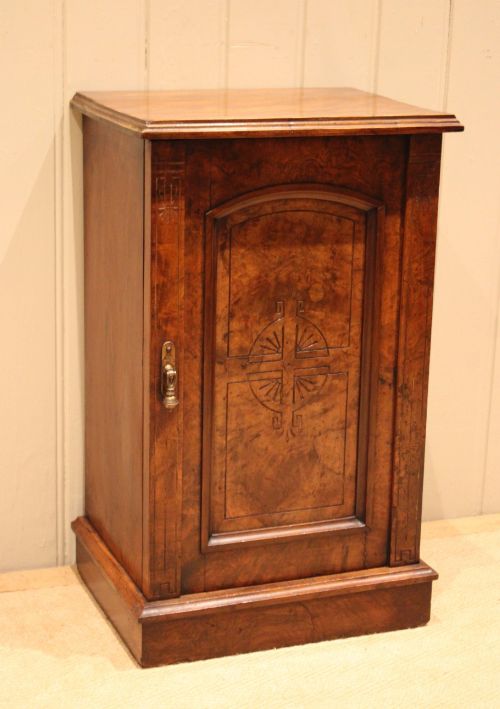
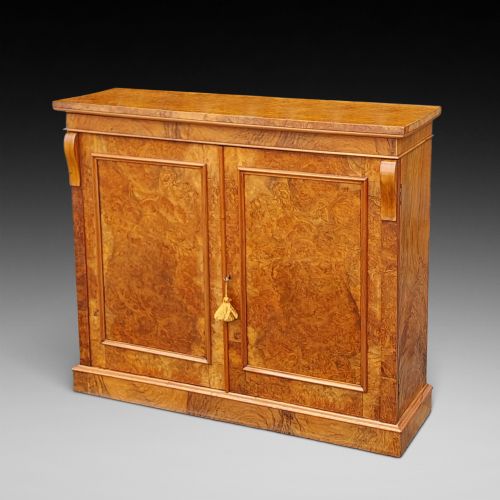
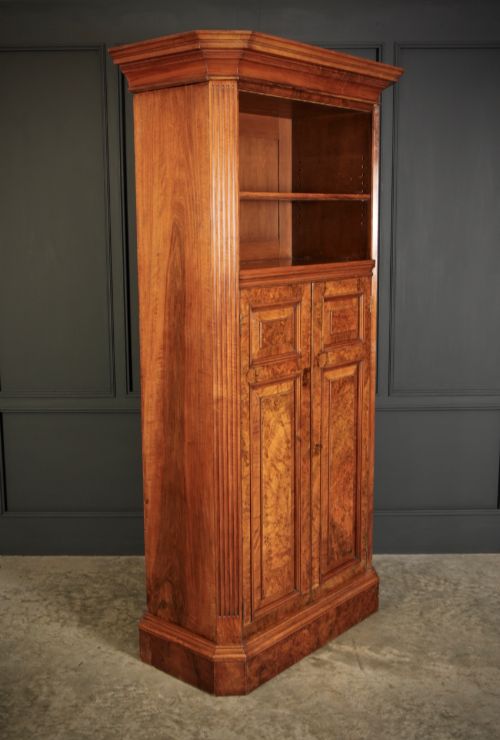
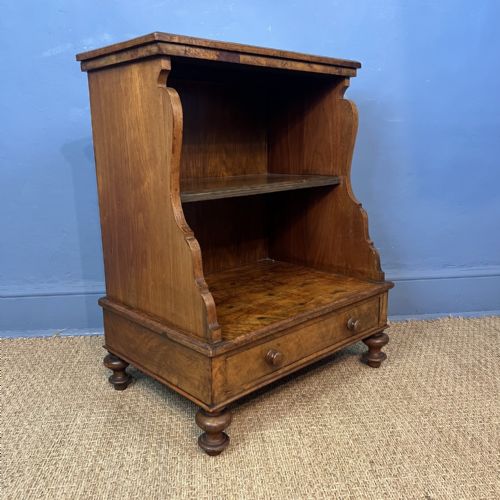
A victorian burr walnut cupboard encompasses a broad range of nineteenth-century storage forms, from compact bedside pot cupboards to grand breakfront bookcases, linen presses, and multi-drawer music filing cabinets.
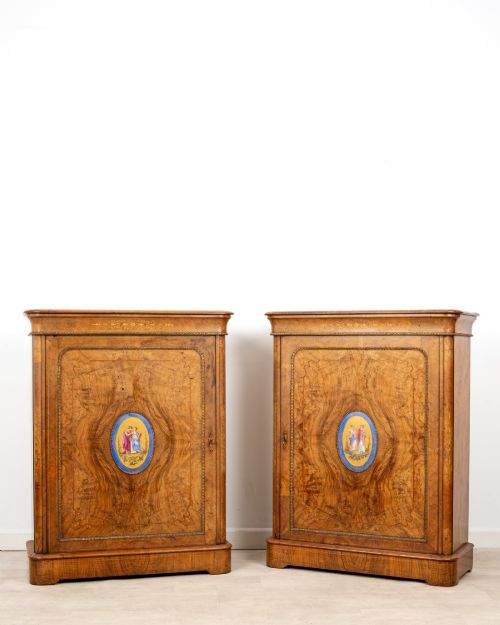
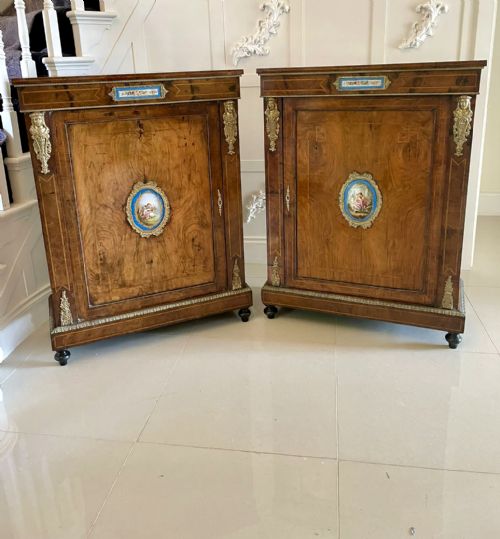
The most common iterations met in daily browsing are single-door bedside cabinets and pairs of pedestal cupboards, reflecting the domestic habits of the period between 1850 and 1900.
These pieces emerge primarily within Victorian cabinet-making traditions, drawing on stylistic revivals including Rococo, French Neoclassical, and Regency, alongside the structured forms of Grunderzeit and William IV.
Materials and Technique
Craftsmen built these carcases using sturdy internal timber frameworks overlaid with finely figured burr walnut veneer, prized for its swirling, organic knot patterns.
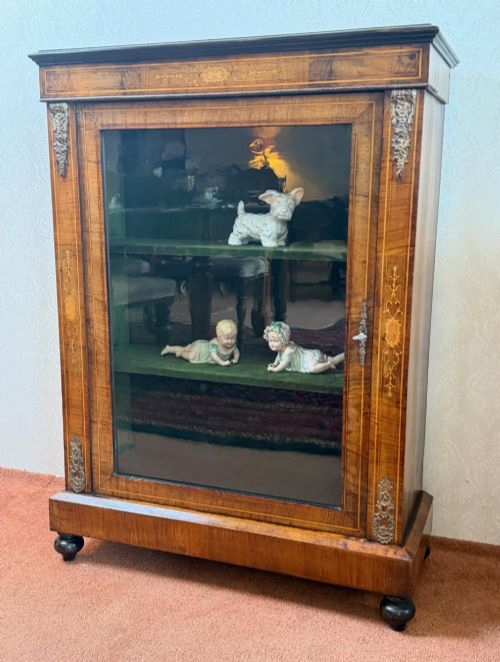
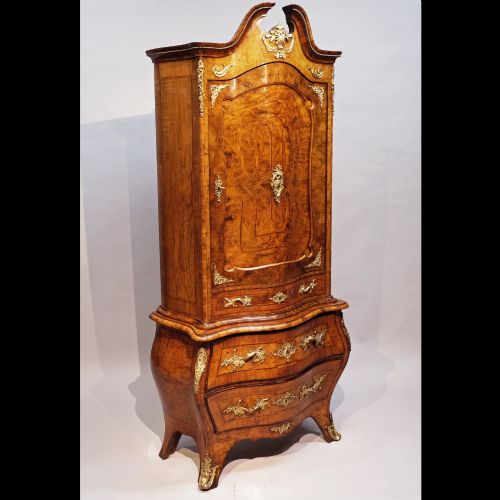
Many examples incorporate decorative details such as brass mounts, ormolu accents, glass doors, velvet linings, and delicate marquetry inlay work utilising contrasting timbers like satinwood.
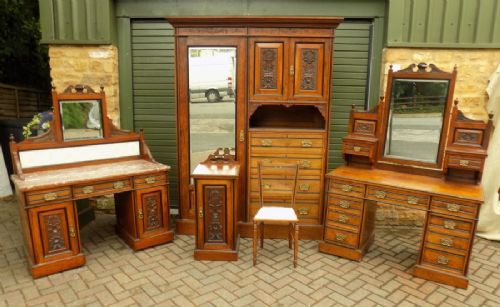
Selected pieces feature structural additions including marble tops, porcelain plaques, and ceramic insets, combining utilitarian storage with ornamental display elements.
Several pieces double as dedicated music filing cabinets and pianist servers for nineteenth-century sheet music.
Judging Quality
Quality rests heavily upon the selection and bookmatching of the burr walnut veneer across the primary surfaces, where symmetrical grain patterns denote superior joinery.
The sophistication of secondary ornamentation dictates the tier of the piece, distinguishing plain bedside utility cupboards from grander examples adorned with elaborate marquetry, ormolu mounts, or porcelain plaques.
Structural integrity reveals itself in the seamless operation of doors and drawers, the precision of brass hardware fittings, and the enduring stability of the underlying timber carcase.
Holland and Sons
The Victorian Burr Walnut Cupboard Glossary
- Burr walnut
- A prized timber veneer harvested from the irregular growths or burls of the walnut tree, generating dense, swirling grain patterns.
- Pier cabinet
- A low nineteenth-century display cabinet designed specifically to fit the wall space between windows.
- Pot cupboard
- A compact bedside cabinet originally constructed to house a chamber pot behind a single enclosed door.
- Ormolu
- Gilded bronze mounts utilised for decorative enrichment on Victorian furniture carcases.
- Marquetry
- The art of applying decorative veneer pieces of various woods to form intricate pictorial or geometric patterns.
Victorian Burr Walnut Cupboard: Frequently Asked Questions
What is a pot cupboard?
A pot cupboard is a small bedside cabinet designed during the nineteenth century to conceal a chamber pot behind a single door.
Over time, these versatile pieces transitioned into general bedside storage tables used for books and personal items.
How do I care for burr walnut?
Burr walnut benefits from gentle dusting with a soft dry cloth and protection from direct sunlight and extreme humidity fluctuations.
Applying occasional specialist wax helps nourish the delicate veneer without building up heavy residues on the polished surface.
Where were these cabinets placed?
Bedside cabinets and pot cupboards naturally found their home flanking a Victorian bed, while larger display pieces occupied salons and drawing rooms.
Tall bookcases and pedestal cabinets were positioned against prominent walls to store libraries and showcase decorative porcelain.
Are these pieces strictly Victorian?
The vast majority originate from the Victorian era between 1850 and 1900, spanning mid-century revivals and late-period production.
Stylistic cues like heavy ormolu mounts or delicate marquetry help align specific examples with decades like the 1860s or 1880s.