


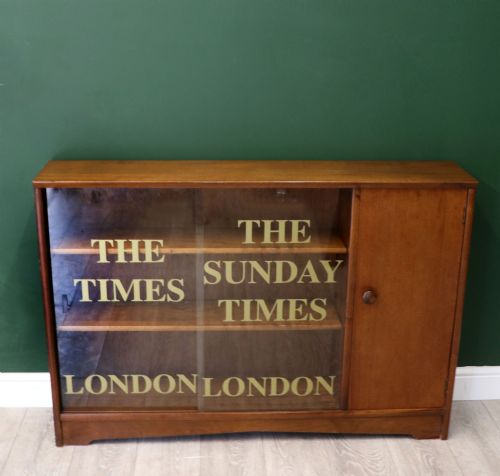
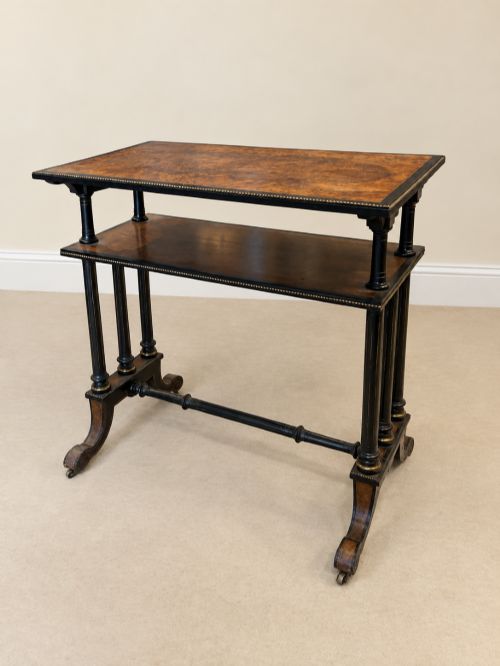
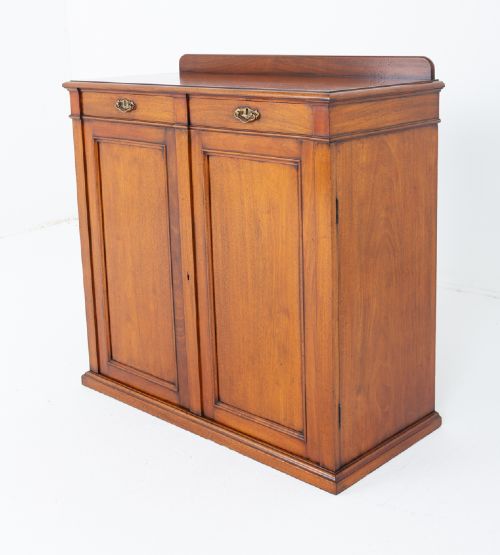
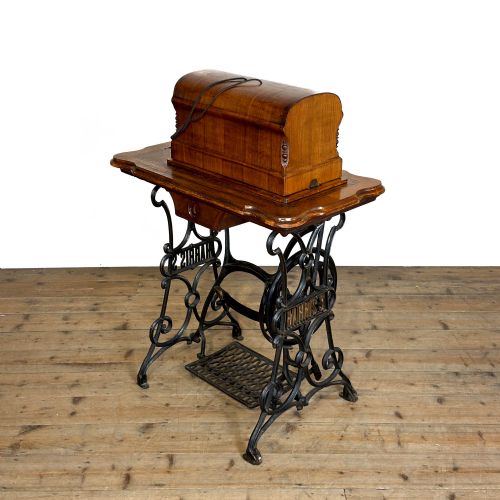
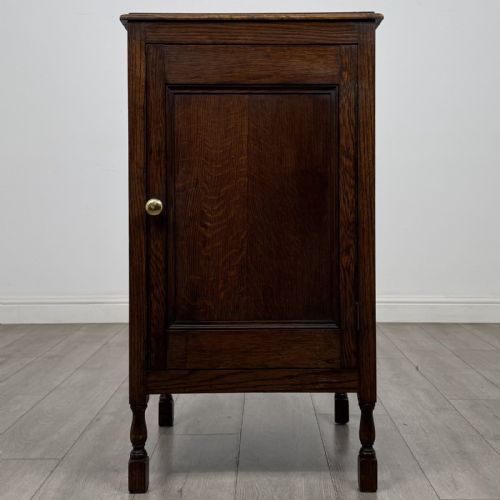
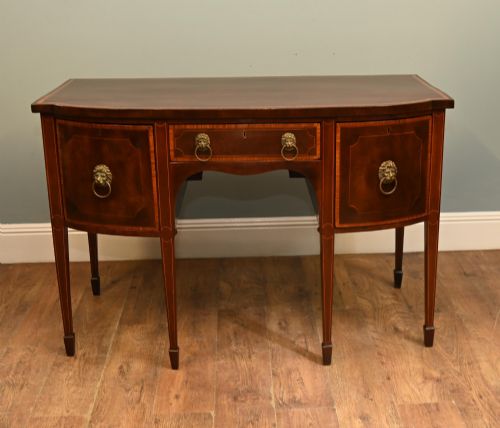
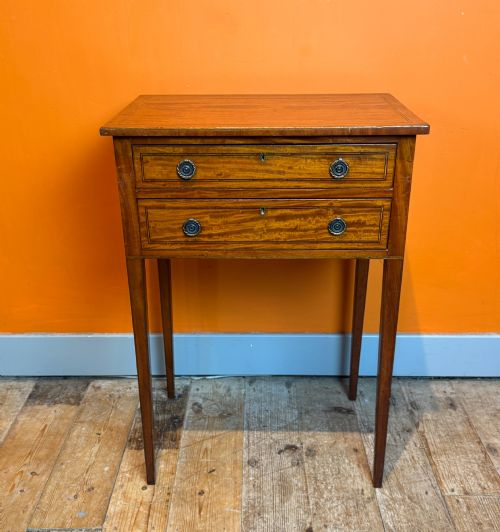
Antique Console Cabinet
An antique console cabinet grounds a room with timeless proportion, offering practical surface space and concealed storage shaped by centuries of cabinet-making.
Antique Console Cabinet
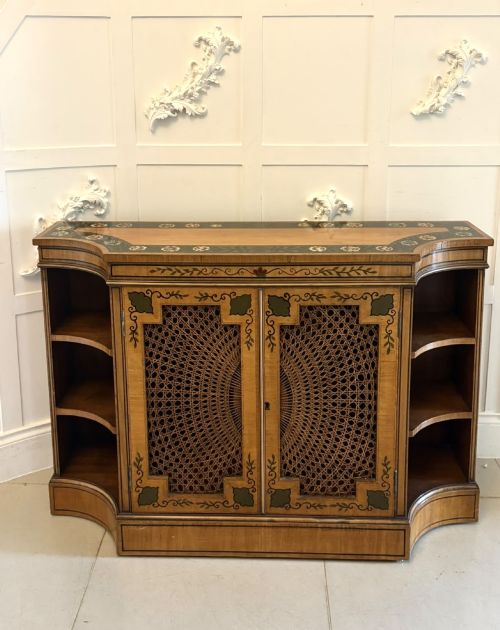
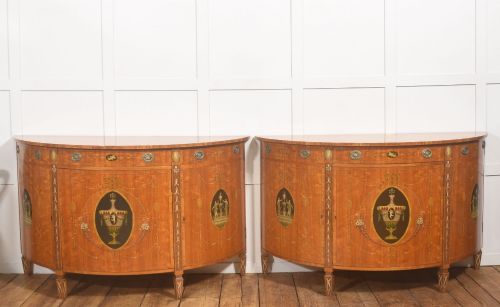
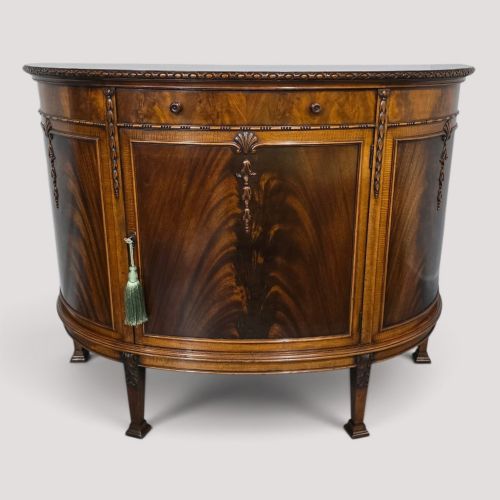
An antique console cabinet combines the slender wall-mounting or flush-standing profile of a side table with the enclosed storage of a cupboard, serving narrow hallways, drawing rooms and dining spaces alike. You encounter these primarily in mahogany, walnut and satinwood forms dating from the eighteenth century through the Edwardian period, often taking serpentine, bow-fronted or demi-lune shapes designed to save floor space.
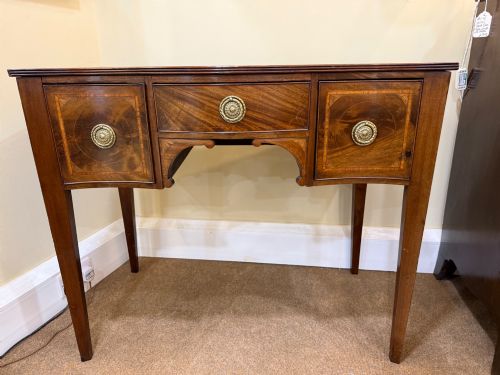
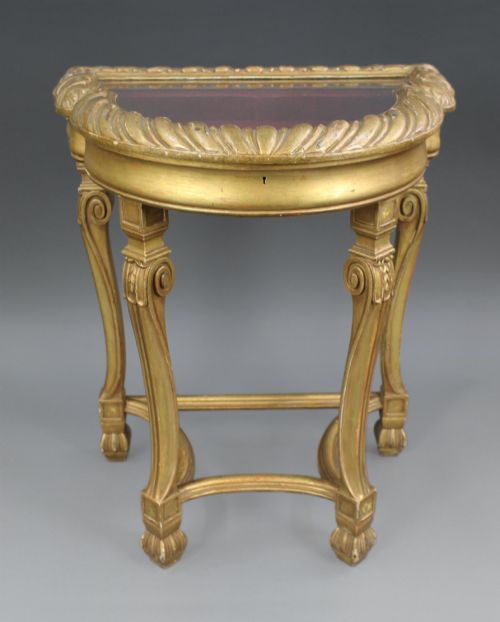
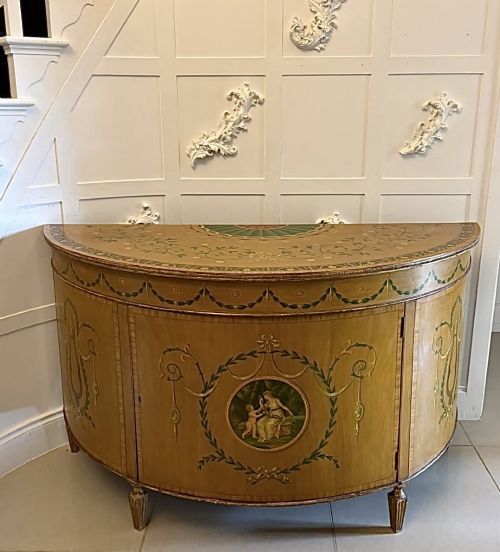
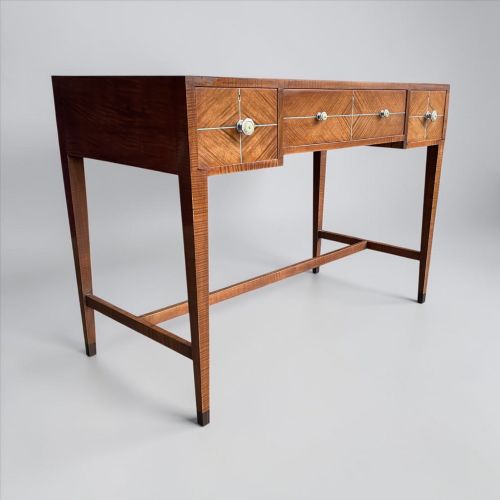
The term spans several related historical forms found on this page, including side cabinets, lowboys, chiffoniers and demi-lune commodes. Pieces range from austere Georgian mahogany work to decorative Edwardian painted satinwood and Dutch marquetry wall-mounting cabinets.
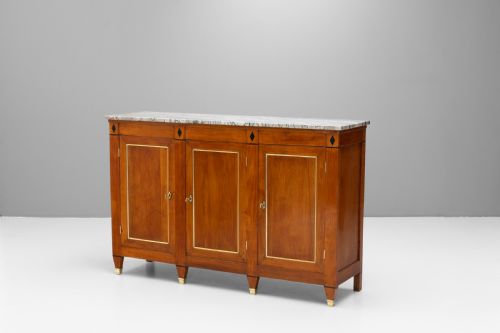
Makers and workshops from various European and regional British centres adapted these designs to suit changing domestic interiors, incorporating marble tops, glass panels and intricate wood veneers. The underlying function remains consistent: providing a disciplined surface for display alongside discreet internal shelving or drawers.
Indicators of quality
Quality rests in the crispness of timber selection, where book-matched veneers and figured grain patterns align symmetrically across doors and drawer fronts. Superior examples show restraint in inlay and carving, executed by skilled hands rather than pressed by machinery.
The integrity of the structural joinery, original brass hardware and the preservation of a deep, warm patina distinguish exceptional pieces from later or heavily restored equivalents. Consistency in timber thickness and traditional drawer construction signal an uncompromising standard of workshop production.
Antique Console Cabinet Retail Price Guide 2026
Typical asking prices for console cabinet among the pieces listed under this phrase on Sellingantiques today, from the lower quarter to the upper quarter. They describe what is for sale here now, not the wider market.
Forms range from Georgian lowboys and Victorian chiffoniers to Edwardian demi-lune cabinets and Art Deco sideboards.
J A Mein Edinburgh·Maurice Adams·Epstein·Pauly et Cie
The Antique Console Cabinet Glossary
- Demi-lune
- A half-moon shape popular for console tables and side cabinets designed to sit flat against a wall. This profile minimises projection into narrow hallways while offering surface area.
- Marquetry
- The art of applying decorative pieces of veneer to a structure to form intricate pictorial or geometric designs. Craftsmen utilised various exotic and native woods to achieve tonal contrast.
- Chiffonier
- A compact sideboard or low cabinet developed during the nineteenth century, typically featuring enclosed shelving below and sometimes a small raised superstructure.
- Lowboy
- A small seventeenth or eighteenth-century table with drawers, resembling a tallboy's lower section, frequently utilised as a side table or dressing surface.
- Parquetry
- Geometric mosaic woodwork used for patterned surfaces on tabletops and cabinet doors. It relies on precise angles and contrasting timber tones.
Antique Console Cabinet: Frequently Asked Questions
Where should I place an antique console cabinet?
These cabinets suit entrance halls, narrow corridors or reception rooms where floor space is limited yet surface display is desired. Their shallow profiles allow them to anchor a wall beneath a mirror or painting without obstructing movement.
Pairing a marble-topped or painted satinwood version with complementary lighting creates a balanced focal point in a dining room or drawing room.
How do I distinguish Georgian from Victorian pieces?
Georgian examples tend to display architectural restraint, heavy reliance on solid mahogany or walnut, and clean structural lines without excessive ornamentation. Timber selection and hand-cut dovetails indicate eighteenth-century origin.
Victorian pieces often introduce richer veneers, machine-assisted elements, marquetry inlay, and sometimes contrasting marble tops or mirror backs, reflecting industrial shifts in cabinet-making.
How do I clean and maintain wood surfaces?
Dust the timber regularly with a soft, dry cloth and apply a traditional beeswax polish sparingly to nourish the grain and preserve the patina. Avoid modern silicone sprays that build up residue over time.
Keep wooden items away from direct heat sources and strong sunlight to prevent the timber and delicate veneers from drying, warping or fading.
What is the difference between a console table and a cabinet?
A console table is primarily an open frame or leg-supported surface designed to stand against a wall, sometimes fixed with brackets. A console cabinet incorporates enclosed cupboard space beneath or behind the surface.
Cabinets offer functional storage behind doors, whereas standard console tables focus purely on display and surface utility.