


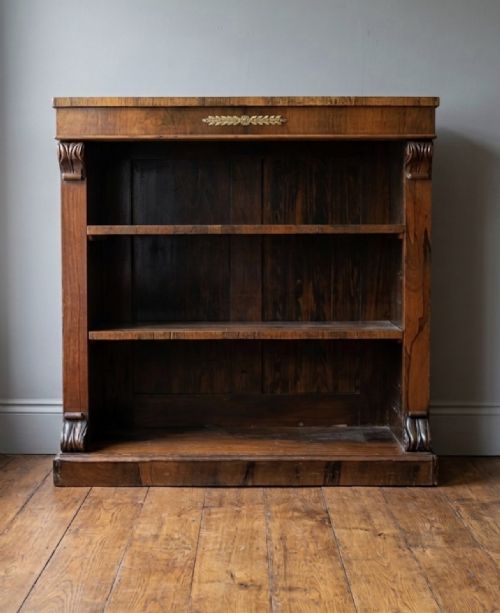


Rosewood Dwarf Bookcase
A rosewood dwarf bookcase offers low-profile storage in dense timber, bringing rich grain and brass detail to traditional rooms.
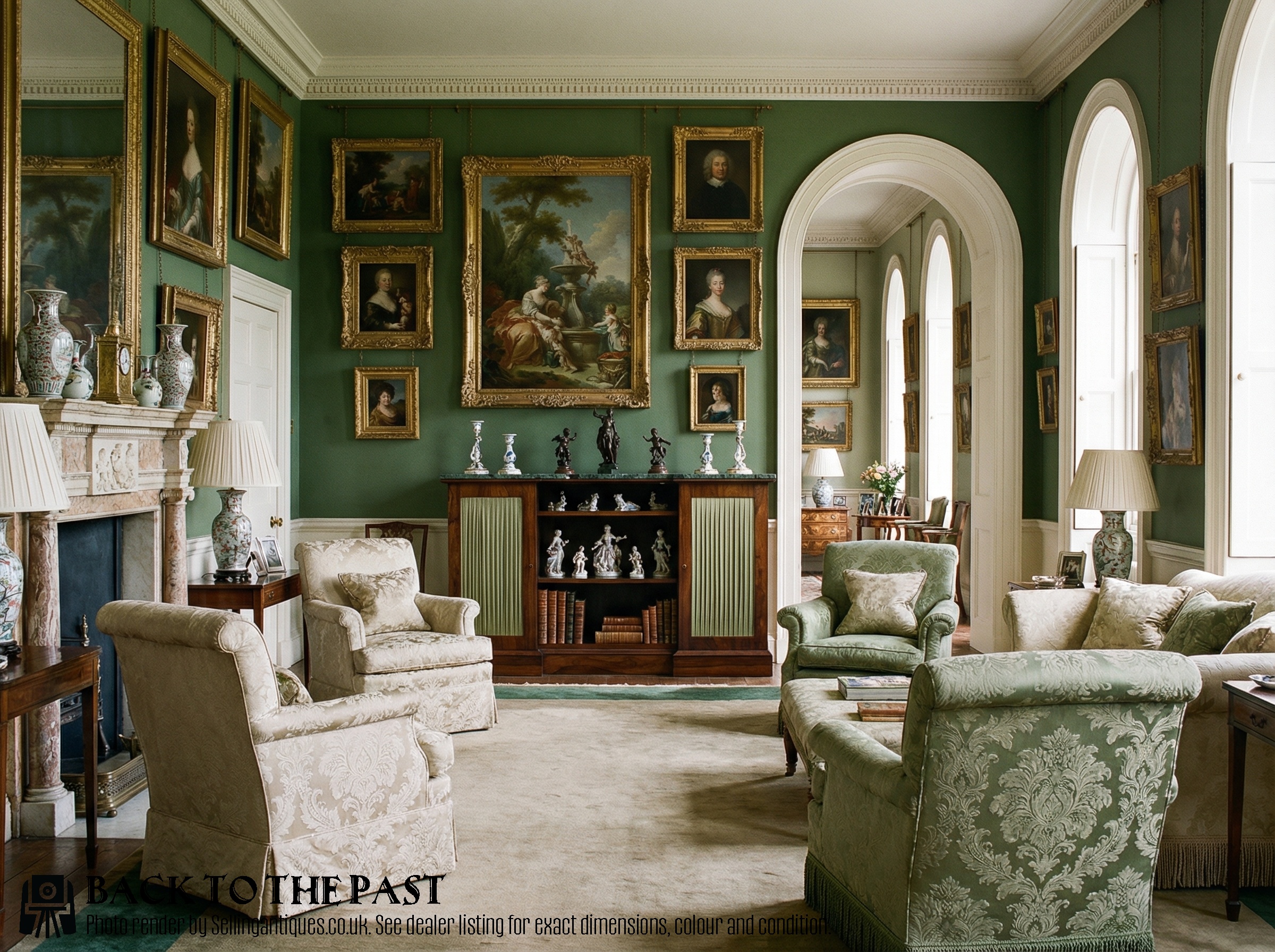
Rosewood Dwarf Bookcase
A rosewood dwarf bookcase provides compact open or enclosed shelving at a lowered height, designed for parlour or library use. Buyers seeking this form will find pieces originating primarily from the Regency and Victorian periods, spanning George IV and William IV reigns alongside mid-nineteenth-century examples.
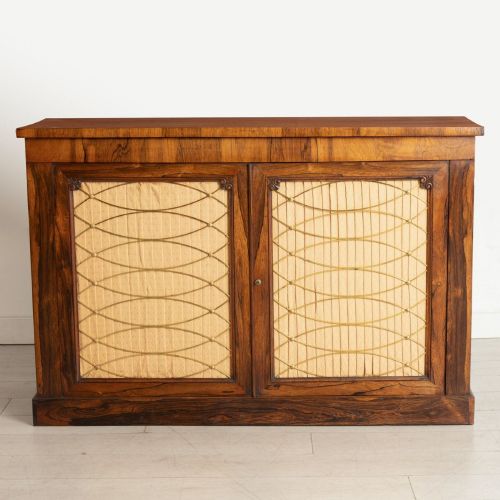
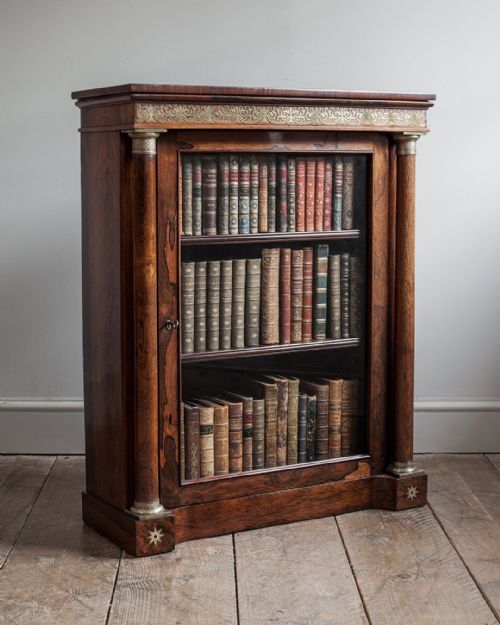
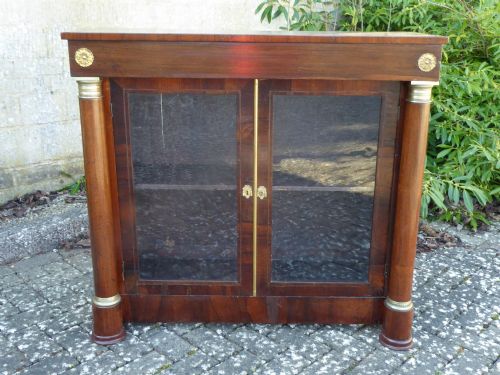
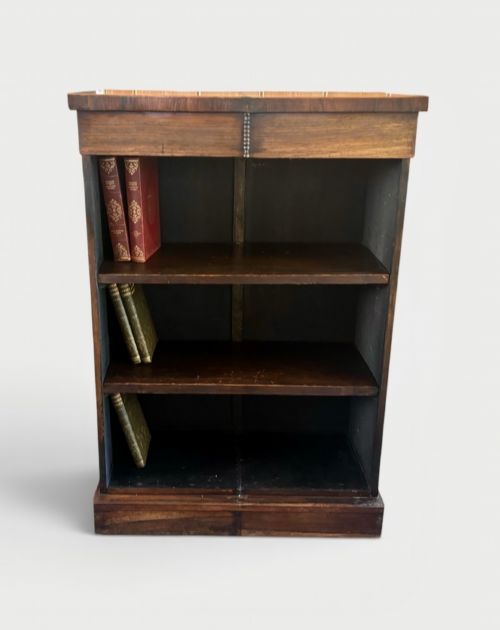
The selection encountered on this page includes open bookcases, breakfront configurations, and side cabinets fitted with glass doors, fabric panels, or marble tops. These low pieces function effectively beneath windows or alongside seating while keeping volumes and cabinet items within reach.
How They Were Made
Cabinetmakers constructed these pieces using solid hardwoods or applied rosewood veneers over secondary timbers like mahogany, often selecting figured grain patterns for primary surfaces. Brass inlay, gilt-brass mounts, and fine stringing punctuate the dark timber across many Regency and William IV specimens.
Interiors incorporate adjustable shelving, while certain glazed or fabric-backed side cabinets utilise pleated chiffon panels or mirrored backs. Structural additions such as mottled marble tops appear on select nineteenth-century library and side cabinets.
Listings feature rosewood dwarf bookcases spanning the Regency, George IV, William IV, and Victorian periods, alongside mid-nineteenth-century Asian export pieces.
What Varies in Quality
The standard of timber selection sets individual pieces apart, ranging from plain dark boards to highly figured, symmetrical rosewood grain that commands attention. Precision in brass inlay work and the crispness of carved elements distinguish workshop output.
Originality of finish and hardware, including untouched grained surfaces and period brass mounts, elevates a cabinet above examples with later alterations or replaced components.
Gillows
The Rosewood Dwarf Bookcase Glossary
- Dwarf bookcase
- A low-standing bookcase designed to sit below dado height or window level. It provides accessible shelving without dominating the wall space of a room.
- Breakfront
- A cabinet design where the central section projects forward from the flanking wings. This architectural arrangement creates depth and visual balance across the piece.
- Pier cabinet
- A low cabinet built to fit the wall space between windows. These pieces often feature glass doors or fabric panels to house display items.
- Gilt-brass
- Brass treated with a gold-coloured finish or plating to enhance decorative mounts and stringing. It provides a bright contrast against dark rosewood timber.
- Rio rosewood
- A dense South American hardwood prized for its dark purple-brown colouring and complex grain patterns. Regency makers utilised this timber for high-status cabinetwork.
Rosewood Dwarf Bookcase: Frequently Asked Questions
What is a dwarf bookcase?
A dwarf bookcase is a low-standing shelving unit designed to sit beneath standard window height. These compact pieces keep books and decorative objects at a convenient level without obstructing wall space.
Cabinetmakers during the Regency and Victorian eras produced these forms in open and enclosed configurations to suit smaller drawing rooms and libraries.
How do I date a rosewood bookcase?
Dating relies on architectural proportions, secondary timbers, and decorative details such as brass inlay or carved mouldings. Regency and George IV examples frequently display crisp brass stringing and formal classical lines.
Later nineteenth-century pieces often introduce heavier proportions, marble tops, or distinct regional flourishes like Anglo-Indian carving.
Were these always used for books?
Many examples functioned as dual-purpose side cabinets or folio stands rather than strict libraries. Enclosed variants with glazed doors or pleated chiffon panels served to protect fragile volumes and display ceramics.
Marble-topped versions also accommodated decorative bronzes, lamps, and botanical specimens in nineteenth-century reception rooms.
How do I care for rosewood furniture?
Rosewood requires stable humidity levels to prevent timber movement and veneer splitting. Keep pieces away from direct heat sources and strong sunlight to preserve the rich natural colour.
Gentle dusting with a soft, dry cloth maintains the surface without the need for heavy modern polishes.