


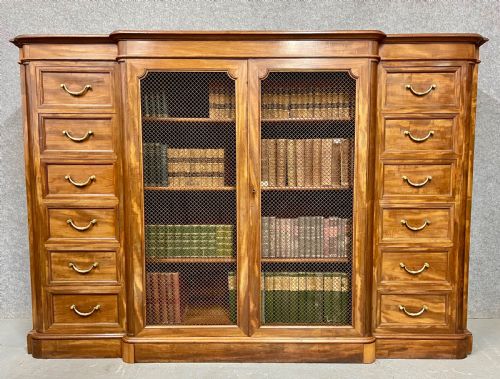


Victorian Brass Grille Cabinet
These Victorian brass grille cabinet pieces bring together rich timber and woven metalwork to ground a room in nineteenth-century craftsmanship.
Victorian Brass Grille Cabinet
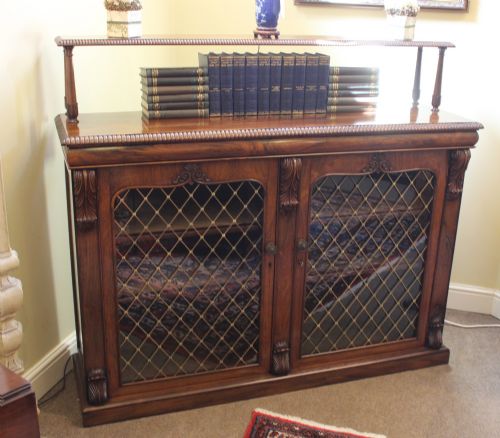
A victorian brass grille cabinet provides enclosed storage through woven wire doors rather than solid wood or plain glass. Buyers seeking this specific form will find examples spanning the nineteenth century, including side cabinets, bookcases, chiffoniers, and sideboards.
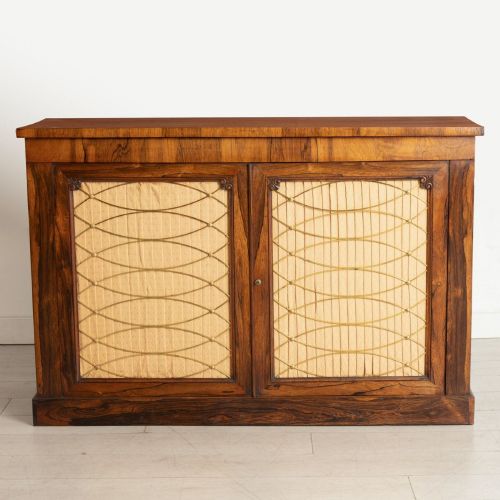
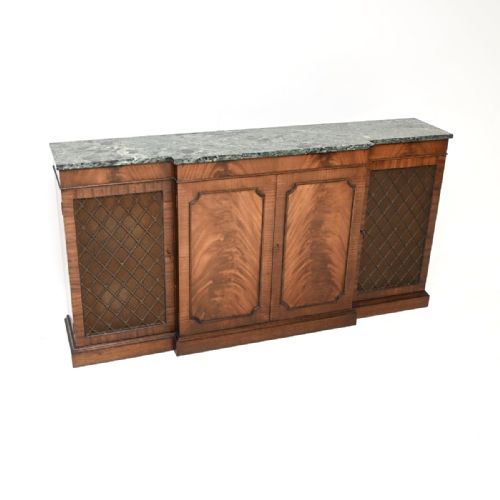
Rosewood and mahogany form the predominant timbers across the current selection, occasionally paired with marble tops, fabric linings, or walnut. Pieces range from single-door cupboards to substantial library bookcases and paired side cabinets.
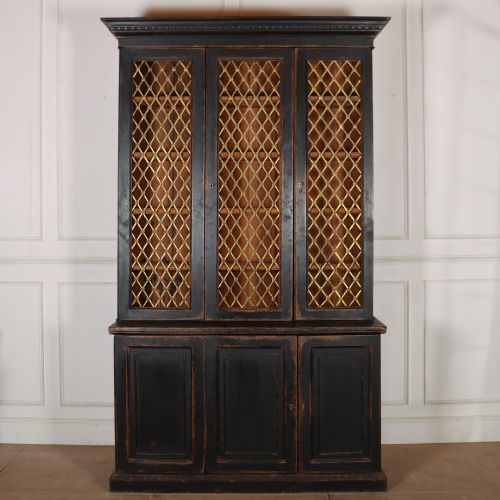
Stylistic influences stretch across the period, taking in Early Victorian, William IV, and Scottish Regency interpretations. The brass grille work remains the unifying feature, offering ventilation and a glimpse of the interior contents.
Materials and Construction
Cabinet makers built these pieces using dense hardwoods like rosewood, mahogany, and walnut, often applying polish to highlight the grain. Structural elements incorporate glass panes alongside painted wood surfaces in certain regional examples.
Brass wire formed the distinctive grilles set into the doors, frequently backed by pleated or flat fabric to conceal the contents. Marble tops provided durable, cool surfaces on specific sideboard and cabinet variations.
Listings feature nineteenth-century periods spanning from 1850 to 1880, utilising brass, rosewood, mahogany, walnut, marble, and fabric.
Assessing Quality and Execution
Quality rests in the precision of the timber selection and the tightness of the brass wire weave in the door grilles. Better examples show careful attention to grain alignment and robust joinery across carcases and doors.
The integration of secondary materials, such as marble tops or fine ebony stringing, separates standard utilitarian cupboards from more ambitious architectural library bookcases and paired side cabinets.
Holland & Sons
The Victorian Brass Grille Cabinet Glossary
- Grille
- A latticework of metal wire set into cabinet doors to allow ventilation while securing the contents. This element defines the visual character of the furniture.
- Chiffonier
- A compact sideboard or low cabinet featuring a combination of lower doors and upper shelving or a superstructure. They gained popularity throughout the nineteenth century.
- Rosewood
- A heavy, dark timber with distinct figuring utilised extensively for high-status Victorian cabinet work. Its rich colour deepens with age and polishing.
- Carcase
- The main structural body or framework of a cabinet before the addition of doors, drawers, and decorative mouldings. Sound carcase construction ensures long-term stability.
Victorian Brass Grille Cabinet: Frequently Asked Questions
What rooms suit a brass grille cabinet?
These cabinets fit well in living rooms, studies, or dining spaces where enclosed storage is required without heavy solid doors. The wire grilles soften the visual weight of large timber furniture.
Their proportions allow them to function as sideboards, bookcases, or low side cabinets depending on the specific room layout.
How do I care for rosewood furniture?
Rosewood benefits from regular dusting with a soft, dry cloth and occasional application of appropriate wax polish to maintain the sheen. Direct sunlight and sudden temperature changes should be avoided to protect the timber.
Keeping the brass grilles clean requires a gentle brush to remove dust from the woven wire intersections without disturbing any underlying fabric.
Why use wire grilles instead of glass?
Wire grilles historically provided ventilation for stored items such as linen, books, or food while keeping contents secure. They also introduced a textural element to the furniture facade.
In nineteenth-century libraries and drawing rooms, brass grilles offered a refined alternative to transparent glass panes.
How do early and late Victorian pieces differ?
Earlier nineteenth-century pieces often display Regency or William IV influences with rich rosewood veneers and classical proportions. Later examples may incorporate walnut or regional painted finishes.
Examining the construction methods and secondary timbers helps establish where a specific piece sits within the Victorian era.