

Antique Coffer with Drawers
When you search for an antique coffer with drawers, you are looking for sturdy storage chests built to hold linens and garments.
What these pieces are
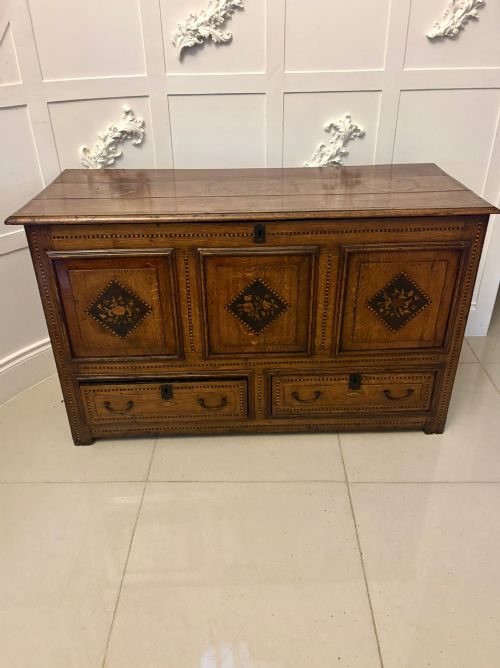
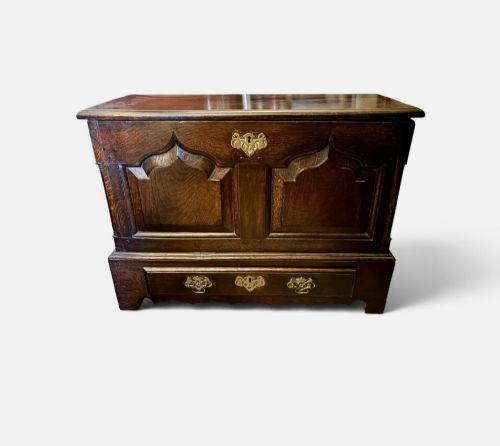
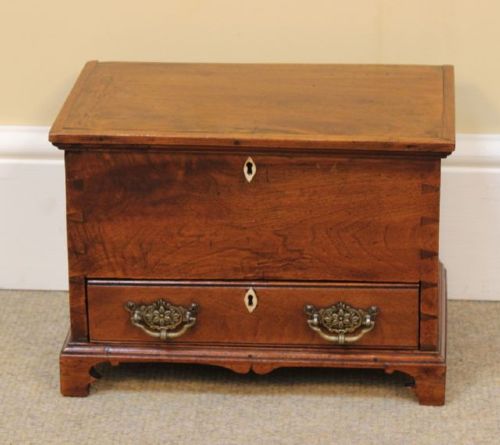
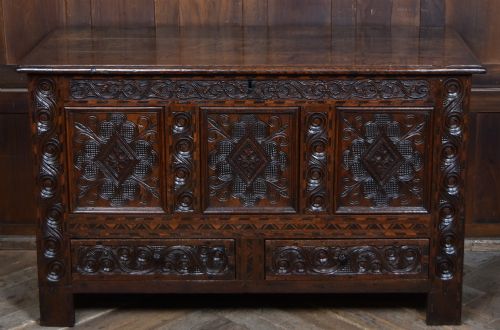
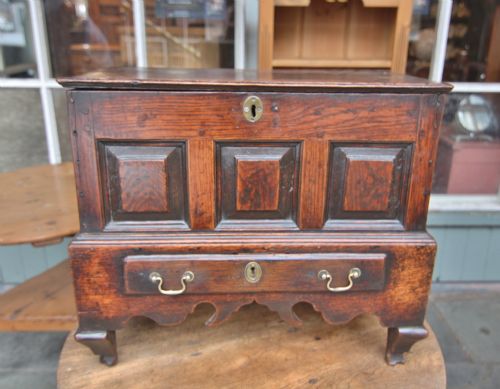
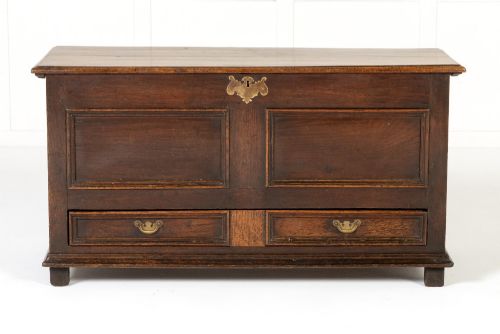
An antique coffer with drawers combines a traditional lidded storage trunk with one or more lower base drawers, bridging the evolution between simple boxes and full chests of drawers. You will frequently encounter mule chests and housekeepers trunks among these listings.
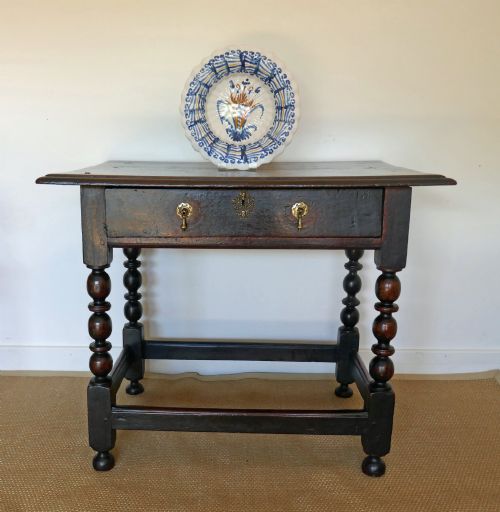
The pieces on this page span several distinct periods, including the seventeenth century, the eighteenth century, the Georgian era, and the nineteenth century. Surviving examples often display regional English country, rustic country, or folk art characteristics.
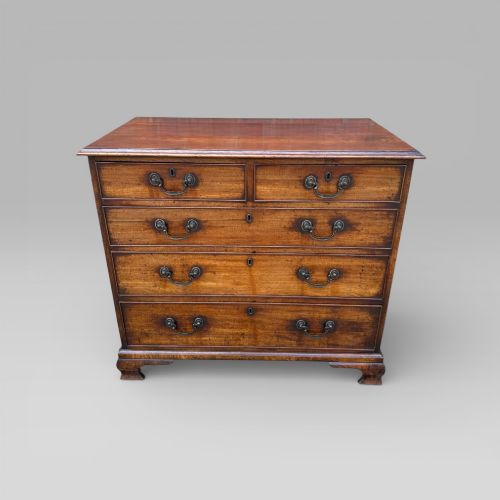
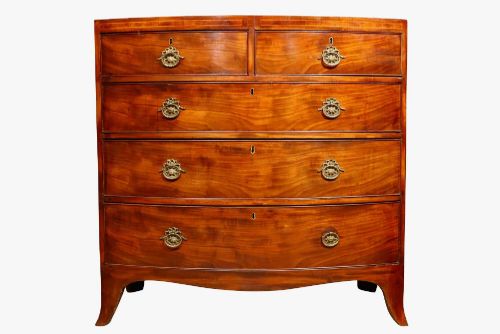
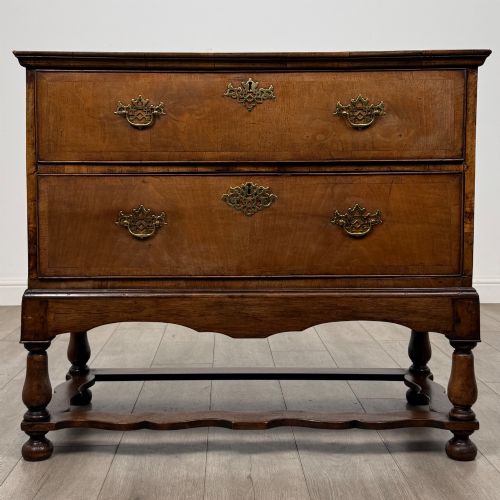
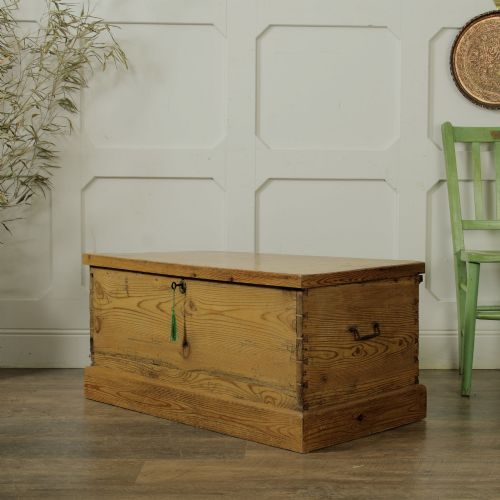
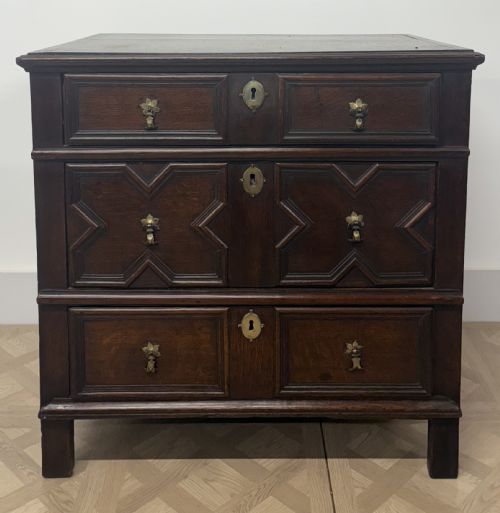
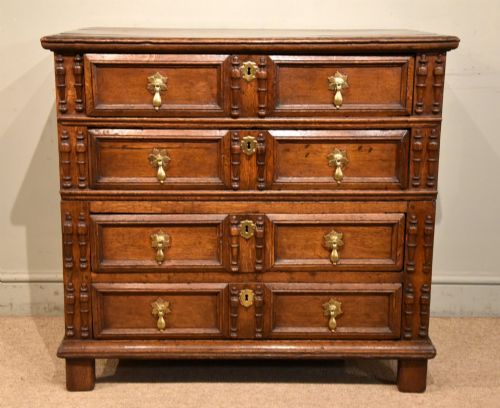
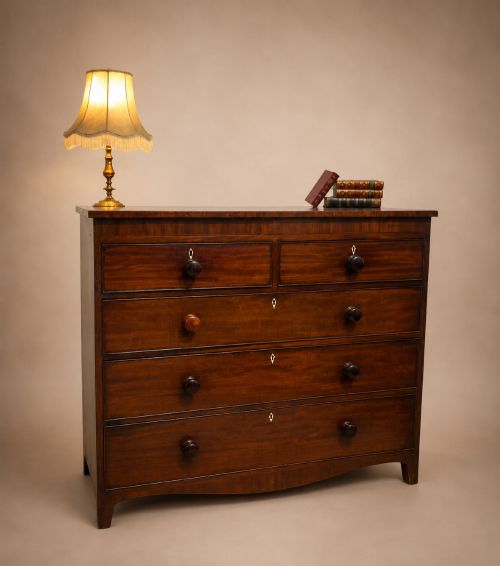
Formats vary from heavy joined timber boxes with single bottom drawers to taller mahogany or pine hall chests. They serve effectively as deep blanket boxes while keeping smaller items accessible in the base compartments.
How they were made
Joiners built these chests primarily using solid hardwoods and softwoods such as oak, pine, mahogany, and elm. Individual boards were joined with traditional framing and panel techniques to withstand the weight of heavy stored textiles.
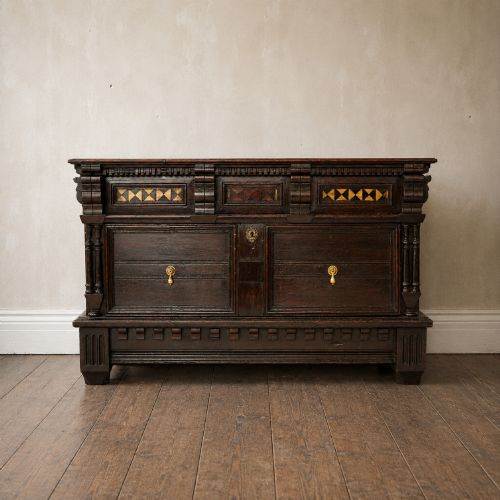
Metalwork played a functional and structural role, incorporating wrought iron hinges and brass drop handles or key escutcheons on the drawers. Selected pieces feature decorative marquetry inlay embedded directly into the timber panels.
Surface finishes include plain waxed wood, painted wood, and aged paint layers that highlight the natural grain and construction marks left by period craftsmen.
Retail Price Guide 2026
Typical UK retail prices for coffer with drawers, calculated from the Sellingantiques database of over a million retail prices indexed since 2003. This retail price guide relies exclusively on Sellingantiques data; no external sources or auction records are used, so the figures do not describe the wider market.
Some nineteenth-century mule chests were tucked into narrow hallways, doubling as stubborn seats for guests waiting to remove muddy boots.
What varies in quality
The distinction between standard utility furniture and superior examples lies in the choice of primary timber and the ambition of the decoration. Finely figured mahogany and intricate marquetry inlay elevate a piece beyond basic domestic storage.
Construction methods also separate the tiers of quality, visible in the snugness of the drawer dovetails and the integrity of the original hardware. Pieces retaining their early brass fittings and sound board joints command greater appreciation.
The Antique Coffer with Drawers Glossary
- Coffer
- A heavy wooden chest traditionally used for storing valuables, documents, or garments before dedicated wardrobes became common. These sturdy boxes often formed the primary furniture in early domestic interiors.
- Mule chest
- A storage chest featuring one or more drawers built into the base beneath the main lidded compartment. This hybrid form emerged to provide easier access to contents without lifting the heavy lid every time.
- Marquetry inlay
- Decorative patterns formed by fitting small pieces of contrasting veneer into prepared recesses in the wood surface. Craftsmen used this technique to create geometric or floral motifs on panel fronts.
- Escutcheon
- A flat plate of brass or iron surrounding a keyhole to protect the surrounding wood from wear. Period examples are usually fixed with small pins and shaped according to prevailing design fashions.
- Dovetail
- A joint formed by interlocking wedge-shaped fingers used to secure drawer corners together. Hand-cut versions help identify period cabinet work through their irregular spacing and tight fit.
Frequently Asked Questions
What is the difference between a coffer and a mule chest?
A standard coffer consists of a simple chest with a top-opening lid and no external compartments. A mule chest adds one or more drawers beneath the main storage well.
This addition allowed owners to reach smaller items without disturbing the heavy blankets stored in the upper section.
Where were these chests used in a home?
Historic households placed these large storage pieces in bedrooms, hallways, and living quarters to hold household linens, clothing, and personal valuables.
Their robust construction also allowed them to function as temporary seating benches when covered with cushions.
How can I tell the age of a wooden chest?
Age is indicated by the tool marks left on internal boards, the type of timber used, and the construction methods visible in the drawer joints. Seventeenth-century examples often feature heavy joined oak, while Georgian pieces frequently employ mahogany or pine.
Secondary woods used for drawer linings and back panels also offer clues to the period of manufacture.
Are the brass handles on these chests original?
Many surviving pieces retain their period drop handles and escutcheons, though hardware was frequently replaced over centuries of active use. Examining the metal patination and the timber around the fixing holes helps determine if the fittings belong to the original period.
Matching fastener types provide further evidence of authenticity.