


Antique Cloisonne Plaque
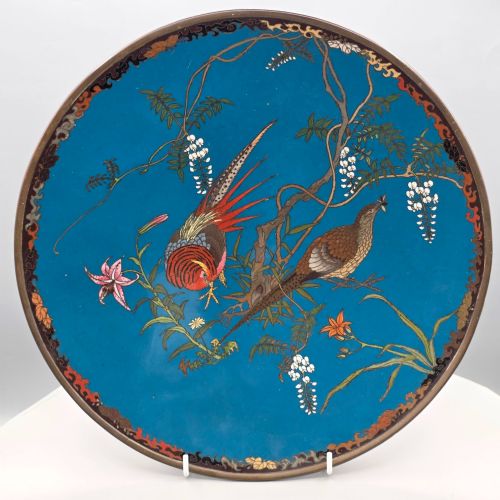
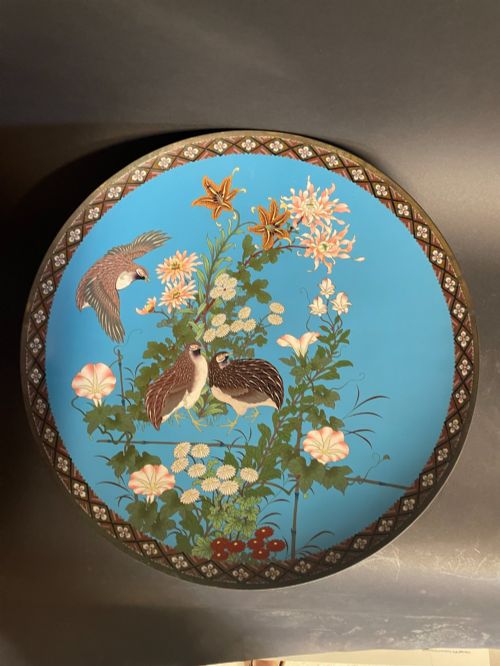
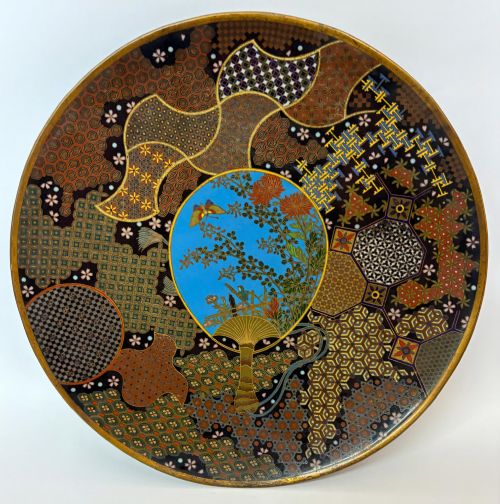
An antique cloisonne plaque brings brilliant enamelled colour and intricate wirework into a room, prized for its vivid depiction of birds, dragons and natural scenes.
Antique Cloisonne Plaque
The selections available here span from the eighteenth century through the nineteenth century, taking in both the Edo and Meiji periods alongside the Qing Dynasty. Japanese Meiji period examples dominate the current selection, frequently taking the form of large chargers illustrating birds, koi and dragons.
Forms range from standard circular plates and deep chargers to octagonal trays and specific display plaques. Collectors meet pieces originating from both Japanese workshops and Chinese dynasties, offering distinct aesthetic traditions within the same technique.
Materials and construction methods
The creation of these works relies on applying fine wire, typically brass or copper, to a metal or porcelain base to form distinct compartments known as cloisons. Artisans then fill these miniature cells with coloured enamel pastes before firing and polishing the surface to a smooth finish.
Bases are constructed from copper, brass, bronze or porcelain, with certain variants employing Totai Shippo techniques on a porcelain body, sometimes incorporating tree bark textures or cinnabar lacquer. The precision of the wirework determines how sharply the subjects - such as chrysanthemums, samurai or single-dragons - stand out against the background enamel.
Listings feature items dated from 1800 through the 1900s, with a strong representation of nineteenth-century Japanese Meiji and Edo period production.
Distinctions in craftsmanship and design
Quality rests upon the fineness of the wire cells and the complexity of the pictorial subject matter. Superior examples display microscopic wirework forming intricate feathers, scales and foliage without distortion in the enamel fields.
Ambition of scale and subject dictates distinction, moving from standard floral motifs to massive chargers depicting leaping koi, dragons or samurai figures. The smoothness of the final polish and the depth of the coloured enamels separate ordinary production from masterwork pieces.
The Antique Cloisonne Plaque Glossary
- Cloisonne enamel
- A decorative metalwork technique where fine wire creates compartments that hold coloured enamel paste. This method allows artisans to produce pictorial designs with distinct outlines.
- Charger
- A large ornamental plate or dish intended for display rather than dining. These pieces form the majority of the large-format visual items in this category.
- Totai shippo
- A Japanese technique where enamel is applied directly to a porcelain body rather than metal. Pieces utilising this method often feature textured surfaces resembling tree bark.
- Meiji period
- A historical era in Japan spanning from 1868 to 1912, noted for technical mastery in metalwork and enamel. Items from this time frequently exhibit highly detailed naturalistic scenes.
- Edo period
- A Japanese historical era lasting from 1603 to 1867, preceding the Meiji era. Works from the late Edo period often present substantial dimensions and bold compositional subjects.
Antique Cloisonne Plaque: Frequently Asked Questions
How do I hang a heavy charger?
Large chargers require robust, specialised wall hangers designed to support substantial weight without putting pressure on the enamel rim. Ensure the mounting fixes securely into wall studs rather than plaster alone.
Alternatively, sturdy tabletop display stands allow these pieces to rest safely on surfaces where the details can be inspected closely at eye level.
Were these items meant for daily use?
These pieces served primarily as decorative display objects in interiors rather than functional tableware. Their intricate enamel surfaces and delicate wire boundaries were designed for visual appreciation.
Placing them on walls or cabinets protected the coloured glass pastes from the wear and tear associated with regular handling and dining.
How should I clean my plaque?
Maintenance requires only gentle dusting with a soft, dry cloth to prevent the accumulation of particles in the wire crevices. Avoid all liquid cleaners, abrasive pads or chemical polishes, which can scratch the enamel or discolour the metal wires.
Keeping the piece away from direct sunlight preserves the vibrancy of the coloured pastes over decades.
What do the different animal motifs signify?
Many motifs carry traditional symbolic meanings rooted in Asian art and folklore. Koi fish leaping upstream represent perseverance and success, while dragons embody strength and imperial authority.
Birds such as ibis, phoenixes and cranes symbolize longevity, peace and auspicious fortunes within the decorative scheme.