


Antique Cider Jug
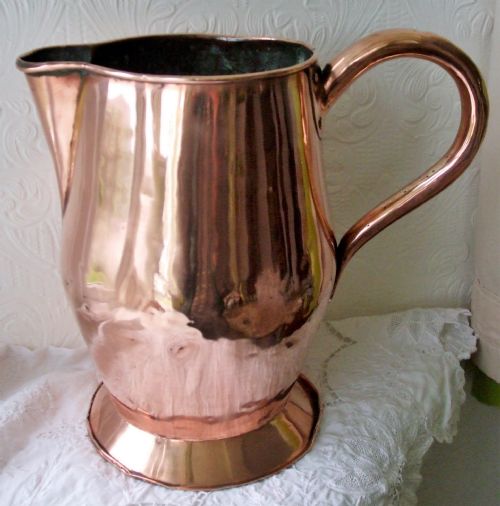
An antique cider jug brings heavy metal and salt-glazed stoneware into the room, holding volumes for the table with straightforward utility.
Antique Cider Jug
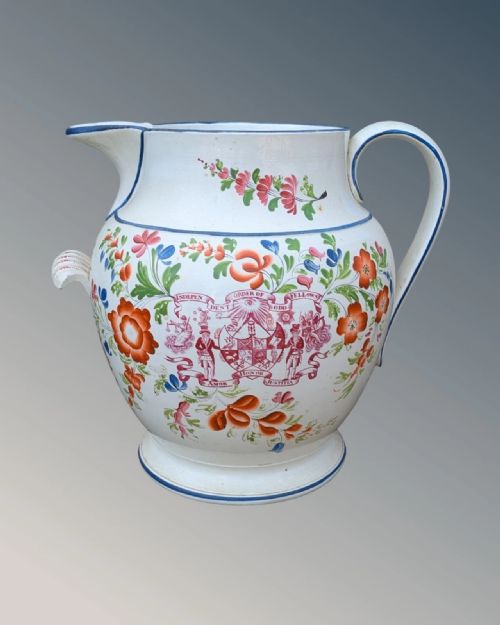
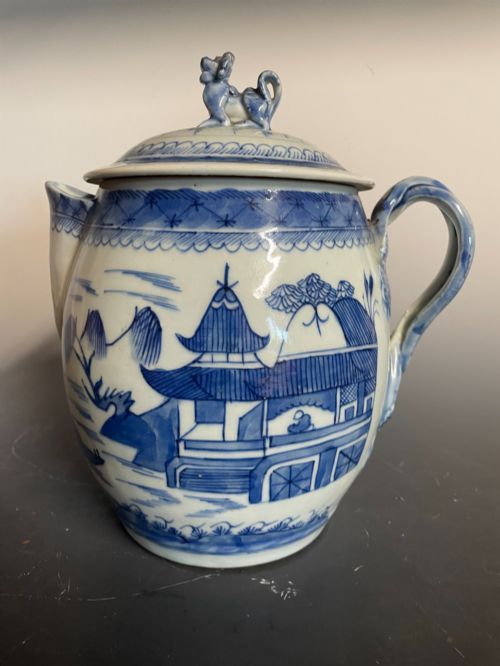
An antique cider jug serves as a capacious vessel for pouring ale, beer or cider, appearing in domestic and tavern settings across several centuries. The selections here span sturdy 18th century forms through to the heavier Victorian and Edwardian iterations.
Most examples you encounter take the form of copper and brass measures, salt-glazed stoneware harvest jugs, or coopered oak vessels bound with brass bands. They range from modest pint sizes up to colossal multi-gallon flagons designed for heavy hospitality.
Makers and origins stretch from English workshops to French provincial kilns, utilising local clays, metals and timber to build vessels meant for daily service.
How They Were Made
Metalsmiths hammered heavy sheets of copper and brass into seamless or neatly joined bodies, attaching sturdy handles and pouring lips for sustained use. Pewter and Old Sheffield Plate alternatives offered brighter metallic surfaces through casting and silver plating.
Potters threw stoneware and earthenware bodies on the wheel, applying salt glazes, creamware surfaces, or delicate sprigged decorations before kiln firing. Coopered wooden vessels relied on tight staves of oak held together by structural brass or copper bands.
Some copper measures are so immense they hold enough cider to render an entire parish cheerfully oblivious to the weather.
What Varies in Quality
The distinction between ordinary utility wares and finer examples lies in the weight of the metal and the crispness of the potter's execution. Heavy-gauge copper and crisp salt-glazed sprigging demonstrate a higher level of workshop competence than thin, plain surfaces.
Original mounts, such as intact silver rims or period lids, elevate the standing of a ceramic piece significantly. The precision of the cooperage in wooden jugs and the legibility of capacity marks also separate standard vessels from superior ones.
Doulton Lambeth·Mountford Staffordshire·Loftus of Oxford Street·HR Quimper
The Antique Cider Jug Glossary
- Flagon
- A large drinking vessel with a handle and often a lid, used primarily for serving ale or cider.
- Coopered
- Built from wooden staves fitted together edge-to-edge and bound by metal hoops, much like a barrel.
- Salt glaze
- A glassy, pitted texture formed by throwing common salt into the kiln during high-temperature firing.
- Creamware
- A refined earthenware of a pale cream colour developed by English potters during the 18th century.
- Sprigged
- Decorated with small moulded clay reliefs applied to the unfired body of a ceramic vessel.
Antique Cider Jug: Frequently Asked Questions
What were antique cider jugs used for?
These large vessels served to store, carry and pour cider, ale and beer at communal tables and in busy taverns.
Their substantial capacities meant fewer trips to the cellar during meals or gatherings.
How do I tell stoneware from earthenware?
Stoneware is fired at a higher temperature until the clay vitrifies, making the body dense, heavy and completely non-porous.
Earthenware remains more absorbent and typically requires a complete glaze to hold liquids effectively.
Are copper jugs safe for drinking?
Many surviving metal vessels were intended for measuring or serving rather than long-term storage of acidic drinks.
Displaying them or using them for dry presentation is common practice among modern collectors.
How do I date a copper jug?
Form, handle construction and official capacity stamps provide the clearest chronological clues for metalware.
Georgian and Victorian examples show distinct shifts in weight, seaming techniques and regulatory markings.