




Antique Church Pricket Holders
These antique church pricket holders bring vertical presence and centuries of devotional craft into domestic spaces through metal and carved wood.
Antique Church Pricket Holders
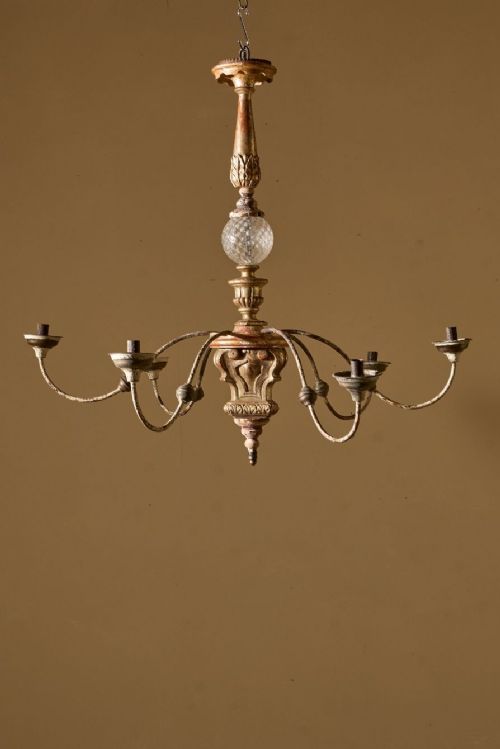
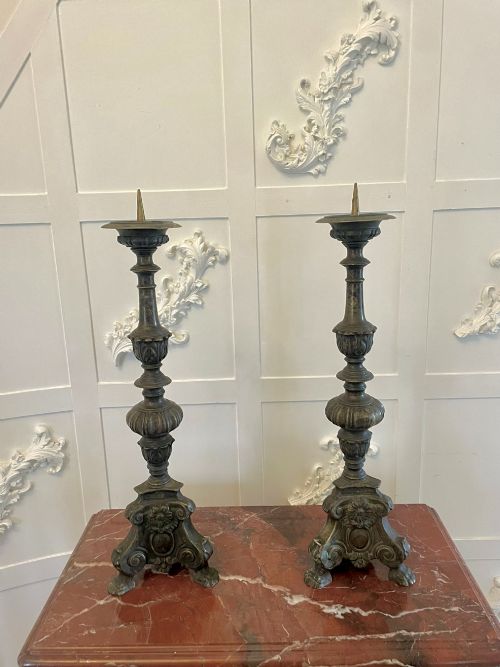
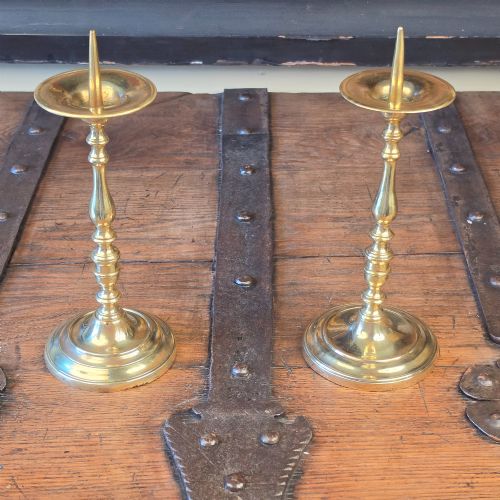
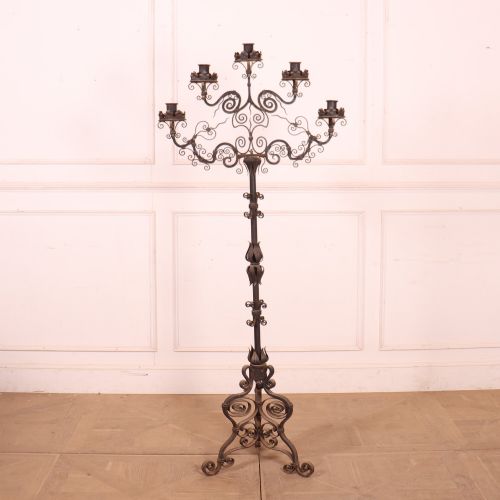
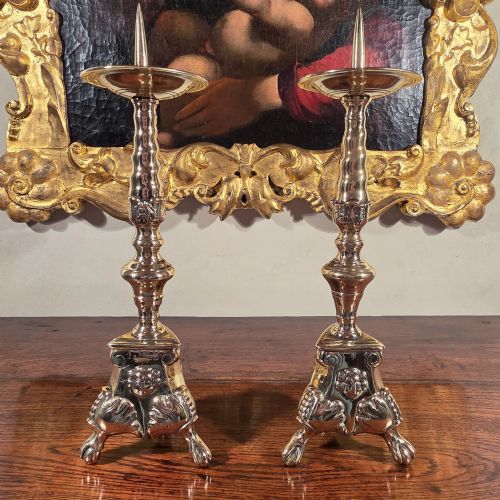
Antique church pricket holders take the form of floor standing candelabras, tall altar candlesticks, torcheres, and hanging chandeliers designed to support large tapers on a central upward-pointing spike.
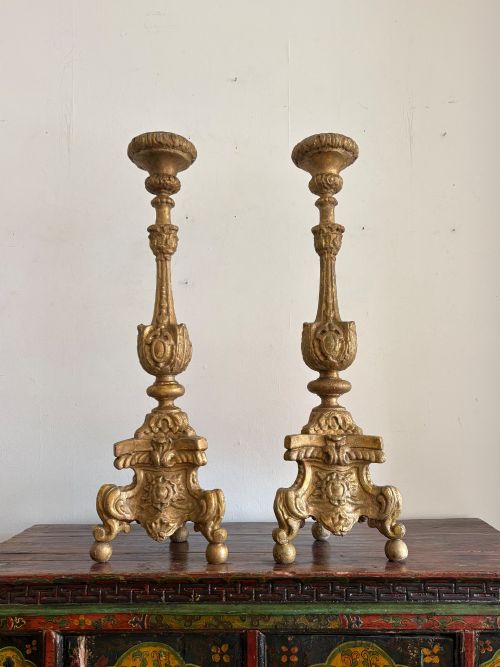
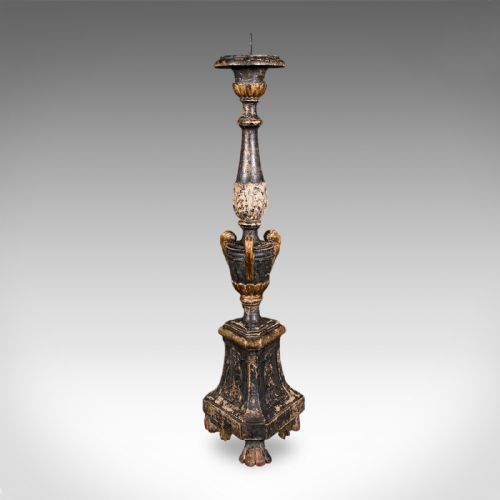
Buyers meet sturdy brass and bronze pairs alongside carved, gilt, and painted wooden figures originating mainly across the eighteenth and nineteenth centuries.
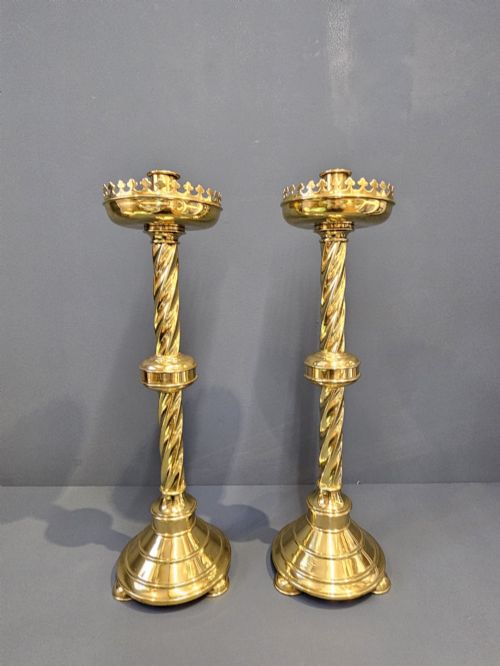
The selection ranges from robust wrought iron work to ornate Gothic Revival and Italian Baroque altar pieces intended originally for ecclesiastical settings.
How They Were Made
Metal examples employ heavy cast and turned brass, bronze, and wrought iron, utilising industrial casting and hand-forging techniques to build weight and structural height.
Wooden pieces rely on carved timber substrates finished with gesso, silver leaf, or giltwood coatings, combining sculptural figures with structural candle platforms.
Listings feature materials spanning brass, bronze, wrought iron, carved wood, gesso, and giltwood across the eighteenth and nineteenth centuries.
What Varies in Quality
Quality rests upon the crispness of the original cast detailing in metal or the depth and sculptural competence of the hand-carved wood beneath the gilding.
Proportion and scale dictate the visual weight of each piece, distinguishing modest domestic adaptations from monumental ecclesiastical furnishings designed for grand altars.
The Antique Church Pricket Holders Glossary
- Pricket
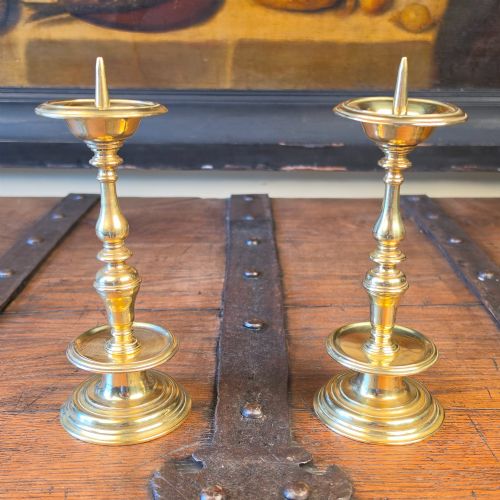
- A metal spike positioned centrally on a drip pan to impale and secure a thick candle. This spike differentiates these items from standard socket candlesticks.
- Torchere
- A tall stand or pedestal designed to support a light source or figure. These tall pieces elevate candles to significant heights in liturgical spaces.
- Giltwood
- Timber coated with gold leaf or gold paint over a prepared gesso ground. This technique gives wooden altar items the appearance of solid gold.
- Acolyte
- An altar server assisting clergy, reflected in smaller portable candlesticks traditionally carried during processions. These items offer a more intimate scale than floor standing pieces.
- Baroque
- An artistic style characterised by dramatic movement, rich detail, and exuberant ornamentation. Pieces from this movement display theatrical carving and bold profiles.
Antique Church Pricket Holders: Frequently Asked Questions
How do pricket holders differ from normal candlesticks?
Pricket holders use an upward-pointing metal spike to secure the base of a candle rather than a surrounding socket. This design accommodated large, heavy wax tapers used in liturgical ceremonies.
Traditional candlesticks cup the candle base, whereas pricket designs require candles with a small hole drilled at the bottom or pressed directly onto the spike.
Where were these altar sticks used?
These items originated in churches, chapels, and cathedrals, standing upon altars, floors, or sanctuary steps to provide ceremonial illumination.
Today, collectors place them on sideboards, floors, or hearths to utilise their architectural height and historical presence in domestic interiors.
How do I distinguish eighteenth-century pieces from nineteenth-century revivals?
Eighteenth-century examples often exhibit hand-carved wooden construction with patinated gilt or silver leaf surfaces shaped by Continental Baroque traditions. Nineteenth-century pieces frequently adopt Gothic Revival or Amsterdam School aesthetics with heavier cast brass and industrial tooling.
Examining tool marks, base construction, and surface wear helps clarify the manufacturing period of each specific metal or wooden holder.
Can these hold standard modern candles?
Modern candles lack the central base hole required to sit securely on a pricket spike without modification. Owners typically use pillar candles modified with a drilled base hole or secure wider tapers carefully onto the metal point.