




Antique Brass Prickets
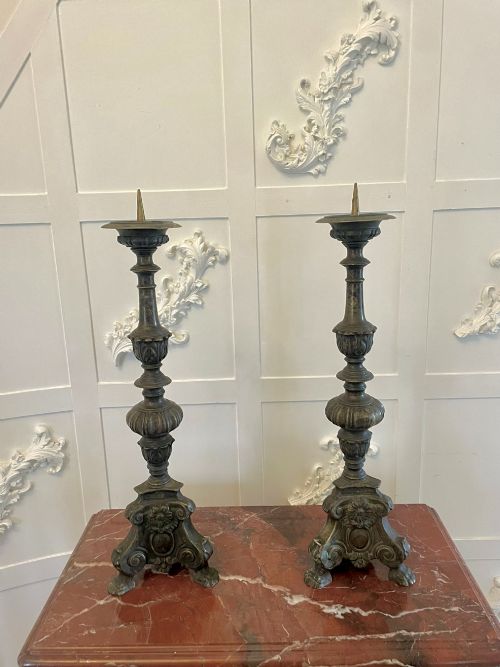
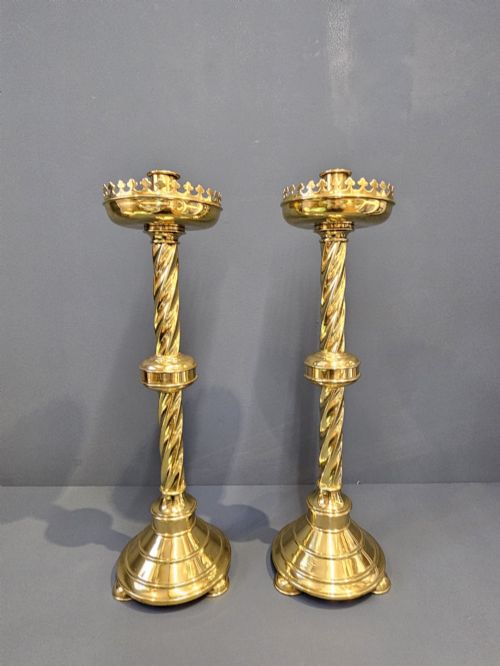
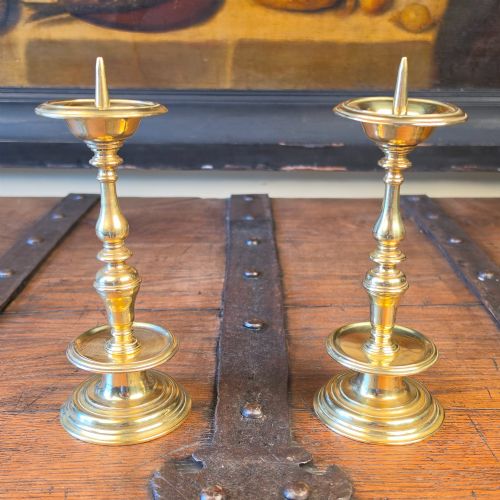
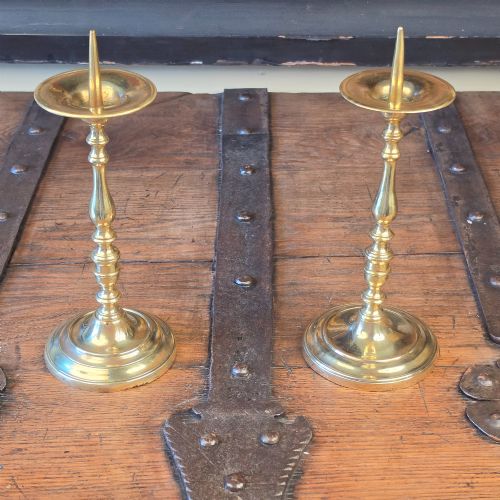
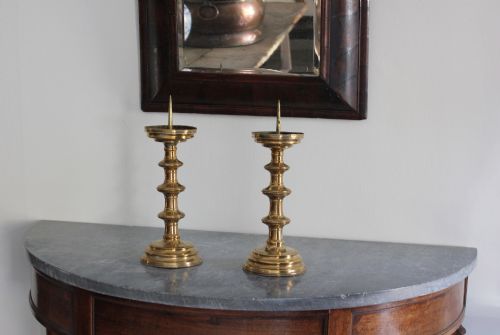
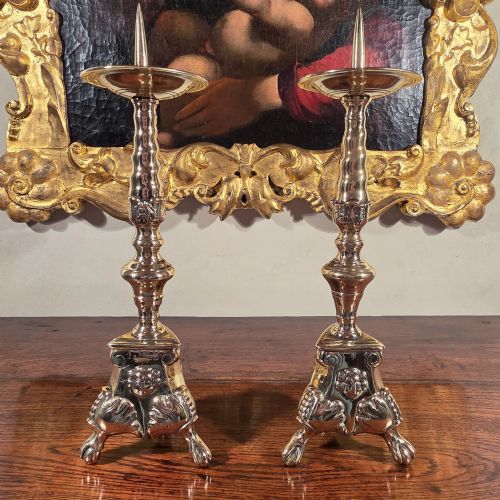
Antique brass prickets are altar and church candle holders featuring a central spike, prized for their striking verticality and ecclesiastical presence.
Antique Brass Prickets
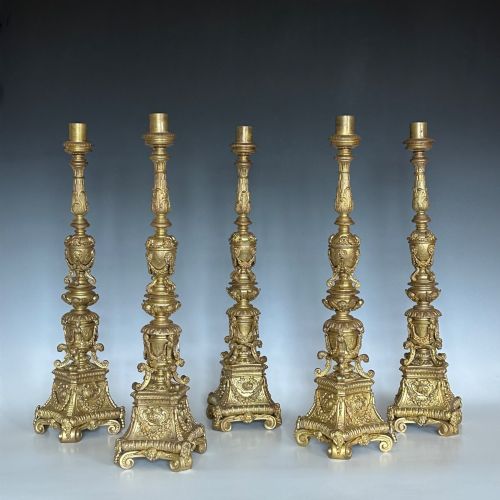
When you search for antique brass prickets, you encounter tall ecclesiastical and altar candle holders spanning from the sixteenth century to the early twentieth century. The selection ranges from monumental floor standing candle holders down to table lamps and smaller domestic pairs.
You meet heavy church candlesticks from the Victorian era and the nineteenth century alongside earlier Flemish and Italian examples. Styles shift from sixteenth century pillar forms and seventeenth century Baroque to Gothic Revival and Amsterdam School designs.
How they were made
These pieces rely primarily on cast brass, bronze, and gilt bronze, often combined with wrought iron or copper alloy elements. Metalworkers utilised traditional casting and turning techniques to build up heavy stems and wide drip pans.
Surface finishes include patinated brass and ormolu, while later adaptations integrate glass or opaline components when converted into table lamps.
Listings span periods from the 16th century to the 1930s, featuring materials such as brass, bronze, iron, and opaline glass.
What varies in quality
Weight and casting crispness separate standard production from superior examples, as heavier metal provides structural stability for tall shafts. The sharpness of turned decoration and the integrity of the original spike indicate the maker's skill.
Surface patination and the survival of original gilding or fire gilt ormolu determine the visual depth of the metal over centuries of handling and church use.
The Antique Brass Prickets Glossary
- Pricket
- A sharp metal spike atop a candlestick designed to impale the base of a wax candle rather than holding it in a socket.
- Ormolu
- Finely ground high-carat gold mercury-gilded to a bronze or brass base, creating a rich golden surface finish.
- Drip pan
- A wide metal tray positioned beneath the candle spike to catch melting wax before it reaches the stem or altar.
- Pillar candlestick
- A heavy cylindrical or columnar form with classical proportions, common in sixteenth and seventeenth century ecclesiastical metalwork.
Antique Brass Prickets: Frequently Asked Questions
What is a pricket candlestick?
A pricket candlestick uses a vertical metal spike instead of a socket to secure the candle.
This design was standard for large church candles before socket candlesticks became common in domestic settings.
How do I date a brass pricket?
Dating relies on examining the casting methods, base construction, and stylistic markers such as Gothic Revival or Baroque details.
Earlier pieces from the sixteenth and seventeenth centuries show heavier hand-finishing and simpler pillar forms compared to nineteenth century Victorian revivals.
Were these used in homes?
Most surviving examples originated in churches, cathedrals, and altars rather than domestic dining rooms.
Later nineteenth and twentieth century revival pieces were frequently adapted for home lighting or converted into table lamps.
How should I clean antique brass?
Antique brass benefits from gentle dusting rather than aggressive polishing that removes the historic patination.
Preserving the darkened areas and natural oxidation maintains the visual depth acquired over centuries.