
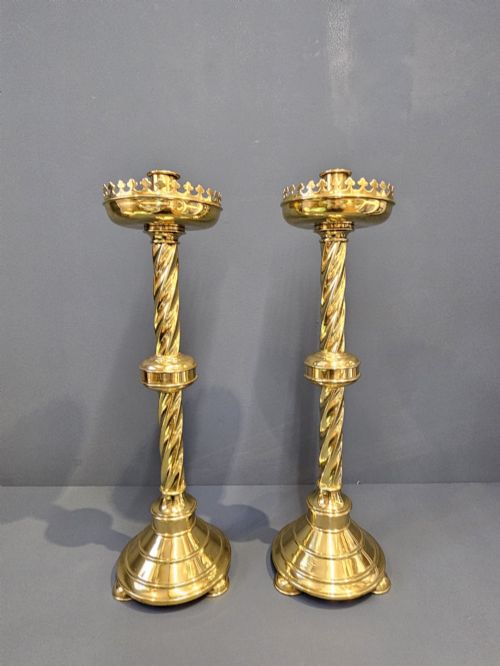
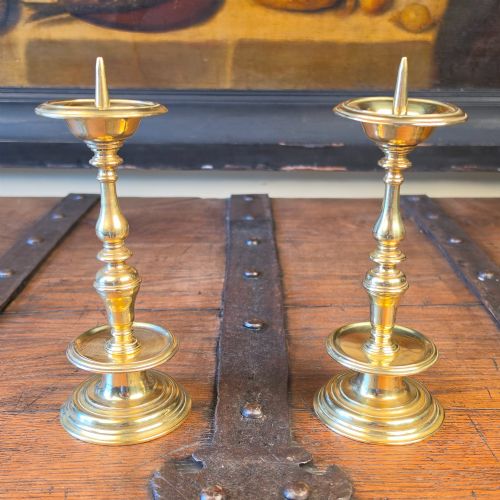
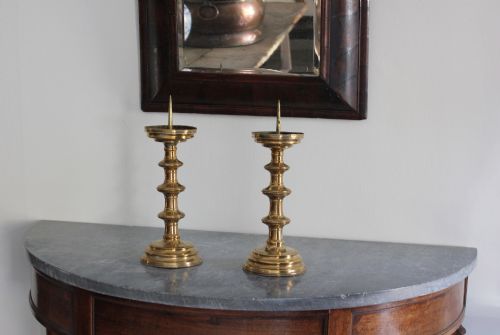
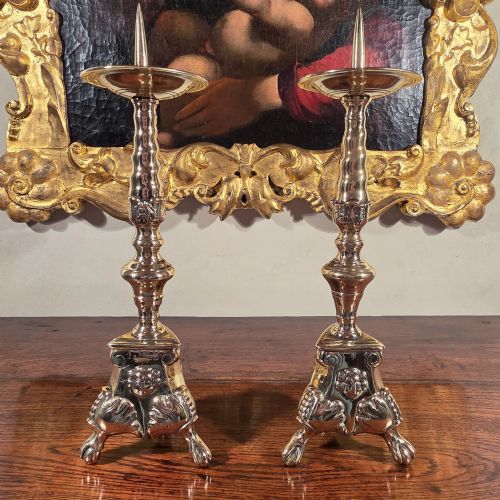


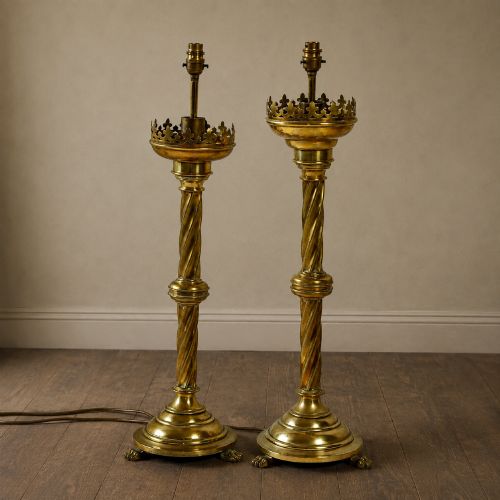


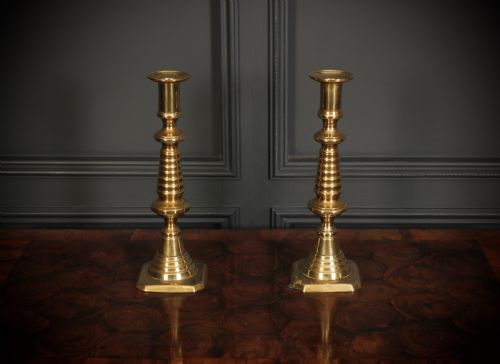


Pair Brass Altar Sticks
These pair brass altar sticks bring heavy ecclesiastical presence to a room, valued for their substantial cast metal forms and architectural silhouettes.
Pair Brass Altar Sticks
When you search for pair brass altar sticks, you encounter ecclesiastical metalwork originally created for liturgical use on church altars and retables. The examples meeting you here span from the sixteenth century through to the twentieth century, with nineteenth century Gothic Revival pieces forming a strong presence.
The objects take the form of tall candlesticks, pricket sticks with spikes to hold large wax candles, and occasional conversions into table lamps or fitted with candelabra branches. Flemish Baroque and seventeenth century styles also appear among the inventory, alongside robust Victorian interpretations.
Buyers seek these pairs for their imposing height, sculptural weight, and the warm metallic glow of aged alloy. They function today as striking decorative focal points on mantelpieces, sideboards, and large dining tables.
How they were made
The construction relies primarily on cast brass and bronze, worked through traditional foundry methods that produced thick, heavy sockets, stems, and stepped bases. Metal components were cast in sections and joined or threaded together, creating the substantial heft noted in many pieces.
Some examples incorporate supplementary materials such as gilt metal, glass beads, and fabric details like silk fringe and damask, particularly in later decorative interpretations. Surface finishes range from polished highlights to dark, patinated patinas accumulated over centuries of handling and ecclesiastical use.
Listings feature periods spanning from the sixteenth century through the nineteenth century, including notable Gothic Revival examples.
What varies in quality
Quality rests in the crispness of the casting detail and the architectural integrity of the design, where superior examples display sharp ornamentation and well-balanced proportions. Heavier gauge metal and secure, tight joins separate finer workshop production from lighter, more commercial output.
The depth of the natural patina and the preservation of original components also dictate the standing of a piece. Alterations, such as subsequent electrical conversions, change the character of the object from its original liturgical purpose.
T Thomason & Co
The Pair Brass Altar Sticks Glossary
- Pricket stick
- A candlestick featuring a sharp metal spike on the drip pan to secure a large wax candle, common in church settings before the widespread use of socket candles.
- Gothic Revival
- An architectural and decorative style popular during the nineteenth century that revived medieval forms, pointed arches, and ecclesiastical motifs.
- Flemish Baroque
- A flamboyant artistic style originating in the Southern Netherlands during the seventeenth century, characterised by robust curves and rich ornamentation.
- Patina
- The surface sheen and coloration developed through age, handling, and oxidation, highly prized by collectors as an indicator of authenticity.
- Retable
- The raised shelf or structure behind an altar where candlesticks and cross figures were traditionally placed.
Pair Brass Altar Sticks: Frequently Asked Questions
How do I clean brass altar sticks?
Dust gently with a soft dry cloth to preserve the accumulated surface character and historical patination. Avoid harsh chemical polishes that strip away age and diminish the visual depth of the metal.
Allow the natural oxidation to remain, as excessive cleaning reduces the antique integrity that collectors value.
How can I date a pair?
Dating relies on examining the casting techniques, stylistic markers, and assembly methods used in the base and stem. Sixteenth and seventeenth century pieces display different casting textures and proportions compared to nineteenth century Gothic Revival revivals.
Reference marks, maker stamps, or historical construction quirks further assist in narrowing the period of manufacture.
Can I use real candles on them?
Pricket sticks require candles with a base hole to sit securely upon the vertical metal spike. Care must be taken with weight and diameter to ensure stability during burning.
many owners choose to display them unlit or fit them with modern drip protectors to safeguard the antique metalwork.