





Antique Ceramic Candelabra
These antique ceramic candelabra combine sculptural porcelain, gilt and enamel to light a room with the full theatre of the nineteenth and early twentieth centuries.
Antique Ceramic Candelabra
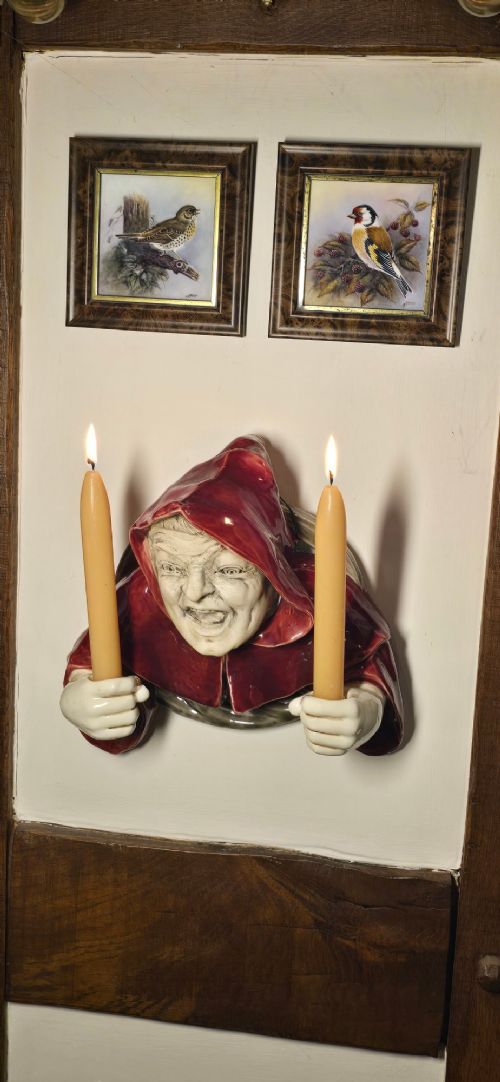
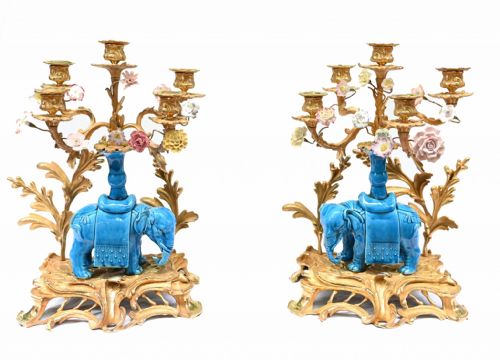
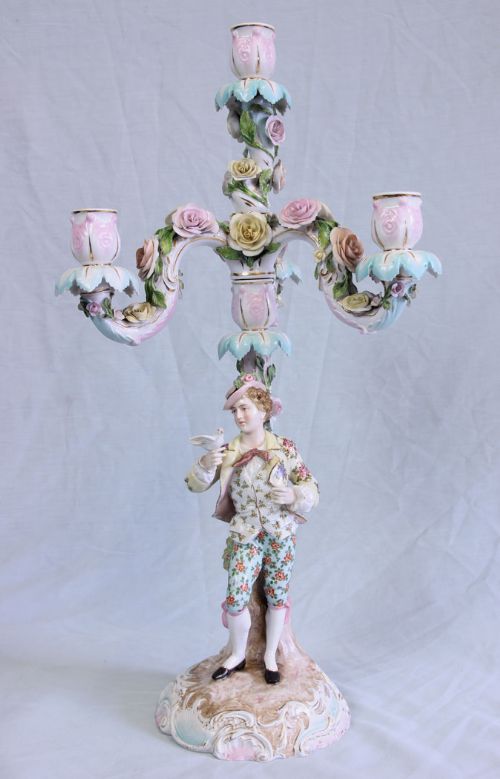
When you search for antique ceramic candelabra, you find multi-branch lighting pieces designed in porcelain, hard-paste porcelain and ceramic. The forms range from pairs of figural table candelabra to wall-hanging pottery and converted lamps on china bases.
The pieces on this page span the Victorian, Edwardian and late nineteenth-century periods, alongside earlier nineteenth-century examples. You will frequently meet German factories such as Meissen, Dresden, Sitzendorf and Saxony, together with English makers like Royal Worcester.
Makers drew on French Rococo Revival, Neoclassical and Victorian design languages to shape these branches and sconces. Figures, gardeners, allegorical subjects and animals often populate the bases beneath the candle nozzles.
How they were made
Potters shaped these works using hard-paste porcelain and ceramic, applying glaze before hand-painting details in enamel colours. Many pieces incorporate gold leaf, gilt and precise gilding to highlight the moulded scrollwork and foliage.
Individual factory techniques allowed for complex figural modelling, seen in botanical bases and multi-arm arrangements. Metal components or bronze mounts occasionally secure china bases or support the structural arms.
Antique Ceramic Candelabra Retail Price Guide 2026
Typical asking prices for ceramic candelabra among the pieces listed under this phrase on Sellingantiques today, from the lower quarter to the upper quarter. They describe what is for sale here now, not the wider market.
Makers represented include Royal Worcester, Meissen, Dresden, Sitzendorf and Helena Wolfsohn.
What varies in quality
The preservation of the gilt, gold leaf and enamel surface finish dictates the visual presence of the piece. Intricate figural groupings with detailed floral bases demonstrate a higher level of artistic ambition from the maker.
Royal Worcester Hadley·Meissen Porcelain·Sitzendorf Porcelain·Helena Wolfsohn·Dresden porcelain
The Antique Ceramic Candelabra Glossary
- Hard-paste porcelain
- A durable, high-fired ceramic compound composed of kaolin and petuntse. It produces a dense, bright white body capable of holding sharp moulded details.
- Gilt
- A thin layer of gold applied to the porcelain surface for decoration. It is often burnished to catch the candlelight.
- Enamel
- A vitreous composition fused to the ceramic body during firing to provide colour. It allows for detailed hand-painting on figures and floral motifs.
- Rococo Revival
- A nineteenth-century design style drawing on eighteenth-century French motifs. It employs asymmetrical scrolls, C-scrolls and naturalistic plant forms.
- Figural candelabra
- Lighting branches supported by human or animal figures. They transform functional table pieces into sculptural ornaments.
Antique Ceramic Candelabra: Frequently Asked Questions
How do I clean ceramic candelabra?
Dust the porcelain gently with a soft brush to protect the delicate enamel and gilt details.
Avoid immersing the piece in water, especially where metal mounts or old adhesives are present.
Were these used on dining tables?
Many pairs served as centrepieces on dining tables or sideboards during evening meals.
Their branches held multiple candles to cast a warm glow across formal rooms.
How do I date German porcelain pieces?
Examine the underglaze factory marks, style of modelling and the character of the painted enamel.
Nineteenth-century pieces often reflect Rococo revival tastes and specific factory blue sword or crown stamps.
What is the difference between candelabra and candlesticks?
Candlesticks feature a single nozzle for one candle atop a vertical shaft.
Candelabra branch out into multiple arms to hold several candles simultaneously.